
Maharashtra FDA Suspends 9 Mumbai Eatery Licences: 5 MCA Restaurants Among Those Hit
On August 24, 2026, the Maharashtra Food and Drug Administration (FDA) delivered a decisive blow to food safety complacency in Mumbai, suspending the licences or registrations of nine establishments in a single day. The action, spearheaded by Commissioner Tukaram Mundhe, targeted everything from high-profile cricket club restaurants to a mid-day meal facility serving schoolchildren.
On August 24, 2026, the Maharashtra Food and Drug Administration (FDA) delivered a decisive blow to food safety complacency in Mumbai, suspending the licences or registrations of nine establishments in a single day. The action, spearheaded by Commissioner Tukaram Mundhe, targeted everything from high-profile cricket club restaurants to a mid-day meal facility serving schoolchildren. This is not an isolated incident but part of a sustained statewide and national crackdown that has now touched schools, dairies, and sweet manufacturers ahead of the festive season.
Mumbai's Food Safety Sweep: Nine Licences Suspended, Five MCA Restaurants Shut Down for Hygiene Failures
Mumbai, Maharashtra – August 25, 2026 — The Maharashtra FDA has suspended the food licences or registrations of nine establishments in Mumbai following inspections that revealed critical hygiene and food safety violations. The action, confirmed by Commissioner Tukaram Mundhe, includes five restaurants operated by the Mumbai Cricket Association (MCA) at the iconic Wankhede Stadium, marking one of the most high-profile enforcement actions in recent memory. The suspensions come just days before Raksha Bandhan (August 28, 2026) and Ganesh Chaturthi, when demand for sweets and restaurant dining typically surges across the city.
The Crackdown at a Glance
The August 24 action is the culmination of an intensified inspection drive that has been running throughout the month. The nine suspended establishments include the MCA's Permit Room, Pavilion, Mediterranean, Oriental Swing, and Clubway & Pastry Counter. Beyond the stadium, the FDA also suspended operations at Sankalp Mahila Audyogik Utpadak Sahakari Society Limited in Kurla, Lenexis Foodworks in Mahim, Café Cadell in Shivaji Park, and China Town Fast Food Centre.
Common violations across the drive included poor sanitation, improper food storage, inadequate temperature control, poor ventilation, and deficiencies in personal hygiene. Under the Food Safety and Standards Act, 2006, and FSSAI regulations, these are not minor infractions—they represent a systemic failure to uphold the basic standards required to protect public health. Suspended businesses cannot operate until all violations are fully rectified and cleared by the FDA, a process that involves re-inspection and verification.
What Inspectors Found at the MCA Outlets
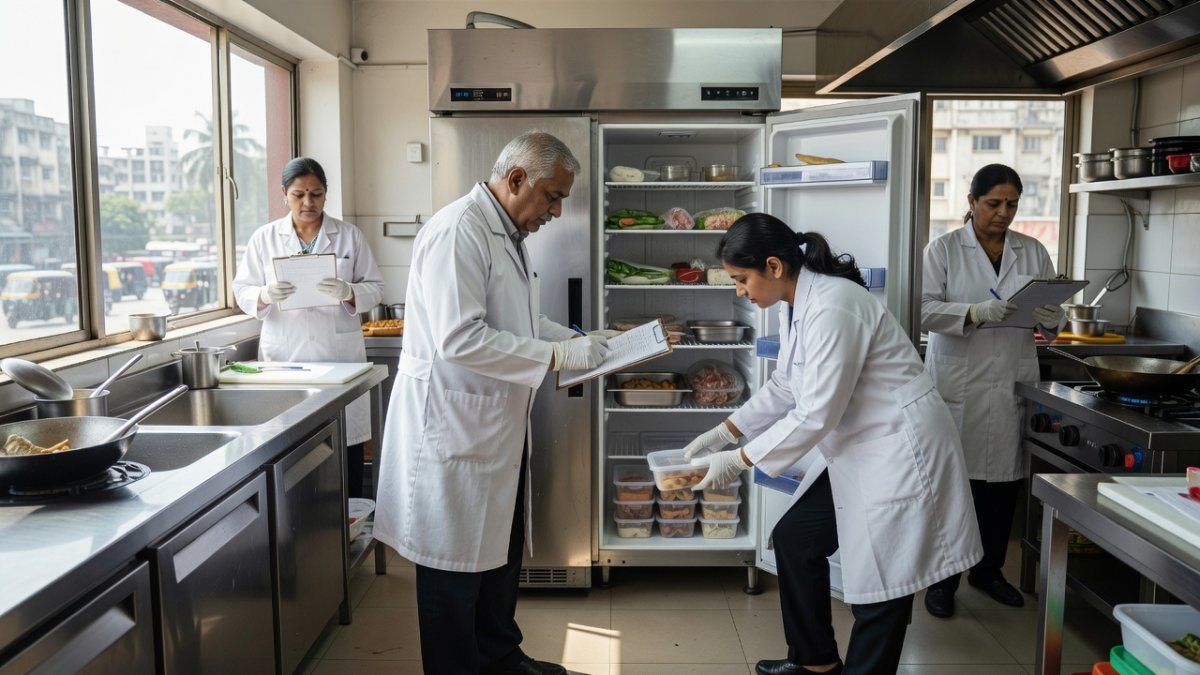
The inspection reports for the five MCA restaurants paint a troubling picture of food safety management at one of India's most prestigious sporting venues. At the MCA Permit Room, inspectors documented an unclean and slippery kitchen floor, ice accumulation inside a refrigerator, and inadequate temperature control—conditions that can lead to bacterial growth and cross-contamination. The MCA Pavilion fared no better, with improper food segregation, poor refrigeration practices, unclean equipment, and inadequate hygiene standards recorded in the official report.
Mediterranean and Oriental Swing were cited for violations related to food safety, sanitation, and food handling, though the FDA has not released the full details of these findings. Most concerning, however, is the case of Clubway & Pastry Counter, where food business activity was being carried out with no valid food licence in the establishment's name. This is a direct violation of the FSS Act, 2006, which mandates that all food businesses obtain a licence or registration before commencing operations. The registration certificate has been suspended, effectively shutting down the outlet.
These findings are particularly significant given the MCA's role as a host for international cricket matches and high-profile events. The Wankhede Stadium attracts thousands of spectators, and the food served there must meet the same standards as any other commercial establishment. The FDA's willingness to take on such a prominent institution signals that no entity is above the law when it comes to food safety.
Beyond the Stadium: Citywide and Statewide Action
The MCA suspensions were just one part of a broader enforcement effort. In Kurla, the Sankalp Mahila Audyogik Utpadak Sahakari Society Limited, which operates a mid-day meal and canteen facility, scored only 48% in its inspection and was marked "Non-Compliant." Inspectors found poor housekeeping, dirty and damaged surfaces, pest-control concerns, inadequate temperature monitoring, and insufficient hand-washing facilities. For a facility that prepares meals for children, these violations are deeply concerning.
In Mahim, Lenexis Foodworks was cited for poor ventilation, grease accumulation in kitchen exhaust systems, stagnant water, inadequate pest-control arrangements, and temperature monitoring deficiencies. Café Cadell in Shivaji Park faced action over shortcomings in ventilation, flooring, personal hygiene, drinking-water records, insect-proofing, and the segregation of vegetarian and non-vegetarian food—a basic requirement under FSSAI regulations that is critical for Indian consumers.
This action follows a statewide inspection drive on August 19-20, 2026, which led to the suspension of seven other Mumbai outlets. Among them was a Colaba club with a 47% non-compliance rate where inspectors found live flies and dead cockroaches. A fast-food outlet was caught using non-dairy analogue cheese labelled "GO Cheese Sauce" while advertising real cheese or paneer—a clear case of consumer deception. Notably, 18 of 20 earlier deficiencies at this outlet remained unresolved, and the establishment had submitted a misleading 148-page compliance report. In another incident at a Nariman Point restaurant, an employee was found washing his face over clean utensils.
Earlier in August 2026, the Maharashtra FDA also suspended licences of Radio Club, Khar Gymkhana, and 11 others for hygiene norm violations. The pattern is clear: the FDA is systematically targeting high-profile establishments, clubs, and restaurants that have historically operated with impunity.
Protecting Children: The School Food Campaign
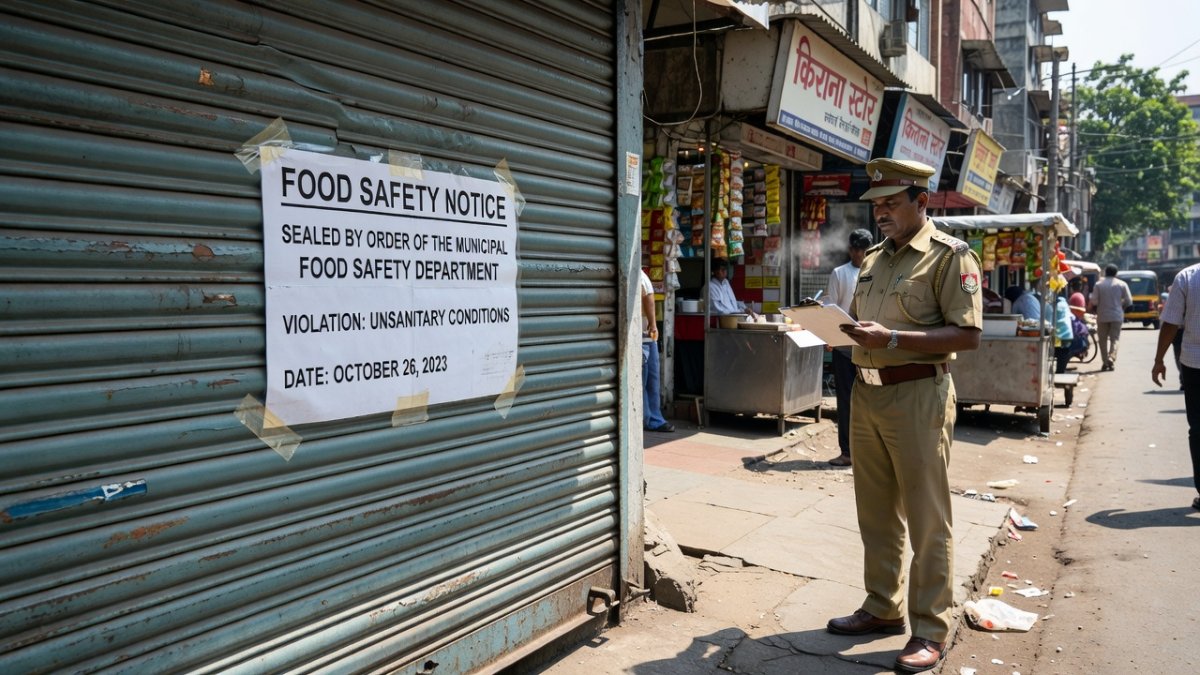
Perhaps the most significant development in this crackdown is the "Safe Food for Every School Child in Maharashtra" campaign. Between July 28 and August 21, 2026, the FDA inspected 250 schools and food establishments around school premises across the state. The results were alarming: action was taken against 15 establishments, with 11 licences or registrations suspended, 4 cancelled, and 2 ordered to stop business entirely.
The campaign also had a strong educational component, with 98 awareness and training workshops conducted. These workshops reached 22,433 schools and engaged 25,108 teachers, creating a network of informed stakeholders who can identify and report food safety issues. This dual approach—enforcement combined with education—is exactly what India needs to build a sustainable food safety culture.
The suspension of the Kurla mid-day meal facility is particularly troubling. Mid-day meals are a critical nutritional intervention for millions of Indian children, and any compromise in their safety is unacceptable. The FDA's action sends a clear message to all contractors and operators of such facilities: the health of schoolchildren is non-negotiable.
Dairy, Sweets and the Festive Season Risk
The FDA's enforcement has extended to the dairy sector, with statewide seizures of 7,332 litres of milk, 104 kg of curd, and 88.4 kg of cream. In Navi Mumbai, 3,648 litres of loose pasteurised skimmed milk worth about Rs 1.24 lakh was destroyed. In Pune, 3,370 litres of cow milk worth about Rs 1.31 lakh tested positive in an acidity test, indicating spoilage or adulteration. In Sangli, officials suspected that cream from cow milk was being mixed with buffalo milk at a collection centre—a practice that defrauds consumers and compromises product quality.
The timing of these actions is critical. With Raksha Bandhan on August 28, 2026, and Ganesh Chaturthi approaching, demand for sweets, milk products, and restaurant dining surges dramatically. This is precisely when unscrupulous operators attempt to cut corners to maximise profits. The FDA's pre-festive crackdown is a proactive measure designed to protect consumers during the highest-risk period of the year.
The national scope of this issue is underscored by events in Uttar Pradesh. On August 25, 2026, Ghaziabad food safety officials seized and destroyed about 1,000 kg (1 tonne) of adulterated, insect-infested rasgullas at a sweet storage and manufacturing unit ahead of Raksha Bandhan. This demonstrates that the crackdown is not a Maharashtra phenomenon but a national wave of enforcement.
What This Means for India
The Maharashtra FDA's actions represent a significant shift in India's food safety enforcement landscape. For too long, licence suspensions were rare and reserved for the most egregious violations. The current approach—systematic, data-driven, and unafraid of targeting powerful institutions—is a welcome change. Commissioner Tukaram Mundhe has demonstrated that the FDA is willing to take on cricket associations, gymkhanas, and clubs that have historically operated with a sense of entitlement.
For Indian consumers, this means greater protection and accountability. The Food Safety and Standards Act, 2006, provides a robust legal framework, but it is only as effective as its enforcement. The FDA's actions show that the law is being applied with vigour. Consumers can now verify a food outlet's FSSAI licence and report violations through the Food Safety Connect portal or helpline, empowering them to play an active role in monitoring the food they consume.
However, the repeated violations at establishments like the MCA restaurants and the Colaba club raise questions about the effectiveness of routine inspections. If a facility can score 47% on a compliance check and still operate, the system has gaps. The FDA's decision to suspend licences rather than issue warnings is a strong deterrent, but sustained vigilance is required to prevent recurrence.
The Bottom Line
The suspension of nine Mumbai establishments, including five MCA restaurants, is a landmark moment in Indian food safety enforcement. It demonstrates that the Maharashtra FDA, under Commissioner Tukaram Mundhe, is serious about protecting public health. The action against the mid-day meal facility in Kurla and the dairy seizures across the state show that no sector is exempt from scrutiny.
As the festive season approaches, consumers should be vigilant and proactive. Check the FSSAI licence of every establishment you patronise. Report violations through official channels. And remember that these suspensions are not just about punishing bad actors—they are about creating a culture of compliance that protects every Indian citizen.
The message from the FDA is clear: food safety is not optional, and the era of impunity for high-profile establishments is over. For the millions of Indians who eat out, order in, or send their children to school with mid-day meals, this is a welcome development. The crackdown is not just about hygiene—it is about dignity, health, and the fundamental right to safe food.
— By Dr. Raj Patel, Staff Writer
This article was produced with AI-assisted research and editorial support. Reporting is based on sources cited in the article.
What's Your Reaction?
 Like
0
Like
0
 Dislike
0
Dislike
0
 Love
0
Love
0
 Funny
0
Funny
0
 Wow
0
Wow
0
 Sad
0
Sad
0
 Angry
0
Angry
0

India/South Asia Correspondent at Global1.News. Analytical voice with a background in science and health journalism. Based in New Delhi, covering Indian politics, education, healthcare, technology, and policy. Breaks down complex data into clear, actionable reporting.















Comments (0)