
Macron and King Abdullah Launch Vicious Attacks on Israel at UN
In a sharply charged segment of JNS TV’s “Israel Undiplomatic” aired on 24 September 2026, hosts Mark Regev and Ruthie Blum dissected the public statements made by French President Emmanuel Macron and Jordanian King Abdullah II during a recent United Nations session.
In a sharply charged segment of JNS TV’s “Israel Undiplomatic” aired on 24 September 2026, hosts Mark Regev and Ruthie Blum dissected the public statements made by French President Emmanuel Macron and Jordanian King Abdullah II during a recent United Nations session. Both leaders leveled serious accusations against Israel, accusing it of ignoring Palestinian rights and downplaying the threat of Hamas. Regev and Blum argued that the remarks betray a growing disconnect between European and Arab diplomatic rhetoric and the security realities Israel confronts on the ground. Their analysis, framed by on‑the‑ground observations and recent security cooperation between Israel and Jordan, offers a window into the diplomatic battle that is playing out behind the headlines.
Macron’s Controversial Claims on Judea and Samaria
During his UN address, President Macron asserted that Israel’s policies in Judea and Samaria (the West Bank) are “out of step” with the aspirations of the Palestinian people. He went further, suggesting that the Israeli government’s settlement expansion undermines any realistic prospect for a two‑state solution. Regev and Blum noted that while these statements echo long‑standing European concerns, they overlook the security calculus that drives Israeli settlement policy, especially in areas that border major population centres such as Ariel and Ma’ale Adumim.
The hosts highlighted that Macron’s claim that “Hamas was not operating there” is factually inaccurate. Israeli security forces have repeatedly reported infiltration attempts and terrorist activity originating from fringe elements in the West Bank, including rocket‑making workshops and weapons smuggling routes that have been disrupted by the IDF’s West Bank Division. By denying Hamas activity in the territory, Macron disregards the intelligence assessments shared with the United Nations Security Council over the past decade.
Regev and Blum also pointed out that Macron’s remarks ignore the broader context of Israeli‑Palestinian negotiations, which have stalled largely due to security concerns on both sides. They argued that the French president’s focus on settlement numbers without acknowledging the threat of terrorism creates a narrative that is “detached from the lived reality of Israeli civilians who face rocket fire and stabbing attacks on a daily basis.”
King Abdullah’s Fresh Accusations and Their Diplomatic Weight
King Abdullah II, speaking from the same UN platform, delivered a set of accusations that echoed but also expanded upon Macron’s criticisms. The Jordanian monarch alleged that Israel’s security operations in the occupied territories “exacerbate tensions” and “fuel radicalization.” He further claimed that Israel’s policies hinder the prospects for a comprehensive peace settlement.
According to Regev and Blum, the King’s statements are particularly striking given the behind‑the‑scenes security cooperation that exists between Israel and Jordan. The two countries have maintained a joint security framework that includes coordination on border patrols, intelligence sharing on terrorist movements, and joint counter‑terrorism drills along the Jordan River and at the Allenby Bridge crossing. The hosts argued that Abdullah’s public criticism, therefore, reflects a “dual track” approach: publicly aligning with broader Arab sentiment while privately ensuring that security cooperation remains intact.
The analysis underscored that Jordan’s public stance is also influenced by domestic political considerations. The Jordanian monarchy must balance its own population’s strong support for the Palestinian cause with the pragmatic need to maintain stability along its borders. By voicing criticism at the UN, King Abdullah signals solidarity with Palestinian aspirations, a message that resonates with his constituency, while the quiet security partnership with Israel continues to protect Jordanian borders from spill‑over violence.
The Growing Gap Between European Rhetoric and Israeli Security Reality
Regev and Blum identified a widening gap between European diplomatic language and Israel’s security environment. They noted that France, once a staunch ally of Israel, has seen its relationship “deteriorate” in recent years, as reflected in Macron’s pointed remarks. The hosts suggested that this shift is driven by a combination of domestic French politics, where pro‑Palestinian activism has gained prominence, and a broader European trend of emphasizing human‑rights discourse over security concerns.
The hosts argued that the European narrative often portrays Israel as the “occupier” while overlooking the persistent threat of Hamas‑led rocket fire from Gaza, as well as the infiltration attempts from the West Bank. By focusing on settlement expansion without equally highlighting the daily security challenges faced by Israeli civilians, the European discourse, according to the hosts, creates a “one‑sided” picture that fuels international pressure on Israel.
In their assessment, the hosts warned that such a narrative, if left unchecked, could lead to policy decisions at the UN that ignore the operational realities on the ground. They cited past UN resolutions that called for settlement freezes without accompanying security guarantees as examples of measures that, while symbolically powerful, risk undermining Israel’s ability to protect its citizens.
Israel’s Response: Balancing Public Diplomacy and Security Imperatives
In the episode, Regev and Blum emphasized that Israel’s diplomatic corps is aware of the growing criticism and is working to counter it through both public statements and behind‑the‑scenes engagement. They highlighted recent remarks by Foreign Ministry spokesperson Israel Katz, who reiterated that “Israel will not compromise its security for political rhetoric.” The hosts noted that such statements aim to reaffirm Israel’s position that any peace process must be predicated on credible security guarantees.
The analysis also pointed to the Israeli Defense Forces’ ongoing operations in the West Bank and Gaza as evidence that Israel continues to take a proactive stance against terrorist threats. Regev and Blum cited recent IDF raids that disrupted Hamas logistics networks, underscoring that Israel’s security actions are not merely reactive but part of a broader strategy to prevent attacks before they reach Israeli territory.
Furthermore, the hosts discussed the importance of Israel’s “strategic communications” unit, which seeks to convey the security rationale behind settlement policies and military operations to international audiences. They argued that this unit must adapt to the evolving diplomatic landscape, where European and Arab leaders increasingly frame Israel’s actions as violations of international law, regardless of the security context.
The Role of Jordan‑Israel Security Cooperation Behind the Scenes
One of the most revealing parts of the discussion centered on the depth of security coordination between Jordan and Israel. Regev and Blum recounted that the two nations share real‑time intelligence on terrorist movements across the Jordan River, conduct joint patrols along the border, and coordinate the management of the Allenby Bridge, a critical crossing for both peoples.
These cooperative mechanisms, the hosts argued, are essential for preventing the spill‑over of violence from Gaza and the West Bank into Jordanian territory. They noted that Jordan’s own security forces have intercepted weapons shipments destined for Hamas, often with Israeli assistance. This collaboration demonstrates that, despite public criticism, both countries recognize a shared interest in containing terrorism.
The hosts also highlighted that the security partnership extends to the coordination of water resources and border infrastructure, which are vital for maintaining stability in the region. By emphasizing these practical ties, Regev and Blum suggested that Jordan’s public accusations may be a diplomatic tool rather than an indication of a breakdown in cooperation.
Implications for Future UN Debates and Regional Stability
The episode concluded with a forward‑looking assessment of how the recent UN statements by Macron and King Abdullah might shape future diplomatic engagements. Regev and Blum warned that if European and Arab leaders continue to frame Israel’s security measures as “aggressive” or “illegal,” the UN may see an increase in resolutions that pressure Israel without offering concrete security solutions.
They argued that Israel will likely respond by strengthening its diplomatic outreach to allies in the United States, Central Europe, and the United Kingdom, while simultaneously deepening covert security cooperation with regional partners like Jordan and Egypt. This dual approach aims to counterbalance the growing public criticism with tangible security outcomes that protect Israeli citizens.
Finally, the hosts stressed that the broader regional dynamics—particularly the ongoing conflict in Gaza, the fragile ceasefire arrangements, and the political volatility in the West Bank—will continue to influence how Israel is portrayed on the world stage. They called on Israeli officials to maintain transparency about security operations, while also engaging in “people‑to‑people” initiatives that can mitigate the perception of an occupying power. In doing so, Israel can better align its security imperatives with the diplomatic narratives that dominate the UN and the international media.
By Hannah Berg, Staff Writer
This article was produced with AI-assisted research and editorial support. Reporting is based on the source material cited below. Sources: JNS TV video report (24 September 2026); JNS TV; Global1.News
What's Your Reaction?
 Like
0
Like
0
 Dislike
0
Dislike
0
 Love
0
Love
0
 Funny
0
Funny
0
 Wow
0
Wow
0
 Sad
0
Sad
0
 Angry
0
Angry
0
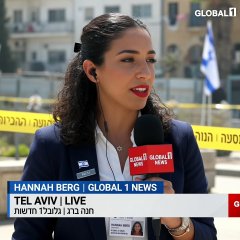
Israel Correspondent at Global1.News. Based in Tel Aviv, covering Israeli politics, security, technology, and society. Provides balanced, deeply-sourced reporting on one of the most closely-watched regions in the world.












Comments (0)