
Barghouti proposes Fatah reunification ahead of Palestinian elections
Imprisoned Fatah stalwart Marwan Barghouti has put forward a fresh appeal for unity within the movement as the Palestinian territories prepare for a crucial legislative election.
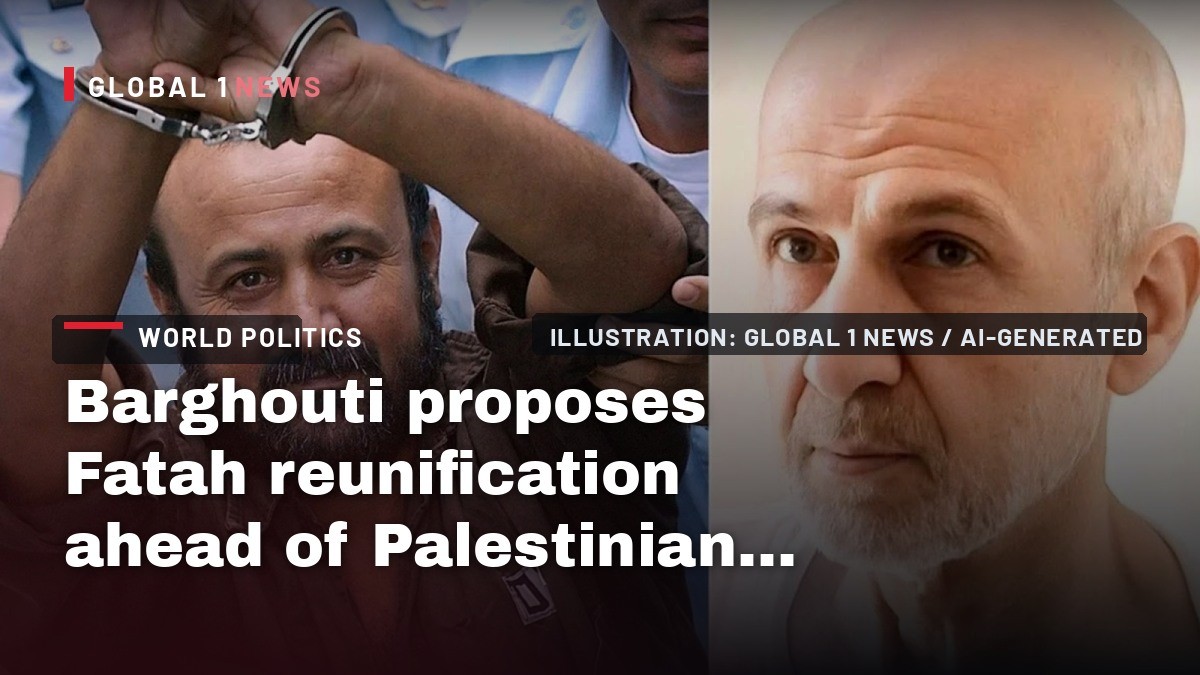
Imprisoned Fatah stalwart Marwan Barghouti has put forward a fresh appeal for unity within the movement as the Palestinian territories prepare for a crucial legislative election. The proposal, which seeks to bring together rival currents under a single, inclusive electoral list, was formally presented to Fatah’s Central Committee and Revolutionary Council, according to party official Ahmed Ghunaim. In a climate where internal fragmentation threatens to undermine the legitimacy of the upcoming vote, Barghouti’s overture carries both symbolic weight and practical implications for the future of Palestinian self‑governance.
Barghouti’s initiative: a call for a single, inclusive Fatah list
Barghouti’s plan calls for Fatah to contest the legislative elections on a unified slate that reflects the movement’s diverse internal currents. Rather than allowing a single faction to dominate the candidate roster, the proposal envisions a list that incorporates the official leadership, the Democratic Reform Current led by Mohammed Dahlan, and other affiliated groups. This approach, Ghunaim explained, is intended to “restore unity among Fatah’s different components” and to address past decisions that have led to the exclusion, marginalisation, or dismissal of members and prominent figures.
The emphasis on a single, inclusive list is significant because it seeks to present a coherent Palestinian voice to the electorate at a time when internal divisions could be exploited by external actors. By uniting the various strands of Fatah under one banner, the movement hopes to reinforce its claim to represent the broad spectrum of Palestinian society, from the West Bank to the diaspora, and to strengthen the legitimacy of any parliamentary outcome.
Procedural steps: submission to the Central Committee and Revolutionary Council
Ghunaim confirmed that Barghouti’s proposal has been formally submitted to the movement’s highest bodies – the Central Committee and the Revolutionary Council. These organs hold the authority to approve structural reforms and to set the strategic direction of the party. The submission marks the first official step in translating Barghouti’s vision from a prison‑based appeal into a concrete political agenda.
While the proposal does not impose a deadline or ultimatum, Ghunaim stressed that internal reconciliation must precede any decisions about the composition of the electoral list. He noted his personal commitment to the initiative but also expressed frustration at the lack of “clear practical steps” from the leadership to implement it. This tension underscores the delicate balance between aspirational unity and the entrenched rivalries that have characterised Fatah’s internal politics for years.
Historical context: past exclusions and marginalisation within Fatah
The call for unity is rooted in a history of internal disputes that have seen factions within Fatah feel sidelined. Ghunaim’s remarks reference “previous decisions that resulted in the exclusion, marginalisation or dismissal of members and prominent figures.” Such grievances have long simmered, particularly after the rise of the Democratic Reform Current, which has at times challenged the dominance of the traditional leadership.
These internal fractures have not only weakened Fatah’s organisational coherence but have also eroded public confidence in its ability to govern. By addressing past exclusions, Barghouti’s proposal seeks to heal wounds that could otherwise translate into voter apathy or splinter candidacies, both of which would dilute the movement’s electoral strength.
Implications for the upcoming legislative elections
The timing of the initiative is critical. Fatah is currently preparing for the legislative elections and has publicly affirmed its commitment to holding the vote as scheduled. The party’s willingness to consider a unified list suggests an awareness that a divided front could jeopardise its performance at the polls.
If the proposal gains traction, the resulting single list could streamline campaign messaging, reduce competition among Fatah candidates, and present a more compelling alternative to rival parties. Conversely, failure to reach consensus could lead to parallel lists, confusing voters and potentially splitting the Fatah vote, which would benefit opposition blocs and undermine the movement’s parliamentary influence.
Barghouti’s continued influence from prison
Barghouti’s ability to shape party discourse from behind bars highlights the enduring resonance of his political stature. According to Ghunaim, Barghouti communicated from prison that he would remain within Fatah’s official framework, signalling his commitment to the party’s institutional continuity. This stance reinforces his role as a unifying figure capable of bridging divides, even as he remains physically isolated.
The fact that his initiative is being taken seriously by senior party officials demonstrates the weight his voice carries among the rank‑and‑file. It also illustrates how Palestinian political leadership can operate across unconventional spaces, with incarcerated figures continuing to influence policy and strategy.
Challenges to implementation: leadership inertia and factional mistrust
Despite the proposal’s noble intent, Ghunaim admitted that he has yet to see “clear practical steps” from the movement’s leadership. This hesitation points to a broader challenge: translating a consensus‑building proposal into actionable reforms amidst entrenched factional mistrust. The Democratic Reform Current, for instance, has historically pursued an agenda that sometimes clashes with the traditional leadership’s priorities.
Moreover, the absence of a deadline or ultimatum in the proposal, while designed to avoid coercion, could also allow procrastination to stall progress. The success of the initiative will depend on whether senior leaders can move beyond rhetoric and enact concrete organisational measures that address the grievances highlighted by Barghouti’s plan.
International and legal dimensions: the stakes for Palestinian self‑determination
Beyond internal party dynamics, the unity of Fatah carries implications for the broader Palestinian quest for self‑determination. A cohesive Fatah list could strengthen the legitimacy of any legislative body elected under its banner, reinforcing the Palestinian Authority’s claim to represent the Palestinian people in negotiations and in international fora.
From an international‑law perspective, a unified Palestinian parliamentary representation bolsters the principle of popular sovereignty, a cornerstone of the right to self‑determination enshrined in UN resolutions. Conversely, a fragmented Fatah could be leveraged by occupying forces and external actors to argue that the Palestinian political system lacks the unity required for meaningful negotiations, thereby weakening the legal and moral weight of Palestinian claims on the world stage.
This article was produced with AI-assisted research and editorial support. Reporting is based on the source material cited below. Sources: Middle East Monitor; middleeastmonitor.com; Global1.News (25 September 2026).
By Fatima Al-Rashid, Staff Writer
What's Your Reaction?
 Like
0
Like
0
 Dislike
0
Dislike
0
 Love
0
Love
0
 Funny
0
Funny
0
 Wow
0
Wow
0
 Sad
0
Sad
0
 Angry
0
Angry
0
Gulf/MENA Correspondent at Global1.News. Based in Doha, covering Gulf politics, energy markets, diplomacy, and development across the Middle East and North Africa. Tracks the economic transformation of the Gulf states.











Comments (0)