
Kerala Landslides Expose India's Monsoon Preparedness Gap
Eight dead, eight missing and 13 injured as Kerala rains trigger landslides and flooding across the state. IMD orange alert for 12 districts; 5,792 evacuated to 209 relief camps. Analysis of preparedness gaps, public health risks and India's climate adaptation challenge.
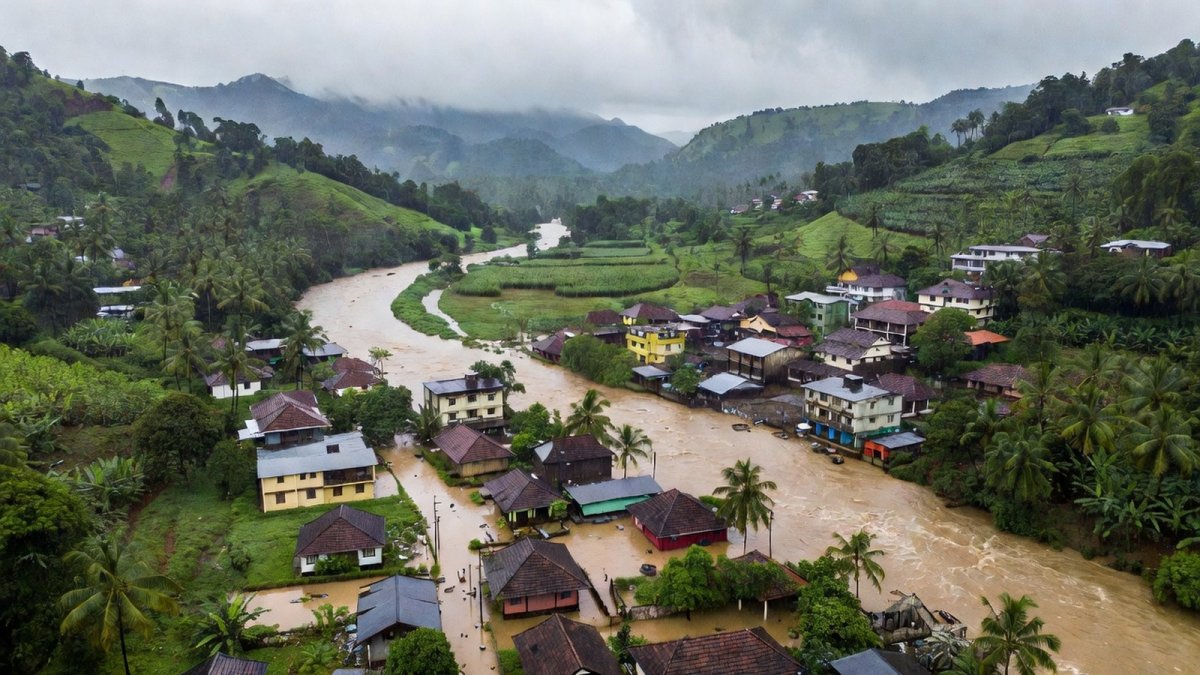
Kerala’s latest monsoon crisis has claimed eight lives, left eight people missing and injured 13 others as landslides and flash floods struck multiple districts on August 2, 2026. State authorities have evacuated 5,792 residents into 209 relief camps while 27 houses were destroyed and 196 sustained partial damage. The sudden escalation has once again tested the limits of India’s disaster response machinery in one of the country’s most flood-prone states.
Kerala Landslides Expose India's Monsoon Preparedness Gap
Thiruvananthapuram, Kerala – August 2, 2026 — Eight deaths and eight missing persons have been confirmed after intense rainfall triggered landslides and flooding across Kerala, forcing 5,792 people into relief camps and exposing persistent gaps in the state’s slope-stabilisation measures.
Immediate Human Toll and Relief Operations
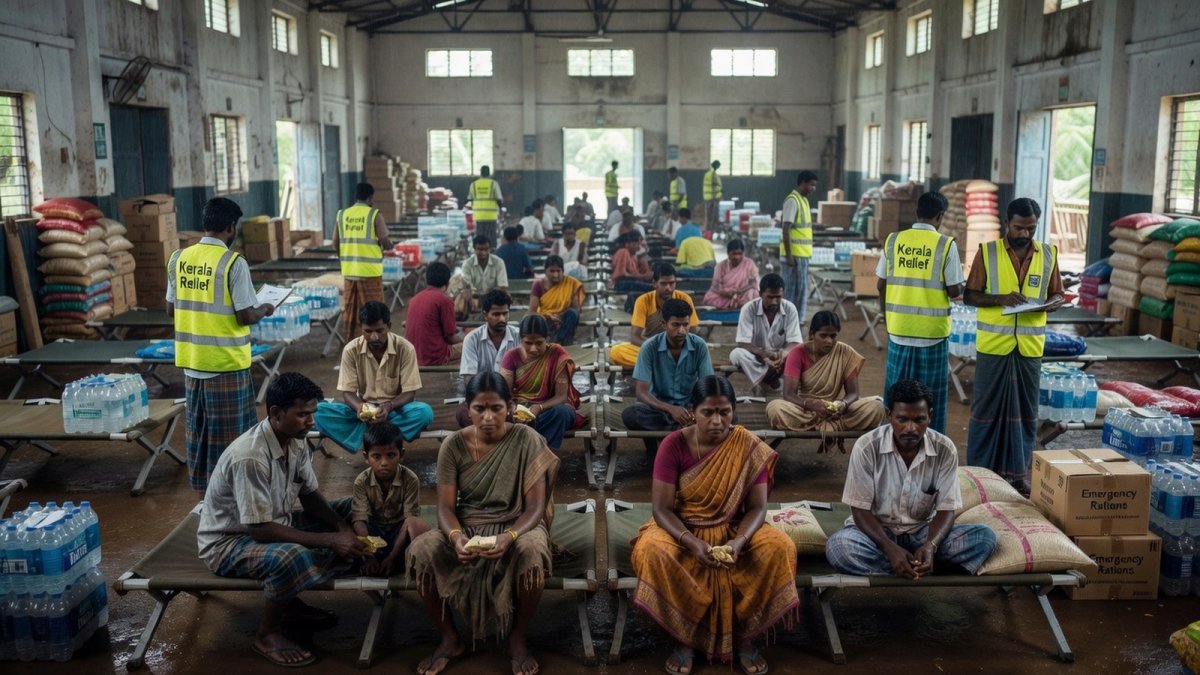
Kerala Chief Minister VD Satheesan confirmed on August 2, 2026, that eight people died, eight remained missing, and 13 sustained injuries after intense rainfall triggered landslides and flooding across multiple districts. Authorities shifted 5,792 residents into 209 relief camps, while 27 houses were completely destroyed and 196 suffered partial damage. Clean-up operations began as rainfall intensity eased, with the state government directing district administrations to coordinate with the Revenue Minister and local officials. The Chief Minister's Office stated that all necessary support would be extended and urged political workers and voluntary organisations to join the drive.
IMD Alert System and District-Level Warnings
The India Meteorological Department issued an orange alert for 12 districts—Pathanamthitta, Alappuzha, Kottayam, Ernakulam, Idukki, Thrissur, Palakkad, Malappuram, Kozhikode, Wayanad, Kannur and Kasaragod—indicating very heavy rainfall between 115.6 mm and 204.4 mm in 24 hours. A prior red alert covered eight of these districts, signalling extremely heavy rainfall exceeding 204 mm. Thiruvananthapuram and Kollam remained the only districts without alerts. District administrations in Wayanad, Kannur, Thrissur, Pathanamthitta, Kozhikode, Kottayam, Ernakulam and Malappuram declared a holiday for all educational institutions on August 2, while rain is forecast to continue until August 5.
The India Meteorological Department’s colour-coded alert framework operates on a tiered threshold system, with yellow indicating heavy rainfall of 64.5–115.5 mm in 24 hours that warrants basic preparedness, orange signalling very heavy rainfall between 115.6 mm and 204.4 mm that triggers heightened administrative readiness, and red denoting extremely heavy rainfall exceeding 204 mm that activates full-scale emergency protocols. This near-statewide coverage—12 of Kerala’s 14 districts—prompted district administrations to declare school holidays, illustrating how IMD alerts directly feed into the disaster management chain involving NDRF pre-positioning and Kerala State Disaster Management Authority activation.
The simultaneous alert status across 12 districts underscores the spatial scale of the monsoon system and the pressure it places on state resources. With rain forecast to persist until 5 August, coordination between the Chief Minister’s Office and district collectors has accelerated evacuation planning and camp setup. Historical comparison with 2018 shows faster translation of IMD warnings into ground-level action, yet the recurrence of extreme rainfall across such a broad area highlights the need for sustained investment in real-time data sharing between IMD, the National Disaster Management Authority and local bodies to minimise response lags.
Meteorological Drivers Behind the Sudden Onslaught
Kerala experienced a 34 percent monsoon rainfall deficit during June and July before an offshore trough combined with localised atmospheric depressions to produce extreme, concentrated precipitation. This pattern of prolonged dryness followed by intense bursts has strained the state’s drainage systems and increased slope instability in hilly regions. Officials have urged residents in vulnerable hilly areas to remain vigilant as the current spell persists.
Historical Pattern of Extreme Events in Kerala
The current crisis echoes the July 30, 2024 Wayanad landslides that killed more than 231 people and flattened Mundakkai and Chooralmala villages. Authorities have now banned entry to the Mundakkai-Chooralmala zone ahead of the second anniversary of that disaster. The 2018 Kerala floods, which claimed over 480 lives and displaced 1.4 million people, established the baseline for the state’s current disaster management protocols under the Kerala State Disaster Management Authority and the National Disaster Management Authority.
Disaster Preparedness and Early Warning Systems
Kerala’s framework integrates IMD forecasts with National Disaster Response Force deployments and district-level coordination through the Kerala State Disaster Management Authority. The rapid activation of relief camps and communication between the Chief Minister's Office and district administrations demonstrates improved early warning dissemination compared with 2018.
Kerala’s landslide early warning system combines Doppler radar rainfall estimates with a network of automated rain gauges feeding data into the State Emergency Operations Centre, enabling panchayat-level alerts when thresholds are crossed. Evacuation drills conducted in landslide-prone areas have improved community response times, yet the repeated activation of the same Mundakkai-Chooralmala terrain reveals persistent vulnerabilities tied to slope instability. The National Disaster Management Authority guidelines stress long-term slope stabilisation and regulated land use, but implementation gaps persist in ecologically sensitive zones of the Western Ghats.
Debate continues over recommendations from the Western Ghats ecology expert panel that called for stricter restrictions on construction and agriculture in high-risk panchayats. While early warning dissemination has demonstrably improved since 2018 through better integration of IMD forecasts with district coordination, the absence of comprehensive land-use enforcement leaves communities exposed. Strengthening these linkages between real-time alerts and preventive zoning remains essential for reducing future landslide casualties.
The speed of the state's response reflects lessons hard-learned over successive disasters. District collectors activated relief machinery within hours of the first orange alerts, and the Chief Minister's Office maintained direct contact with ministers in charge of each affected district throughout the crisis. The pattern of pre-positioned National Disaster Response Force teams, rapid camp registration and coordinated inter-agency communication that Kerala has built since 2018 is now regarded as a template by other flood-prone states, even as the underlying vulnerabilities of terrain, drainage and unregulated construction persist.
Public Health Risks in Relief Camps
With 5,792 people housed in 209 camps, health authorities have prioritised surveillance for leptospirosis and waterborne infections that followed the 2018 floods. Leptospirosis spreads through contact with floodwater contaminated by animal urine, prompting Kerala’s protocol of prophylactic doxycycline distribution to camp residents within 48 hours of exposure. District medical officers in Idukki, Wayanad and Malappuram, supported by primary health centres, are conducting daily symptom screening while ensuring chlorinated water supplies and sanitation facilities to curb secondary outbreaks of dengue, typhoid, hepatitis A and skin infections that historically emerged within days of displacement.
Mental health support for affected families is being integrated into camp management, recognising the psychological strain of repeated evacuations. The Ministry of Health’s directive emphasises continuous monitoring to prevent the crowded conditions that amplified post-2018 epidemics, with ICMR-linked laboratories on standby for rapid testing. This layered approach reflects Kerala’s matured post-flood disease surveillance system, though sustained funding for sanitation infrastructure remains critical to avoid recurrence of past outbreaks.
Implications for India's Climate Adaptation Policy
This event underscores the need for updated climate adaptation strategies that account for shifting monsoon patterns and increased extreme rainfall intensity. Extreme rainfall events have intensified with warming Arabian Sea temperatures, producing short-duration downpours that overwhelm drainage systems and trigger landslides. Agricultural losses, infrastructure damage and tourism disruption in Pathanamthitta, Wayanad and neighbouring districts are projected to run into thousands of crores, underscoring the economic case for shifting resources toward ecosystem restoration and resilient infrastructure.
The event also highlights the widening gap between India’s disaster response spending and mitigation investment under the National Disaster Mitigation Fund and State Disaster Mitigation Funds. National Disaster Management Authority guidelines advocate integrating climate projections into state land-use planning, yet current allocations still favour post-event relief over proactive measures. For Kerala, sustained funding for early warning upgrades and Western Ghats conservation will determine whether future monsoons generate comparable human and economic costs, aligning state policy more closely with emerging climate adaptation imperatives.
-- By Dr. Raj Patel, Staff WriterThis article was produced with AI-assisted research and editorial support. Reporting is based on sources cited in the article.
What's Your Reaction?
 Like
0
Like
0
 Dislike
0
Dislike
0
 Love
0
Love
0
 Funny
0
Funny
0
 Wow
0
Wow
0
 Sad
0
Sad
0
 Angry
0
Angry
0

India/South Asia Correspondent at Global1.News. Analytical voice with a background in science and health journalism. Based in New Delhi, covering Indian politics, education, healthcare, technology, and policy. Breaks down complex data into clear, actionable reporting.














Comments (0)