
Karnataka Directs Colleges to Run HIV Awareness Camps as Youth Infections Climb to 66,600
In the three months from April to June 2026, Karnataka tested 5,53,453 people from the general population for HIV and identified 3,091 positive cases, while screening 2,81,742 pregnant women and finding 111 positive results. These figures underscore why the Karnataka government has directed every government, aided and private engineering and degree college to organise Integrated Health Camps offering HIV awareness, counselling and voluntary testing. The directive from the Kar
In the three months from April to June 2026, Karnataka tested 5,53,453 people from the general population for HIV and identified 3,091 positive cases, while screening 2,81,742 pregnant women and finding 111 positive results. These figures underscore why the Karnataka government has directed every government, aided and private engineering and degree college to organise Integrated Health Camps offering HIV awareness, counselling and voluntary testing. The directive from the Karnataka State AIDS Prevention Society (KSAPS) targets rising infections among young people aged 18-35, where cases climbed from 44,500 in 2023-24 to 66,600 in 2025-26.
Karnataka Directs Colleges to Run HIV Awareness Camps as Youth Infections Climb to 66,600 in Key Age Group
New Delhi, India - August 3, 2026 -- The Karnataka government has ordered all engineering and degree colleges to conduct Integrated Health Camps that deliver HIV awareness sessions, confidential counselling and voluntary testing with informed consent. This step follows a formal recommendation from KSAPS and comes after Visvesvaraya Technological University (VTU) and the Department of Collegiate Education received instructions to implement the programme across government, aided and private institutions.
The Viral Claim and the Official Response
Social media posts and some media reports asserted that more than 7,000 students in Karnataka had tested HIV positive and that testing had been made compulsory. KSAPS Project Director Padma Basavanthappa, IAS, immediately labelled these claims false and misleading. The department does not categorise HIV data by occupation or student status, so no verified figure exists for HIV-positive students. The misinterpreted number stems from cumulative records of 39,028 HIV-positive individuals in the 18-35 age group since 2004. Health and Family Welfare Minister UT Khader reinforced this clarification on August 2, 2026, stating that the reports had generated unnecessary panic and stigma.
What the Data Actually Says
Karnataka holds the third-highest burden of people living with HIV in India after Maharashtra and Andhra Pradesh, according to the Sankalak: Status of National AIDS & STD Response 2024 report from the National AIDS Control Organisation (NACO). The state has approximately 2.6 lakh people living with HIV, of whom 2.05 lakh receive antiretroviral therapy while an estimated 54,000 remain unaware of their status. KSAPS records show the state detects 11,000 to 12,000 new cases annually. Only 12 per cent of people living with HIV voluntarily approach Integrated Counselling and Testing Centres (ICTC) on their own initiative.
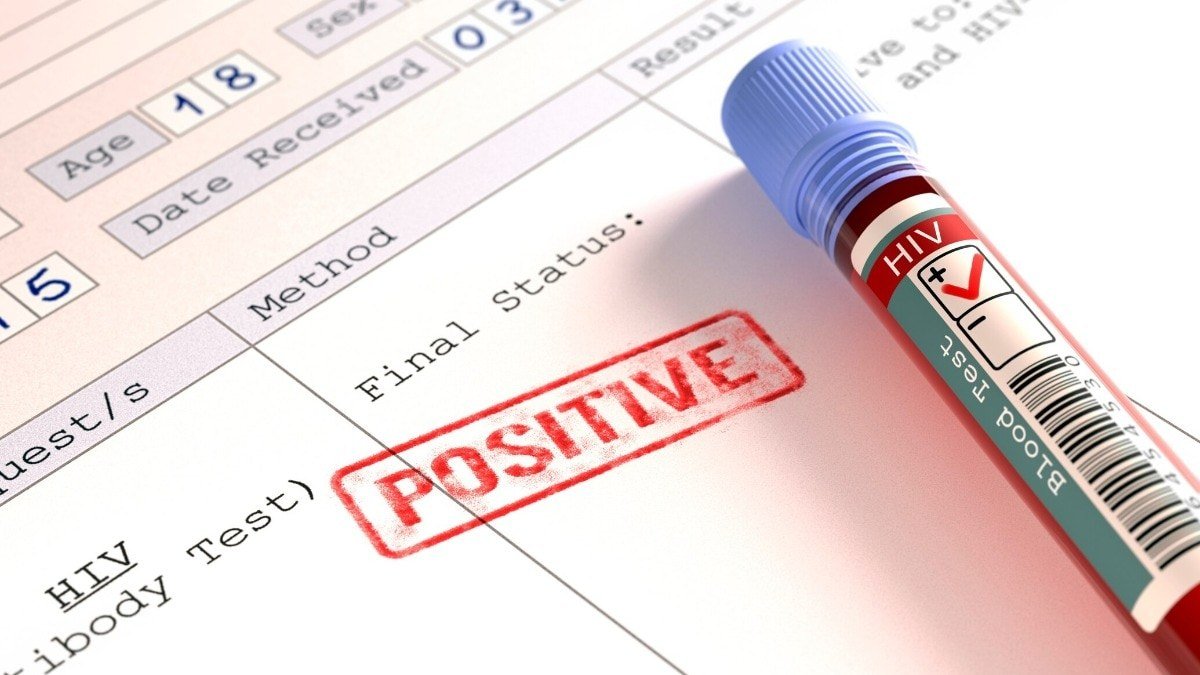
The April-June 2026 quarter recorded 5,53,453 general population tests yielding 3,091 positives alongside 2,81,742 pregnant women screened with 111 positives, producing 3,202 total detections. These figures, set against Karnataka's annual 11,000-12,000 new cases, reveal that routine surveillance captures only a fraction of transmission. The 12% voluntary testing rate among people living with HIV indicates the majority remain outside formal systems, sustaining a hidden reservoir that quarterly snapshots cannot fully illuminate.
Policy analysis shows the gap between detected and estimated cases widens when young adults avoid ICTCs due to perceived stigma. With 54,000 unaware individuals statewide, low voluntary uptake translates into delayed linkage, higher community viral load, and elevated long-term costs for both patients and the public exchequer. Data therefore underscore the need for proactive yet non-coercive outreach rather than reliance on self-initiated testing alone.
Why Colleges? The Policy Rationale
KSAPS identified changing social behaviour, including anonymous interactions through dating applications, as a factor complicating contact tracing among young adults. The University Grants Commission (UGC) and the Union Education Ministry have similarly directed states to expand HIV awareness in degree and technical institutions. By placing camps inside colleges affiliated with VTU and the Department of Collegiate Education, authorities aim to reach the 18-35 demographic where infections rose sharply to 66,600 cases in 2025-26. The eight-month Red Ribbon Awareness Campaign under the Mobilisation for AIDS Suraksha (MAS) programme specifically targets college students alongside other vulnerable groups.
VTU and the Department of Collegiate Education are executing the KSAPS request by embedding camps within degree and technical institutions, directly responding to the UGC and Union Education Ministry directive issued to all states. Campuses offer structured access to a mobile population whose dating-app interactions reduce the effectiveness of traditional contact tracing.
The eight-month MAS Red Ribbon campaign leverages existing college infrastructure to normalise confidential counselling before risk escalates. By situating services inside familiar environments, authorities lower logistical barriers that previously kept most young adults from ICTCs, aligning institutional reach with epidemiological need without violating consent requirements.
Voluntary Testing and the 2017 Act
The HIV and AIDS (Prevention and Control) Act, 2017, explicitly prohibits mandatory HIV testing and requires informed consent before any individual undergoes screening or begins treatment. While institutions must organise the camps, students retain the right to decline testing. KSAPS has promoted the Break Free mobile application, a confidential seven-question self-risk assessment tool that collects no personal data, and introduced a QR code-based HIV Self-Risk Assessment Tool for students. Those flagged at risk are advised to visit the nearest ICTC voluntarily. Around 23,000 people currently receive free treatment through KSAPS, with nearly 96 per cent achieving viral suppression.
The HIV and AIDS (Prevention and Control) Act 2017 mandates informed consent and prohibits compulsory testing, ensuring students retain the explicit right to decline. KSAPS has operationalised this through the Break Free app's seven-question confidential assessment that collects no personal identifiers and the accompanying QR-code tool, both designed to reduce stigma while guiding at-risk individuals toward voluntary ICTC visits.
Public-health reasoning emphasises that legal protections against coercion preserve trust essential for sustained engagement. With only 12% of positive individuals historically approaching centres independently, these digital entry points expand reach while respecting autonomy, thereby supporting higher diagnosis rates without triggering the panic that mandatory policies historically produced in other settings.
The 95-95-99 Roadmap and National Context
KSAPS's MAS campaign pursues 95-95-99 targets: 95 per cent of people living with HIV aware of their status, 95 per cent linked to treatment, and 99 per cent viral suppression to curb onward transmission. This aligns with the global UNAIDS 95-95-95 framework, though India's 2024 progress stood at roughly 81-88-86, with diagnosis remaining the largest gap. Nationally, India HIV Estimates 2023 recorded 68,500 new infections and 35,900 AIDS-related deaths, with 2.4 million people living with HIV overall. Early diagnosis enables prompt antiretroviral therapy, allowing individuals to reach undetectable viral loads and preventing transmission under the U=U principle.
India's 2024 progress of 81-88-86 against the 95-95-99 targets leaves diagnosis as the principal shortfall, mirroring Karnataka's experience where 54,000 remain unaware. National estimates of 68,500 new infections and 35,900 AIDS deaths in 2023 highlight that closing this gap is prerequisite for achieving 95% awareness and subsequent treatment linkage.
U=U messaging gains practical force once diagnosis occurs, converting undetectable viral loads into zero transmission risk. The diagnosis shortfall therefore carries measurable economic weight: each undetected case sustains onward infections that later require costlier interventions, underscoring why campus-based voluntary testing forms a rational component of the national roadmap.
What This Means for Indian Students, Patients and Taxpayers
Students in Karnataka's engineering and degree colleges now have structured access to confidential counselling and voluntary testing inside familiar campus environments, reducing barriers that previously kept only 12 per cent of positive individuals from seeking care independently. For patients, linkage to the 2.05 lakh already on antiretroviral therapy demonstrates that timely diagnosis leads to viral suppression rates of 96 per cent. Taxpayers fund these services through the state health framework and NACO-supported programmes, making efficient case detection essential to controlling long-term treatment costs. The policy also reinforces India's broader commitment under the HIV and AIDS (Prevention and Control) Act, 2017, to protect rights while expanding prevention in the education sector.
Early detection through campus camps lowers lifetime ART expenditure by enabling prompt enrolment, as evidenced by the 2.05 lakh already on treatment statewide. NACO-supported ICTC networks and PMTCT screening of 2,81,742 pregnant women yielding only 111 positives demonstrate scalable prevention when testing reaches at-risk groups before symptoms appear.
Taxpayers finance these programmes; efficient case finding therefore reduces aggregate treatment costs while protecting future productivity of the 18-35 cohort. For students, confidential access inside colleges removes geographic and psychological hurdles that previously limited voluntary uptake to 12%, converting public investment into measurable reductions in new infections and mother-to-child transmission.
Expert and Official Perspectives
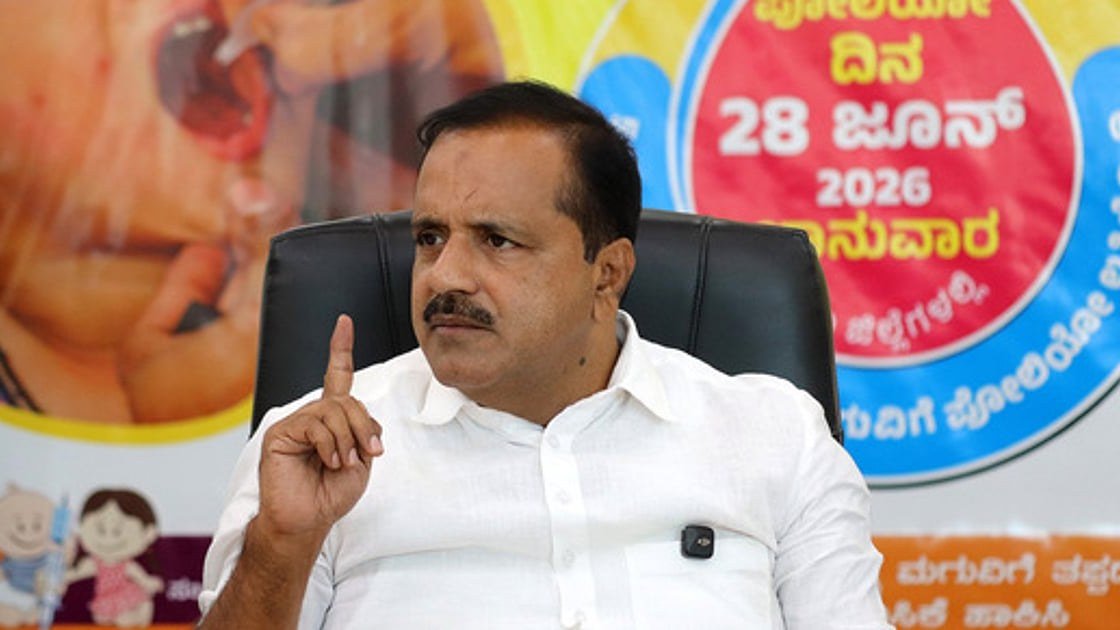
Padma Basavanthappa has emphasised that the absence of student-specific statistics prevents panic-driven narratives and keeps focus on evidence-based outreach. Minister UT Khader highlighted that the Red Ribbon Awareness Campaign encourages use of the Break Free platform rather than coercive measures. Public health messaging from KSAPS and NACO consistently stresses that unprotected sexual contact remains the primary transmission route, alongside mother-to-child transmission and contaminated needles or blood products. These messages are now being delivered directly to the age group showing the steepest recent rise in infections.
The Bottom Line
Karnataka's college-based Integrated Health Camps represent a targeted response to verified increases in HIV among young adults, grounded in the legal protections of the 2017 Act and aligned with national 95-95-99 goals. By correcting misinformation about 7,000 students and publishing precise quarterly testing data of 5,53,453 general population tests and 3,091 positive results, authorities aim to replace stigma with voluntary participation. The success of this effort will be measured by how many of the estimated 54,000 unaware individuals in the state come forward for confidential ICTC testing and achieve the viral suppression already attained by 96 per cent of those on treatment.
Correcting misinformation about student-specific figures enables focused implementation of the MAS campaign and Break Free tools, directly supporting measurable gains toward 95-95-99. When the estimated 54,000 unaware individuals access voluntary ICTC services, viral suppression rates already achieved by 96% of those on treatment can extend to new cohorts, lowering both incidence and long-term fiscal burden.
Success will be quantified by increased voluntary participation and reduced annual detections within the 18-35 group, confirming that evidence-based, consent-driven outreach outperforms panic-driven narratives in delivering sustainable public-health outcomes.
-- By Dr. Raj Patel, Staff Writer
This article was produced with AI-assisted research and editorial support. Reporting is based on sources cited in the article.
What's Your Reaction?
 Like
0
Like
0
 Dislike
0
Dislike
0
 Love
0
Love
0
 Funny
0
Funny
0
 Wow
0
Wow
0
 Sad
0
Sad
0
 Angry
0
Angry
0

India/South Asia Correspondent at Global1.News. Analytical voice with a background in science and health journalism. Based in New Delhi, covering Indian politics, education, healthcare, technology, and policy. Breaks down complex data into clear, actionable reporting.














Comments (0)