
5.3 Earthquake Rocks Egypt Near Suez, Tremors Felt Across the Middle East
Folks, if you felt the ground move under your feet in the middle of the night — you're not imagining things. A magnitude 5.3 earthquake ripped through northeastern Egypt in the early hours of Monday, August 3, 2026, and the shake didn't stop at the border. From Cairo to the eastern Mediterranean.
Folks, if you felt the ground move under your feet in the middle of the night — you're not imagining things. A magnitude 5.3 earthquake ripped through northeastern Egypt in the early hours of Monday, August 3, 2026, and the shake didn't stop at the border. From Cairo to the eastern Mediterranean, from the banks of the Nile to the shores of the Levant, millions of people felt it — and millions more went straight to Google to ask one question: "earthquake near me?"
5.3 Earthquake Rocks Egypt Near Suez, Tremors Felt Across the Middle East
Cairo, Egypt — A powerful earthquake struck northeastern Egypt in the predawn hours Monday, rattling nerves from the Red Sea coast to the eastern Mediterranean — and sending search engines into overdrive across the region. Here is everything we know right now, and what it means for a region that can't afford to sleep through a wake-up call.
What We Know Right Now
The United States Geological Survey (USGS) recorded the quake at magnitude 5.3, with an epicenter roughly 41.2 kilometers (25.6 miles) north-northeast of the city of Suez — the industrial hub and port city that guards the southern mouth of the Suez Canal. The tremor struck at approximately 3 a.m. local time, with the European-Mediterranean Seismological Centre (EMSC) clocking the event at 00:00:34 UTC at a depth of 10 kilometers (6.2 miles).
Initial estimates varied — the Egyptian Gazette's preliminary reporting suggested a higher magnitude of 5.7, and EMSC's own instrumentation logged 5.2 — but the USGS figure of 5.3 has become the working number for emergency responders and international agencies alike. What nobody disputes is this: the ground moved, hard, and it moved through one of the most strategically important corners of the planet.
The Epicenter: A Critical Corner of the Region
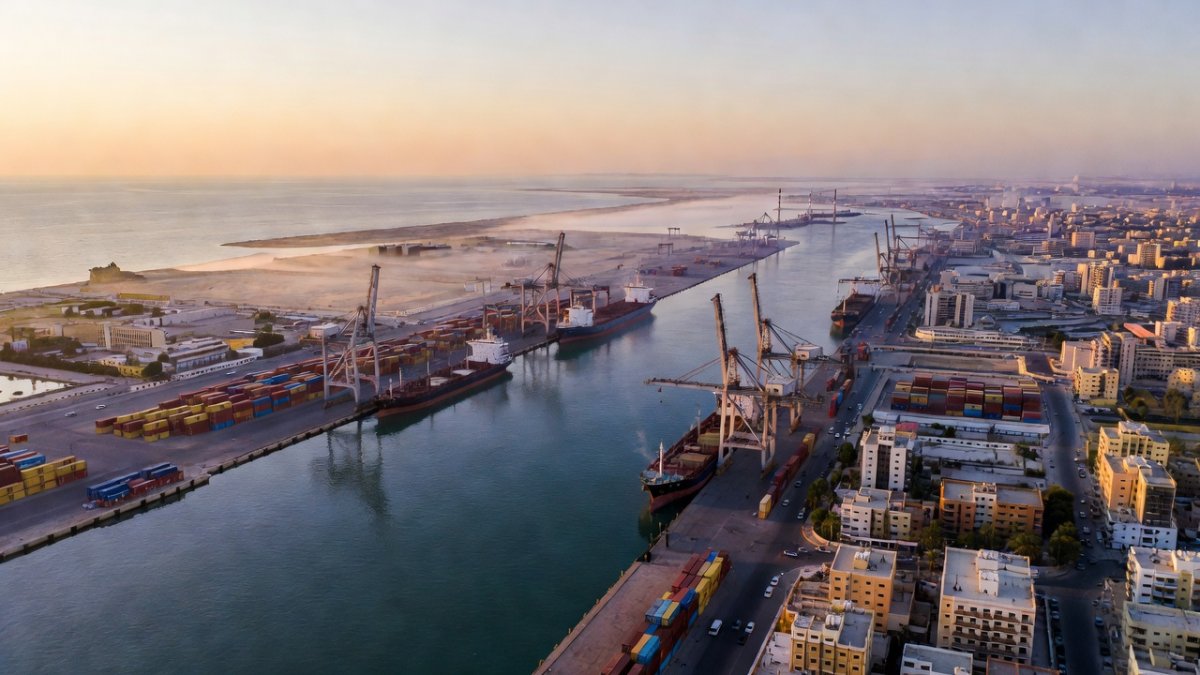
Let's be clear about what sits near that epicenter. Suez is not just another city on a map. It's the seaport at the southern terminus of the Suez Canal — the 120-mile waterway that carries roughly 12 percent of global trade and connects the Mediterranean to the Red Sea. When the ground shakes near Suez, the entire global supply chain holds its breath.
The quake's shallow depth — 10 kilometers — is worth flagging. Shallow earthquakes transfer more energy to the surface than deep ones. A 5.3 at that depth in a densely built urban corridor is the kind of event that seismologists watch closely, even when initial damage reports come back clean.
Felt Across Borders: From Cairo to the Levant
Here's where this story gets regional. The Egyptian Gazette reported that tremors were felt across Egypt, Palestine, Cyprus, Saudi Arabia, Jordan, Lebanon, and Syria. That's a shockwave spanning the eastern Mediterranean and the Levant — a reminder that geology doesn't care about borders, checkpoints, or ceasefires.
The public reaction was immediate and digital. Google Trends data showed a massive spike in "earthquake near me" searches in Israel and the Palestinian territories in the hours after the quake — with traffic surging past 5,000 searches in Israel alone. In Lebanon, searches for weather and political terms were eclipsed by seismic anxiety. When the ground shakes in the Middle East, the entire neighborhood reaches for their phones before they reach for anything else.
That reaction is understandable, because this is a region that lives with tectonic tension every single day. Israel and Jordan sit astride the Dead Sea Transform — the major fault system running from the Red Sea up through the Dead Sea and into Turkey, marking the boundary between the Arabian and African plates. Israeli authorities have spent years building earthquake preparedness programs and regional alert systems precisely because the next big one could come at any moment. When a 5.3 rocks Suez at 3 a.m., every country in the neighborhood runs the same mental calculation: how close was that, and when is the bigger one coming?
The Global Trade Angle: All Eyes on the Canal
Now let's talk about why this earthquake matters far beyond the eastern Mediterranean. That epicenter, 41 kilometers from Suez, sits in the backyard of one of the most important pieces of infrastructure on Earth. The Suez Canal is the 120-mile shortcut that connects the Mediterranean Sea to the Red Sea, separating Africa from Asia and carrying roughly 12 percent of global trade through its waters. Nearly 20,000 vessels transit it every year — tankers, container ships, bulk carriers, all of them moving between Europe, Asia, and the Gulf.
We all remember what happened in March 2021, when the container ship Ever Given ran aground and blocked the canal for six days. That single accident snarled global supply chains for months, cost billions in delayed cargo, and showed the entire world just how dependent the global economy is on this one strip of water. So when the ground shakes near Suez, commodity traders and shipping executives don't ask "was anyone hurt?" first — they ask "is the canal okay?"
As of the early reports, the answer is: no immediate disruption reported. The Egyptian Red Crescent confirmed no injuries or damage in the quake's aftermath, and there were no immediate reports of shipping delays through the canal. But the episode is a stark reminder that the world's supply chains run through one of the most seismically active and politically volatile regions on the planet — and that a 5.3 today could be a 6.5 tomorrow.
No Injuries Reported — But Officials Aren't Relaxing
The good news, and let's lead with it: the Egyptian Red Crescent reported no injuries or damage in the immediate aftermath, according to Anadolu Agency. But "no reports" in the first hours of a predawn quake is not the same as "all clear" — and Egyptian authorities know it.
The Health Ministry activated its emergency plan within hours of the tremor, putting hospitals and field response teams on standby across the affected governorates. That's the right call. In the 1992 Cairo earthquake — the one that killed more than 540 people and injured thousands — the worst images came not from the initial shock, but from the panic, the collapsing older buildings, and the chaos that followed. Egypt has been here before, and it is not taking chances this time.
Why This Region Shakes: The Gulf of Suez Rift Explained
For the folks asking why Egypt — a country most people associate with deserts and pyramids, not fault lines — can produce a 5.3 earthquake, here's the science. Northeastern Egypt sits within an active extensional tectonic zone driven by the Gulf of Suez rift, a geological feature that has been pulling the crust apart for millions of years. The same forces that opened the Red Sea and created the Gulf of Suez are still at work today, building stress in the crust until something gives.
Seismologists classify Egypt as a "moderate" seismic zone — not California, not Japan, but far from immune. The Gulf of Suez and the eastern Mediterranean have generated destructive earthquakes throughout recorded history. When the USGS published its own geological studies of the region, it noted that northeastern Egypt's contemporary setting is governed "in large part" by active extensional tectonics within the Gulf of Suez rift. Translation: this is not a freak event. It's a region that stores seismic energy — and occasionally, it releases it.
A History Lesson Egypt Can't Forget
Egypt's modern seismic memory begins with October 12, 1992. A magnitude 5.8 earthquake — only half a point stronger than Monday's tremor — struck near Dahshur, about 35 kilometers south of Cairo, in the middle of the afternoon. More than 540 people were killed, over 6,500 were injured, and tens of thousands were left homeless when poorly constructed buildings collapsed like cards.
That quake was a national trauma and a national wake-up call. It led to stricter building codes, seismic retrofitting programs, and a permanent national emergency response apparatus. Monday's 5.3 near Suez is a direct test of everything Egypt has built since 1992 — and so far, by the early reports, the system held. No injuries. No collapse reports. Emergency plans activated before panic could set in. That is what progress looks like, even when the ground tries to remind you who's really in charge.
What Happens Next
Here's the part where I level with you: a 5.3 magnitude quake is almost always followed by aftershocks. Seismologists will be watching the Gulf of Suez region closely over the next 48 to 72 hours, and residents across Egypt and the Levant should expect the ground to keep talking. Most aftershocks are smaller — but they can still rattle already-frayed nerves and trigger damage in structures weakened by the main event.
For now, the region dodged a bullet. No deaths, no reported injuries, no canal disruption reported. But this earthquake is a flashing red reminder of three things. One: the Middle East sits on active geology that doesn't care about diplomacy. Two: infrastructure built before modern codes — in Egypt, in Lebanon, in Syria, in Gaza — remains dangerously exposed. And three: when the ground shakes in the eastern Mediterranean, the ripple effects travel further and faster than any shockwave. From global shipping lanes to regional search engines, everyone feels it.
Stay safe out there, folks. Check on your neighbors. And if you live in a seismically active zone — whether that's the Nile Delta or the San Andreas — make sure your emergency kit is stocked and your family knows the plan. The ground doesn't give warnings. But we can be ready anyway.
By Jessica Ali, Staff Writer
This article was produced with AI-assisted research and editorial support. Reporting is based on sources cited in the article.
What's Your Reaction?
 Like
0
Like
0
 Dislike
0
Dislike
0
 Love
0
Love
0
 Funny
0
Funny
0
 Wow
0
Wow
0
 Sad
0
Sad
0
 Angry
0
Angry
0

Editor-in-Chief at Global1.News. Atlanta-based journalist who cuts through the BS and tells it like it is. Lead anchor, host, and the voice you hear when the spin stops and the truth starts.













Comments (0)