
Israeli Forces Raid Wedding Hall in al-Eizariya, Arrest Groom Amid West Bank Escalation
In a recent Middle East Eye report, video footage showed Israeli forces storming a wedding hall in the town of al-Eizariya, east of occupied Jerusalem, firing live ammunition and sound bombs, and assaulting guests in the middle of a celebration.
In a recent Middle East Eye report, video footage showed Israeli forces storming a wedding hall in the town of al-Eizariya, east of occupied Jerusalem, firing live ammunition and sound bombs, and assaulting guests in the middle of a celebration. The raid, reported on August 14, 2026, resulted in the arrest of several people, including the groom, and has drawn renewed attention to the escalating violence and collective punishment that Palestinians face in the occupied West Bank. The incident is not an isolated one, but rather a stark illustration of a broader pattern of military raids, settler attacks, and systemic displacement that the United Nations has warned is pushing the territory to a breaking point.
Israeli Forces Raid Wedding Hall in al-Eizariya, Arrest Groom Amid West Bank Escalation
al-Eizariya, occupied East Jerusalem – August 14, 2026 — The celebration turned to chaos when Israeli forces entered a wedding venue in al-Eizariya, a Palestinian town in the Jerusalem Governorate that borders East Jerusalem. The Middle East Eye video, which has been widely circulated on social media, shows soldiers moving through the hall as guests scatter, with the sound of stun grenades and live fire ringing out. According to the video description and corroborating regional reports, forces used pepper spray, assaulted attendees, and made several arrests — including the groom, whose name has not been released.
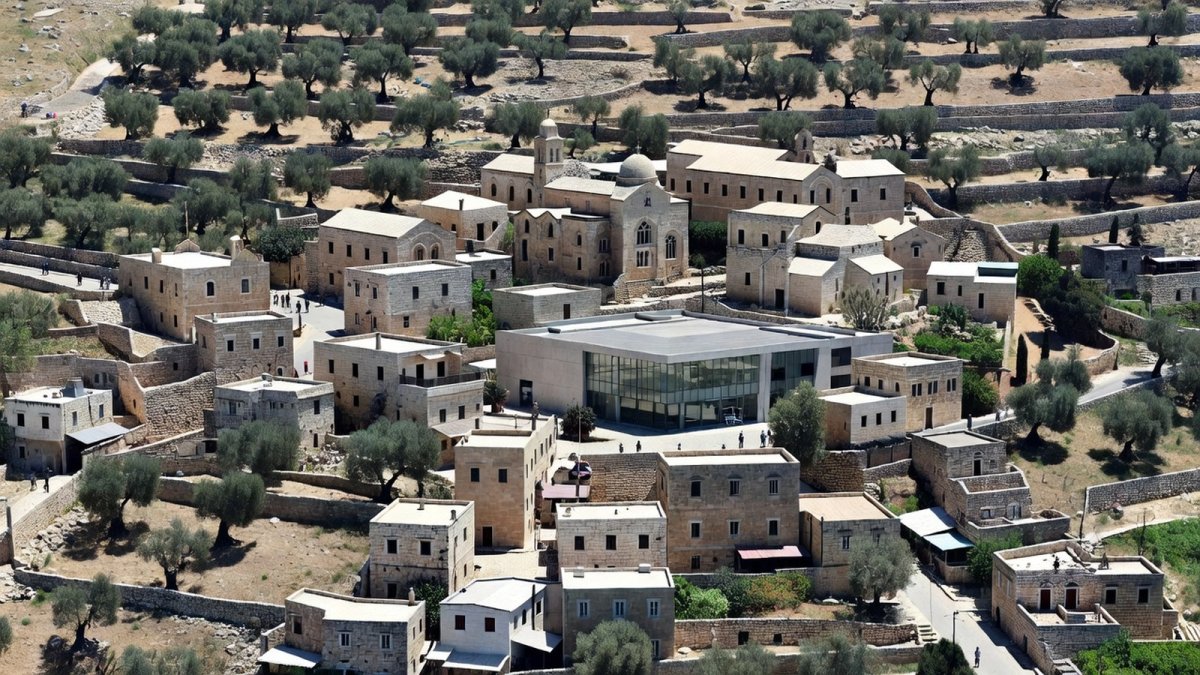
Al-Eizariya, known in biblical tradition as Bethany, is a town of deep historical and religious significance, home to both Christian and Muslim Palestinian communities. It sits in the shadow of the large Israeli settlement of Ma'ale Adumim, one of the largest settlements in the occupied West Bank, and has long been a flashpoint for land confiscation and military incursions. Friday's raid, however, struck at the heart of a communal ritual — a wedding — and has left residents shaken and angry.
A Wedding Interrupted: What the Footage Shows
The Middle East Eye video description states that forces “assault people inside” the hall, and corroborating regional reports describe soldiers firing live ammunition, launching sound bombs, using pepper spray against guests, and arresting several attendees, including the groom. The video, which was widely circulated on social media, has been verified by regional outlets covering the occupied West Bank, though the Israeli military had not issued a statement about the raid as of this writing. Figures on the total number of arrests were not immediately available beyond the confirmation of the groom's detention.
The raid fits a documented pattern of military operations that target Palestinian communal spaces. In January 2025, Israeli forces stormed a wedding hall in Hebron and held the groom, according to the official Palestinian news agency WAFA. In June 2026, the Israeli army arrested a groom, his father and his brother during a wedding raid in Anata, northeast of occupied Jerusalem, as reported by Middle East Monitor.
The choice of a wedding hall as a target is particularly jarring, but it is not unprecedented, and residents say these incidents point to a deliberate tactic of disruption that extends beyond security operations into the realm of collective punishment.
West Bank at a 'Breaking Point'
The al-Eizariya raid comes at a time when the United Nations has issued stark warnings about the state of the occupied West Bank. On August 12, 2026, Al Jazeera reported that the UN had declared the territory at a "breaking point," citing a surge in military raids, settler violence, and home demolitions. In the two days preceding the wedding raid, Israeli forces arrested at least 23 Palestinians and demolished several homes across the West Bank, including the residence of Farouq Ramadan, one of four Palestinians killed during a confrontation with Israeli settlers on July 24, 2026. Two Israelis were also killed in that incident, which has fueled calls for revenge from far-right elements of the Israeli government.
The demolition of Ramadan's home is part of a broader pattern of punitive house demolitions, a practice that human rights organizations have long condemned as a form of collective punishment under international law. According to UN figures, Israel has demolished an average of 122 Palestinian buildings every month this year, a rate that has accelerated dramatically since October 2023. These demolitions are not limited to the homes of alleged attackers; they also target structures built without Israeli-issued permits, which are nearly impossible for Palestinians to obtain, as well as entire communities in areas designated for settlement expansion.
For residents of al-Eizariya, the raid on the wedding hall is a reminder that no space is safe. The town, which sits in an area under full Israeli military control in the occupied West Bank, has experienced night raids on homes and shops for years; the intrusion into a wedding celebration marked a new threshold for many who spoke with regional media after the attack.
Settler Violence on the Rise: A Trajectory of Impunity
The context of the wedding raid is inseparable from the surge in settler violence that has gripped the West Bank. According to data from the UN Office for the Coordination of Humanitarian Affairs (OCHA) and the Office of the High Commissioner for Human Rights (OHCHR), released on July 29, 2026, settler attacks have increased each year since 2023, rising to 1,835 attacks in 2025. In the first four months of 2026, there were approximately 190 attacks per month, putting the year on track to exceed 2,000 attacks by December.
The human cost of this violence is staggering. As of July 20, 2026, 18 Palestinians had been killed this year in attacks involving settlers. Nearly 700 Palestinians in nine West Bank communities have been displaced by settler attacks in the first four months of the year, according to OHCHR. July 2026 was, jointly with March 2026, the deadliest month for Palestinians in incidents involving settlers since October 2023, according to an OCHA report published on July 31, 2026.
These attacks are not random acts of violence; they are often carried out with the tacit support or active participation of Israeli security forces. In many cases, settlers are armed, and soldiers are present but do not intervene. The result is a climate of impunity that has emboldened extremists and left Palestinian communities defenseless. The UN has documented numerous instances where settlers, sometimes masked and armed, have attacked villages, burned fields, and forced families to flee, often with military escorts.
International Condemnation and Empty Warnings
The international community has responded with statements of concern, but little concrete action. OHCHR spokesperson Ravina Shamdasani warned of "open calls by Israeli leaders for revenge and collective punishment against Palestinian communities, accompanied by threats to turn the West Bank into another Gaza." Her words echo the fears of many Palestinians who see the tactics used in Gaza — mass displacement, indiscriminate bombing, and starvation — being replicated in the West Bank, albeit at a slower pace.
Ramiz Alakbarov, the UN Deputy Special Coordinator for the Middle East Peace Process, called the loss of life "deeply alarming" and urged Israel to hold perpetrators of settler violence accountable. He also noted that Israeli Finance Minister Bezalel Smotrich, a far-right settlement advocate, had recently approved several new settlements, which Alakbarov called "illegal under international law." Smotrich's approval of new settlements is a direct challenge to the international consensus that settlements are a major obstacle to peace and a violation of the Fourth Geneva Convention.
The legal framework for these condemnations is clear. In July 2024, the International Court of Justice (ICJ) issued an advisory opinion ruling that Israel's occupation of Gaza, East Jerusalem, and the West Bank since 1967 is illegal. The court called for an end to the occupation and for the dismantlement of settlements. Israel condemned the ruling, and the international community has largely failed to enforce it. For Palestinians, the ICJ opinion is a moral victory but a practical irrelevance, as the occupation continues to deepen with no end in sight.

Daily Life Under Siege: Fuel Shortages and Economic Strangulation
Beyond the immediate violence of raids and demolitions, Palestinians in the West Bank are grappling with a slow-motion economic crisis that is strangling daily life. A separate Middle East Eye report from August 2026 detailed severe fuel shortages across the territory. Demand for fuel is approximately 4 million liters per day, while the normal supply is around 3 million liters. On one day, deliveries reportedly fell to just 1 million liters, causing long queues at gas stations and crippling transportation, agriculture, and emergency services.
The fuel crisis is rooted in a 1994 economic agreement, signed as part of the Oslo Accords, which locks Palestinians into buying fuel only from Israeli suppliers. This arrangement gives Israel near-total control over the Palestinian energy supply, a leverage point that has been used repeatedly to exert pressure. In addition, Israeli banks have limited cash flows back to Palestinian banks, creating a liquidity crunch that has made it difficult for businesses to pay workers and for families to access their savings.
The economic strangulation is a form of collective punishment that rarely makes headlines but has a devastating impact on Palestinian society. Hospitals struggle to keep generators running, farmers cannot transport their produce, and families are forced to choose between heating and eating. The combination of military violence, settler attacks, and economic siege is designed to make life so unbearable that Palestinians will leave voluntarily — a policy that human rights groups have labeled as a form of forced displacement.
An Election-Year Escalation
The escalation in the West Bank comes as Israel prepares for a parliamentary election in October 2026. The political calendar is not coincidental. Far-right parties, including those led by Smotrich and National Security Minister Itamar Ben-Gvir, have made settlement expansion and a hardline security posture central to their campaigns. The violence in the West Bank serves their political interests, demonstrating to their base that they are delivering on promises of "security" and "sovereignty."
For Palestinian leaders, the election is a reminder that the international community's focus on Israeli domestic politics often comes at the expense of Palestinian rights. Far-right parties have historically used West Bank operations to demonstrate strength to their base, and Palestinian analysts have repeatedly warned that the rhythm of violence accelerates around Israeli election cycles.
The timing of the wedding raid, just two months before the election, suggests that the Israeli military is operating with an eye toward domestic political considerations. Raids that produce dramatic footage of soldiers "taking on" Palestinian militancy are popular with a segment of the Israeli electorate, even when they target civilians at a wedding. The result is a cycle of violence that serves no one's interests except those who benefit from perpetual conflict.
A Community in Mourning, A People in Resistance
In al-Eizariya, the aftermath of the raid is a mix of shock, anger, and defiance. The wedding hall now stands as a symbol of the occupation's reach into every aspect of Palestinian life, and local residents have called on human rights organizations to document the incident. The groom, whose name has not been released, remains in detention, and his family has appealed publicly for information about his condition.
The raid has also reignited debates about the effectiveness of the Palestinian Authority, which has limited control over parts of the West Bank but no authority in areas under full Israeli military control, where al-Eizariya is located. Many Palestinians see the PA as a subcontractor of the occupation, unable or unwilling to protect them from Israeli violence. The result is a growing sense of abandonment, not just by the international community, but by their own leadership.
Yet, despite the despair, there is also resilience. The wedding raid, like the settler attacks and the demolitions that precede it, has been met with a determination to stay. In interviews with regional media, residents have said the occupation cannot stop them from living, from rebuilding, or from celebrating their weddings — no matter how many halls are raided or grooms detained.
The situation in the West Bank is a test of the international community's commitment to human rights and international law. The warnings from the UN, the rulings of the ICJ, and the reports of human rights organizations have all been clear. The question is whether the world will act, or whether it will continue to watch as the West Bank is slowly dismantled, wedding by wedding, home by home, life by life.
By Fatima Al-Rashid, Staff Writer
This article was produced with AI-assisted research and editorial support. Reporting is based on sources cited in the article.
What's Your Reaction?
 Like
0
Like
0
 Dislike
0
Dislike
0
 Love
0
Love
0
 Funny
0
Funny
0
 Wow
0
Wow
0
 Sad
0
Sad
0
 Angry
0
Angry
0

Gulf/MENA Correspondent at Global1.News. Based in Doha, covering Gulf politics, energy markets, diplomacy, and development across the Middle East and North Africa. Tracks the economic transformation of the Gulf states.













Comments (0)