
Israel's Syria Strike Nearly Triggered Direct Military Confrontation with Türkiye, US Envoy Reveals
US envoy Tom Barrack reveals Israel's Aug. 18 strike on Syria's Abu al-Duhur air base nearly triggered a direct clash with Turkiye as jets flew within 80km of the border without warning, exposing a dangerous rivalry over post-Assad Syria.
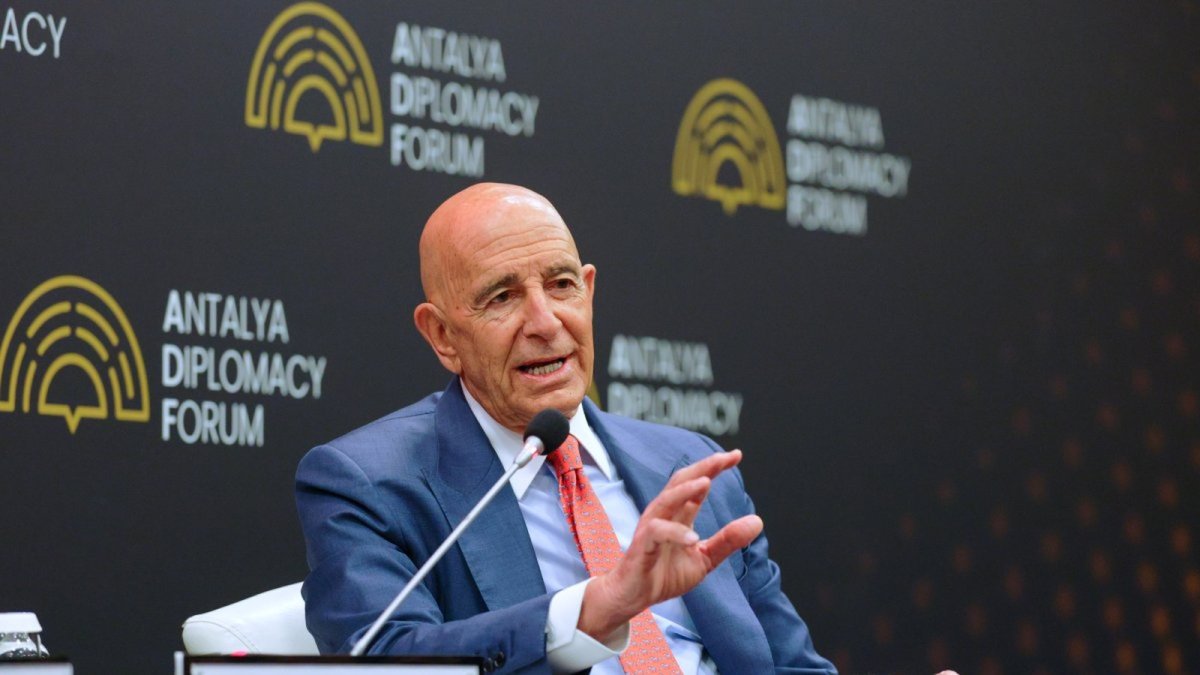
The thin line between strategic competition and open conflict in the Middle East was nearly crossed on Aug. 18, when Israeli jets struck the Abu al-Duhur air base in northwestern Syria — coming within roughly 80 kilometers of the Turkish border without a single word of advance warning to Ankara. The revelation, delivered by U.S. Ambassador to Türkiye and Special Envoy to Syria Tom Barrack in a PBS NewsHour interview, exposes a volatile triangle of competing interests where Washington's two most important regional partners are now circling each other over the future of post-Assad Syria.
Israel's Syria Strike Nearly Triggered Direct Military Confrontation with Türkiye, US Envoy Reveals
Istanbul, Türkiye – Aug. 22, 2026 — The airstrike that damaged runways at Abu al-Duhur was not merely another chapter in Israel's long-running campaign inside Syria. According to Barrack, it was a moment where miscalculation could have produced a direct dogfight between the Israeli Air Force and the Turkish military — two of the most capable air powers in the region, both nominally allied with Washington.
Five Days of Diplomacy, One Hour of Kinetic Action
The sequence of events leading to the strike reveals a breakdown that Barrack described as either a serious communications failure or something far more deliberate. For five days before the attack, Israel had communicated concerns to Washington and Damascus that Türkiye might be moving military personnel or equipment onto the Abu al-Duhur facility. Washington checked its own intelligence and concluded no such deployment was taking place. Syrian Foreign Minister Asaad al-Shaibani and Mossad chief David Barnea even engaged in a two-hour backchannel conversation to address Israeli concerns directly.
Despite those assurances, Israeli aircraft appeared anyway. "It came 80 kilometers to their border without notification. Israeli jets," Barrack said. Türkiye detected the approaching aircraft but could not determine their purpose or target. With the Turkish military potentially forced to respond, the situation raised the possibility of a direct clash between Israeli and Turkish aircraft. Barrack offered two explanations: a breakdown in communication between Mossad, the Israeli military and Prime Minister Benjamin Netanyahu's office — or, as he put it, "the Israelis were baiting the Turks." He declined to say which he believed.

The T4 Precedent: A Pattern of Preemptive Strikes
This was not the first time Israeli jets have targeted a Syrian air base to block Turkish military expansion. In the spring of 2025, Turkish teams inspected the T4 base at Tiyas in Homs province and the main military airport in Hama as Ankara considered a possible defense agreement with Damascus. A second inspection of T4 was scheduled for March 25, 2025 — but Israeli aircraft struck both bases just hours before the Turkish delegation was due to arrive. Israel later struck T4 again in early April.
Israeli concern then, as now, centered on the possibility that Türkiye could deploy air defense systems and drones at these facilities, giving Ankara greater control over Syrian airspace and restricting Israeli operations. The confrontation over T4 eventually pushed Israel and Türkiye to establish a communication channel in 2025 to prevent accidental collisions in Syria. The Abu al-Duhur strike suggests that channel has not resolved the underlying dispute. Former Turkish ambassador Cengiz Kamil Fırat called the latest attack "quite reckless" given its proximity to the border, describing it as part of a broader escalation. "There's an escalation, there's an aggressive behavior coming from the Israeli side with actions, not only words, but actual actions," he told i24NEWS.
Israel's 'Clear Line of Sight to Iran' Doctrine
At the heart of Israeli strategy is a doctrine Barrack articulated plainly: Israel views Syrian airspace as providing a "clear line of sight to Iran." Jerusalem wants Syrian territory kept free of military systems that could threaten its ability to operate against Iranian targets across the region. This explains why Israel launched hundreds of strikes after the Assad regime collapsed in December 2024, destroying aircraft, missiles, naval assets and air defense systems it feared could fall into hostile hands.
The concern is less about Syria's immediate ability to attack Israel and more about what a rebuilt Syrian military could become — particularly if Türkiye plays a central role in its reconstruction. A Turkish presence involving radar, aircraft or air defense systems could restrict the Israeli Air Force's freedom of maneuver over Syria. Israeli analysts describe the calculus in similar terms. Hay Eytan Cohen Yanarocak, an expert on Turkey at Tel Aviv University's Moshe Dayan Center, told The Jerusalem Post that Israel is "not interested" in clashing with Turkey and is "doing everything possible to keep Turkey away from its borders" — while warning that the "geographical contiguity between Turkey and Syria" makes a direct clash harder to avoid the longer Turkish forces remain embedded in the north.
Türkiye's 'One State, One Army' Vision
Ankara's position is rooted in a fundamentally different strategic calculus. Türkiye has emerged as the most important external supporter of Syria's new leadership, signing a memorandum on joint military training and consultancy with Damascus on Aug. 13, 2025. Turkish officials describe the assistance as covering training, technical assistance and reciprocal visits aimed at strengthening Syria's defense capacity — all provided at the request of the Syrian government and intended to reinforce the country's unity and territorial integrity.
Türkiye's Defense Ministry has denied that any Turkish military delegation was at Abu al-Duhur before or during the attack, and both Ankara and Damascus have rejected plans for a Turkish base or permanent military presence there. Yet the principle Ankara articulates — "one state, one army" — signals an ambition to help shape Syria's new political and military order. Barrack acknowledged this growing influence should not automatically be viewed as a threat. "Türkiye's going into a new powerful mode, which makes everybody nervous, but it's a great thing for Türkiye," he said, describing the country as a strategically important hub linking Europe, the Middle East, Central Asia and the Mediterranean.
The Danger of Miscalculation Between Two US Allies
The most dangerous dimension of this rivalry is that it involves two of Washington's key regional partners, each with powerful militaries and neither willing to back down. Barrack noted that Türkiye detected the approaching Israeli aircraft but did not know their purpose or target — a situation where the Turkish military could "reasonably have prepared its own response." In a separate Reuters interview, he said "thankfully, calm heads were able to prevent the situation from deteriorating further."
Barrack called the strike an "unnecessary escalation that does not advance regional stability" and urged Israel to communicate with Türkiye before conducting operations close to the border. "Israel is smart. They have one of the best intelligence organizations in the world," he said. "The way to handle that is just have a discussion with Türkiye on a backchannel or front channel, rather than taking independent action." The rhetoric between Ankara and Jerusalem has intensified since the strike, with Netanyahu's office directing accusations at Erdoğan and Türkiye's Communications Directorate rejecting the remarks as lacking "historical facts and political seriousness." Barrack dismissed much of the hostile rhetoric as politics, noting Israel is in an election cycle.
What Each Side Wants — And the Road Ahead
The strategic competition over Syria's future is now defined by overlapping but incompatible goals. Israel wants to preserve its freedom to strike Iran and prevent military threats from emerging in Syria — a doctrine that treats Syrian airspace as a corridor for its operations. Türkiye wants to maintain influence over its southern neighbor and has its own security interests in shaping Syria's new political and military order. Both sides say they do not want a direct military conflict, but their communication channel has not resolved the fundamental disagreement over Türkiye's military role in Syria or the capabilities Damascus should be allowed to rebuild.
Barrack's prescription is straightforward: "Lower the temperature, increase the dialogue, increase the discourse, and avoid these abrupt kinetic action." He wants the competing interests addressed through diplomacy rather than military surprises, arguing that Ankara has a powerful military and air force and could interpret an unexpected Israeli operation as a direct threat. The United States, he said, wants to bring the parties "back to a table where you can all sit down and talk." Whether that table can be assembled before another 80-kilometer close call becomes a direct collision remains the central question for a region where the margin for error is shrinking by the day.
This article was produced with AI-assisted research and editorial support. Sources: Daily Sabah, Hurriyet Daily News, PBS NewsHour, Reuters, i24NEWS, The Jerusalem Post, To Vima.
By Malik Hassan, Staff Writer
What's Your Reaction?
 Like
0
Like
0
 Dislike
0
Dislike
0
 Love
0
Love
0
 Funny
0
Funny
0
 Wow
0
Wow
0
 Sad
0
Sad
0
 Angry
0
Angry
0

Middle East Correspondent at Global1.News. Based in Beirut, covering politics, conflict, energy, and society across the Middle East. Brings context and depth to a region often reduced to headlines.











Comments (0)