
From Ashes to Operations: The Rubble-Built WFP Headquarters in Deir al-Balah
In the battered landscape of the central Gaza Strip, where the ceasefire holds but the scars of war remain omnipresent, a quiet act of defiance and ingenuity is taking shape.
In the battered landscape of the central Gaza Strip, where the ceasefire holds but the scars of war remain omnipresent, a quiet act of defiance and ingenuity is taking shape. As Arab capitals debate multi-billion-dollar reclamation plans and international donors wrangle over funding mechanisms, Palestinian engineers in Deir al-Balah have demonstrated a more immediate, ground-level solution: constructing a functional headquarters for the World Food Programme (WFP) from the very rubble of the homes destroyed in the October 2023 war. This is not merely a logistical feat; it is a strategic statement about Palestinian agency, the economics of scarcity, and the fragile politics of reconstruction under a closed blockade.
From Ashes to Operations: The Rubble-Built WFP Headquarters in Deir al-Balah
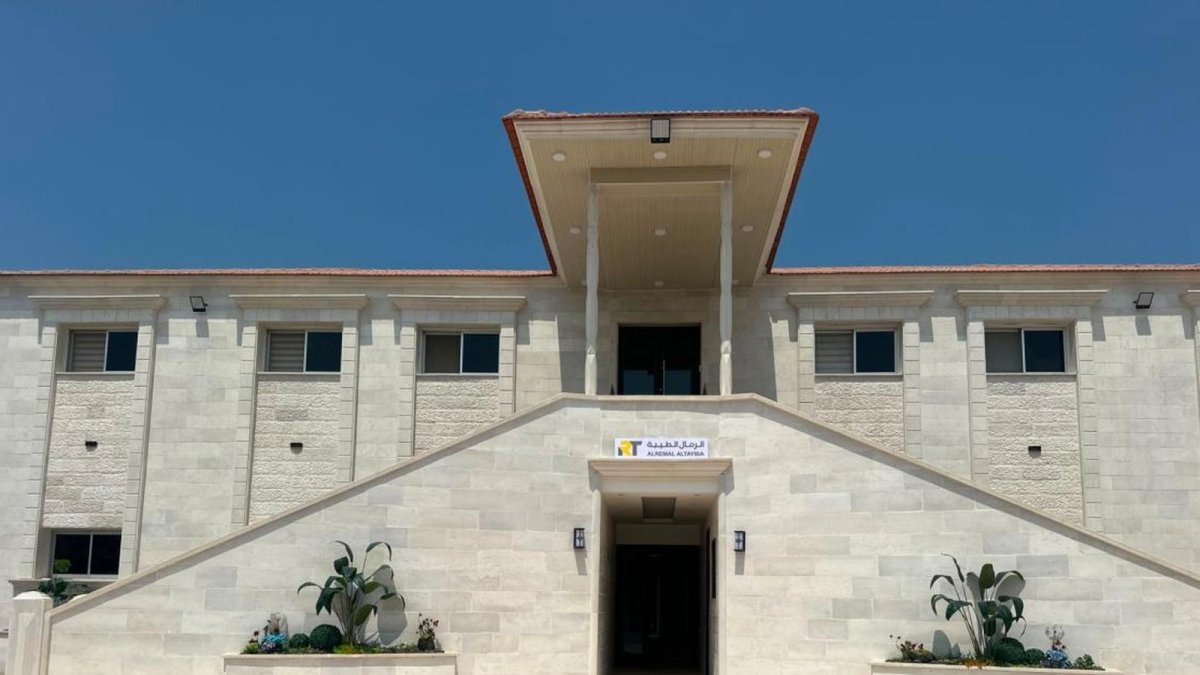
Deir al-Balah, Gaza Strip - August 22, 2026 - In a strip of land where nearly 57 million tonnes of pulverized concrete and twisted steel now define the topography, a two-story building stands as a testament to what local expertise can achieve against overwhelming odds. The Al-Rimal Al-Tayba Company, a Palestinian logistics firm, has completed a headquarters for the World Food Programme using a steel frame and materials sourced partly from the debris of destroyed buildings. The project, which took approximately four months to complete, represents a novel approach to emergency infrastructure in a territory where traditional construction materials remain inaccessible due to the ongoing Israeli blockade.
The Engineering of Survival: A Masterclass in Adaptive Construction
The project, supervised by engineer Awni Sharaf, is a study in meticulous resourcefulness. Rather than clearing the massive foundations of bombed-out structures—a process that would require heavy machinery and fuel in short supply—Sharaf's team reused existing foundations from destroyed structures. They installed a steel ground beam, lower and upper supports, and a steel-framed first floor, creating a structural skeleton that is both robust and, crucially, demountable. The roof was built with galvanized "Zinco" metal panels, a material that has become a staple of emergency shelter in Gaza, while the exterior facades were finished with Jerusalem stone, a portion of which was collected from the rubble of bombed homes and purchased from their owners.
This is not accidental aesthetics. The use of Jerusalem stone—a symbol of Palestinian heritage and architectural identity—carries a deliberate weight. It transforms debris from a symbol of loss into a component of functional dignity. Internally, the building includes insulation against moisture, a critical feature in Gaza's coastal climate where humidity and winter rains can quickly degrade poorly constructed shelters. The result is a facility that is not a temporary tent or a prefabricated container, but a proper headquarters capable of housing the administrative and logistical operations of one of the world's largest humanitarian agencies.
The "Mechanical Construction" Model: A Bridge to Recovery or a Stopgap?
Younis Majdi Abu Muailaq, executive director of Al-Rimal Al-Tayba, describes the approach as "mechanical construction"—a model that could provide a foundation for recovery while traditional materials remain inaccessible. His company has prepared approximately 30 dunams as a storage and logistics system, with warehouses covering more than 10 dunams dedicated to food storage, alongside truck and vehicle facilities. This is not a small-scale operation; it is a fully integrated logistics hub designed to support the massive humanitarian enterprise currently sustaining Gaza's population.
Abu Muailaq is careful, however, to frame this achievement within its limits. "This model is a rapid emergency solution," he emphasizes, "but it cannot replace opening the crossings, allowing construction materials to enter, and restoring supply chains for sustainable reconstruction." This is a crucial distinction. The rubble-built WFP headquarters is a testament to Palestinian ingenuity, but it is also a mirror reflecting the failure of the international community and the Israeli government to facilitate a proper reconstruction pipeline. The building is designed to be dismantled in the future and reused—an admission that it is a temporary measure, a placeholder for a more permanent solution that remains politically elusive.
The Rubble Economy: 57 Million Tonnes of Potential and Politics
The Deir al-Balah project sits at the intersection of a much larger and more contentious issue: the fate of Gaza's rubble. According to UN News reporting from May 14, 2026, nearly 57 million tonnes of rubble now litter the Strip, with three-quarters of Gaza's built environment destroyed. This is not merely a cleanup problem; it is a strategic resource. The United Nations Environment Programme (UNEP) has cautioned that recycled debris can supply only approximately 10 million cubic metres of the roughly 200 million cubic metres of aggregates needed for the Cairo Arab summit reclamation plan, which aims to restore 14 square kilometres of land. The math is stark: even with maximal recycling efforts, Gaza faces a massive shortfall in construction materials.
This scarcity has created a new and unseemly competition. Israeli companies are reportedly vying for contracts to process and profit from Gaza's rubble, raising questions about who will control the narrative and economics of reconstruction. Meanwhile, the UN is studying proposals to build artificial islands off Gaza's coast using recycled debris—a concept that, while innovative, carries significant environmental, security, and sovereignty implications. The rubble, in other words, is not just debris; it is a geopolitical asset, a bargaining chip, and a potential source of conflict in its own right.

WFP's Humanitarian Lifeline: Feeding a Starving Population
Amidst this complex rubble economy, the WFP's operational needs are immense and urgent. The agency reports reaching more than 1 million people per month in Gaza, a staggering figure that underscores the scale of the humanitarian catastrophe. Yet even this massive operation is insufficient: 77 percent of the population still faces crisis-level food insecurity, a statistic that speaks to the depth of the deprivation caused by nearly three years of war and blockade. The WFP has issued an urgent appeal for US$426 million to cover its operations from July to December 2026—a sum that, while significant, represents a fraction of the overall reconstruction needs.
The Deir al-Balah headquarters is therefore not a luxury; it is a critical piece of infrastructure enabling this lifeline. The warehouses, the truck facilities, the administrative space—all are essential for coordinating the distribution of food to a population on the brink. The fact that this facility was built from rubble is a double-edged sword: it demonstrates the WFP's commitment to working with local partners and adapting to conditions on the ground, but it also highlights the absurdity of a situation where a UN agency must rely on salvaged debris to house its operations in the 21st century.
The Crossings Calculus: Blockade Economics and the Politics of Entry
The fundamental constraint on all reconstruction efforts in Gaza remains the crossings. The Israeli closure, which has been in place with varying degrees of severity since the war began, has created a severe shortage of construction materials. Cement, steel, glass, and even basic tools are either unavailable or priced at astronomical levels on the black market. The rubble-built WFP headquarters is a workaround, but it is not a solution. Abu Muailaq's point is clear: the "mechanical construction" model can keep the humanitarian system functioning, but it cannot rebuild Gaza's schools, hospitals, and homes.
The blockade economics are brutal. Every tonne of material that enters Gaza is subject to Israeli security scrutiny, political calculation, and bureaucratic delay. The result is a system where the most basic inputs for reconstruction are weaponized, and where the Palestinian population is forced to cannibalize its own destroyed infrastructure just to survive. The Deir al-Balah project is a microcosm of this dynamic: it is a triumph of local ingenuity, but it is also a damning indictment of the international community's failure to compel Israel to open the crossings and allow for a genuine reconstruction effort.
Regional Implications: Ceasefire Stability and the Arab Diplomatic Role
The success of the WFP headquarters project has implications that extend far beyond the boundaries of Deir al-Balah. In the context of the fragile ceasefire, the ability to demonstrate tangible progress—even on a small scale—is crucial for maintaining stability. If Palestinians see that reconstruction is possible, even in limited forms, it reduces the desperation that fuels extremism and violence. Conversely, if the reconstruction process stalls entirely, the ceasefire itself becomes untenable.
The Arab role is central to this calculus. The Cairo Arab summit's reclamation plan, which envisions restoring 14 square kilometres of land, represents a significant diplomatic investment in Gaza's future. But the gap between the plan's ambitions and the on-the-ground reality—where recycled debris can only supply 5 percent of the needed aggregates—is a potential source of embarrassment and frustration for Arab leaders. The Deir al-Balah project offers a template for a more pragmatic, phased approach: use local resources and expertise to build what can be built now, while simultaneously pressuring Israel to allow the import of materials for the larger reconstruction effort.
Regional Implications: The Strategic Calculus of Rubble and Sovereignty
There is a deeper strategic dimension to this story that should not be overlooked. The competition among Israeli companies over Gaza's rubble is not merely about profit; it is about control over the physical remnants of Palestinian society. Who processes the rubble, who profits from it, and who decides what is rebuilt and where are all questions of sovereignty. The UN's study of artificial islands from recycled debris adds another layer of complexity, raising questions about Gaza's maritime boundaries, fishing rights, and long-term territorial integrity.
For the Palestinians, the rubble-built WFP headquarters is a small but significant assertion of agency. It says: we are not passive victims waiting for others to rebuild us; we are active participants in our own recovery. This is a narrative that resonates far beyond Gaza, in the broader Palestinian struggle for self-determination. It also sends a message to the international community: the capacity and the will to rebuild exist, but they require the political conditions—namely, an end to the blockade and a genuine commitment to reconstruction—to be fully realized.
Regional Implications: The Path Forward
As the ceasefire enters its second year, the window for meaningful progress is narrowing. The WFP's US$426 million appeal is a test of international commitment, but it is only a down payment on the billions needed for full reconstruction. The Deir al-Balah headquarters is a reminder that even in the most dire circumstances, human ingenuity can produce functional solutions. But it is also a warning: without a political breakthrough on the crossings and a sustained commitment from the international community, the rubble economy will continue to define Gaza's existence, and the "mechanical construction" model will remain a permanent emergency rather than a bridge to recovery.
The Palestinians of Deir al-Balah have shown what is possible with steel, stone, and determination. The question now is whether the international community—and Israel—will allow them to move beyond survival and toward a genuine, sustainable reconstruction. The answer to that question will determine not only the fate of Gaza's built environment, but the stability of the entire region.
By Malik Hassan, Staff Writer
This article was produced with AI-assisted research and editorial support. Reporting is based on sources cited in the article.
What's Your Reaction?
 Like
0
Like
0
 Dislike
0
Dislike
0
 Love
0
Love
0
 Funny
0
Funny
0
 Wow
0
Wow
0
 Sad
0
Sad
0
 Angry
0
Angry
0

Middle East Correspondent at Global1.News. Based in Beirut, covering politics, conflict, energy, and society across the Middle East. Brings context and depth to a region often reduced to headlines.














Comments (0)