
Democrats oppose plan to stack FCC with Republicans, plan probes of Chairman Carr
Senate Democrats on Tuesday slammed President Trump’s nomination of Danielle Thumann Severs to the Federal Communications Commission, arguing the move is a partisan grab during a lame‑duck window that should be left to the incoming Democratic majority in January 2027.
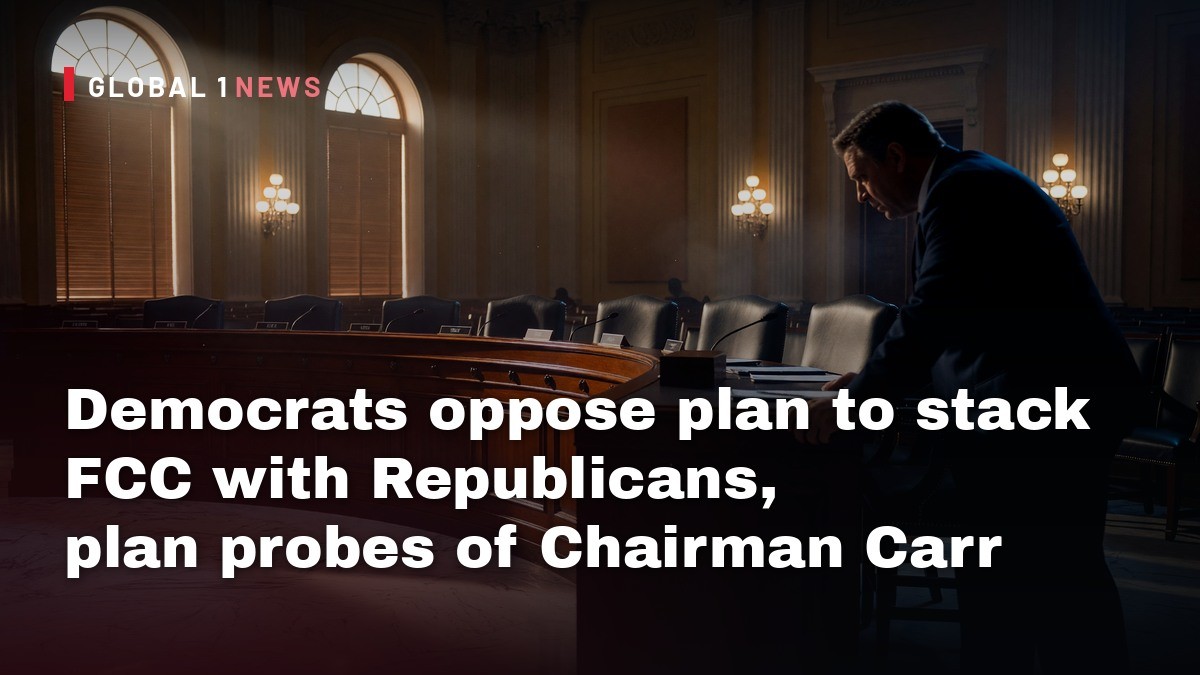
Senate Democrats on Tuesday slammed President Trump’s nomination of Danielle Thumann Severs to the Federal Communications Commission, arguing the move is a partisan grab during a lame‑duck window that should be left to the incoming Democratic majority in January 2027. The hearing on the Commerce, Science & Transportation Committee turned into a blunt showdown, with senior Democrats demanding clarity on the nominee’s ties to FCC Chairman Brendan Carr and on policy issues that could reshape the nation’s communications landscape.
Democrats frame the nomination as a partisan power play
Senator Ed Markey (D‑Mass.) opened the hearing by invoking the recent “overwhelming” rejection of the MAGA agenda by voters, insisting there is “no justification for this committee to advance partisan nominees during the lame‑duck period.” He positioned the vote as a test of whether the Senate will allow a Republican‑dominated FCC to push through an agenda that, in Democrats’ view, threatens independent regulation.
Markey’s remarks echoed a broader Democratic narrative: that the Trump administration is attempting to cement a three‑to‑one Republican majority on the FCC, a body that traditionally operates with a 3‑2 split to preserve bipartisanship. If Severs is confirmed, the GOP would control all three commissioner seats needed for a quorum, leaving only one Democratic commissioner, Anna Gómez, whose term ends in 2027. Democrats warned that the administration could then fire Gómez, effectively silencing the lone Democratic voice on the commission.
Senators question Severs on Carr’s controversial media tactics
Senator Ben Ray Luján (D‑N.M.) seized on the nominee’s close relationship with Carr, asking directly, “Do you support Chairman Carr’s illegal campaign to remove Jimmy Kimmel from the nation’s airwaves?” Severs replied that she has not advised Carr on media‑related topics and declined to identify any specific policy disagreements with him. The exchange highlighted the tension over Carr’s past attempts to pressure broadcasters, including a 2025 incident where he threatened to revoke ABC’s broadcast licenses unless the network took action against comedian Jimmy Kimmel.
Senator Tammy Duckworth (D‑Ill.) pressed Severs further, warning that a confirmation would place the nominee in a position to decide whether the FCC remains an “independent regulator, or becomes an arm of the White House press office.” Duckworth underscored the stakes, noting that the FCC’s independence is crucial for protecting the First Amendment and preventing political interference in media markets.
The E‑Rate program becomes a flashpoint
Beyond the nominee’s loyalty to Carr, Democrats zeroed in on policy, especially the future of the E‑Rate program—a congressional initiative that subsidizes broadband for schools and libraries. The program, valued at roughly $2 billion a year, has become a target for Carr, who has floated eliminating or scaling it back. Severs admitted she helped draft the FCC’s Notice of Proposed Rulemaking on E‑Rate, which seeks public comment on the agency’s authority to modify or eliminate the program.
Senator Markey pressed her on whether the FCC can unilaterally cut E‑Rate, and Severs responded that she “can’t prejudge the open proceeding” at this stage. Duckworth countered, asserting that any move to dismantle E‑Rate would require congressional approval and would be ill‑timed amid soaring gas, grocery, and utility costs that already strain school budgets.
Procedural tactics: racing the clock before the Democratic takeover
Committee Chairman Sen. Ted Cruz (R‑Tex.) is pushing to approve Severs before the Republican Senate majority ends in January 2027. The hearing’s timing—just days before the Senate’s lame‑duck session—signals a strategic push to lock in a Republican‑friendly commission before Democrats can block further appointments. The Senate’s rules require three commissioners for a quorum, and with Severs confirmed, the GOP would hold a 3‑0 majority, effectively sidelining the lone Democrat.
Democrats warned that this maneuver undermines a long‑standing Senate practice of pairing Republican and Democratic nominees for FCC seats, a tradition meant to preserve the agency’s bipartisan character. Sen. John Hickenlooper (D‑Colo.) reminded the committee that the Communications Act bars a single party from holding more seats than necessary for a majority, hinting that the administration could be violating statutory norms if it proceeds unchecked.
Potential investigations loom under a Democratic Congress
Looking ahead, Senate Democrats signaled they will use their upcoming majority to launch investigations into Chairman Carr’s conduct. Luján warned that Carr will face “subpoena authorities” and “multiple testimonies a month” once Democrats control both chambers. He suggested that Carr’s tenure could be limited to “three or four months” before the new Congress forces him to answer for alleged “nonsense and the cover‑ups” taking place at the FCC.
Markey echoed this sentiment, accusing Carr of using regulatory authority to intimidate broadcasters, and framing the upcoming probes as a necessary check on what Democrats describe as an “illegal campaign” against media figures. The prospect of heightened oversight adds pressure on the administration to secure Severs’ confirmation before the Democratic majority can intervene.
Implications for media consolidation and free speech
Senators across the aisle warned that a fully Republican‑controlled FCC could accelerate media consolidation, a trend that threatens a diverse press landscape. Hickenlooper emphasized that a bipartisan commission is essential to “avoid large‑scale media consolidation” and to protect a “free and diverse press.” He warned that without a Democratic voice, the FCC could become a tool for partisan agenda‑setting, undermining the agency’s foundational independence.
Critics also pointed to Carr’s prior threats to broadcasters as evidence that the FCC could be weaponized against dissenting voices. The potential elimination or scaling back of E‑Rate would further limit access to broadband for schools and libraries, disproportionately affecting low‑income communities and narrowing the public’s ability to receive diverse information sources.
What comes next: the confirmation timeline and political calculus
Following the hearing, nominees have until November 16 to respond to additional questions submitted by senators. The committee must vote on Severs before Thursday, after which the full Senate will consider her confirmation. If approved, the GOP would secure a 3‑0 majority on the FCC, setting the stage for possible dismissal of Commissioner Gómez and a shift toward a more partisan regulatory agenda.
Democrats, meanwhile, are preparing to leverage their 2027 majority to scrutinize Carr’s actions, protect the E‑Rate program, and restore a bipartisan balance at the commission. The coming weeks will determine whether the lame‑duck push succeeds or whether the incoming Democratic Congress can reassert its oversight, preserving the FCC’s independence and, by extension, the broader principle of a free and diverse media environment.
This article was produced with AI-assisted research and editorial support. Reporting is based on the source material cited below. Sources: Ars Technica; arstechnica.com; Global1.News (11 November 2026).
By Jessica Ali, Staff Writer
What's Your Reaction?
 Like
0
 Dislike
0
 Love
0
 Funny
0
 Wow
0
 Sad
0
 Angry
0

Editor-in-Chief at Global1.News. Atlanta-based journalist who cuts through the BS and tells it like it is. Lead anchor, host, and the voice you hear when the spin stops and the truth starts.















Comments (0)