
Iran Missiles Hit Korean Ship HMM Namu: Seoul's Diplomatic Tightrope
South Korea confirmed on May 27 that Iranian-made Noor anti-ship missiles struck the Korean-operated cargo ship HMM Namu in the Strait of Hormuz on May 4, summoning Tehran's ambassador. Analysis of Seoul's balancing act between Washington and Tehran amid the ongoing Hormuz crisis.
[Seoul, South Korea – August 15, 2026] — The attack on the Korean-operated cargo vessel HMM Namu in the Strait of Hormuz on May 4, 2026, has evolved from a maritime security incident into a defining test of South Korean statecraft. When First Vice Foreign Minister Park Yoon-joo stood before reporters on May 27 to announce that technical analysis had concluded the vessel was struck by "likely Noor-series anti-ship missiles developed by Iran," Seoul crossed a diplomatic Rubicon. The finding, delivered with forensic precision, placed the Republic of Korea in the unenviable position of publicly accusing a belligerent state of attacking its commercial shipping while simultaneously navigating a volatile security environment shaped by the ongoing US-Iranian conflict that began on February 28, 2026.
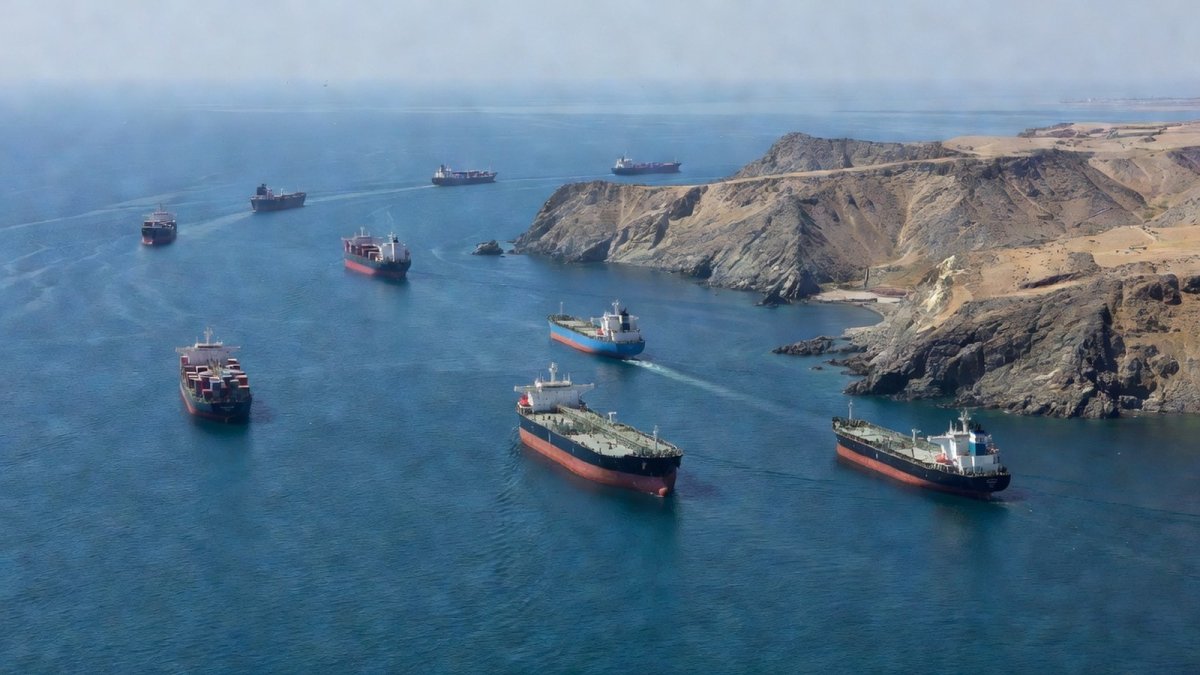
The incident itself was harrowing but, mercifully, not fatal. The 35,000-tonne Panama-flagged vessel, operated by South Korea's HMM Co., was anchored near the UAE coast at approximately 11:40 a.m. GMT on May 4 when two unidentified airborne objects struck the hull. An explosion triggered an engine-room fire, yet all 24 crew members—six South Koreans and eighteen foreign nationals—survived, with only one minor injury reported. The crew's successful use of carbon dioxide to extinguish the blaze over four hours prevented a potential maritime catastrophe. The vessel was towed to Dubai, entering port on May 8, where a joint inspection team comprising three investigators from the Central Marine Safety Tribunal and four forensics experts from the National Fire Agency began a full-scale probe.
Forensic Evidence and the Iranian Connection
The May 27 announcement was notable not merely for its conclusion but for the evidentiary rigor that underpinned it. Vice Minister Park detailed a 7-meter-wide rupture in the hull near the stern, recovered debris bearing the inscription "TEM-T05003" traced to an Iranian entity believed to be Turbine Engineering Manufacturing, and a sky-blue paint scheme identified as "a known feature of Iranian-made anti-ship missiles." The electronic components suggested a missile manufactured some 20 to 30 years ago, indicating an older-model Noor system with a Toloue-4 engine—a reverse-engineered French turbojet design. Critically, the first warhead failed to detonate while the second detonated on impact, providing investigators with intact components for analysis.

Park's language was carefully calibrated. "Multiple pieces of evidence point toward Iran," she stated, while acknowledging that intent "is extremely difficult to reach a definitive conclusion" on. The government could not confirm the launch site, the exact perpetrator, or the strategic rationale behind the attack. This measured approach reflects the inherent complexity of attributing attacks in a waterway where the Iranian navy, the Islamic Revolutionary Guard Corps, and various pro-Iranian groups operate with overlapping mandates and varying degrees of state control. The foreign ministry summoned Iranian Ambassador Saeed Koozechi to deliver a strong protest and demand "responsible measures, including steps to prevent a recurrence."
Tehran's Denial and the Shadow of False Flags
Ambassador Koozechi's response was unequivocal. Speaking to reporters after his ministry meeting, he declared, "Iran denies all allegations regarding this matter. We were absolutely not involved in the attack." He added a personal expression of regret over the damage suffered by the Korean vessel while warning of "false flag operations by hostile countries." The Iranian Embassy in Seoul had earlier stressed that Tehran "firmly and categorically" denies any involvement by its military. This denial strategy, consistent with Tehran's broader approach throughout the Hormuz crisis, seeks to delegitimize the evidentiary basis of Seoul's findings while planting seeds of doubt about alternative perpetrators.
The timing of the attack, however, raises questions that Tehran's denials do not adequately address. The Namu was the 33rd such incident in the waterway since the conflict began, according to South Korean government figures. The broader context is one of deliberate Iranian strategy to choke off passage through the Strait of Hormuz—a waterway through which approximately 20 percent of global oil consumption transits—in response to US-Israeli strikes that initiated the war on February 28. For Seoul, the forensic conclusion represents a rare instance of a middle power publicly attributing an attack to a major regional actor, a decision with significant diplomatic consequences.
Seoul's Strategic Predicament: Between Washington and Tehran
The Namu attack has forced Seoul into a delicate balancing act that illuminates the structural tensions in South Korean foreign policy. Initially cautious—an oceans ministry official stated on May 4 that "it is too early to determine whether it was caused by an external attack"—Seoul's position hardened as forensic evidence accumulated. The United States, for its part, moved quickly to leverage the incident. President Donald Trump claimed shortly after the attack that Iran had "taken some shots" at the HMM vessel and other targets, urging Seoul to join US-led efforts to secure shipping through the strait. A senior foreign ministry official was quoted by Yonhap on May 14 as saying the possibility of a non-Iranian actor being responsible was low, suggesting that US-shared intelligence played a role in shaping Seoul's assessment.
Yet Seoul's dependence on Hormuz transit creates profound vulnerabilities. South Korea imports the overwhelming majority of its crude oil through the strait, and the closure has sent oil price spikes rippling through Korean refiners and airlines. The strategic calculus is further complicated by the presence of 26 Korean-flagged or Korean-operated vessels stranded in the chokepoint, at one point carrying approximately 597 people including some 144 Koreans. The human dimension—including 12 students from domestic maritime universities among the stranded crews—has added urgency to Seoul's diplomatic efforts. The May 21 transit of an HMM-operated oil tanker, the first Korean-managed vessel through the waterway since the conflict began, represented a tentative step toward normalizing operations under extreme risk.
The Evolving Hormuz Crisis and Regional Diplomacy
As of August 2026, the broader crisis shows no signs of resolution. On August 6, Iran announced that a deal with Oman to reopen the Strait of Hormuz was "on the verge of being finalised," with both countries confirming agreed coordinates for shipping routes. Iranian foreign ministry spokesperson Esmaeil Baghaei noted that talks were in the final stage of reviewing and drafting a joint statement, unless "certain third parties" obstruct the process. However, Iran insists it will not reopen the strait until the US naval blockade of its ports is lifted—a condition Washington shows no inclination to accept. Deputy Foreign Minister Kazem Gharibabadi indicated that new inbound and outbound shipping routes would be used for two to four months or longer, and Iran has intimated plans to introduce a fee system for ships transiting the waterway, despite international maritime law prohibiting tolls on international straits.
The June 17 memorandum of understanding framework between Washington and Tehran collapsed last month, and US officials say they would not accept any arrangement leaving Iran in control of the waterway. Treasury Secretary Scott Bessent has pledged to apply measures "never been seen" on Iran, combining economic isolation with the continued blockade. CNN reported on August 13 that Strait of Hormuz traffic remains low as the International Energy Agency warned global oil stockpiles are dwindling rapidly. The UAE reported that two of its tankers were attacked while transiting on Thursday, underscoring the persistent threat environment. For Seoul, this volatile landscape means the Namu incident cannot be treated as a closed chapter; it remains an active diplomatic liability with unresolved questions of compensation and accountability.
Implications for Korean Foreign Policy and Maritime Security
The Namu attack has catalyzed a broader reassessment of South Korea's maritime security posture and its diplomatic positioning in the Middle East. Vice Oceans Minister Nam Jae Heon stated in July that Seoul "may consider a review later" regarding potential reimbursement from Iran or the United States, while HMM has been covering repair costs and plans to lodge an insurance claim. The vessel was set to leave the Strait of Hormuz by mid-July following repairs, with two South Korean vessels including the Namu remaining stranded with 35 crew aboard at that time. By August, 21 Korean-operated vessels had safely navigated the strait since the Washington-Tehran ceasefire two weeks earlier, suggesting a gradual return to operational normalcy under persistent risk.
From an academic perspective, the Namu incident represents a significant case study in middle-power diplomacy under conditions of great-power conflict. South Korea's response—methodical forensic investigation, public attribution, diplomatic protest, and simultaneous engagement with all parties—reflects a sophisticated understanding of the limits and possibilities of its influence. Seoul cannot compel Iran to change its behavior, nor can it fully align with Washington's maximalist position without jeopardizing its economic interests and regional relationships. The careful calibration of language in the May 27 announcement—"likely" rather than "certainly," acknowledgment of evidentiary limitations, separation of technical attribution from intent—demonstrates an awareness that diplomatic language carries strategic weight.
Looking Ahead: The Namu's Legacy
The HMM Namu incident will likely be studied for years as an exemplar of how a non-belligerent state navigates the treacherous waters of a regional conflict that threatens its core economic interests. The attack has forced Seoul to develop new protocols for crisis response, forensic investigation, and inter-agency coordination in overseas contingencies. It has also highlighted the vulnerability of Korean commercial shipping in strategically contested waterways—a vulnerability that will persist regardless of how the current crisis resolves. The foreign ministry's repeated convening of task forces and deployment of inspection teams to Dubai suggests an institutional learning process that will shape future responses to similar incidents.
For the broader Korean public, the Namu attack has brought the distant conflict in the Persian Gulf into sharp focus. The image of Korean sailors stranded in a war zone, the forensic evidence of Iranian missiles embedded in a Korean-operated vessel, and the diplomatic confrontation with Tehran have all contributed to a heightened awareness of Korea's global vulnerabilities. As the Hormuz crisis continues to evolve, with Iran's proposed reopening deal hanging in the balance and US pressure intensifying, Seoul's handling of the Namu aftermath will remain a critical test of its capacity to protect national interests in an increasingly volatile international environment. The vessel's name may fade from headlines, but the strategic questions it raised will endure.
By Prof. David Park, Staff Writer
This article was produced with AI-assisted research and editorial support. Reporting is based on sources cited in the article.
What's Your Reaction?
 Like
0
Like
0
 Dislike
0
Dislike
0
 Love
0
Love
0
 Funny
0
Funny
0
 Wow
0
Wow
0
 Sad
0
Sad
0
 Angry
0
Angry
0

East Asia/Technology Correspondent at Global1.News. Seoul-based voice covering Korean politics, technology, business, and culture. Analyzes how technology and geopolitics intersect across East Asia.











Comments (0)