
Humanoid Robots Shatter Bolt's 100m Record at Beijing Games
The unthinkable has happened in Beijing. A machine has done what no human on Earth has managed in 17 years — it has run 100 metres faster than Usain Bolt.
The unthinkable has happened in Beijing. A machine has done what no human on Earth has managed in 17 years — it has run 100 metres faster than Usain Bolt. And for South African sports fans who grew up worshipping the Jamaican's 9.58-second masterpiece from Berlin 2009, this moment demands we ask a difficult question: is this sport, or is this something else entirely?
Humanoid Robots Shatter Bolt's 100m Record at Beijing Games — What It Means for the Sanctity of Sport
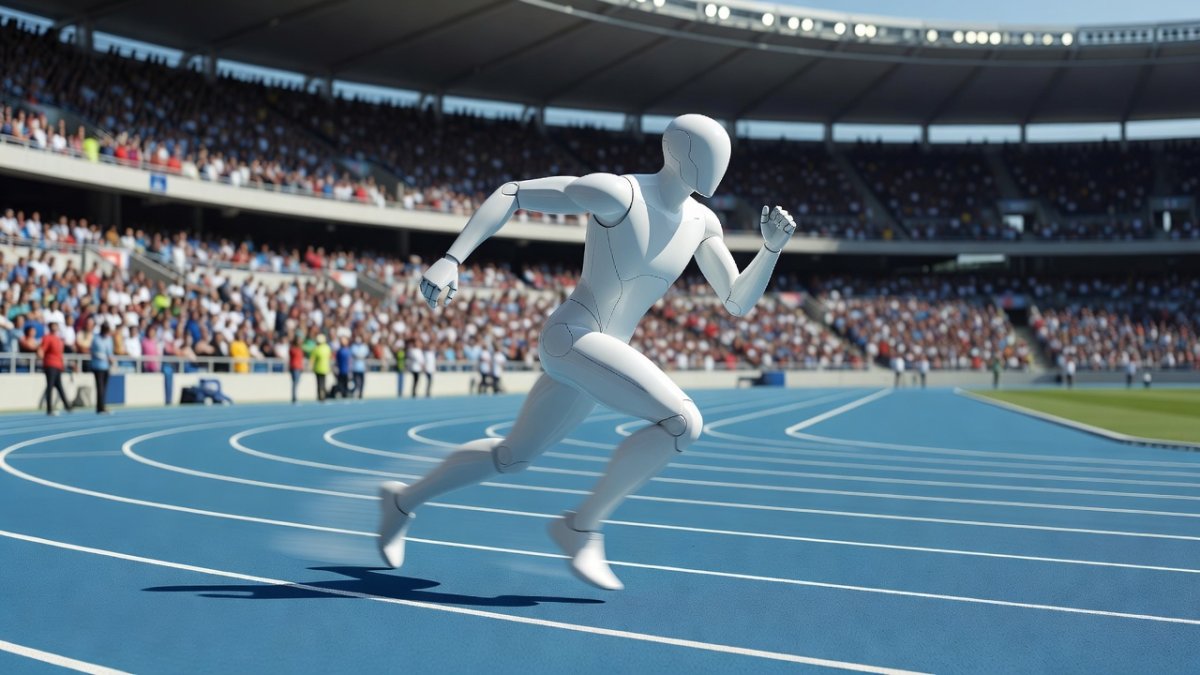
Beijing, China – 22 August 2026 — A humanoid robot developed by Chinese smartphone maker Honor has run 100 metres in 9.32 seconds, according to China's state broadcaster CCTV, obliterating the 9.58-second human world record set by Usain Bolt at the World Athletics Championships in Berlin in 2009. The robot, dubbed 'Lightning', reached a peak speed of 14.5 metres per second during a preparatory test event for the second World Humanoid Robot Games, which opened at the National Speed Skating Oval in Beijing on Saturday.
Machines on the Track — The Numbers That Stunned the World
Let's put this in perspective for the Mzansi sports fan. Bolt's 9.58 seconds stood for 17 years as the ultimate benchmark of human speed — a record that survived every generation of sprinters, every training innovation, every wave of doping scandals. It took a machine to break it. And not just one machine. Another Chinese humanoid robot, Tiangong Ultra, ran 100m in 9.39 seconds in a preliminary heat, also faster than Bolt's record, according to Reuters. Two robots, both under 9.58 seconds, both in the same week.
The numbers get even more surreal. Lightning, which stood 169cm tall with 95cm-long legs at the Beijing half marathon in April, had its legs lengthened by 10cm to 1.05 metres before the World Humanoid Robot Games, CCTV reported. That engineering tweak helped the robot win the 21km Beijing half marathon in 50 minutes and 26 seconds — faster than the elite men's human world-record pace. A robot running a half marathon faster than any human has ever managed. Let that sink in.
And it's not just running. In a standing high jump, a humanoid robot from Beijing-based X-Humanoid reached 2.88m, surpassing the 0.95m best from last year's first edition of the games and beating the human high jump world record of 2.45m set by Cuba's Javier Sotomayor in 1993. Sotomayor's record has stood for 33 years. A machine cleared it by 43 centimetres.
The World Humanoid Robot Games — A New Kind of Olympics
This is not a fringe sideshow. More than 2,000 humanoid robots are participating in the five-day, second edition of the World Humanoid Robot Games, held at the National Speed Skating Oval built for the 2022 Winter Olympics. There are 51 events and more than 1,000 competitions, including running, table tennis, football, weightlifting and tug of war. Organisers say 16 countries are participating, including Germany, Japan and the US.
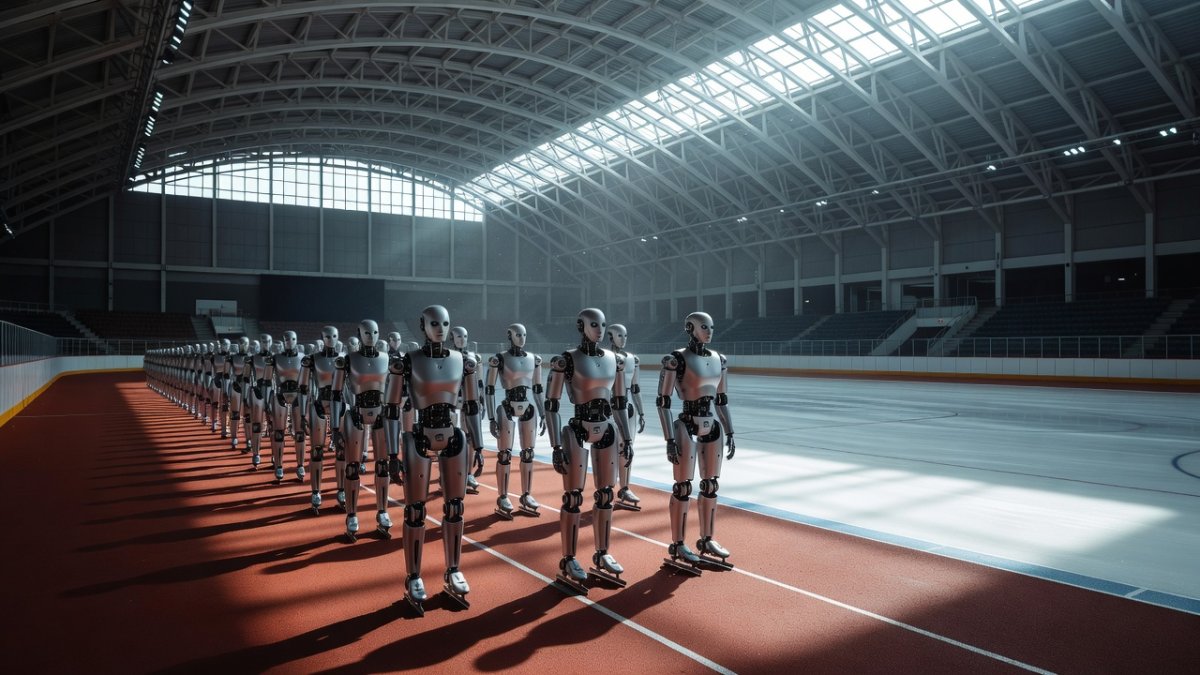
At Saturday's opening, hundreds of humanoid robots marched in formation onto the field. Organisers and robot makers declared that Chinese humanoid robots had defeated human world records. The games opened the same week Beijing held the 2026 World Robot Conference, where companies showcased around 3,000 products, including humanoid robots. China makes the majority of the world's humanoid robots, and the country has been promoting humanoid robots as a strategic emerging industry, with policymakers and companies betting advances in AI and hardware will accelerate deployment in manufacturing, logistics and consumer applications.
This is not a gimmick. This is a geopolitical statement dressed in running shoes.
The South African Perspective — Simbine, Van Niekerk, and the Human Spirit
For South Africans, this cuts deep. We are a nation that has built its sporting identity on the triumph of the human spirit over adversity. Our sprinting heritage is defined by Akani Simbine, who has repeatedly broken the national 100m record and reached global finals, and Wayde van Niekerk, whose 400m world record of 43.03 seconds at the Rio 2016 Olympics remains one of the greatest athletic achievements in history. These are humans who trained for years, sacrificed everything, and pushed their bodies to the absolute limit.
Bolt's 9.58 record is revered across Africa, not just Jamaica. It represents the pinnacle of what a human being can achieve with natural talent, relentless work, and an unbreakable will. When Simbine lines up against the world's best, he carries the hopes of a nation that sees athletics as a pathway to unity and pride. The debate over whether machine times should count against human records resonates deeply with SA fans who treasure the sanctity of world records.
Athletics South Africa (ASA) governs the sport in our country, and the organisation has long championed transformation and grassroots development. The question now is whether ASA and other governing bodies will need to create separate categories for humanoid robots — or whether these machines should be excluded from human record books entirely. The International Association of Athletics Federations (World Athletics) has yet to rule on this, but the pressure is mounting.
The Human-Machine Debate — What Counts as Sport?
Here's the uncomfortable truth: these robots are not athletes. They are engineered products, refined through iterations of hardware and software, not through sweat and sacrifice. When Bolt broke the 100m record in Berlin, he did it with lungs burning, muscles screaming, and a crowd of 70,000 roaring him home. When Lightning ran 9.32 seconds, it did so with a battery pack and a programmed gait. There is no drama, no heartbreak, no triumph over adversity. There is only engineering.
Experts say humanoid robots are still mostly used for demonstrations, performances and research, and it will take time to achieve mass real-world deployment. But the symbolism is powerful. China has made humanoid robots a strategic priority, and the World Humanoid Robot Games are a showcase of that ambition. The geopolitical dimension is impossible to ignore — last month, the US Federal Communications Commission announced a ban on imports of new foreign-made humanoid robots, citing national security in a move that targeted China. The Pentagon recently added Unitree, a leading Chinese humanoid robot maker, to its list of companies deemed to have ties with the Chinese military.
South Africa is watching this unfold from a unique position. We are a nation with a growing robotics and AI ecosystem — our universities and tech hubs are producing world-class engineers and researchers. We are not bystanders in this revolution. But we are also a nation that understands the value of human achievement in sport. When Van Niekerk ran 43.03 seconds in Rio, he was running for more than himself. He was running for a country that had been through apartheid, through division, through decades of struggle. That is the power of human sport. A robot cannot replicate that.
Implications for Fans and the Sport — Protecting the Record Books
For South African sports fans, the implications are clear. We must protect the integrity of human records. Bolt's 9.58 seconds should remain the human world record, just as Sotomayor's 2.45m high jump should remain the human world record. These marks represent the limits of human potential, and they should not be erased by machines that can be upgraded, reprogrammed, and optimised in ways no human body can match.
This is not about being anti-technology. South Africa has embraced technology in sport — from Hawk-Eye in cricket to VAR in football, from performance analytics in rugby to wearable tracking devices in athletics. But there is a fundamental difference between using technology to enhance sport and allowing machines to compete against humans. The former is progress. The latter is a category error.
The World Humanoid Robot Games are fascinating, and South Africans should watch them with curiosity and wonder. The engineering is remarkable, and the potential applications in manufacturing, logistics, and consumer applications are genuinely exciting. But we must draw a line. Human records are sacred. They represent the best of what we can achieve as a species, and they inspire generations of young athletes — from the townships of Soweto to the stadiums of Johannesburg — to dream bigger and work harder.
What to Watch For
As the World Humanoid Robot Games continue through the week, South African fans should watch how the global athletics community responds. Will World Athletics create a separate category for humanoid robots? Will the International Olympic Committee weigh in? And will other countries, including South Africa, invest more heavily in robotics research to compete with China's dominance?
The bigger question is philosophical. As artificial intelligence and robotics advance, we will face increasingly difficult questions about what it means to be human, and what it means to compete. South Africa, with its rich sporting heritage and its growing tech sector, is uniquely positioned to contribute to this conversation. We have always believed that sport is about more than winning — it is about unity, transformation, and the celebration of human potential.
Bolt's 9.58 seconds will always belong to humanity. No robot can take that away. But the machines are coming, and the world of sport must decide how to respond. For now, let us celebrate the wonder of what these robots can do — and hold fast to the belief that nothing can replace the drama, the passion, and the sheer humanity of sport.
By Dante Williams, Staff Writer
This article was produced with AI-assisted research and editorial support. Reporting is based on sources cited in the article.
What's Your Reaction?
 Like
0
Like
0
 Dislike
0
Dislike
0
 Love
0
Love
0
 Funny
0
Funny
0
 Wow
0
Wow
0
 Sad
0
Sad
0
 Angry
0
Angry
0

Breaking News and Investigations Correspondent at Global1.News. Based in London, covering global breaking news, security, and investigative stories. Known for digging deeper and connecting the dots across continents.















Comments (0)