
Tokyo Earthquake: Magnitude 5.9 Strikes Ibaraki, Japan
A magnitude 5.9 earthquake struck southern Ibaraki Prefecture before dawn Sunday, shaking Tokyo, injuring 23 people and cutting power to hundreds of homes. No tsunami was triggered and nuclear plants reported no anomalies, but panic-driven falls, not buildings, caused most injuries.
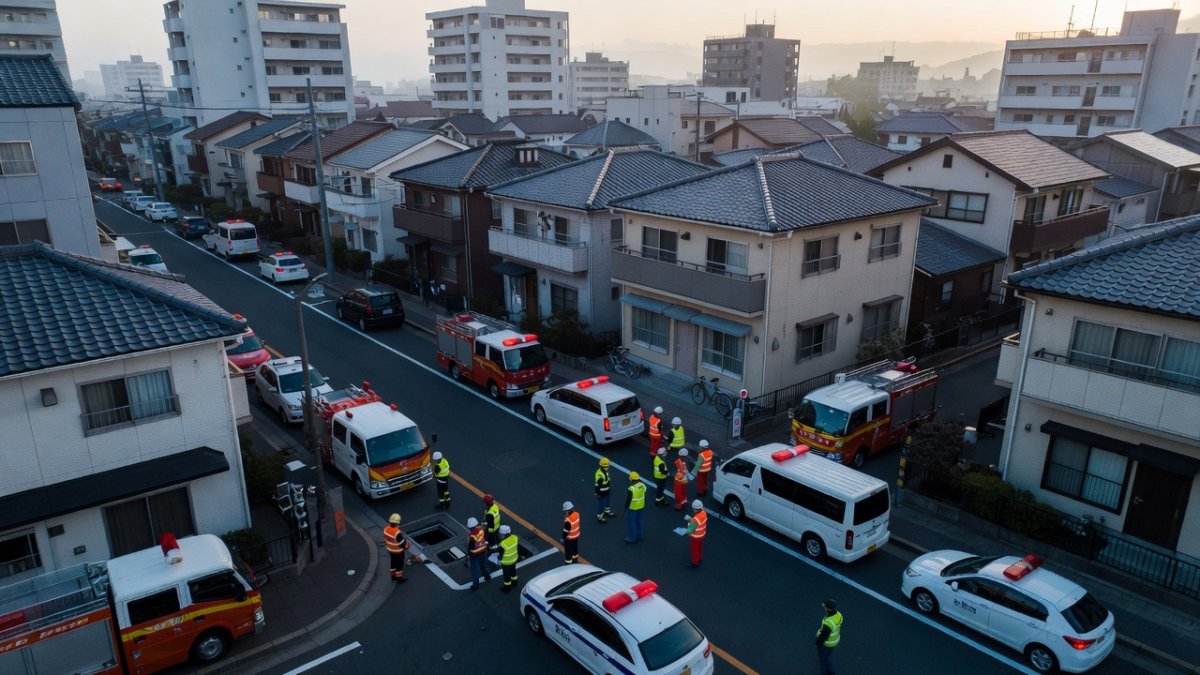
Folks, if you were in Tokyo in the dead of night this morning, you felt it. That jarring, gut-punching jolt that yanks you out of a dead sleep and sends your heart racing before your brain even catches up. At approximately 2:00 a.m. local time, a magnitude 5.9 earthquake ripped through southern Ibaraki Prefecture, just northeast of the capital, and it didn’t just rattle the ground—it rattled the entire Kanto region, shook people out of their beds, and sent a clear message that Japan’s seismic clock never stops ticking.
This wasn’t a distant rumble. This was a direct hit on the most densely populated corridor on Earth. The shaking was strongly felt in Tokyo, triggering those piercing emergency alerts on millions of mobile phones—the ones that scream before the ground even moves. And while the initial reports were sparse, the picture that emerged by morning is one of a region that got lucky, but not entirely unscathed. Twenty-three people are injured. Power flickered out for hundreds of homes. A water main burst in the city. And yet, the Shinkansen kept running, the reactors stayed quiet, and there was no tsunami. Let’s break down exactly what happened, because in a country that lives on fault lines, the details are everything.
What Hit, and Where It Hit
Let’s get the raw data on the table, folks. The Japan Meteorological Agency—the JMA—recorded a preliminary magnitude of 5.9. The United States Geological Survey, or USGS, independently clocked it at a slightly lower 5.8. That discrepancy is normal, but the epicenter is what matters: southern Ibaraki Prefecture, sitting at latitude 36 degrees north and longitude 140.1 degrees east. That puts it squarely in the neighborhood of Tokyo, a stone’s throw from the most critical infrastructure on the planet.
The quake struck at a depth of about 70 kilometers—roughly 43 miles. That depth is significant. A shallow quake of this size would have caused far more damage. But at 70 kilometers down, the energy spreads out over a wider area, which is why the shaking was felt so broadly, yet the structural damage remained limited. On Japan’s seismic intensity scale of 7, this registered as a “lower 5” in parts of Ibaraki, Saitama, and Chiba prefectures, as well as in Tokyo’s Adachi Ward. For those unfamiliar with the scale, a lower 5 is not a gentle nudge. It’s the level where hanging objects swing violently, dishes rattle out of cabinets, and people feel a genuine threat to their safety. It’s the level where you stop what you’re doing—or in this case, wake up in a panic—because the earth is telling you to pay attention.
The JMA was quick to issue the all-clear on the biggest fear: there was no tsunami threat. None. Zero. That’s a relief, but it doesn’t diminish the fact that this quake struck at 2:02 a.m., the worst possible time for human reaction. People were asleep, disoriented, and vulnerable. And that’s exactly where the injuries came from.
The Numbers: 23 Injured, and How It Happened
Let’s talk about the human toll, because 23 injuries is not a statistic—it’s two dozen people whose night went sideways. According to prefectural officials, the injured were spread across four prefectures. Nine in Saitama. Nine in Kanagawa. Four in Chiba. One in Ibaraki. That’s the breakdown, and it tells a story.
Most of these injuries were classified as slight. But “slight” doesn’t mean “nothing.” The vast majority of people were hurt in the chaos that followed the initial jolt. They were startled awake, panicked, and got out of bed in a hurry. In the dark, in a disoriented state, they fell. They hit furniture. They slammed into doors. The quake itself didn’t throw them—their own adrenaline did.
And then there’s the one case that should give everyone pause. The Yomiuri newspaper reported that a woman in her 80s in Yokohama, in Kanagawa Prefecture, fell off her bed and suffered a serious hip injury. A serious injury. A broken hip for an octogenarian is a life-altering event. It’s a reminder that in an earthquake, the most vulnerable among us are often the ones who pay the highest price, not from collapsing buildings, but from a simple fall in the dark. That woman is the face of this quake’s toll—a stark illustration that preparedness isn’t just about bolting bookshelves to walls; it’s about protecting the elderly, the frail, and the unprepared in the dead of night.
The Response: Takaichi’s Task Force and the Agencies on Alert
When the ground stops shaking, the machinery of the Japanese state kicks into gear. And this morning, that machinery was humming. Prime Minister Sanae Takaichi took to X—formerly Twitter—to announce that the government had set up a task force to assess possible damage. That’s not a symbolic gesture. That’s a coordinated command structure designed to funnel information from local municipalities up to the national level, to identify gaps in response, and to deploy resources where they’re needed most.
The JMA, for its part, did exactly what it’s built to do. They issued the preliminary magnitude, the depth, the epicenter, and the intensity readings within minutes. They confirmed the absence of a tsunami threat, which allowed residents to focus on the immediate aftermath rather than a coastal evacuation. The USGS provided its independent verification, which is crucial for the international community and for cross-checking data. This is the system working as designed—a layered network of monitoring, alerting, and response that has been honed by decades of living on the Ring of Fire.
But let’s be clear: the task force isn’t just about counting injuries. It’s about assessing the secondary impacts—transport, power, water, and nuclear safety. And on those fronts, the picture is mixed but manageable.
Transport and Infrastructure: Shinkansen Runs, Trains Delay, Water Breaks
Here’s where the quake’s impact on daily life becomes tangible. East Japan Railway Company—JR East—reported that express trains serving Tokyo and Narita Airport, as well as other local trains in the northeastern regions, were delayed. If you were trying to catch a flight this morning, or commute into the city, you felt this quake in your schedule. Delays are an inconvenience, but they’re also a safety measure. Trains are automatically slowed or stopped when seismic sensors trigger, and that protocol prevents derailments. It’s a pain, but it’s a pain that saves lives.
Now, the good news: the Shinkansen bullet train services were running normally. That’s a testament to the engineering marvel that is Japan’s high-speed rail. The system is designed to withstand significant seismic events, and this morning, it did. The trains kept moving, which is a massive relief for a country that depends on them for everything from business to tourism.
But not everything was so smooth. In Tokyo’s eastern ward of Koto, an underground water pipe ruptured. NHK public television showed footage of water spilling onto the road—a visual reminder that even a moderate quake can crack the city’s vital arteries. The pipe was later repaired and the leak was stopped, but that’s a disruption that affects residents and businesses in the immediate area. It’s also a preview of what a larger quake would do on a catastrophic scale.
And then there was the power. TEPCO Power Grid reported that the earthquake caused blackouts in about 460 homes in Tokyo. Let me repeat that: 460 homes. That’s not a city-wide crisis, but for those 460 households, it was a dark, unsettling morning. The good news is that power was restored by later Sunday morning. The system held, the crews worked fast, and the lights came back on. But it’s a stark reminder that our modern lives hang by a thread—a thread that an earthquake can snap in an instant.
Nuclear Safety: No Anomalies, But the Watch Continues
Folks, I know what you’re thinking. Every time Japan shakes, the first question is always about the nuclear plants. And this morning, the answer is a clear, definitive: no anomalies. The Nuclear Regulation Authority reported that there were no issues at about a dozen nuclear power plants and other facilities handling nuclear materials. That’s the official word, and it’s a good word.
But let’s not treat this as a given. Japan’s nuclear infrastructure is built to withstand seismic forces, but the memory of Fukushima is not distant. Every quake is a test, and every test that passes is a validation of the safety systems. But the vigilance must remain absolute. The fact that a dozen facilities reported no anomalies is a success, but it’s a success that requires constant maintenance, constant inspection, and constant humility in the face of nature’s power. The Nuclear Regulation Authority’s all-clear is welcome, but it’s not a reason to relax—it’s a reason to keep the standards high.
The Context: Last Month’s Kumamoto Nightmare
Now, let’s zoom out, because this quake doesn’t exist in a vacuum. Just last month, a magnitude 7.1 earthquake struck the Kumamoto area on Japan’s southernmost main island of Kyushu. That was a monster. It killed 38 people. It injured 364. It destroyed more than 1,500 buildings and damaged nearly 20,000 others. That’s not a disruption—that’s a disaster.
This morning’s 5.9 in Ibaraki is a different beast. It’s a moderate quake in a region that is, as the JMA noted, prone to frequent earthquakes. But the contrast is instructive. The Kumamoto quake was a reminder of the catastrophic potential that lies beneath Japan’s surface. This morning’s quake is a reminder that even the “moderate” ones can cause injuries, disrupt power, and break water pipes. The scale is different, but the lesson is the same: Japan is a country that lives on borrowed time, geologically speaking. Every day without a major quake is a gift, and every quake—no matter the size—is a drill for the big one.
The fact that this quake injured 23 people, most of them from falls, is a direct indictment of our collective preparedness. We know the drill. We know to secure our furniture. We know to keep a flashlight by the bed. We know not to panic-run in the dark. But we don’t always do it. And the woman in Yokohama with the serious hip injury is the price we pay for that complacency.
Why This Matters: The Earthquake Preparedness Imperative
Here’s the bottom line, folks. This quake was a 5.9. It was 70 kilometers deep. It was in a relatively prepared region. And it still managed to injure 23 people, knock out power to 460 homes, and rupture a water main in Tokyo. Imagine, for a moment, if this had been a 7.0 at a shallower depth. Imagine if it had struck during the day, when the streets were full and the trains were packed. The numbers would not be in the dozens—they’d be in the thousands.
This is why earthquake preparedness is not a bureaucratic checkbox. It’s a survival imperative. Japan has the best early warning system in the world. The alerts that went off on phones this morning—including one from BBC correspondent Kurumi Mori, who posted on X that the alert went off before the shaking started—are a lifesaving technology. But that technology only works if people know what to do when they hear it. Drop. Cover. Hold on. Don’t run outside. Don’t get out of bed in a panic. Wait for the shaking to stop, then assess your surroundings.
The fact that most injuries were from falls after getting out of bed is a failure of messaging. We need to tell people, over and over again: stay in bed during the shaking. Cover your head with a pillow. Wait it out. The floor is not your friend in the dark. The furniture is not your friend. The safest place is where you are, protected, until the motion stops.
What You Should Know Right Now
So, where do we stand this morning? The quake has passed. The aftershocks are likely, but the JMA has not issued any major warnings. The tsunami threat is zero. The power is back on. The water leak is fixed. The trains are running, albeit with some delays. The nuclear plants are quiet. The task force is assessing, and the injured are being treated.
But here’s what you should take away from this, whether you’re in Tokyo or anywhere else on this restless planet. Earthquakes don’t care about your plans. They don’t care about your schedule. They strike at 2 a.m. when you’re most vulnerable. They test your infrastructure, your response systems, and your personal preparedness. And the only way to win is to be ready before the ground moves.
Secure your furniture. Keep a flashlight and sturdy shoes by your bed. Know where your gas shut-off valve is. Have a plan for your family. And when that alert goes off, don’t panic. Drop, cover, and hold on. Stay put. Protect your head. And wait for the shaking to stop.
This morning, 23 people were injured because they reacted to fear instead of training. Let’s make sure the next quake—and there will be a next quake—doesn’t add to that number. Stay safe, stay smart, and stay prepared. That’s the only way we get through this together.
By Jessica Ali, Staff Writer
This article was produced with AI-assisted research and editorial support. Sources: Japan Meteorological Agency, USGS, Xinhua, India Today/PTI, AOL/PA Media, NHK.
What's Your Reaction?
 Like
0
Like
0
 Dislike
0
Dislike
0
 Love
0
Love
0
 Funny
0
Funny
0
 Wow
0
Wow
0
 Sad
0
Sad
0
 Angry
0
Angry
0

Editor-in-Chief at Global1.News. Atlanta-based journalist who cuts through the BS and tells it like it is. Lead anchor, host, and the voice you hear when the spin stops and the truth starts.














Comments (0)