
Ellis Park Roar Turns to Silence as All Blacks Land a Devastating Blow
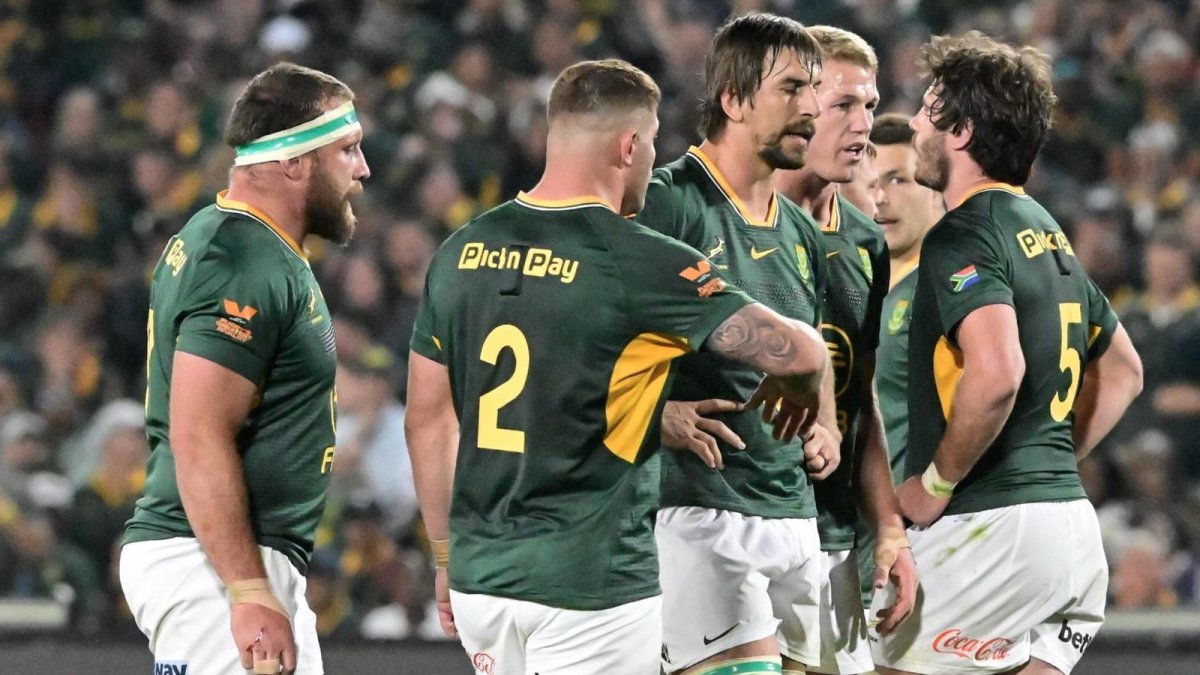
Ellis Park Roar Turns to Silence as All Blacks Land a Devastating Blow Johannesburg — The cathedral of South African rugby, Ellis Park, was meant to be a fortress. Instead, on a chilly Highveld Saturday, it became the scene of a brutal reckoning. The Springboks, riding a 12-match unbeaten wave, were dismantled 33-16 by a relentless All Blacks side in the first Test of the Rugby's Greatest Rivalry series.
Ellis Park Roar Turns to Silence as All Blacks Land a Devastating Blow
Johannesburg — The cathedral of South African rugby, Ellis Park, was meant to be a fortress. Instead, on a chilly Highveld Saturday, it became the scene of a brutal reckoning. The Springboks, riding a 12-match unbeaten wave, were dismantled 33-16 by a relentless All Blacks side in the first Test of the Rugby's Greatest Rivalry series. It was a result that sent shockwaves through the sporting nation, statistically the heaviest defeat of Rassie Erasmus' tenure and the team's worst loss since a 38-3 drubbing by Ireland in 2017.
For 60 minutes, this was a contest of ferocious power and tactical chess. Then, the dam wall broke. New Zealand, clinical and composed, dominated the final quarter 21-0, turning a tight tussle into a statement of intent. The Ellis Park crowd, who had come expecting a Springbok surge, were left in stunned silence as Will Jordan crossed twice and the visitors ran riot. The series, as promised, is alive — but the Boks are suddenly facing an existential crisis with the second Test looming in Cape Town.
The Breakdown: Where the Boks Lost the War
If you want to understand how the All Blacks won this Test, look no further than the breakdown. The Springboks, renowned for their physical dominance, were utterly outplayed in the contest for the ball. They conceded a staggering 22 turnovers at the breakdown, a statistic that will haunt the coaching staff. This wasn't just a case of poor discipline; it was a systematic dismantling of the Boks' primary attacking weapon.
The numbers tell a grim story. The Boks had 11 entries into the All Blacks' 22 but averaged a paltry 0.9 points per entry, scoring just one try. New Zealand, by contrast, enjoyed nine entries and averaged 3.6 points per entry. This is the difference between a team that creates pressure and a team that converts it. The All Blacks, marshalled brilliantly by Ardie Savea and the electric Cam Roigard, defended with a ferocity that matched the Boks' attack. They were forced to make 122 tackles, but they did so with a tackle completion rate that exposed the Boks' lack of precision. South Africa's own tackle completion rate was a concerning 77%, with 26 missed tackles — a figure that will be dissected endlessly in the coming week.
This wasn't a case of the Boks lacking heart. They brought the power, as Mark Keohane noted in the Sunday Times, but they lacked the precision. "The Boks brought the power but they did not have any precision. The latter was in abundance among these brave All Blacks," he wrote. It's a damning but accurate assessment. The Boks' attacking structure, so often built on the maul and forward dominance, was blunted by a New Zealand side that read their plays with unnerving clarity.
The Turning Point: A Scrum, a Boot Change, and a Momentum Shift
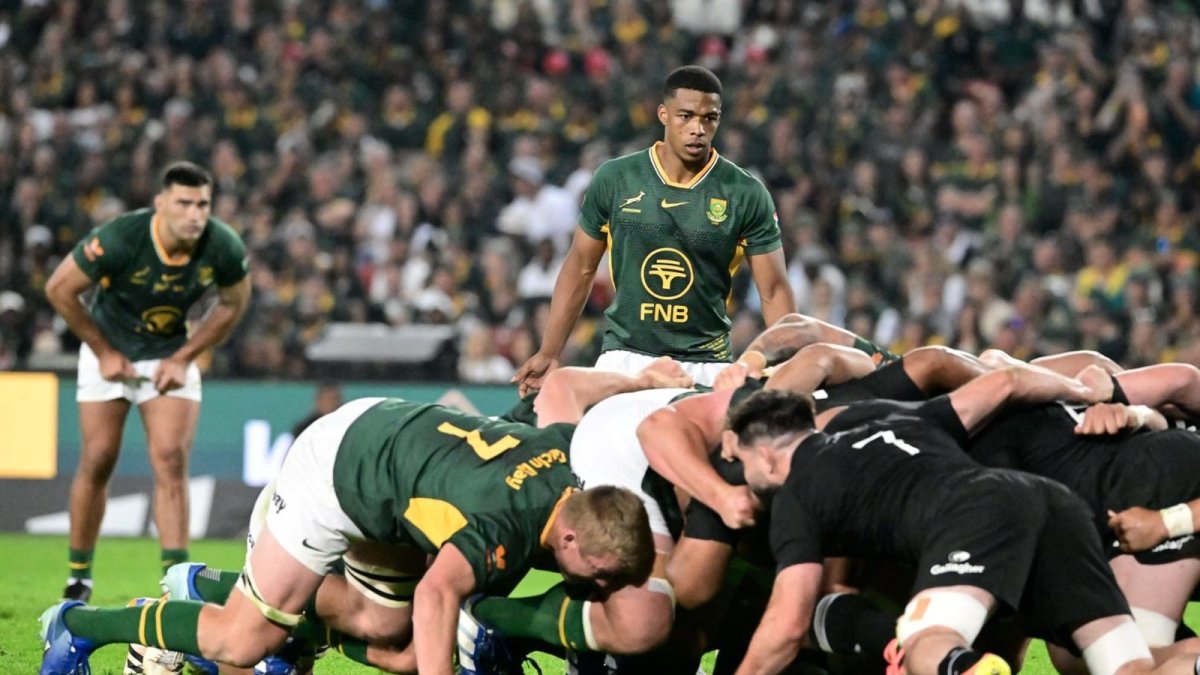
Midway through the second half, with the score still tight, the Springboks had the perfect opportunity to seize control. They won three successive scrum penalties just five metres from the All Blacks' tryline. The crowd was on its feet, sensing blood. The Boks, with their famed 'Bomb Squad' on the field, opted for another scrum, expecting to grind the All Blacks into submission.
Then came a moment of pure farce that would prove decisive. A lengthy delay ensued while lock Eben Etzebeth changed his boots. The momentum, so palpable just moments before, evaporated. When the scrum finally engaged, the penalty went New Zealand's way. The All Blacks escaped their own 22, gained field position, and never looked back. It was a microcosm of the Boks' afternoon: dominance squandered, opportunity lost.
Rassie Erasmus, visibly frustrated, acknowledged the shift. "We were down and out when we got the two yellow cards. It just confounded that we couldn't launch any comeback when we got the yellow cards," he said. But the boot change was a symptom of a deeper issue — a lack of ruthlessness in the red zone. The Boks had the All Blacks on the rack and let them off. Against a side of this quality, that is unforgivable.
The Controversy: Van Staden's Yellow Card and the Savea Debate
No Test between these two giants is complete without a flashpoint, and this one arrived in the final quarter. With the Boks chasing the game, referee Mathew Carley made a decision that will be debated in pubs and braais from Soweto to Sandton for weeks. All Blacks captain Ardie Savea was under TMO review for a shoulder-to-head hit on Jasper Wiese. The Ellis Park crowd, sensing a penalty, roared in anticipation.
Instead, Carley carded Marco van Staden for a dangerous clear-out moments after the initial incident. The Boks were reduced to 13 men when Cobus Reinach followed Van Staden to the sin bin in quick succession. It was a double blow that effectively ended any hope of a comeback. All Blacks coach Dave Rennie, unsurprisingly, defended the officials. "Technically it's the right call. You'll see the footage that when Ardie hits him [Wiese], his head comes forward. And so that means the first impact's on the body then the head will come forward. If the head goes back, first impact is straight on the head. So it's a really good refereeing and good to see at this level," he said.
Erasmus, typically, was more measured in his public comments, but the frustration was palpable. The Boks finished with 13 men, and the All Blacks exploited the numerical advantage with ruthless efficiency, scoring 21 unanswered points in the final quarter. Whether the Van Staden call was correct or not, the Boks' discipline had already been fraying. The yellow cards were a symptom of a team under pressure, not the cause of their downfall.
The Selection Conundrum: Erasmus' Tinkering Exposed
Beyond the breakdown and the yellow cards, there is a deeper structural concern for the Springboks. Erasmus' constant tinkering at scrumhalf and flyhalf has left combinations unsettled. In the last 10 Tests, the Boks have used seven distinct 9/10 combinations. This lack of continuity is a luxury they cannot afford against a side as cohesive as the All Blacks.
The halfback axis is the brain of the team, and the Boks' brain has been scrambled. Against New Zealand, the decision-making under the sticks was poor, and the handling was sloppy. The reliance on the maul, while effective at times, became predictable. The All Blacks, with their superior tactical awareness, simply starved the Boks of the opportunities they needed to build momentum.
This is not a crisis of talent — the Boks have some of the best players in the world. It is a crisis of clarity. The players need a settled structure, a consistent game plan, and the confidence that comes from knowing who will be wearing the 9 and 10 jerseys. Erasmus has one week to find that clarity before the second Test in Cape Town. The All Blacks, meanwhile, are unbeaten in 2026 and playing with a freedom that the Boks can only envy.
What Next? The Cape Town Reckoning
The rematch is next Saturday in Cape Town, and the stakes could not be higher. The prospect of surrendering this four-Test series to the All Blacks is unthinkable for a rugby-mad nation. But the All Blacks have sent a clear message: they are back, and they are hungry.
Mark Keohane's words ring true: "People, we have a Test series on our hands. Buckle in. It is going to get even more brutal than at Ellis Park and even more beautiful for the purist." This is not hyperbole. The Boks will need to fix their breakdown, settle their halfback combination, and find a way to convert pressure into points. The All Blacks, meanwhile, will be confident but not complacent. They know that the Boks, wounded and angry, are at their most dangerous.
For South African fans, this is a moment of truth. The Springboks have been the standard-bearers of national pride, a unifying force in a divided country. But sport is unforgiving, and the All Blacks have exposed the cracks. The question now is not whether the Boks can win the series, but whether they can find the precision and composure to match their power. The answer will come in Cape Town, under the shadow of Table Mountain, where the Springboks will either rise from the ashes or face the unthinkable.
Tags: Springboks, All Blacks, Ellis Park, Rugby Championship, Rassie Erasmus, Dave Rennie, Ardie Savea, Will Jordan, Marco van Staden, breakdown, yellow card, Test series, Cape Town, South Africa rugby, New Zealand rugby
By Dante Williams, Staff Writer
This article was produced with AI-assisted research and editorial support. Reporting is based on sources cited in the article.
What's Your Reaction?
 Like
0
Like
0
 Dislike
0
Dislike
0
 Love
0
Love
0
 Funny
0
Funny
0
 Wow
0
Wow
0
 Sad
0
Sad
0
 Angry
0
Angry
0

Breaking News and Investigations Correspondent at Global1.News. Based in London, covering global breaking news, security, and investigative stories. Known for digging deeper and connecting the dots across continents.













Comments (0)