
Hamas Agrees to Disarm in Gaza: A Historic Gamble for Peace
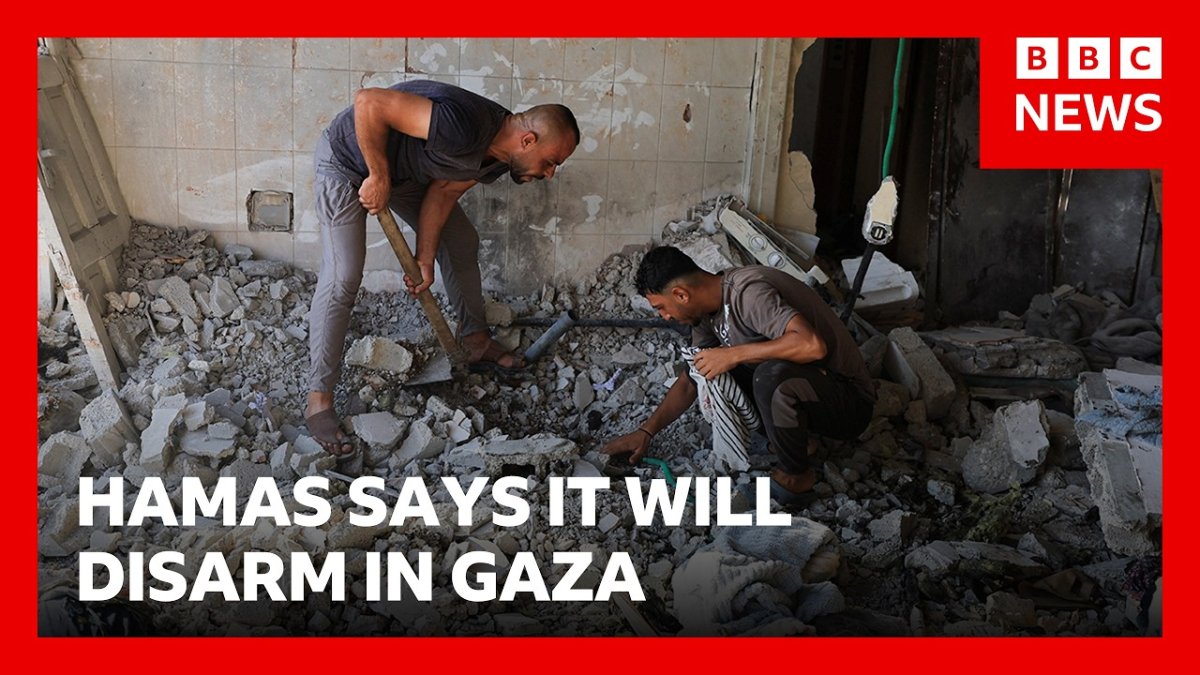
In a recent BBC News report, the world learned that Hamas has agreed to disarm in Gaza for the first time in its history — a development that could reshape the Middle East, even as Israeli strikes continued to kill Palestinians overnight.
In a recent BBC News report, the world learned that Hamas has agreed to disarm in Gaza for the first time in its history — a development that could reshape the Middle East, even as Israeli strikes continued to kill Palestinians overnight.
Hamas Agrees to Disarm in Gaza: A Historic Gamble for Peace
Gaza City – 2 August 2026 — Hamas has announced it will hand over its weapons in exchange for an Israeli withdrawal from Gaza, a historic reversal for the armed group that has governed the territory since 2007. The agreement, brokered by President Donald Trump's Board of Peace with intensive mediation by Egypt and Turkey, was confirmed on Friday after days of secret negotiations. Yet even as the announcement was made, at least eight people were killed in overnight Israeli strikes, in a stark reminder of how fragile the process remains.
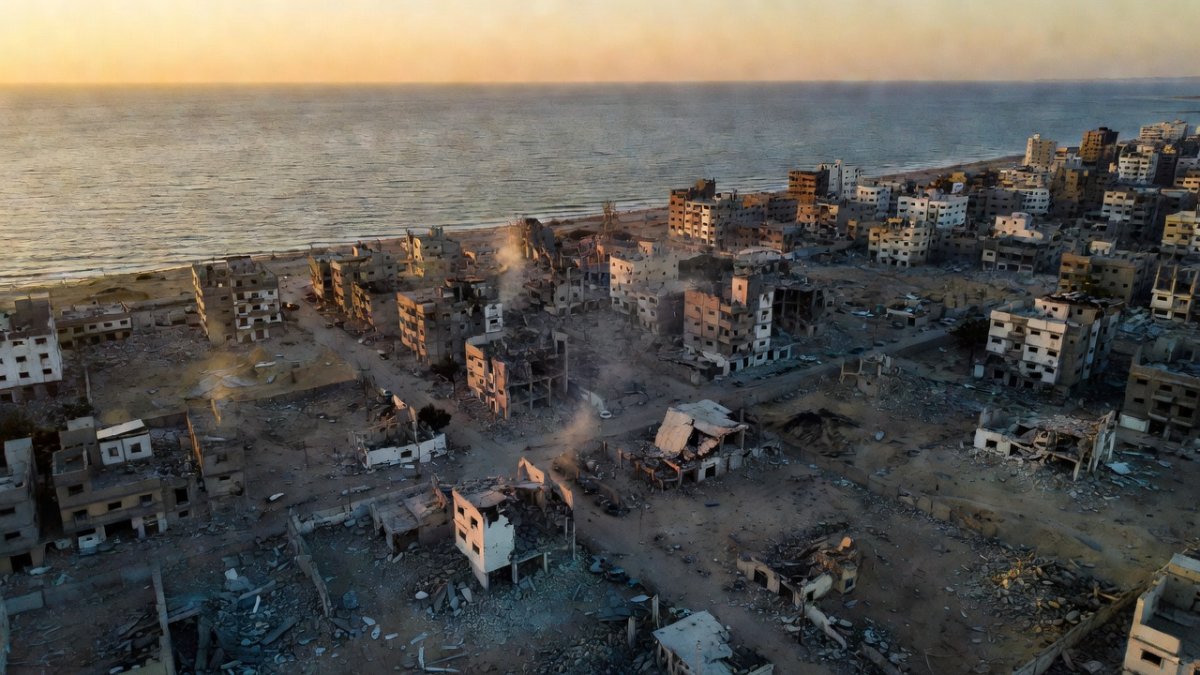
The Disarmament Agreement
Hamas's announcement marks the first time in its history that the group has agreed to disarm, a concession driven by devastating losses and catastrophic humanitarian conditions facing more than two million Palestinians in Gaza. The agreement was announced by President Donald Trump on Thursday evening and confirmed by Hamas on Friday, with the group's newly confirmed political leader, Khalil al-Hayya, playing a crucial role in dropping objections to the framework. Egyptian and Turkish mediators did much of the hard diplomatic work to bring the factions to the table.
Trump, speaking at a cabinet meeting at Camp David, said he had an "understanding" with Israel over the proposal, insisting that "Israel's very happy about it" and describing the deal as "a big step for the Middle East." He said Hamas's weapons would be handed over to the Board of Peace, the body created under the US-brokered 20-point plan unveiled in September last year. The plan outlines disarmament, Israeli withdrawal, reconstruction and deployment of an international stabilisation force. Khalil al-Hayya's involvement proved decisive after internal Hamas debates, as the group negotiated what it described as "responsibly and positively" with "national consensus."
Confirmed facts show the announcement followed intensive shuttle diplomacy. Egypt and Turkey coordinated the final details, while the Board of Peace framework provided the institutional structure for weapons handover. This development stands as a verified reversal for Hamas, which has maintained armed resistance as central to its identity since 2007. The process now hinges on verification mechanisms that all parties must accept before any phased implementation begins.
Perspectives from Hamas emphasise that disarmament remains conditional on concrete Israeli steps. The group views the agreement as a pragmatic response to battlefield realities rather than ideological surrender. International observers note that such a concession could open pathways for broader regional stabilisation if followed through with verifiable actions on all sides.
The Bargain: Weapons for Withdrawal
At the heart of the proposal lies a simple bargain: as Hamas hands over its heavy weapons, Israel pulls its forces out of the roughly 70 percent of Gaza it currently occupies. In its statement, Hamas said handing over its weapons was contingent on Israel ending "all forms of aggression" and withdrawing its forces, describing Israel's commitment to ending its attack as a "fundamental prerequisite." The group also demanded a guaranteed right to "self-determination" and the establishment of an independent Palestinian state.
The 20-point plan explicitly links disarmament to withdrawal and reconstruction under the Board of Peace. Hamas has framed its participation as a responsible national decision reached through consensus. This conditional approach reflects the group's insistence that security guarantees must accompany any weapons transfer. Palestinian representatives in Gaza have stressed that self-determination remains non-negotiable for long-term acceptance of the framework.
Israeli officials have countered that withdrawal cannot precede verified disarmament. The bargain therefore requires simultaneous confidence-building measures monitored by international actors. Egypt and Turkey continue to facilitate talks to bridge these positions. The process could reshape governance in Gaza if both sides meet their stated obligations under the plan.
Analysts suggest the linkage between weapons handover and territorial withdrawal creates a narrow window for progress. Failure to synchronise these steps risks renewed escalation. Hamas's public emphasis on ending aggression indicates the group seeks reciprocal commitments before full implementation.
Israel's Position and the Yellow Line
A senior Israeli official stated there will be no IDF withdrawal from the current Yellow Line without the "genuine disarmament" of Hamas. The Yellow Line serves as the demarcation point agreed under the ceasefire, leaving Israel in control of 53 percent of Gaza. This area later expanded to 60 percent, and per Prime Minister Benjamin Netanyahu's May directive, Israeli forces have moved toward controlling 70 percent of the territory.
Prime Minister Benjamin Netanyahu has not commented on the latest proposal. Far-right National Security Minister Itamar Ben Gvir dismissed the draft as "not acceptable." Israel's UN ambassador Danny Danon said Israel is "looking forward to implementing" the deal but added, "We have to verify what they [Hamas] are doing, not what they are saying." These positions highlight internal divisions within the Israeli government over the framework.
The Yellow Line expansion reflects ongoing military operations even as diplomatic talks advance. Israeli statements stress verification as essential before any territorial concessions. Netanyahu's silence leaves room for interpretation regarding his political calculations ahead of Israel's general election at the end of October.
Perspectives from Israeli officials underscore scepticism toward Hamas commitments. The emphasis on actions over words aligns with longstanding policy that disarmament must be irreversible. This stance complicates rapid implementation of the withdrawal component in the 20-point plan.
Washington and World Reaction
Trump's political stakes remain high with US midterms in November and his need for a foreign policy win after the Iran conflict. UN Secretary General Antonio Guterres described the agreement as "the only good news in recent days." UK Foreign Secretary Ed Miliband urged implementation of the full 20-point plan including IDF withdrawal and respect for the ceasefire, while saying conditions "remain appalling" and Israel "must immediately end the unacceptable restrictions on aid." Israel denies restricting aid.
Global reaction shows cautious optimism alongside calls for concrete follow-through. The deployment of an international stabilisation force under the Board of Peace roadmap forms a key element of the plan. Palestinian voices, including 18-year-old university student Tala in a tent in Gaza, expressed measured hope: "every time people hear about a possible ceasefire, we hope that it will finally end. But when these promises are broken, it creates more fear."
Ed Miliband's statements reflect UK concerns over humanitarian access. Antonio Guterres highlighted the rarity of positive developments amid ongoing violence. These reactions indicate broad international support for the framework provided verification proceeds transparently.
The involvement of the Board of Peace signals sustained US engagement. However, implementation depends on coordination among multiple actors including Egypt, Turkey and the UN. Palestinian civilians continue to face daily uncertainty despite the diplomatic progress.
A Diminished Hamas and the Humanitarian Catastrophe
Most of Hamas's senior leaders and thousands of fighters have been killed by Israel. The IDF continues to assassinate senior figures. Hamas has sought to rebuild grassroots support through Quran memorisation programmes and charity amid widespread aid dependency. The human cost of the war exceeds 70,000 Palestinians killed during the war and more than 1,000 more since the ceasefire, according to the Hamas-run health ministry whose figures the UN regards as reliable. The ministry reports a total exceeding 73,290.
UNICEF states Israel has killed more than 20,000 children since 7 October 2023, with at least 1,000 babies among the dead and wounded. The 7 October 2023 attack killed about 1,200 people and took 251 hostages. Organised demolition of Palestinian communities by Israeli contractors continues in parts of Gaza. The West Bank is on track for its most violent year in a decade according to ACLED, amid settler violence and sanctions on figures such as Smotrich by Western countries.
These losses have weakened Hamas's military capacity while increasing civilian suffering. Aid dependency has grown as reconstruction stalls. The combination of battlefield attrition and humanitarian collapse underpins the group's decision to accept disarmament terms.
Perspectives from Gaza residents highlight the daily toll. The scale of child casualties reported by UNICEF underscores the long-term demographic impact. Israeli operations targeting remaining Hamas figures continue even as talks advance.
Analysis — What Happens Next
BBC International Editor Jeremy Bowen's assessment indicates the plan faces big obstacles yet offers rare hope. The step-by-step confidence-building approach appears the only viable path forward. Trump's engagement remains uncertain given the Iran war and upcoming midterms. Netanyahu's political calculus ahead of Israel's general election at the end of October places him behind in the polls while fighting a corruption trial; he must avoid appearing soft on Hamas while preserving relations with Washington.
This could indicate that the process risks collapse without a political horizon for Palestinians. Analysts suggest diplomatic failure would play into the hands of those on both sides who believe the conflict has no solution other than defeating the enemy. In the broader great-power dynamics, the Kremlin watches US Middle East diplomacy closely; Russia's own ties with Hamas and Iran affect Moscow's calculus and could lead to alternative influence channels if the Board of Peace framework stalls.
Ordinary Gazans stand to gain most from sustained implementation, yet they also face the greatest risk if talks falter. Regional stability hinges on whether verification mechanisms satisfy all parties. The involvement of Egypt and Turkey provides some continuity, but sustained US pressure under Trump will prove decisive.
Without addressing core Palestinian demands for self-determination, the agreement may prove temporary. The interplay between Israeli domestic politics and Hamas's diminished position creates a fragile equilibrium. Success would require consistent international monitoring and tangible improvements in daily life for civilians across Gaza and the West Bank.
By Irina Volkov, Staff Writer
This article was produced with AI-assisted research and editorial support. Reporting is based on sources cited in the article.
What's Your Reaction?
 Like
0
Like
0
 Dislike
0
Dislike
0
 Love
0
Love
0
 Funny
0
Funny
0
 Wow
0
Wow
0
 Sad
0
Sad
0
 Angry
0
Angry
0

Russia/Eastern Europe Correspondent at Global1.News. Covering Russian politics, energy, security, and the shifting dynamics of the post-Soviet space. Provides clear-eyed analysis on one of the world's most opaque regions.











Comments (0)