
Female Bomber Kills at Least 3, Injures 21 Near Moscow Restaurant
A homemade bomb carried by a woman exploded outside Moscow's Balzi Rossi restaurant on Saturday evening, killing at least three people and injuring 21 others. Kommersant reported the device may have been detonated remotely, as the FSB and Investigative Committee probe the attack.
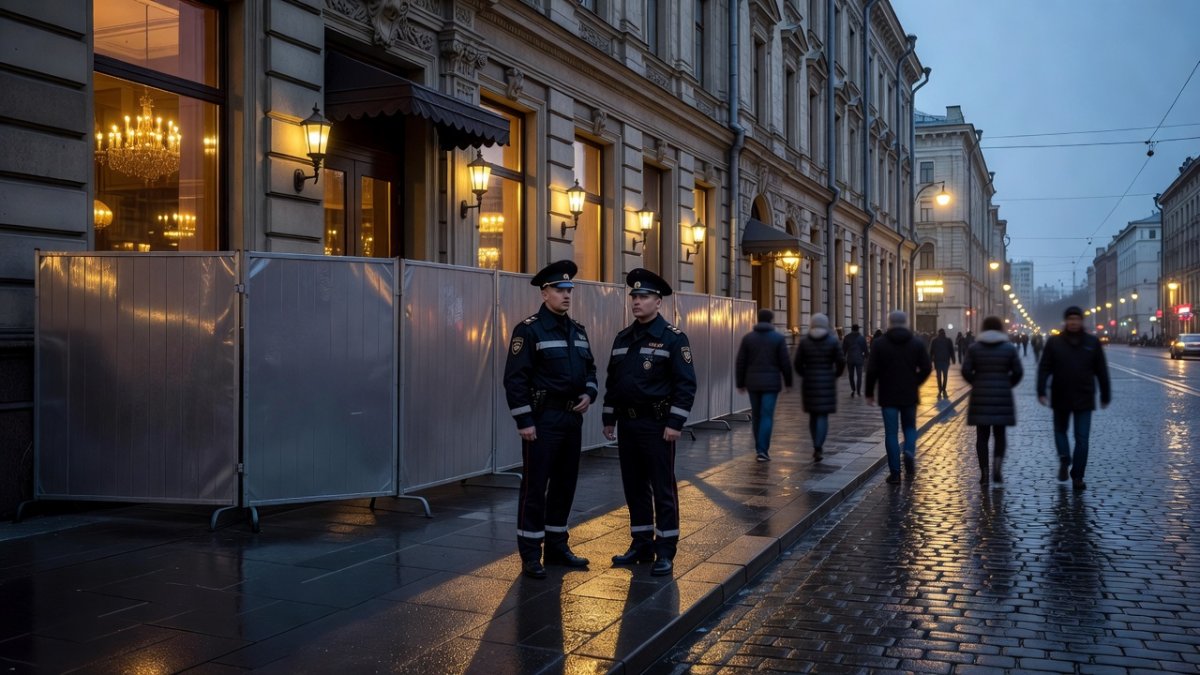
A homemade bomb exploded near an upscale Italian restaurant in central Moscow on Saturday evening, killing at least three people and injuring 21 others. The blast occurred around 7:50 p.m. Moscow time near the Balzi Rossi restaurant.
Moscow, Russia — The woman was dressed as a courier and was stopped by a security guard while attempting to enter the restaurant, where a private celebration was taking place. The device, filled with metal pellets, detonated before she could enter.
Attack Details and Timeline
The explosion took place on Saturday evening outside the Balzi Rossi Italian restaurant in central Moscow. Russian state media, citing the Interior Ministry, confirmed the death toll stood at three, including the suspected bomber, with 21 others wounded by shrapnel and blast effects.
Kommersant newspaper sources stated the bomb had been intended to maim and kill guests on the restaurant's summer terrace. The device detonated in the moments after the woman was halted at the entrance, limiting further casualties inside the building.
Kommersant sources indicate the summer terrace was the primary target zone, where the device's metal pellets would have maximized harm among seated guests during the evening hours. The timing of the detonation, occurring just outside the entrance rather than on the terrace itself, altered the casualty pattern in ways that investigators are likely examining through witness timelines and physical evidence from the scene. State media accounts, drawing on Interior Ministry data, note that the 21 injured received treatment for shrapnel wounds and blast trauma, underscoring how the device's construction influenced the distribution of injuries across bystanders in the immediate vicinity.
Analysis of the reported sequence suggests the blast's proximity to the restaurant entrance created a concentrated impact area, with emergency services responding to contain secondary risks such as structural damage or further devices. The shrapnel design, as described in official reports, points to an intent for fragmentation effects that could extend beyond the initial detonation point, a factor that may shape forensic reconstruction efforts in the coming days. Relative to the private event underway, this positioning limited deeper penetration into the venue while still affecting those near the doorway.
Interpretation of the timeline from available sources frames the incident as one where rapid intervention at the threshold contained what could have been a more contained terrace-focused outcome, directing attention to how urban dining spaces in central areas factor into response planning. The casualty figures released through state channels provide a baseline for assessing the device's effectiveness in its partial deployment, without yet addressing perpetrator coordination.
The Bomber's Disguise and Detonation
The woman approached the restaurant entrance wearing clothing typical of a delivery courier. A security guard intercepted her before she could pass through the doorway, according to accounts reported by state media.
Kommersant's sources suggested the woman carrying the bomb may not have known about it and that it may have been set off remotely by someone else. The presence of metal pellets inside the device increased the potential for widespread injury among bystanders on the terrace.
The courier disguise employed in the approach raises interpretive questions about how delivery personnel integrate into routine urban access patterns around central Moscow venues, potentially allowing closer proximity before security checks activate. Kommersant reporting on the remote-detonation possibility introduces analysis that a handler may have maintained line-of-sight or signal control from a nearby position, implying prior reconnaissance to identify the target's layout and timing. Such a method would shift investigative focus toward communication traces and surveillance footage rather than solely on the carrier's movements.
Framed as analysis, this disguise tactic suggests an adaptation to heightened entry protocols at upscale locations, where visible service roles provide a pretext that delays suspicion until the critical moment. The remote element, if substantiated through evidence, could indicate layered operational planning that separates the delivery vector from the activation decision, complicating attribution in the initial inquiry phase. State media descriptions of the clothing align with common courier attire, highlighting how everyday urban flows intersect with security assessments at social venues.
Further examination of the Kommersant-sourced theory points to implications for tracing any pre-event scouting, as the choice of disguise would require familiarity with the restaurant's entrance procedures to time the approach effectively. This dimension underscores the challenges for authorities in distinguishing routine deliveries from potential threats amid dense city activity.
Official Response and Investigation
Moscow Mayor Sergei Sobyanin described the incident as a "brutal terrorist act" without naming any group or individual responsible. Authorities including the FSB and the Investigative Committee immediately opened a formal inquiry into the explosion.
State media reports, drawing on Interior Ministry information, provided the initial casualty figures and confirmed the device's construction. No further operational details from the investigation have been released publicly at this stage.
Sobyanin's characterization of the event as a "brutal terrorist act" establishes an official interpretive frame that emphasizes severity while deferring specific perpetrator identification, a pattern seen in prior Russian statements on similar incidents. The joint involvement of the FSB and Investigative Committee signals a coordinated probe structure typical for cases elevated to national security status, with initial information flows routed through Interior Ministry channels for casualty confirmation. This setup allows for phased public updates that prioritize factual baselines over immediate conclusions.
Analysis of the response indicates that Russian officials often employ measured language in early statements to maintain investigative flexibility, avoiding premature links that could influence ongoing operations or public perception. The absence of named suspects at this stage aligns with standard practice of building evidence through forensic and intelligence channels before attribution. State media reliance on ministry data reinforces a controlled narrative that focuses on verified impacts rather than speculative motives.
Interpretation of the high-level inquiry launch suggests pressure on security structures to demonstrate rapid containment, particularly in the capital where such events draw immediate domestic attention. Future statements may follow established patterns of gradual disclosure as the probe advances, balancing transparency with operational security needs.
The Restaurant and Private Celebration
The Balzi Rossi restaurant was hosting a private celebration at the time of the blast. The summer terrace area, where the device was meant to cause harm according to Kommersant sources, sits directly adjacent to the main entrance.
Security measures at the venue included a guard stationed at the door who prevented the woman from entering. This intervention occurred moments before the detonation, containing the immediate impact to the area outside the building.
The private celebration at the upscale Balzi Rossi venue in central Moscow carries interpretive weight as a gathering point for potentially prominent attendees, amplifying the symbolic resonance of an attack on an elite social space. Unconfirmed social-media speculation regarding military or security ties among guests remains outside verified reporting and serves mainly to illustrate public discourse patterns following such incidents. The choice of location, with its summer terrace adjacent to the entrance, positions the event within a visible urban setting that underscores vulnerabilities in high-profile hospitality areas.
Analysis frames the venue's selection as potentially tied to its status as a destination for private functions, where security measures like on-site guards represent standard precautions that were tested in this instance. The intervention at the doorway, as described in accounts, highlights how such celebrations can become focal points when external access is involved. Keeping speculation labeled as unconfirmed preserves distinction between reported facts and broader online narratives.
Further context from the draft elements suggests the symbolism of striking a central Moscow establishment may factor into discussions of intent, though official channels have not yet addressed motive. This aspect directs attention to how elite venues navigate security amid ongoing urban routines.
Parallels to the 2023 Tatarsky Bombing
The method of delivery echoes the 2023 bombing that killed pro-war blogger Vladlen Tatarsky inside a St. Petersburg cafe. In that case, Darya Trepova was later sentenced to 27 years in prison for delivering a bomb concealed inside a statuette.
Both incidents involved an individual bringing an explosive device into a social setting under a seemingly innocuous pretext. Russian authorities have not yet drawn any official connection between the two events.
The 2023 Tatarsky incident, involving delivery of a concealed device to a St. Petersburg cafe, provides a reference point for examining carrier-based tactics where an individual serves as the vector into a social environment. Darya Trepova's subsequent 27-year sentence illustrates the legal outcomes applied in such cases, with the statuette concealment method demonstrating how innocuous items can mask explosives until the point of delivery. Parallels in the current event center on the use of a disguised approach to a gathering space, though Russian authorities have not established any formal connection.
Analysis of these elements suggests evolving considerations around remote activation components, as the Kommersant theory in the Moscow case introduces a potential handler dimension not detailed in the earlier bombing. The statuette precedent shows how pretexts facilitate entry, while the courier approach here adapts to restaurant-specific access points. Both highlight reliance on human carriers to bypass initial barriers in targeted settings.
Interpretation positions these similarities as indicators of persistent tactical patterns in urban attacks, warranting scrutiny of how investigations adapt to variations in concealment and detonation methods. The absence of official linkage keeps focus on distinct operational details emerging from each probe.
Broader Context of Attacks Amid the Ukraine War
This incident represents the latest in a series of attacks and incidents inside Russia amid the war in Ukraine. Social media speculation has linked the event to the ongoing conflict, noting that some guests at the private celebration had ties to the Russian military or security establishment.
Such incidents occur against the backdrop of heightened security operations by structures including the FSB. Ordinary Russians have experienced periodic disruptions from these events in recent months, though official statements have avoided direct attribution in this case.
A series of incidents inside Russia during the Ukraine conflict, including drone strikes, sabotage actions, and targeted killings, forms the backdrop against which this explosion occurs, with security structures like the FSB intensifying monitoring and response protocols. The Kremlin's tightened measures have led to periodic disruptions in daily routines for ordinary Russians, such as increased checks and alerts in public spaces. State media reporting on this event avoids direct attribution, consistent with patterns that separate verified facts from conflict-related speculation.
Analysis interprets the cumulative effect as heightening vigilance around social venues in major cities, where private events may intersect with perceived security risks. The war context influences public discourse, as seen in unverified online links, yet official statements maintain focus on the incident's immediate elements. This environment shapes investigative priorities toward rapid containment and evidence gathering.
Further framing notes that such attacks test the balance between sustained security operations and minimal interference in civilian life, with each event prompting reviews of urban access controls. The draft's reference to ongoing conflict underscores the persistent nature of these developments without assigning specific causation.
Analysis and Implications
State media reporting, citing the Interior Ministry, establishes the basic facts of the casualties and the device's construction without assigning responsibility. Kommersant's sources introduce the possibility of remote detonation, which investigators will need to examine through forensic evidence.
The involvement of the FSB and Investigative Committee signals a high-level response typical of incidents classified as terrorist acts. Mayor Sobyanin's statement frames the event in strong terms while leaving open questions about perpetrators that the ongoing inquiry may address.
Future updates from the investigation could clarify whether the attack fits patterns seen in prior cases or represents a distinct operation. Russian security structures continue to monitor such developments as the war in Ukraine persists.
The attack signals interpretive concerns about security layering in the capital, where entrance protocols at venues like restaurants face tests from disguised approaches that exploit routine urban activity. Potential political fallout may include renewed scrutiny of FSB coordination in preventing similar incidents, particularly as high-level probes unfold under joint agency structures. Pressure on security services could manifest in accelerated forensic work to clarify remote-detonation elements referenced in Kommersant sources.
Analysis of implications points to watch points in coming days, such as updates on the device's components and any identified reconnaissance indicators, which could inform adjustments to public-space monitoring. The event's classification as a terrorist act by Sobyanin frames expectations for sustained investigative resources, aligning with responses to prior cases. This dynamic may influence broader discussions on capital security without immediate operational disclosures.
Interpretation emphasizes the need to track how the inquiry balances attribution with evidence thresholds, as patterns from related incidents suggest phased information release. Such developments could affect public confidence in security measures amid the wider conflict environment.
By Irina Volkov, Staff Writer
This article was produced with AI-assisted research and editorial support. Reporting is based on sources cited in the article.
What's Your Reaction?
 Like
0
Like
0
 Dislike
0
Dislike
0
 Love
0
Love
0
 Funny
0
Funny
0
 Wow
0
Wow
0
 Sad
0
Sad
0
 Angry
0
Angry
0
Russia/Eastern Europe Correspondent at Global1.News. Covering Russian politics, energy, security, and the shifting dynamics of the post-Soviet space. Provides clear-eyed analysis on one of the world's most opaque regions.










Comments (0)