
AARP Says a Shrinking Tax Base Cost Social Security 25 Years. Sanders Wants to Expand It.
AARP's Public Policy Institute says the share of the economy subject to Social Security payroll taxes fell from 41 percent of GDP in 1983 to 34 percent in 2025, costing the trust fund 25 years of solvency. Sen. Bernie Sanders expects to chair the Senate subcommittee weighing the fix.
AARP's research arm published a paper this week with a number that cuts against nearly everything Washington says about Social Security: the program's money problem is not mainly that America got old. It is that the economy stopped paying in.
AARP Says a Shrinking Tax Base Cost Social Security 25 Years. Sanders Wants to Expand It.
WASHINGTON — The report, from the AARP Public Policy Institute, measures a single share of the economy and follows it for four decades. The result lands in the middle of a fight that is about to change hands in Congress.
Two Shares That Stopped Tracking
The paper is titled "Shifting Income Patterns Have Shortened the Life of Social Security's Trust Fund by 25 Years." Its author is Richard W. Johnson, vice president of financial security at the AARP Public Policy Institute, and it is dated Nov. 10. The central measurement is this: earnings subject to the Social Security payroll tax equalled 41 percent of gross domestic product in 1983. By 2025, that share had fallen to 34 percent, and the institute expects it to stay near that level for decades. Had the share held at 41 percent, the paper estimates, Social Security could have paid full scheduled benefits until 2059. That is roughly 25 years beyond the combined trust funds' projected depletion in 2034. The revenue that never arrived is estimated at $10.8 trillion between 1984 and 2034, expressed in inflation-adjusted 2025 dollars. The paper also measures the shift inside the paycheque. Labor income's share of gross domestic product fell from 65 percent in 1970 to 57 percent in 2023, while corporate profit and investment return grew faster than worker compensation. Research the paper cites from the American Enterprise Institute puts numbers on the tilt: between 1979 and 2019, inflation-adjusted wage and salary income rose 41 percent for workers at the 90th percentile and 7 percent for workers at the 10th.
What the Trustees Actually Project
The baseline numbers come from the trustees' June report, not from AARP. Under the trustees' intermediate assumptions, the Old-Age and Survivors Insurance fund pays 100 percent of scheduled benefits until the fourth quarter of 2032, one quarter earlier than the 2025 report projected. At that point continuing income covers 78 percent of scheduled benefits, a share that slides to 62 percent by 2100. The disability fund stays positive through the 75-year window. Combined, the two legally separate funds run dry in the third quarter of 2034, when 83 percent of scheduled benefits would be payable, declining to 65 percent by 2100. AARP ran its analysis against the 2034 date because Congress has moved money between the two funds before. Read plainly, 78 percent payable means a 22 percent reduction from promised levels.
The Ledger From Last Year
The trustees' account of 2025 shows the gap already open. The retirement fund's cost of $1,448.8 billion exceeded its income by $200.0 billion. The disability fund ran the other way, with income of $200.5 billion exceeding cost by $39.8 billion. Combined, Social Security's cost exceeded income by $160.2 billion. An estimated 184.7 million people paid Social Security payroll taxes in 2025, and payroll taxes accounted for about 91 percent of the retirement fund's income and 96 percent of the disability fund's. AARP's own breakdown of program revenue puts payroll taxes at 91 percent, interest income at 5 percent and federal income taxes paid by higher-income beneficiaries on their benefits at 4 percent. The trustees also note that this year's tax legislation, the One Big Beautiful Bill Act, reduced projected revenue from taxing benefits, because lower rates and larger deductions leave less of each benefit taxable.
Who Pays In, and Who Stops Paying
The mechanism is an annual ceiling. Workers and employers each pay 6.2 percent, 12.4 percent combined, and self-employed workers pay the full 12.4 percent. The tax applies only up to a taxable maximum: $184,500 in 2026, rising to $192,300 in 2027. Above that line, earnings carry no Social Security tax at all. AARP's figures put just 6 percent of individuals at or above the cap in 2024, which is why the institute argues that lifting it would spare most workers. The ceiling rises each year with average wages. What it does not do, the paper argues, is follow a wage distribution that has changed shape: more income now arrives as business profit, investment return or pay above the cap, and none of that is taxed for Social Security.
The Argument AARP Wants to Break
Johnson is direct about the target. "Social Security's finances have weakened not simply because America has grown older, but because the economy has changed, while the program's revenue system has not," he said at a briefing on the research. Bill Sweeney, AARP's senior vice president for government affairs, is blunter. "There are groups in Washington peddling the idea that we should raise the retirement age and cut Social Security," he said. "This report blows a hole in their argument." The organization also brought polling: in its post-election survey, 80 percent of all voters and 90 percent of older voters said it is very or extremely important for Congress to protect Social Security from cuts. The paper itself does not endorse a bill, and AARP has not backed specific benefit changes. Johnson's summary line is the one to keep: "The fix for Social Security isn't cutting earned benefits; it's rebuilding the revenue behind them." Demography is still in the story. The institute's own figures show the worker-to-beneficiary ratio falling from 3.4 in 2000 to a projected 2.4 by 2030. The argument is about proportion, not about whether aging matters.
The Case Against the Cap Fix
The counterargument is not that the arithmetic is wrong. It is that the arithmetic is not enough. "Eliminating the payroll tax cap wouldn't even cover the benefits Congress has already promised, let alone fund an expansion," said Romina Boccia, director of budget and entitlement policy at the Cato Institute. She was responding to a separate proposal to raise benefits, but her objection applies to the revenue debate as a whole: taxing more of the same economy, she argues, does not produce the growth that makes the promise affordable. Two other data points sit beside the cap question without settling it. The trustees estimated that lifting the combined payroll tax rate to 16.65 percent in January 2026 would have kept the combined program solvent through 2100. A February University of Maryland School of Public Policy survey of 2,509 adults found 62 percent would support a smaller, gradual rise from 6.2 to 6.5 percent.
What 1983 Assumed
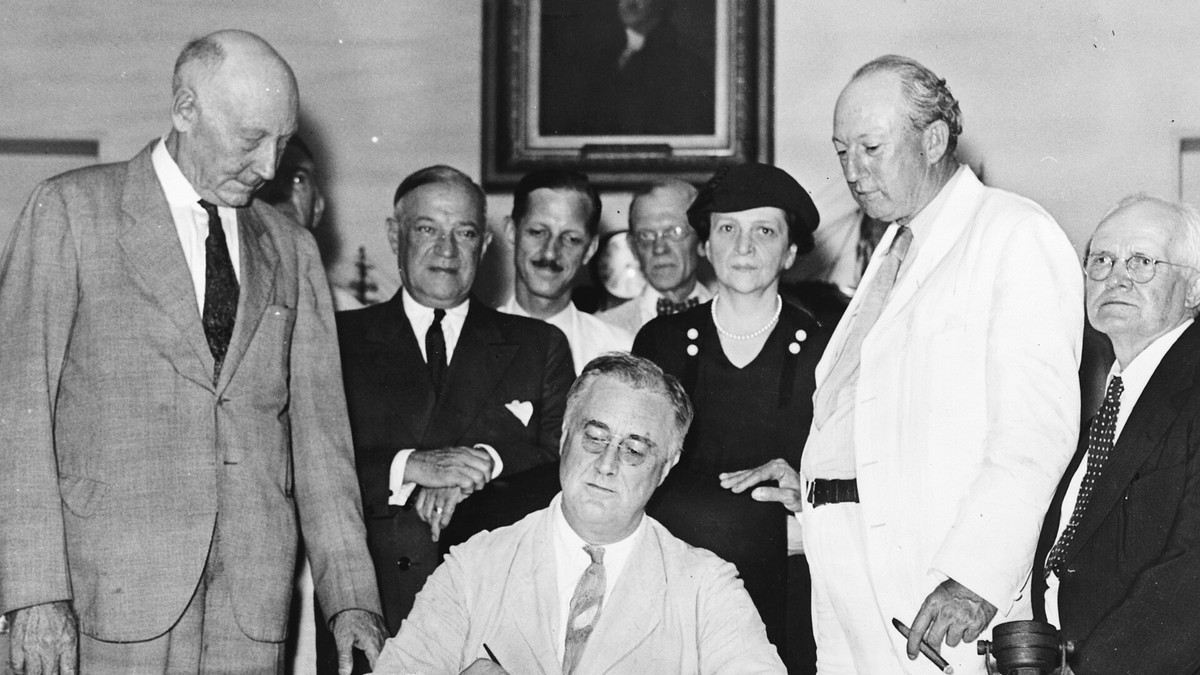
The last restructuring is the reference point for all of this. When Congress passed the 1983 reforms, the payroll tax captured about 90 percent of all eligible earnings, and the 75-year solvency projections assumed that would hold. Stephen Nuñez, director of stratification economics at the Roosevelt Institute, found in an analysis published in January that the share had fallen to roughly 82 to 83 percent by 2000. He argues the actuaries got almost everything right in 1983 but could not foresee the rise in income inequality or the depth of the 2007-2008 recession. He also objects to the way the shortfall is described, saying the near-exclusive focus on the retirement wave rather than the economic shift is "very frustrating." The 1983 package raised the retirement age from 65 to 67, delayed the cost-of-living adjustment by six months and made some benefits taxable. AARP's Jenn Jones said those changes cut lifetime retirement benefits by about 19 percent for people turning 65 in 2026.
What Changed on Nov. 3
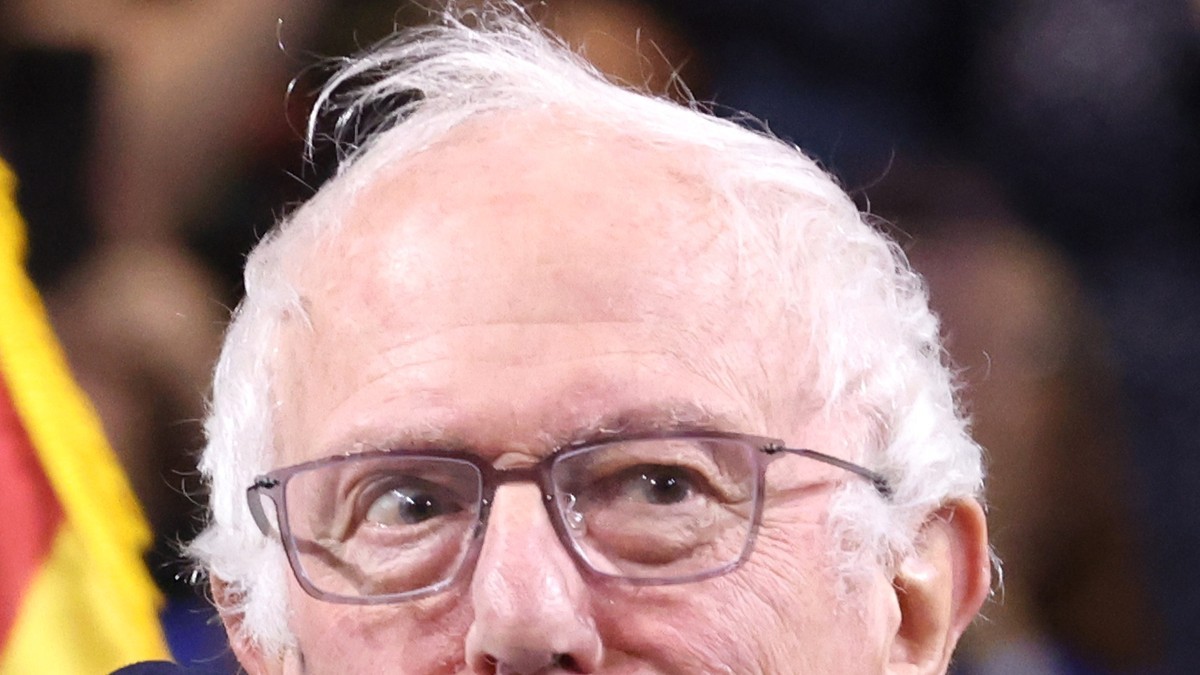
The politics moved nine days ago. BBC News reported that Democrats won both the Senate and the House, taking control of Congress for the rest of Donald Trump's presidency. Published seat counts still differ by outlet as the last races are called. The consequence for this debate is a gavel. Sen. Bernie Sanders, the Vermont independent who caucuses with Democrats, posted on X on Saturday that he expects to chair the Senate Social Security subcommittee. "A top priority will be to expand Social Security benefits by at least $2,400 a year & extend Social Security's solvency for generations," he wrote. "How? By scrapping the cap & demanding that the wealthy pay their fair share of taxes." He would succeed Sen. Chuck Grassley, the Iowa Republican, and take the post in January.
The Bills Already on the Shelf
Sanders is not starting from nothing. His Social Security Expansion Act would apply payroll taxes to all income above $250,000, add the $2,400 annual increase, about $200 a month, on top of the cost-of-living adjustment, and base that adjustment on the Consumer Price Index for the Elderly. His fact sheet says it protects 91 percent of households making $250,000 or less from any tax increase. The Social Security 2100 Act would eliminate the cap and add a tax on investment income for taxpayers earning more than $400,000, covering stock gains, dividends and rental income but not 401(k)s or IRAs. The Medicare and Social Security Fair Share Act sits alongside them. AARP's own scoring says closing the cap entirely would address 67 percent of the 75-year gap only if new contributions do not buy higher benefits, and that a 12.4 percent tax on certain investment income would cover about 25 percent.
What Six Years Buys
The calendar does not care who chairs what. The fourth quarter of 2032 is a little under six years away, and the 2027 cost-of-living adjustment of 3.6 percent, announced on Oct. 14, changes none of it. The Social Security Administration said nearly 72 million beneficiaries will receive that increase beginning in January. The first bigger Supplemental Security Income checks are due Dec. 31, the Clarion Ledger reported. Personal notices will be available online late this month and mailed in December. The trustees recommended that lawmakers address the shortfall early so changes can be phased in gradually. No vote is scheduled this week. What is available now is the record: an earnings statement at ssa.gov, the trustees' report, and a paper arguing that the shortfall was built by the tax base, not by retirees.
By Jessica Ali, Staff Writer
This article was produced with AI-assisted research and editorial support. Sources: AARP Public Policy Institute; Social Security Administration 2026 Trustees Report and 2027 COLA announcement; CNBC; Quartz; MarketWatch; USA TODAY; BBC News; NBC News; Cato Institute; Roosevelt Institute. Cover: Global 1 News editorial image. Photographs: Architect of the Capitol (public domain); Gage Skidmore, CC BY-SA 2.0; Social Security Administration (public domain).
What's Your Reaction?
 Like
0
 Dislike
0
 Love
0
 Funny
0
 Wow
0
 Sad
0
 Angry
0

Editor-in-Chief at Global1.News. Atlanta-based journalist who cuts through the BS and tells it like it is. Lead anchor, host, and the voice you hear when the spin stops and the truth starts.















Comments (0)