
Gaza's 15,000 Missing: Families Demand Answers
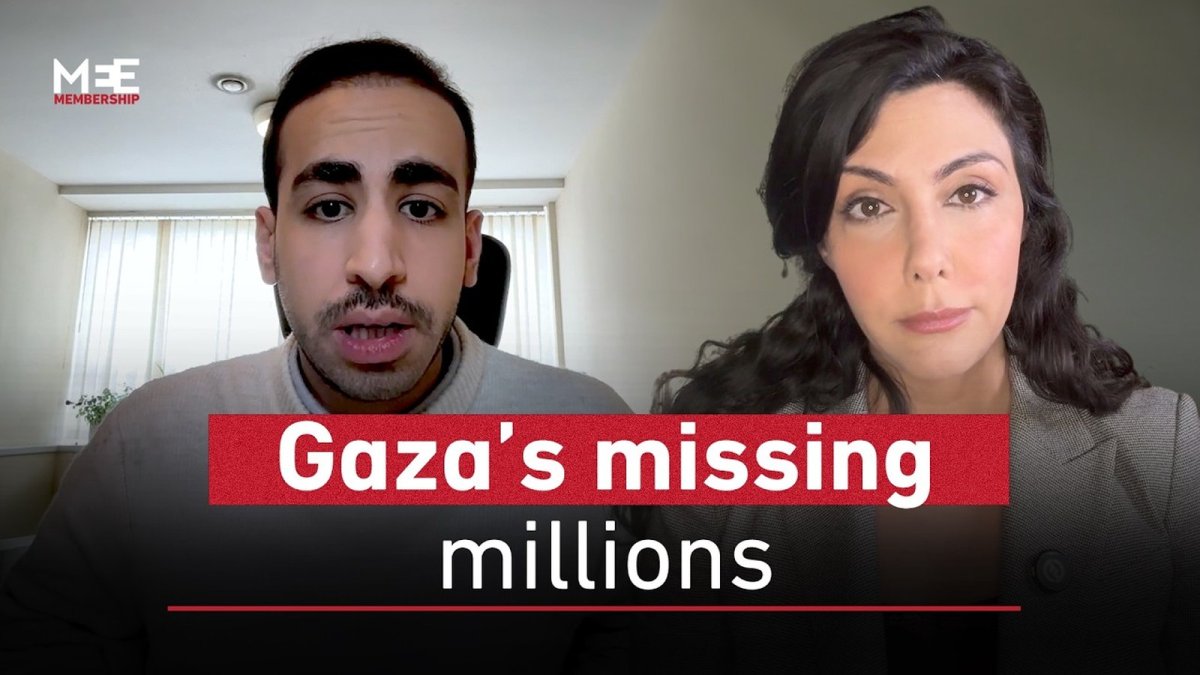
In a recent Middle East Eye report, journalist Rhana Natour spoke with Palestinian journalist Mahmoud Mushtaha about his WIRED investigation that places the number of missing Palestinians in Gaza at around 15,000, a figure 50 percent higher than earlier counts from health authorities. The interview highlights the absence of forensic tools and the ongoing searches by families amid rubble and morgues.
In a recent Middle East Eye report, journalist Rhana Natour spoke with Palestinian journalist Mahmoud Mushtaha about his WIRED investigation that places the number of missing Palestinians in Gaza at around 15,000, a figure 50 percent higher than earlier counts from health authorities. The interview highlights the absence of forensic tools and the ongoing searches by families amid rubble and morgues. This development underscores the deepening uncertainty for thousands of households nearly three years after the war began.
Gaza's 15,000 Missing: Families Demand Answers
Gaza City, Palestine - August 6, 2026 - Palestinian journalist Mahmoud Mushtaha's investigation with WIRED reveals that approximately 15,000 people remain missing in Gaza, far exceeding the estimates previously documented by health authorities and rights groups. Families continue daily searches through destroyed neighborhoods and hospital records, often without resolution. The lack of identification resources leaves relatives in prolonged limbo.
The Scale of Those Unaccounted For
Estimates of Gaza's missing vary sharply across sources. The Gaza Health Ministry reports more than 9,500, while the Palestinian Center for the Missing and Forcibly Disappeared places the figure near 9,000. A WIRED investigation cited in Middle East Eye coverage raises the total to approximately 15,000, reflecting cases where individuals vanished without confirmed death or detention records. At least 7,400 people remain reported buried under rubble, according to Zaher al-Waheidi of the Gaza health ministry records department, with recovery slowed by Israeli restrictions on heavy equipment and risks from unexploded ordnance.
These numbers sit against a pre-war population of 2.1 to 2.3 million and a death toll exceeding 73,377 since October 7, 2023, per Gaza health ministry data as of August 4, 2026. The gap between official counts and the WIRED estimate reflects cases that fall through documentation systems entirely.
Hassan's Disappearance and Family Search
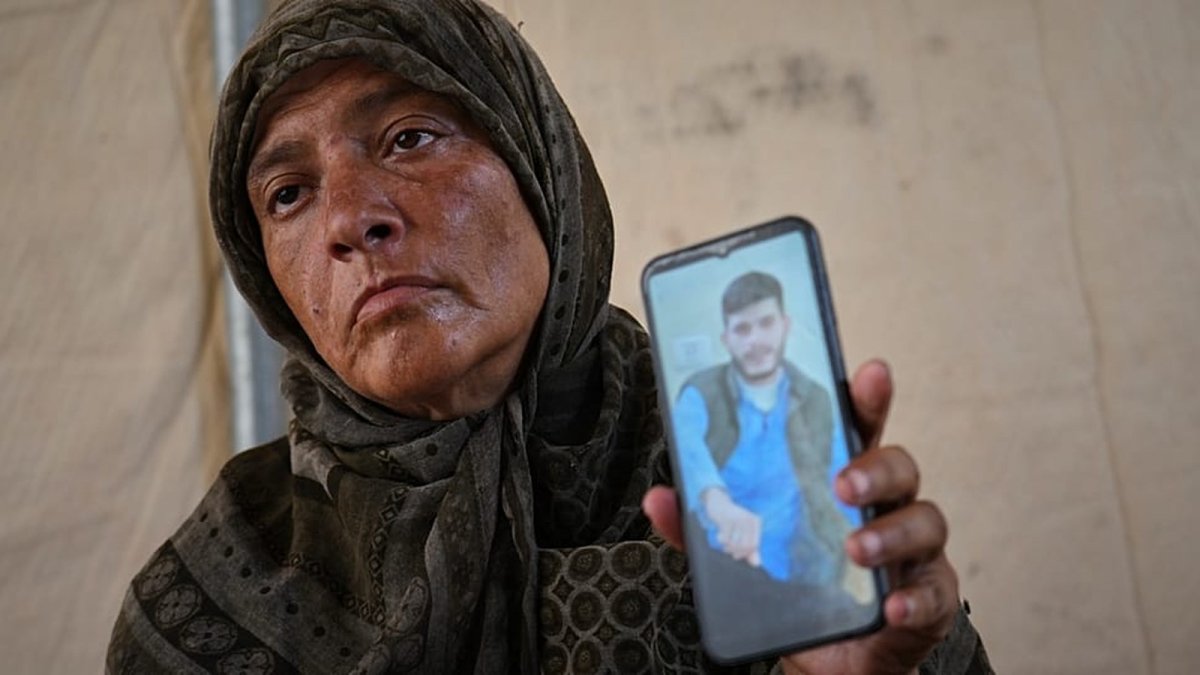
Sixteen-year-old Hassan, who is autistic, lived with his family in al-Tuffah, east of Gaza City. One afternoon he took his bicycle and rode out of the neighborhood, as he had done many times before the war. He never came back. Days later, his father Ali went to Al-Shifa Hospital, where the corridors were lined with bodies wrapped in blankets and plastic; he looked, registered what he could, and moved on, then went home and broke down for the first time since his marriage. His mother Abeer stated, "If you want me to leave this city, bring me my son first. Put him in my hands, and I will go." His father has checked every released detainee group since the ceasefire took effect on October 10, 2025, and on January 19, 2026, ran to question a released 16-year-old who might have seen him. Two years later, the family holds no confirmation of his fate.
Forensic Tools Blocked by Restrictions
Khalil Hamada, who heads Gaza's forensic medicine department at Al-Shifa Hospital since 2022, explained that toxicology testing, genetic analysis, and biometric scanners remain on Israel's dual-use list since the 2007 blockade. "For years, we appealed to the World Health Organization and the International Committee of the Red Cross for forensic equipment. Nothing was allowed in," he said. Ziyad Ashour, head of the Medical Evidence Section, added that DNA testing, the global standard for identification, is unavailable in the Gaza Strip.
Hamada's team works with rudimentary methods: a digital photograph, a hand-filled form recording a case number and date, an estimated age and height when possible, and notes on clothing. Only a few hundred unidentified bodies have been formally archived, a tiny fraction of the total, and Gaza maintains no biometric database to match remains against family reference samples. Forensic identification itself grew out of conflict, with one of its earliest recorded uses dating to 1776; in Gaza, that historical progress has been denied.
Bodies Returned Without Identification
During the January 2024 truce, an international NGO brought a forensic specialist from Oslo University who trained ten Palestinian doctors in emergency mass-fatality documentation and evidence preservation. In October and November 2025, Israel returned 315 bodies to Gaza after a ceasefire, yet 182 arrived unnamed and without paperwork; of the remainder, 91 were identified, almost always because relatives recognized clothing or features. Hamada noted, "The bodies arrive void of information." A committee of representatives from the Health Ministry, the Ministry of Religious Affairs, and the Palestinian Civil Defense authorizes the burial of remains in numbered graves when identification fails.
Secret Detentions and Limited Tracing
HaMoked's detainee-tracing mechanism, introduced in May 2024, has confirmed 3,353 cases of detention out of 4,985 traced individuals. Responses often state only "no indication" of arrest without further detail. The OHCHR has verified 89 deaths of Palestinians in Israeli custody since October 7, 2023, while Physicians for Human Rights records 94. The ICRC remains denied access to detainees.
Tracing mechanisms have narrowed sharply since the war began. The May 2024 system requires families to send a signed power of attorney authorizing a lawyer or human rights organization to file a tracing request, a difficult task under displacement. This contrasts with pre-war patterns where ICRC access and HaMoked's hotline operated unevenly but offered some predictability. The 89 verified deaths in Israeli custody, including 88 men and one boy, are described by rights groups as likely undercounts given the ICRC's denied access.
Some individuals have reemerged alive after secret detention, including Ehab Diab, 35, following a late 2023 raid. On January 19, 2026, eight detainees released to Al-Aqsa Martyrs Hospital included a 16-year-old; Hassan's father Ali asked the released teen whether he had seen his son. Families navigate conflicting reports of custody or death through informal networks while awaiting formal information.
One Family's Lingering Uncertainty
Bisan Fadl Fayyad, 31, was reported missing on January 7, 2024, in Deir al-Balah. Her family received three badly burned body parts and her damaged ID card, which they buried. On August 17, 2025, reports emerged that she was alive in Israeli custody. Her brother Anan posted, "If she was martyred, may God have mercy on her. If she is in detention, I ask God to bring her back to us soon."
Analysis and Implications
Mayy El Sheikh of the OHCHR emphasized that Israel holds an obligation under international humanitarian law, including the Geneva Conventions, to take all feasible measures to account for missing persons. The Israeli military maintains it operates in accordance with international law and takes feasible precautions to minimize civilian harm. The sustained denial of forensic equipment stands as a distinct barrier to that duty, separating Gaza from the identification systems present in most modern conflicts. Reem Amin Youssef Fayad, whose son remains missing, described the state as one of limbo between conflicting reports.
Ceasefire fragility adds pressure: more than 1,200 people have been killed since the truce took effect on October 10, 2025. In November 2025, Gaza authorities proposed issuing death certificates for those missing more than six months after the ceasefire, even without an identified body, to help families unlock inheritance and guardianship rights. Hassan's mother Abeer keeps the trousers of the tracksuit he wore the day he vanished, along with a voice message he sent days before disappearing; his father Ali has walked hospital corridors and met released detainees in search of any trace. These cases illustrate the prolonged uncertainty that shapes daily decisions and future planning across affected communities. What families are asking for is specific: entry for heavy equipment and trained forensic personnel, DNA testing and genetic analyzers, functioning tracing mechanisms for detainees, and bodies returned with the documentation international humanitarian law requires. Without those measures, the search for the missing becomes an open wound that will shape Gaza's grieving for generations.
By Fatima Al-Rashid, Staff Writer
This article was produced with AI-assisted research and editorial support. Reporting is based on sources cited in the article.
What's Your Reaction?
 Like
0
Like
0
 Dislike
0
Dislike
0
 Love
0
Love
0
 Funny
0
Funny
0
 Wow
0
Wow
0
 Sad
0
Sad
0
 Angry
0
Angry
0

Gulf/MENA Correspondent at Global1.News. Based in Doha, covering Gulf politics, energy markets, diplomacy, and development across the Middle East and North Africa. Tracks the economic transformation of the Gulf states.












Comments (0)