
Arab, Muslim Ministers Meet in Jordan on Jerusalem
Arab and Muslim ministers met in Jordan on Wednesday to oppose Israeli policies in Jerusalem, with officials from Jordan, Egypt, Saudi Arabia, Algeria, Tunisia, Pakistan, and Iraq issuing statements on holy sites, settlements, and the two-state solution, highlighting impacts on Palestinian worship and daily life in East Jerusalem.
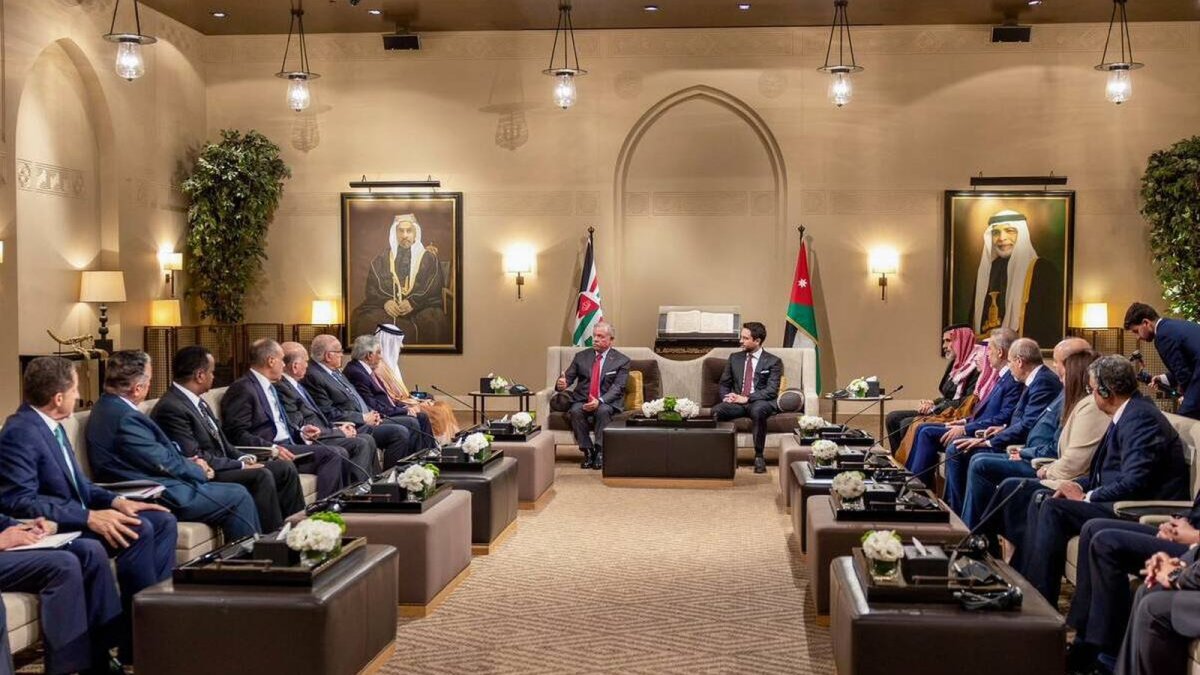
Arab and Muslim foreign ministers gathered in Jordan on Wednesday to coordinate a unified stance against Israeli policies in Jerusalem, as officials described mounting pressures on the city's identity and its holy sites. The meeting, hosted in Amman, brought together the Arab ministerial committee on Jerusalem, Arab League Secretary-General Ahmed Aboul Gheit, and foreign ministers from Turkiye, Pakistan, Indonesia, and Malaysia to address developments at the city's Islamic and Christian places of worship.
Meeting Convened Amid Concerns Over Jerusalem's Status
Jordan's state news agency Petra reported that participants focused on forging a joint position to counter Israeli measures in East Jerusalem and the Old City. The gathering included representatives tasked with confronting policies affecting the Palestinian territories, with discussions centering on settlement construction, land issues, and access to religious sites. Officials stressed the need for coordinated diplomatic efforts to uphold the historical character of Jerusalem.
The Arab ministerial committee on Jerusalem functions as a specialized body within the Arab League framework, bringing together foreign ministers to develop coordinated responses to Israeli policies affecting the city and its religious sites. Amman serves as a regular venue for these gatherings because of Jordan's geographic proximity and its established diplomatic role in regional affairs. Following the 1967 occupation of East Jerusalem, the territory has been treated under international law as occupied, with numerous United Nations resolutions affirming that status and rejecting unilateral changes to its character.
Jordan holds the Hashemite Custodianship over the Islamic and Christian holy sites in Jerusalem, a responsibility that involves oversight of maintenance and access arrangements at key locations. The preservation of the longstanding status quo at Al-Aqsa Mosque/Al-Haram Al-Sharif carries broad international weight, as alterations risk inflaming religious sensitivities across Muslim and Christian communities worldwide and complicating efforts toward negotiated solutions in the region.
Jordanian Foreign Minister Details Threats to Holy Sites
Jordanian Foreign Minister Ayman Safadi opened the session with a stark assessment of the city's position, accusing Israel of tightening control over East Jerusalem through settlement construction, land annexation, property confiscation, and restrictions that isolate the city from the rest of the Palestinian territories. Safadi described these steps as part of a plan targeting the city's identity, history, present, and future, while also noting violations of the sanctity of sites and limits on freedom of worship for Muslims and Christians. He highlighted pressures on Christian clergy and churches from extremist attacks and legislation aimed at seizing property, as well as efforts to alter the status quo at Al-Aqsa Mosque/Al-Haram Al-Sharif.
Jordanian Foreign Minister Ayman Safadi warned that "Jerusalem is facing an escalating danger" and that holy sites were under an unprecedented threat during the session. These remarks highlighted concerns over settlement expansion, property measures, and restrictions that limit worship access for local communities. In practice, altering the status quo at Al-Aqsa Mosque/Al-Haram Al-Sharif often involves adjusted entry times, permit requirements for worshippers, and organized visits by settlers accompanied by security forces, practices that can heighten friction at the compound.
The site remains a regional flashpoint because it holds profound significance for Muslims globally while also forming part of a contested urban landscape in East Jerusalem. Any perceived shift in access or control can quickly draw reactions from neighboring states and religious authorities, underscoring the delicate balance required to prevent wider unrest and maintain the site's role as a place of worship for diverse communities.
Egypt, Saudi Arabia, and Algeria Reaffirm Support for Custodianship
Egyptian Foreign Minister Badr Abdelatty rejected any measures that would change Jerusalem's Arab, Islamic, and Christian identity and reiterated Cairo's backing for Jordan's Hashemite Custodianship over the holy sites. He warned that settlement expansion and settler violence undermine prospects for a two-state solution and rejected any displacement of Palestinians from Gaza or the occupied West Bank, including East Jerusalem. Saudi Foreign Minister Prince Faisal bin Farhan condemned ongoing violations in Gaza and declared that unilateral Israeli measures, including settlement expansion and attempts to alter the status of holy sites, are null and void. He emphasized that East Jerusalem is the capital of the State of Palestine and urged the international community to take practical steps to halt violations and protect the sites. Algerian Foreign Minister Ahmed Attaf cautioned against plans to alter Jerusalem's Arab, Islamic, and Christian identity and called for coordinated Arab and international diplomatic action to safeguard the city and support the Palestinian people.
Arab states frequently describe Israeli measures in Jerusalem as "null and void," a formulation drawn from international legal precedents established by the United Nations Security Council and the International Court of Justice. This language frames such actions as lacking legitimacy under occupation law and reinforces collective positions against settlement growth or changes to holy site arrangements. Saudi Arabia's explicit statement that East Jerusalem constitutes the capital of the State of Palestine aligns with long-standing Arab consensus on the two-state framework.
Egypt's opposition to any displacement of Palestinians from Gaza or the West Bank stems from concerns over regional stability and the humanitarian consequences of forced movement. By reaffirming support for Jordan's custodianship, Cairo and other capitals signal continuity in protecting the religious character of the sites while linking these efforts to broader diplomatic initiatives aimed at upholding Palestinian rights and preventing further fragmentation of the occupied territories.
Additional Voices from Tunisia, Pakistan, and Iraq
Tunisian Foreign Minister Mohamed Ali Nafti described preserving Jerusalem's identity and protecting its Islamic and Christian holy sites as a collective responsibility. He reaffirmed Tunisia's rejection of settlement expansion, forced displacement, and attempts to change the city's historical, legal, and demographic status. Pakistani Foreign Minister Ishaq Dar condemned incursions by extremist Israeli settlers into Al-Aqsa Mosque/Al-Haram Al-Sharif, noting that such actions undermine the site's religious and historical standing and risk broader conflict. He stated that all measures seeking to alter the character or status of occupied East Jerusalem or its holy sites are null and void, while expressing concern over settlement expansion, settler violence, and oppression of Palestinians in the occupied West Bank. Iraqi Foreign Minister Fuad Hussein condemned continued violations in Jerusalem, including incursions into Al-Aqsa Mosque, settlement expansion, and forced displacement, and called for stronger diplomatic efforts to preserve the city's historical and legal status while supporting an independent Palestinian state with East Jerusalem as its capital.
Impact on Daily Life for Palestinians and Worshippers
These policies described by the ministers carry direct consequences for Palestinians living in East Jerusalem, where restrictions on movement and access limit family connections and economic activity. Worshippers at Al-Aqsa Mosque/Al-Haram Al-Sharif face repeated barriers to prayer, affecting the spiritual routines central to Muslim communities across the region. Christian residents in the Old City report similar strains on their institutions, with pressures on clergy and church properties disrupting longstanding communal practices. The measures also separate Jerusalem from surrounding Palestinian areas, fragmenting social ties and access to services that sustain daily existence under occupation.
Restrictions in East Jerusalem, including home demolitions, forced displacement, and complex permit systems, place sustained pressure on Palestinian families seeking to maintain residence and family ties. Checkpoints and barriers fragment movement between the city and surrounding West Bank areas, complicating access to employment, education, and medical services. Settler violence adds another layer of insecurity, often disrupting routines and limiting safe passage for residents in affected neighborhoods.
The Christian community in the Old City faces particular strains from property disputes and institutional pressures that threaten historic presence in the area. Economic isolation results as Jerusalem becomes increasingly separated from its traditional hinterland, reducing commercial flows and deepening dependence on limited local resources. These overlapping constraints affect worship patterns at Al-Aqsa Mosque/Al-Haram Al-Sharif and other sites, where access barriers interrupt regular spiritual practices central to community life.
Calls for Unified Action and Preservation of the Two-State Path
Throughout the meeting, ministers urged Arab and Muslim countries to act together in protecting Jerusalem and its holy sites while rejecting settlement activities. They linked these efforts to support for the Gaza peace plan and UN Security Council Resolution 2803, alongside broader diplomatic work to defend Palestinian rights. The discussions underscored the two-state solution as the framework for a just peace, with repeated affirmations that East Jerusalem serves as the capital of a future Palestinian state. Arab League Secretary-General Ahmed Aboul Gheit participated in the talks aimed at translating these positions into sustained international engagement.
By Fatima Al-Rashid, Staff Writer
This article was produced with AI-assisted research and editorial support. Reporting is based on sources cited in the article.
What's Your Reaction?
 Like
0
Like
0
 Dislike
0
Dislike
0
 Love
0
Love
0
 Funny
0
Funny
0
 Wow
0
Wow
0
 Sad
0
Sad
0
 Angry
0
Angry
0
Gulf/MENA Correspondent at Global1.News. Based in Doha, covering Gulf politics, energy markets, diplomacy, and development across the Middle East and North Africa. Tracks the economic transformation of the Gulf states.















Comments (0)