
Banyana Banyana 1-0 Burkina Faso: WAFCON Quarter-Finals
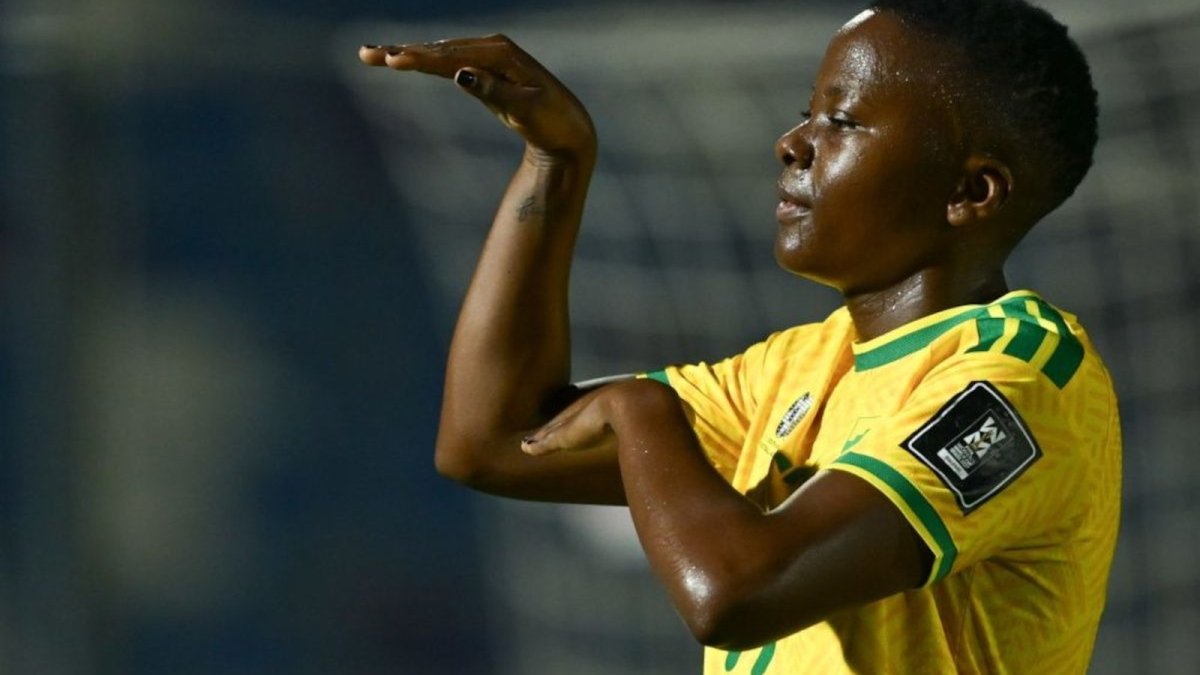
Banyana Banyana defeated Burkina Faso 1-0 at Stade Moulay Rachid in Casablanca on Tuesday night, 4 August 2026, to advance to the WAFCON quarter-finals. Thembi Kgatlana scored the decisive goal in the 21st minute from a pass by Fikile Magama. The result keeps South Africa's continental title defence alive and opens a path to the 2027 FIFA Women's World Cup.
Tags: Banyana Banyana, WAFCON, Thembi Kgatlana, Desiree Ellis, Morocco, World Cup qualification, SAFA, women's football
Match Report: Kgatlana's Early Strike Seals Victory
The decisive moment arrived in the 21st minute when Thembi Kgatlana converted a defence-splitting pass from Fikile Magama. Kgatlana finished calmly past the Burkina Faso goalkeeper to give South Africa the lead they never surrendered. Coach Desiree Ellis had named an experienced starting XI that included Kaylin Swart, Bambanani Mbane, Refiloe Jane, Linda Motlhalo, Hildah Magaia, Noxolo Cesane and Kgatlana herself.
Isabella Ludwig, making her first WAFCON start for Mamelodi Sundowns, helped control midfield alongside the veterans. Hildah Magaia reached 50 caps during the match, while substitute Gabriela Moodaly-Salgado also earned her 50th appearance after coming on in the second half. The team showed discipline and structure, limiting Burkina Faso's attacks while protecting the narrow lead until the final whistle.
Group B Drama: Head-to-Head Twist Decides Second Place
South Africa finished second in Group B with four points after losing their opener to Tanzania, drawing 2-2 with Ivory Coast and then beating Burkina Faso. Ivory Coast topped the group with seven points following their 2-1 win over Tanzania. Tanzania and Burkina Faso both exited with three points each.
The win alone was not enough for Banyana. Final standings required Ivory Coast to defeat Tanzania because head-to-head records would decide tied points. That result arrived, confirming South Africa's progression. The permutations added tension right until the final group match concluded.
The path through Group B tested every ounce of Banyana Banyana’s resolve, turning what could have been a straightforward campaign into a tense calculation that hinged on results elsewhere. After an opening defeat to Tanzania and a hard-fought draw against Ivory Coast, the narrow victory over Burkina Faso left the team needing external assistance. Ivory Coast’s subsequent 2-1 win over Tanzania delivered the required outcome, confirming second place on four points while the top side finished with seven. This sequence underscored how continental tournaments reward not only on-field performance but also an understanding of tie-breaker mechanics that can shift dramatically in the final moments of the group phase.
Burkina Faso arrived with early attacking intent, carving out promising openings that forced South Africa to absorb pressure before settling into rhythm. Isabella Ludwig, earning her first WAFCON start, nearly broke the deadlock with a header that flashed wide moments before the decisive strike. The disciplined response after the interval, when Burkina Faso pushed more bodies forward, highlighted a collective maturity that limited clear opportunities. Reaching fifty caps each for Hildah Magaia and Gabriela Moodaly-Salgado during the fixture added emotional weight, symbolising the depth of experience now embedded in the squad.
Quarter-Final Showdown: Banyana Face Hosts Morocco in Rabat
Banyana Banyana will meet hosts Morocco in the quarter-final at Rabat on Saturday, 8 August. Morocco topped Group A despite a 0-0 draw with Senegal and will rely on attackers such as Chebbak, Sakina Ouzraoui and Elodie Nakkach. South Africa currently sit 57th in the FIFA rankings, two places above Morocco's 64th position.
Banyana have beaten Morocco in back-to-back encounters, including the 2022 WAFCON final played on Moroccan soil. That history gives the squad confidence heading into the rematch, though the home crowd and the stakes will test their resolve.
Meeting Morocco in Rabat carries layered significance beyond the immediate knockout stakes. The hosts sit fourth in Africa at 64th globally, two places below South Africa’s ranking, yet their attacking threats led by Chebbak, Sakina Ouzraoui and Elodie Nakkach have already shaped Group A results, including a goalless draw with Senegal. Banyana’s prior successes against the same opponents, most notably the 2022 final victory on Moroccan soil, provide a psychological anchor, yet the home environment and crowd intensity introduce fresh variables that demand precise execution under pressure.
Only semi-finalists advance to the 2027 FIFA Women’s World Cup in Brazil, elevating Saturday’s encounter into a high-stakes gateway. The narrow margins seen throughout the group stage suggest that set-piece organisation and defensive compactness will again prove decisive. South Africa’s ability to weather early pressure, as demonstrated against Burkina Faso at Stade Moulay Rachid, offers a blueprint for containing Morocco’s forward momentum while seeking opportunities on the counter.
The fixture also represents a chance to extend the continental title defence that began with the historic 2022 triumph. Maintaining the momentum identified by emerging players will require balancing recovery with tactical clarity, ensuring the squad arrives prepared for the unique demands of a quarter-final on foreign soil.
World Cup Qualification on the Line
The winner of Saturday's quarter-final reaches the semi-finals and automatically qualifies for the 2027 FIFA Women's World Cup in Brazil. Only the four semi-finalists earn that direct ticket. SAFA president Dr Danny Jordaan stated: "Well done Banyana Banyana. We are fully behind you and we are aware that one more victory will qualify us for the FIFA Women's World Cup in Brazil in 2027."
The 2026 WAFCON therefore serves as Africa's qualifying tournament for the global showpiece. A semi-final appearance would mark another major milestone for South African women's football.
South African Perspective: Ellis, 2022 Defence and Grassroots Growth
Desiree Ellis retained 16 players from the triumphant 2022 squad while introducing new faces such as Isabella Ludwig. The coach's experience and the returning players' familiarity with high-pressure matches provide a solid foundation. Ludwig noted after the win: "I think it hasn't been an easy road, but we are getting on the right trajectory. Obviously, we got a loss, a draw, and now a win. It's picking up."
The victory reflects broader progress in South African women's football under SAFA and SASCOC. Grassroots programmes and domestic leagues like the MultiChoice Diski Challenge continue to feed talent into the national setup. Transformation remains central, with more young players gaining exposure at continental level and inspiring the next generation across provinces.
Desiree Ellis’s decision to retain sixteen players from the 2022 championship squad blends continuity with calculated renewal. The inclusion of Isabella Ludwig from Mamelodi Sundowns signals an intent to integrate fresh energy while preserving the core that delivered South Africa’s first continental crown. This blend allows the team to draw on proven tournament experience while injecting new perspectives that can adapt to evolving opposition tactics across the knockout phase.
Ludwig’s post-match reflections captured the squad’s trajectory after navigating a loss, a draw and a win: the side is strong, morale is rising, and the finish line feels close enough to warrant sustained pushing. Such comments reflect a collective mindset shaped by repeated exposure to high-stakes environments, where each result builds incremental confidence rather than instant dominance. The presence of players reaching personal milestones like fifty caps further cements the sense of a programme maturing across multiple cycles.
Beyond the immediate squad, the progress traces back to sustained investment in domestic structures and provincial development pathways. These foundations continue to supply talent capable of competing at continental level, fostering a pipeline that inspires younger athletes across the country to pursue the game with renewed ambition.
What to Watch for Saturday in Rabat
Kgatlana emphasised recovery and focus: "I think right now the most important thing is to recover and make sure that we arrive at the quarter-final fresh. For us, that's the best thing that we can do. We are in a tournament, and we have the experience of being in this environment." Ludwig added that team morale is strong after the positive result.
Banyana must manage the physical demands of the tournament while maintaining the defensive organisation that worked against Burkina Faso. One more victory would secure World Cup qualification and keep the 2022 champions' journey alive. South African fans will watch with pride as the team carries national hopes into the Rabat showdown.
Thembi Kgatlana’s emphasis on recovery and arriving fresh for the quarter-final points to the physical realities of a compressed tournament schedule. With experience of multiple WAFCON campaigns already in the squad, the focus shifts toward managing energy levels while preserving the defensive discipline that neutralised Burkina Faso’s second-half advances. This approach allows the team to maintain structure even when opponents commit numbers forward in search of an equaliser.
Ludwig’s observation that the finish line is close reinforces the importance of sustaining momentum gained from the group-stage victory. The narrow win demonstrated how well-worked set-pieces and individual moments, such as Kgatlana’s close-range chance after a Refiloe Jane combination, can create decisive openings. Replicating that clinical edge against Morocco will require the same blend of patience and opportunism.
South African supporters will monitor how the side balances attacking intent with the organisation needed to limit Morocco’s creative outlets. The quarter-final represents the clearest chance yet for this generation to convert continental pedigree into a World Cup berth, and the Rabat showdown will show whether the lessons of a turbulent group stage have hardened Banyana for the knockouts.
By Dante Williams, Staff Writer
This article was produced with AI-assisted research and editorial support. Reporting is based on sources cited in the article.
What's Your Reaction?
 Like
0
Like
0
 Dislike
0
Dislike
0
 Love
0
Love
0
 Funny
0
Funny
0
 Wow
0
Wow
0
 Sad
0
Sad
0
 Angry
0
Angry
0

Breaking News and Investigations Correspondent at Global1.News. Based in London, covering global breaking news, security, and investigative stories. Known for digging deeper and connecting the dots across continents.










Comments (0)