
From Cardboard to Cosplay: Kenya's Anime Fans Turn Creativity into Culture
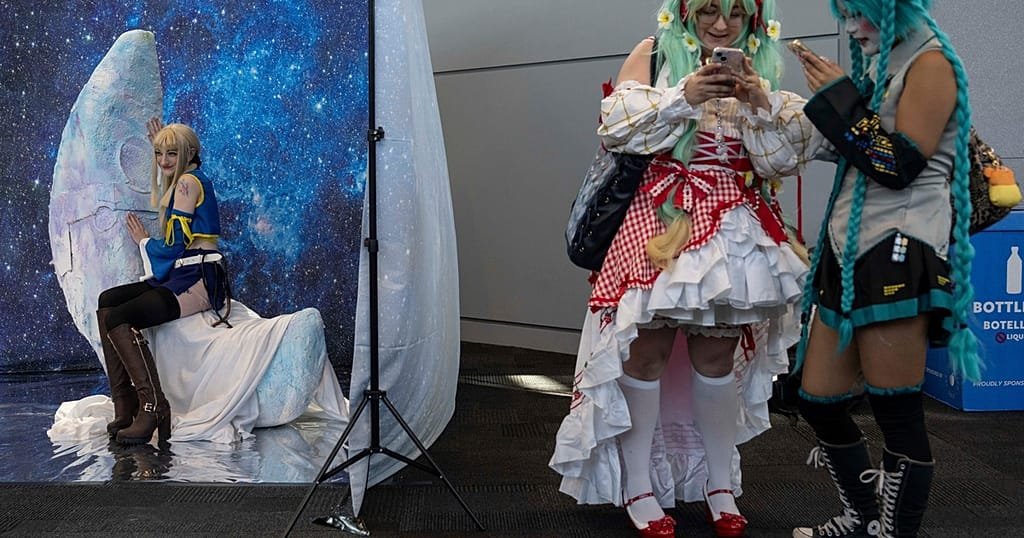
In the heart of Nairobi, thousands of young Kenyans gathered this weekend to celebrate a passion that knows no borders: anime and manga. The Otamatsuri convention transformed the Carnivore Grounds into a vibrant explosion of colour, craft and cosplay, where cardboard boxes, recycled plastic and sheer imagination became the building blocks of elaborate costumes.
In the heart of Nairobi, thousands of young Kenyans gathered this weekend to celebrate a passion that knows no borders: anime and manga. The Otamatsuri convention transformed the Carnivore Grounds into a vibrant explosion of colour, craft and cosplay, where cardboard boxes, recycled plastic and sheer imagination became the building blocks of elaborate costumes. This gathering is not merely a fan event; it is a powerful testament to a continent-wide creative renaissance, where African youth are taking global pop culture and remaking it in their own bold, resourceful image.
From Cardboard to Cosplay: Kenya's Anime Fans Turn Creativity into Culture
Nairobi, Kenya — More than 4,000 people flooded the Carnivore Grounds on Saturday, August 22, for one of Africa's largest cosplay conventions, a spectacular showcase of fandom and artistry. Cosplayers brought beloved characters from One Piece, Naruto and the darker, edgier world of Gachiakuta to life, but the real story was not just the characters—it was the extraordinary craftsmanship, the community spirit, and the defiant creativity that turned humble materials into works of art. This was Otamatsuri 2026, and it proved that Kenya's anime revolution is not just alive; it is thriving, loud and unapologetically inventive.
Nairobi's Anime Revolution
The scale of Otamatsuri 2026 was breathtaking. Organiser Jotham Micah, co-founder of the entertainment company Movie Jabber, looked out over the sea of colourful wigs, painted faces and intricate costumes with a sense of pride. The event, organised in partnership with Anime Hub Kenya—a group dedicated to promoting anime and Japanese pop culture in the country—featured not only cosplay but also anime merchandise stalls, gaming zones, live music and a host of fandom activities that kept the energy high from morning until night.
Micah explained that the convention's explosive growth reflects a deeper cultural shift. "I think the different sectors or cultural aspects of entertainment, the subcultures are key. It gives people life, it gives people inspiration, and it's fun and entertaining," he said, his voice warm with enthusiasm. He believes that "the beauty of anime and manga has transcended the borders of culture," and the evidence was all around him—young Kenyans dressed as Japanese characters, speaking in English and Swahili, sharing a universal language of storytelling and heroism.
The event was part of the africanews #AfThisIsCulture series, which spotlights the incredible creativity emerging from the continent. The series has been showcasing how African artists, musicians and now cosplayers are redefining what it means to be a cultural producer in the 21st century. For Kenya, a country with a young, tech-savvy population and a vibrant creative economy, anime has become a natural fit, offering narratives of perseverance, friendship and self-discovery that resonate deeply with local audiences.
Walking through the grounds, one could see the cross-pollination of cultures happening in real time. A young woman in a flowing kimono-style dress chatted with a friend wearing a traditional Kenyan kitenge print. The boundaries between Japanese pop culture and African identity were not just blurred—they were being joyfully dismantled. This is the new face of globalisation, where cultural exchange flows in multiple directions, and Africa is not just a consumer but a vibrant participant and innovator.
The atmosphere was electric, a testament to the growing appetite for these events. From the elaborate stage performances to the quiet corners where fans traded tips on makeup and prop-making, Otamatsuri was a celebration of belonging. It was a space where the often-isolated world of fandom became a public, shared and deeply communal experience, proving that in Nairobi, the love for anime is a powerful force that brings people together.
Creativity on a Budget
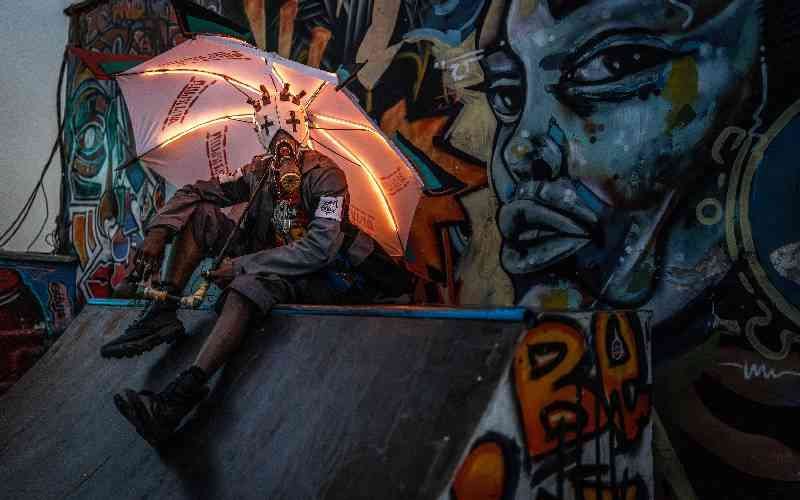
In a quiet corner of the convention, away from the main stage's booming music, stood Julius Mokaya, a 34-year-old building caretaker whose presence commanded attention. He was dressed as Enjin from the Gachiakuta manga, a character whose story is steeped in themes of abandonment and redemption. Mokaya is a two-time winner of the costume competition, and his secret is not a fat wallet but an inexhaustible well of ingenuity. His costume, like all his creations, was forged from cardboard and materials salvaged from recycling bins, transforming what others see as trash into a stunning piece of wearable art.
Mokaya's Nairobi apartment is a testament to his obsession—a cluttered workshop filled with homemade weapons, masks and accessories, each one a labour of love. He spent months creating the Enjin costume, meticulously studying the character's design and the manga's complex narrative. "The message of the story is that trash and things thrown out aren't really bad," he explained, his eyes lighting up behind his character's face paint. This philosophy is at the heart of his craft: he sees value and beauty where others see only waste.
His dedication is absolute, even when resources are scarce. "I'm broke half the time, but... I love the creative aspect, the deep dive into research and understanding the character," Mokaya said with a laugh. For him, cosplay is not a frivolous hobby but a serious artistic pursuit. It requires patience, problem-solving and a deep understanding of design principles. He approaches each new costume like a research project, delving into the character's backstory, personality and visual motifs to create a faithful and compelling representation.
The craftsmanship on display was staggering. From the intricate layering of cardboard to simulate armour to the careful painting that gave his props a metallic sheen, Mokaya's work rivals that of professional prop makers. He has learned to work with the limitations of his materials, using glue, tape and sheer determination to overcome structural challenges. His success in the competition, beating out cosplayers with far more financial resources, is a powerful reminder that creativity is not a function of budget but of vision and hard work.
His story is an inspiration to many aspiring cosplayers who feel that the hobby is too expensive. Mokaya proves that with enough passion and resourcefulness, anything is possible. He is a living example of the DIY spirit that defines so much of Africa's creative scene—a spirit that turns scarcity into a catalyst for innovation, and in doing so, produces work that is not only impressive but deeply personal and meaningful.
Crafting Takes Centre Stage
While Mokaya's work is a masterclass in upcycling, this year's costume competition winner, Yvonne Chockey, demonstrated a different kind of technical mastery. The 24-year-old took on the formidable challenge of creating Angewomon, a divine angel character from the Digimon universe, complete with eight massive, pristine white wings. The result was breathtaking, a towering creation that seemed to defy gravity and left onlookers in awe. Chockey's victory was a testament to her patience, skill and relentless pursuit of perfection.
Her process was a feat of engineering. To create the wings, Chockey used a hot-sand technique to heat and shape PVC pipes into a sturdy frame, a method that requires precision and a steady hand. "I had to cut each feather one by one and then attach them to the base. That was the most difficult part," she explained, describing the painstaking process that took weeks to complete. Each of the hundreds of feathers was individually shaped, painted and meticulously placed to create a flowing, organic look that was both majestic and delicate.
Chockey's dedication to her craft is unwavering. "My next step is to keep crafting because I want to be maybe I cannot be perfect at crafting, but I want to get close, as close as I can to perfect," she said, her voice filled with quiet determination. This drive for excellence is what separates a good cosplayer from a great one, and it was on full display at Otamatsuri. The standard of work at African conventions is rising rapidly, challenging the global perception that high-quality cosplay is exclusive to Japan, the US or Europe.
The technical skill required for such creations is immense. It involves not just sewing and crafting but also an understanding of physics, weight distribution and structural integrity. Chockey had to ensure her wings were not only beautiful but also wearable, allowing her to move and pose for hours. The result was a performance that was as much about engineering as it was about character portrayal, a perfect blend of art and science.
Her win is a signal to the world that African cosplayers are not just participants in this global culture; they are innovators and leaders. They are pushing the boundaries of what can be achieved with available materials and techniques, developing new methods and setting new standards. The craftsmanship on display in Nairobi this weekend was world-class, and it is only going to get better as the community grows and shares knowledge.
A Community for Like-Minded Fans
Beyond the spectacle and the competition, Otamatsuri served a far more fundamental purpose: it was a sanctuary for the like-minded. For many attendees, the convention is the one place a year where they can be their authentic selves without fear of judgment. Shalom Donga, a cosplayer who was beaming with joy, captured this sentiment perfectly. "This event is special to me because I get to meet a lot of like-minded people. I don't go out a lot, so I don't have the chance to meet people in person," she said, highlighting the profound social isolation that many fans experience in their daily lives.
The convention floor was a buzzing network of new friendships and reunions. Strangers bonded over shared favourite series, exchanged social media handles and posed for photos together. For young people who often struggle to find others who share their niche interests, Otamatsuri is a lifeline. It provides a sense of belonging that is hard to find elsewhere, a community where being obsessed with a Japanese cartoon is not just accepted but celebrated.
This phenomenon is not unique to Nairobi. Cosplay communities are growing exponentially across the continent, from the bustling streets of Lagos to the creative hubs of Johannesburg. These events are becoming vital social infrastructure for a generation that is increasingly connected digitally but often isolated physically. They offer a tangible space for connection, collaboration and mutual support, fostering a sense of identity that transcends national borders.
The social value of these fandom spaces cannot be overstated. They provide a safe environment for self-expression, particularly for those who may feel marginalised in mainstream society. Within the cosplay community, individuals can explore different aspects of their identity, build confidence and develop social skills. The friendships forged at these events often extend far beyond the convention walls, creating a support network that lasts all year round.
As these communities grow, they are also becoming more organised and influential. They are creating their own content, organising smaller meetups and using social media to connect with fans across the continent. This grassroots movement is building a powerful pan-African network of creators and enthusiasts, proving that the love for anime is a powerful unifying force that is helping to shape a new, more connected and creative generation.
Breaking Stereotypes
Despite the joy and community, the path of a cosplayer in Kenya is not without its challenges. Mokaya shared a story that illustrates the misunderstandings that still surround the hobby. "Relatives saw what I was doing on social media and asked my father if I had joined a cult," he recounted with a wry smile. This anecdote speaks to the suspicion and confusion that cosplay can generate in a society where it is still a relatively new and unfamiliar phenomenon. For many older Kenyans, seeing a grown man dressed in elaborate, otherworldly armour is baffling, even concerning.
These stereotypes are slowly being dismantled, one convention at a time. As events like Otamatsuri gain more media coverage and public visibility, the hobby is becoming more familiar and accepted. The narrative is shifting from one of eccentricity to one of artistry and skill. Parents who once worried about their children's strange hobby are now seeing the incredible craftsmanship, the dedication and the positive community that comes with it. The dignity of self-expression is being recognised, and cosplayers are being seen for what they truly are: artists and performers.
The costumes themselves are a powerful tool for changing perceptions. When someone sees a meticulously crafted suit of armour or a beautifully sewn gown, it is hard to dismiss it as mere childish play. The work speaks for itself, demonstrating a level of talent and commitment that commands respect. Mokaya's cardboard creations, for instance, are not just costumes; they are sculptures, testaments to his artistic vision and his ability to see potential in the discarded.
This growing acceptance is part of a larger cultural movement in Kenya and across Africa, where young people are increasingly asserting their right to define their own identities and interests. They are pushing back against the idea that there is a single, "correct" way to be African. By embracing anime and cosplay, they are creating a new, hybrid culture that is both globally aware and distinctly their own. They are finding their own space in the country, a space where creativity and passion are the only credentials that matter.
The journey is far from over, and cosplayers still face puzzled looks and probing questions. But the tide is turning. Each public appearance, each viral photo, each successful convention helps to normalise the hobby and educate the public. The community is building bridges of understanding, one costume at a time, and in doing so, they are not just breaking stereotypes about cosplay; they are breaking stereotypes about what young Africans can achieve.
What to Watch For
The future of Otamatsuri and similar conventions across Africa looks incredibly bright. The success of this year's event, with its record attendance and high-calibre craftsmanship, signals a growing demand for these cultural gatherings. Organisers like Jotham Micah are already thinking about how to expand and improve the experience, potentially making it a multi-day festival or attracting international guests. The momentum is undeniable, and the potential for growth is immense.
This movement is also becoming a significant part of the continent's creative economy. Cosplay is not just a hobby; it is a pathway into professional careers in design, fashion, film and prop-making. The skills that cosplayers like Mokaya and Chockey are honing—sewing, sculpting, painting, engineering—are highly transferable and increasingly valuable in a globalised job market. As the African film and entertainment industries boom, these artisans will be in high demand, providing the costumes and props that bring new stories to life.
Kenya, with its young, tech-savvy population and vibrant creative economy, is perfectly positioned to be a leader in this space. The government and private sector are beginning to take notice of the economic potential of the creative industries, and events like Otamatsuri are proof of the talent that exists. With the right support and investment, this grassroots movement could blossom into a major industry, creating jobs and putting African creativity on the global stage.
For now, the community is focused on the next event, the next costume, the next opportunity to come together. From Nairobi to Lagos to Johannesburg, the cosplay scene is buzzing with activity. African fans are not just consuming global pop culture; they are actively putting their own stamp on it, infusing it with their unique perspectives, resourcefulness and flair. The world is watching, and the story is just beginning.
By Amara Diop, Staff Writer
This article was produced with AI-assisted research and editorial support. Reporting is based on sources cited in the article.
What's Your Reaction?
 Like
0
Like
0
 Dislike
0
Dislike
0
 Love
0
Love
0
 Funny
0
Funny
0
 Wow
0
Wow
0
 Sad
0
Sad
0
 Angry
0
Angry
0

West Africa/Sahel Correspondent at Global1.News. Dakar-based journalist covering politics, security, climate, and development across Francophone and Anglophone West Africa. Tells the stories of a region undergoing profound transformation.











Comments (0)