
Taiwo Hassan: The Mechanic Who Became a King, and the Heartbeat of Yoruba Cinema
Nollywood mourns Taiwo Hassan, the Yoruba cinema icon known as Ogogo, who died at 66 after a battle with cancer. From mechanic to Alaafin of Oyo in Anikulapo, his four-decade career made him one of the most recognisable faces in African film.
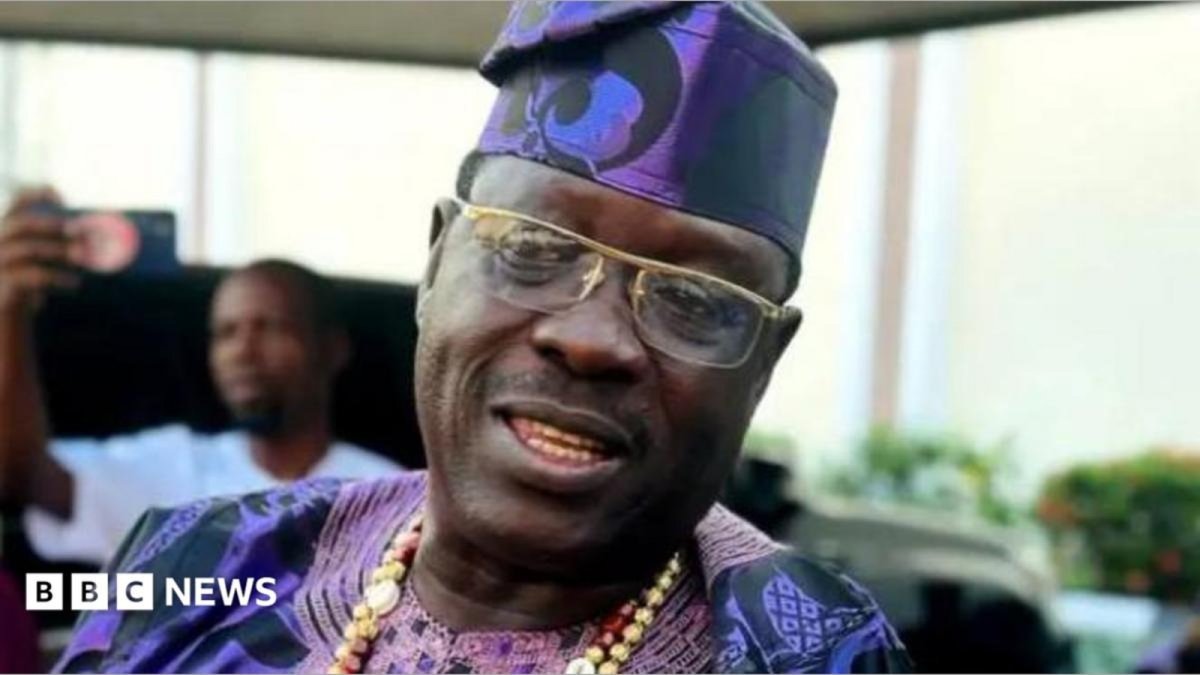
Taiwo Hassan: The Mechanic Who Became a King, and the Heartbeat of Yoruba Cinema
Lagos, Nigeria — August 24, 2026 — Ogogo's death from cancer marks the end of a profound chapter in Yoruba-language cinema, a genre that has long been the cultural bedrock of Nigeria's film industry. He was more than a face; he was a pillar, a bridge between the theatrical travelling troupes of the 1980s and the slick, billion-naira productions of today. As his colleague Muyiwa Ademola poignantly stated, this is truly "the end of an era."
A Farewell Fit for a King, and a Faithful Son
The finality of death is often softened by ritual, and for Ogogo, the rites were swift and deeply personal. According to fellow veteran actor Prince Jide Kosoko, Ogogo was buried on Monday in his hometown in Ogun state, south-west Nigeria. The burial, in line with Muslim tradition, was a quiet, dignified affair—a stark contrast to the colourful characters he often portrayed on screen. It is a fitting end for a man who remained deeply rooted in his community. He never forgot his origins in Ogun State, the same soil that produced literary giant Wole Soyinka and the legendary musician Fela Kuti. His return to that soil for his final rest is a powerful symbol of a life lived with humility. The tributes pouring in from across the industry paint a picture of a man who was as generous in life as he was commanding on screen. Actor Saidi Balogun, his voice heavy with sorrow, shared a simple but devastating message: "You can rest now... This is truly painful." It is the language of a brother, not just a colleague. Femi Adebayo, a leading light in the new generation of Yoruba filmmakers, praised him as a "true pillar of Yoruba cinema," adding, "Thank you for the years, the stories, the lessons and the moments that made us fall in love with the craft." These are not just platitudes; they are the currency of a community that understands the weight of legacy.From the Garage to the Spotlight: A 13-Year Detour
What makes Ogogo's story so resonant, particularly for young West Africans who dream of escaping their daily jobs, is his remarkable, unhurried path to stardom. Before the lights, the cameras, and the red carpets, Ogogo was a mechanic. For 13 long years, he worked at the Ogun State Water Corporation, his hands calloused and stained with grease, fixing the vehicles that kept the state's water supply running. This was not a man who stumbled into fame. He earned it, one bolt at a time. In 1981, while still working his day job, he began appearing in films, juggling the demands of a municipal workshop with the creative pull of the stage. It was a double life that speaks volumes about his dedication. For 13 years, he lived in two worlds: the world of pistons and engines, and the world of myth, morality, and magic. It wasn't until 1994 that he finally took the leap, leaving the security of a government job to pursue the profession he loved full-time. The decision, made in his thirties, was a testament to his courage. In a region where job security is often prized above all else, Ogogo bet on himself. And he won. His story is a powerful counter-narrative to the idea that success must come early or not at all—a reminder that the skills of a mechanic, precision and problem-solving, are not so different from those of a great actor.The Name 'Ogogo' and the Weight of Ancestry
For years, many assumed that "Ogogo" was a character name—a villain or comic figure he had played. But the truth, as he once explained, is far more beautiful and deeply rooted in Yoruba tradition. "Ogogo" was not a stage name he invented for the cameras; it was a family praise name, an oriki. In Yoruba culture, oriki are more than just names. They are poetic attributions, verbal formulas that encapsulate a family's history, their values, and their identity. They are chanted to evoke the spirit of a lineage. By adopting "Ogogo" as his professional identity, Taiwo Hassan was not just choosing a catchy moniker; he was anchoring his career in the deep soil of his ancestry. He was carrying his family's name into the public sphere, making it synonymous with excellence and entertainment. This detail is crucial. It separates him from the transient fame of many modern celebrities. Ogogo's identity was a declaration of heritage. He was not playing a role; he was living out a family legacy. This is a profoundly West African concept, where the individual is always seen as a vessel for the collective memory of their people.Anikulapo and the Crown of the Alaafin
While Ogogo starred in dozens of films over his four-decade career, one role stands out as the crowning achievement of his artistic life: his portrayal of the Alaafin of Oyo in the epic film Anikulapo. The Alaafin is not just a king; he is the most revered monarch in Yorubaland, a figure of immense spiritual and political authority. To play the Alaafin is to take on profound cultural responsibility. It demands a presence, a gravitas that can command the screen and honour the historical weight of the character. Ogogo delivered. His performance earned him critical acclaim and solidified his status as a heavyweight of the industry. In that role, he was not just an actor from Ogun State; he was the embodiment of Yoruba royalty, a symbol of the enduring power of traditional institutions. The film itself, a period piece exploring themes of love, betrayal, and the supernatural, was a landmark for Nollywood, demonstrating that Yoruba cinema could compete with the best in the world in terms of production value and storytelling depth. Ogogo's performance was the anchor that held the narrative together—a role that required him to be stern, wise, and vulnerable, a testament to the range he had honed over decades.More Than Entertainment: A Mirror to Society
The tributes have not only come from his colleagues in the film industry. Atiku Abubakar, the presidential candidate of the African Democratic Congress, issued a statement that captured the broader significance of Ogogo's life. He noted that Ogogo "brought laughter into countless homes, told stories that reflected our society, and used his talent not only to entertain but also to educate and inspire social rebirth." This is the true legacy of the greats of Yoruba cinema. They were not merely entertainers; they were social commentators. Their films, steeped in folklore and morality tales, served as a mirror to society, reflecting virtues and vices—corruption, family strife, the clash between tradition and modernity. Ogogo, with his commanding voice and expressive face, was a master of this craft. For us in Senegal and across Francophone West Africa, the loss of Ogogo resonates deeply. Our own cinematic traditions, from the masterpieces of Ousmane Sembène to the vibrant productions of the modern era, share a common DNA with Nollywood. We are all storytellers, heirs to a tradition that predates the colonial borders that divide us. When a giant like Ogogo falls, the tremor is felt from Lagos to Dakar, from Accra to Bamako. His films, dubbed or subtitled, travelled across the region, finding audiences who recognised in his characters the faces of their own uncles, fathers, and community elders. His death is a reminder of the fragility of our cultural institutions. As the generation of actors who built Nollywood from the ground up begins to age, we must ask ourselves: who will carry the torch? The new generation, led by figures like Femi Adebayo, is talented and ambitious, but they stand on the shoulders of giants like Ogogo. The challenge is not just to replicate his success, but to honour his spirit—the spirit of a mechanic who became a king, a man who understood that true stardom is not about the size of your paycheck, but the depth of your connection to your people. As the sun sets on Ogun State, we mourn a titan—but we also celebrate a life lived fully and a legacy that will endure in the stories he told and the lives he touched. Rest in peace, Ogogo. The stage is darker without you, but the stories you told will light our way for generations to come. By Amara Diop, Staff Writer This article was produced with AI-assisted research and editorial support. Sources: BBC AfricaWhat's Your Reaction?
 Like
0
Like
0
 Dislike
0
Dislike
0
 Love
0
Love
0
 Funny
0
Funny
0
 Wow
0
Wow
0
 Sad
0
Sad
0
 Angry
0
Angry
0

West Africa/Sahel Correspondent at Global1.News. Dakar-based journalist covering politics, security, climate, and development across Francophone and Anglophone West Africa. Tells the stories of a region undergoing profound transformation.










Comments (0)