
On the Front Line of Ecuador's Drug War: Police Fight Gangs, Guns and Corruption
Inside Ecuador's drug war: BBC embeds with police in Duran as Captain Bustamante's team raids gang hideouts and confronts corruption that reaches judges and politicians, in a country that funnels much of the cocaine reaching Europe and the United States.
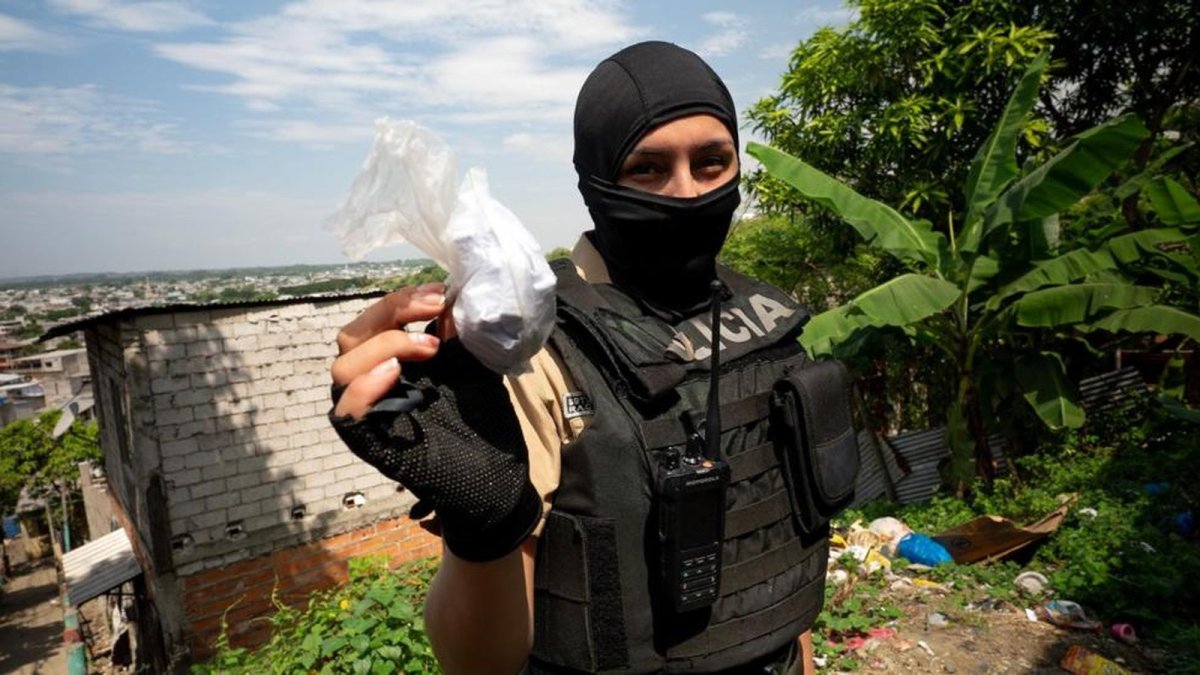
In the hardscrabble streets of Duran, Captain Jean Carlos Bustamante leads a hand-picked police team against Los Aguilas, the gang that controls the heart of gangland. At 34, the former special forces officer has already lost three close friends to the violence, while his mother warns him to be careful because he might die there and his father calls constantly to check if he is good. His unit raids abandoned houses and seizes weapons, yet Bustamante states that gangs have many weapons and much more money than the state. He remains convinced they can win the war, even as fear silences residents who know that speaking out can get them killed.
Duran, Ecuador — Captain Jean Carlos Bustamante, 34, directs operations in a city where rival gangs dominate daily life and residents live behind metal grills on their windows. His team recently searched an abandoned house and recovered two handguns, one ready to fire, along with ammunition for an assault rifle. Bustamante said after the raid that there are two guns less for the gangs. The operation highlights the daily risks faced by officers who confront groups with far greater resources than the state can muster.
Captain Bustamante and the Raid
Captain Jean Carlos Bustamante heads a specialized unit in Duran, where he serves as the oldest member of his hand-picked team. A former special forces officer, he has lost three close friends while fighting gangs. His mother tells him to be careful because he might die there, and his father phones repeatedly to ask if his son is good. During one raid on an abandoned house used to hide weapons, officers found two handguns and ammunition for an assault rifle. Bustamante noted that the seizure means two guns less for the gangs.
Bustamante has spoken openly about the challenges inside the force. He stated that many bad people operate inside the unit, inside the state, and inside politics, and that they are in the pay of the gangs. Despite these obstacles, he continues leading operations in neighborhoods where fear keeps residents silent because they know that speaking out can result in death.
Ecuador's Cocaine Corridor
Around 70 percent of the cocaine reaching Europe and the United States is funnelled out of Ecuador, according to President Daniel Noboa. The drug flows in from neighbouring Colombia and Peru, the world's two biggest producers. Home-grown gangs with links to Mexican cartels and Albanian mafia groups then smuggle it onward through Ecuador's weak border controls, underfunded security forces, and long Pacific coast. In under a decade, the country shifted from a peaceful tourist haven to a killing ground dominated by these networks.
Micro-traffickers in Duran sell packets of a highly addictive mix called H that contains small amounts of heroin for one dollar each, often stashed in flowerpots. These local operations feed into the larger export routes that move the bulk of the cocaine northward and across the Atlantic.
Ecuador's position as a transshipment hub stems directly from its Pacific ports, which serve as the most direct maritime link between the Andean cocaine production zones of Colombia and Peru and the Atlantic routes that reach European and North American markets. Duran sits across the Guayas River from Guayaquil, Ecuador's largest port, putting the city at the centre of the corridor where cocaine is consolidated before it heads overseas. Ordinary Ecuadoreans, especially those in working-class port communities, bear the daily weight of this trade as violence and intimidation become normalized features of life along the coast.
Murder Wave and Noboa Crackdown
Last year Ecuador recorded more than 9,200 killings, one of the highest murder rates in the world, according to the interior ministry. President Daniel Noboa has pursued an iron-fisted crackdown over the past two years that resulted in the arrest of top crime bosses. The operations fractured some gangs but also caused them to multiply, and critics say the approach backfired by increasing violence in places like Duran.
Colonel Santiago Gavilanez, deputy commander of Duran police, described how imprisoned gang members are sometimes released and then kill again, leaving orphans behind. The rapid rise in killings transformed once-quiet streets into zones where bodies were routinely found beheaded or dismembered.
The fragmentation dynamic created by arresting top crime bosses without dismantling their networks has produced a familiar outcome across Latin America: smaller, more violent factions that compete for territory and increase bloodshed. Ecuador's iron-fisted approach mirrors the militarized responses tried in Colombia and Mexico, where the removal of visible leaders often leads to rapid multiplication of groups rather than lasting reductions in violence. Duran's experience fits this wider regional pattern, as the crackdown has left working-class neighborhoods caught between splintered gangs and a state that relies on force over structural solutions.
Critics of the strategy point to the human cost in communities where the murder wave has already claimed thousands of lives, noting that the policy of targeting bosses alone rarely disrupts the underlying economic incentives of the cocaine trade. In Ecuador, as elsewhere in the Andes, such approaches have historically deepened distrust between residents and security forces while allowing new actors to fill the vacuum. The result is a cycle of escalation that punishes the very populations most affected by the drug corridor.
Corruption Inside the System
Bustamante stated that gangs have money to buy laws, judges, and politicians. In one case, officers arrested three suspects during a micro-trafficking operation, but prosecutors released two of them while charging only one, who faces up to five years in jail if convicted. Senior officers blame corruption in the justice system and the prosecutor's office for such outcomes.
An anonymous officer reported receiving text messages offering enough money to retire on if he cooperated with gangs. He turned down the bribes twice, yet a colleague had already informed the gang where he worked. Colonel Gavilanez added that gangs use their resources to influence officials at multiple levels, allowing released members to return to criminal activity.
Corruption inside the justice system hollows out every attempt at enforcement by allowing gangs to purchase influence at every level of the state, creating a revolving door that undermines arrests almost immediately. When officers detain suspects only for prosecutors to release them, the pattern of arrest-release-recidivism becomes routine, draining resources and demoralizing those who risk their lives on the front lines. This erosion of institutional integrity leaves ordinary citizens in places like Duran with little reason to believe the state can protect them from the cocaine economy that surrounds them.
That dynamic extends beyond the justice system. Public trust collapses when officers themselves face offers of money that exceed their salaries, and when colleagues are suspected of tipping off gangs. In Ecuador, as across the Andean region, this institutional weakness ensures that the human cost of the drug trade continues to fall on those least able to escape it.
Gang Leader Jonathan's Account
Jonathan, a 37-year-old gang leader in the Duran area, admitted that four officers remain on his payroll as part of an early-warning system that costs between 1,500 and 2,000 dollars a month. He joined a gang at age 18 to put food on the table and described himself as a drug pusher and a killer who has taken about eight lives. The youngest member observed with the group was a lean 17-year-old wearing a bulletproof vest and flip flops. Human rights workers note that boys can be recruited by age 12 and become hitmen three years later.
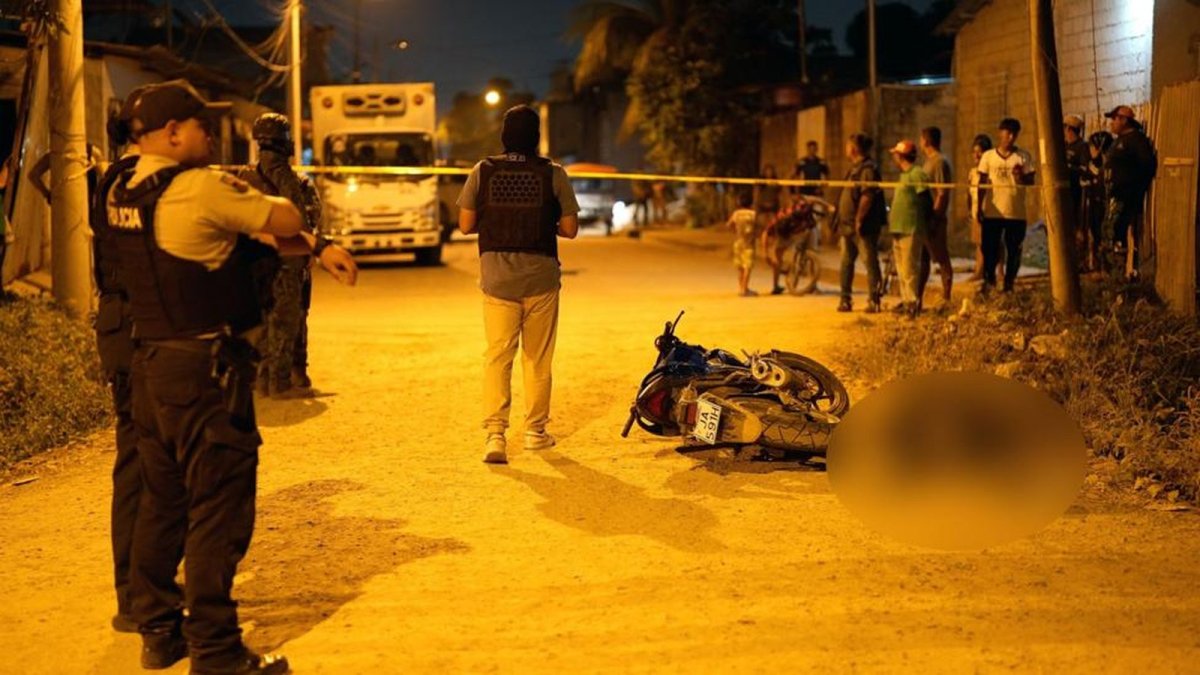
Jonathan said that death is paid by death and that he will not make it easy for anyone who comes to kill him. A recent revenge killing in the neighbourhood left one man shot six times by two assailants on a motorbike, with witnesses describing how the attackers finished him off with a shot to the head after he had already been hit in the back. Another corpse was already in the refrigerated van at the scene.
Economic drivers of recruitment remain rooted in the lack of legitimate opportunity that pushes young people in working-class neighborhoods toward gangs at an early age. When poverty leaves families struggling to put food on the table, the promise of steady income draws teenagers into a world where violence becomes a trade, mirroring the broader pattern seen throughout the Andean cocaine economy. The tragedy of child recruitment represents the human cost of a system that offers few alternatives to those born into marginal communities.
Residents find themselves trapped between gangs that control daily life and a state they cannot fully trust to deliver either security or justice. For families in Duran and similar areas, the choice is often between enduring the gangs' presence or risking retaliation by seeking help from institutions already compromised by the same trade that surrounds them.
Signs of Progress and the Road Ahead
The murder rate in Duran fell by half during the first six months of this year. Streets that once emptied after 19:00 local time now see more activity, and bodies are no longer routinely found beheaded or dismembered, according to Colonel Gavilanez. He stated that police have managed to contain the gangs, though gaining complete control will be a medium-term process.
Bustamante acknowledged that he may be a little tired but insisted that the work must continue because he believes they can win this war. Residents remain wary, with one witness noting that criminals appear like ghosts and that such violence happens every day, yet the reduction in killings offers a measure of relief in a city still gripped by the drug trade.
By Elena Vasquez, Staff WriterThis article was produced with AI-assisted research and editorial support. Reporting is based on sources cited in the article.
What's Your Reaction?
 Like
0
Like
0
 Dislike
0
Dislike
0
 Love
0
Love
0
 Funny
0
Funny
0
 Wow
0
Wow
0
 Sad
0
Sad
0
 Angry
0
Angry
0

Latin America Correspondent at Global1.News. Based in Mexico City, covering politics, economics, energy, and culture across the region. Brings an on-the-ground perspective to stories spanning from the Rio Grande to Patagonia.












Comments (0)