
Drones vs TB: Latin America's New War on the Geography of Death
Tuberculosis still kills more than a million people every year, and across Latin America the numbers are moving in the wrong direction. But on the remote islands of the Philippines, a pediatrician with a fleet of drones is proving that distance — long the disease's greatest ally — can be beaten. Now, from the Amazon to the Andes, the region is watching closely and building its own skyways of care.
Tuberculosis still kills more than a million people every year, and across Latin America the numbers are moving in the wrong direction. But on the remote islands of the Philippines, a pediatrician with a fleet of drones is proving that distance — long the disease's greatest ally — can be beaten. Now, from the Amazon to the Andes, the region is watching closely and building its own skyways of care.
Drones vs TB: Latin America's New War on the Geography of Death
São Paulo, Brazil – August 14, 2026 — Tuberculosis is a daily, grinding reality in the Philippines, where it claims approximately 98 lives every single day and ranks among the archipelago's leading causes of death. The tragedy is that those deaths are not inevitable — they are the direct consequence of a brutal geographical equation: when you live on a remote island, separated from diagnostic laboratories by hours of treacherous travel, the bacteria almost always wins the race against medicine.

The Geography of Death — Why TB Thrives Where Roads End
In the Philippines, tuberculosis is not a lingering memory of a bygone era; it is a daily, grinding reality that claims approximately 98 lives every single day. That staggering figure, which positions TB as a leading cause of death in the archipelago, is not merely a statistic on a public health chart. It represents fathers, mothers, children, and elders lost to a disease that is entirely preventable and curable. The tragedy is compounded by the fact that these deaths are not inevitable. They are the direct consequence of a brutal geographical equation: when you live on a remote island, separated from diagnostic laboratories and treatment centers by hours of treacherous travel, the bacteria that causes TB almost always wins the race against medicine.
The Philippines is an archipelago of more than 7,000 islands, a beautiful but unforgiving terrain of mountainous interiors and vast stretches of open sea. For communities like Geparayan and Basilan, the journey to the nearest healthcare facility was, until recently, a logistical nightmare. Residents faced a grueling three-hour boat ride followed by a four-hour trek on foot, often over muddy, mountainous trails. For a person already weakened by a TB infection, that journey is not just arduous; it is effectively impossible. Many residents in these areas had never received medical care in their lives before the arrival of volunteer missions from Remote Area Medical (RAM). They were, for all intents and purposes, invisible to the national health system, living and dying without ever being diagnosed.
This is the geography of death that defines TB in the Philippines. The disease, caused by the airborne Mycobacterium tuberculosis, spreads easily when an infected person coughs, sneezes, or even sings. In crowded, poorly ventilated homes common in rural and impoverished communities, transmission is relentless. But the bacteria itself is only half the story. The other half is the distance. Delayed diagnosis is fatal, and multidrug-resistant TB (MDR-TB) is a growing threat precisely because patients cannot access the consistent, long-term treatment they need. When a patient must choose between a 7-hour round trip for a sputum test or feeding their family, the test is postponed, the disease progresses, and the bacteria becomes stronger. The Philippines, with a TB incidence rate of roughly 500 or more new infections per 100,000 people, sits among the top five countries in the global TB tally. To put that in perspective, the Western Pacific regional average is just 97 per 100,000. The gap is not a mystery; it is a map of neglect, and the solution must be as mobile and as agile as the disease itself.
Drones Over the Archipelago — How Dr Heidi Sampang Is Closing the Distance
Enter Dr Heidi Sampang, a pediatrician whose career took a decisive turn toward innovation. A graduate of Northwestern University with a Master of Science in Global Health, class of 2017, Sampang understood that the clinical knowledge she possessed was useless if it could not reach the patients who needed it most. As the founder of Philippines Flying Labs, she has pioneered a radical approach to an ancient problem: using drones to collapse the distance between remote communities and modern medicine. The technology is not about futuristic spectacle; it is about pragmatic, life-saving logistics. What once took three hours by boat and four hours on foot now takes a mere 14 minutes by air. This is not just a time-saving convenience; it is a fundamental shift in the calculus of survival.
The drones operated by Philippines Flying Labs are not merely delivery vehicles; they are an integrated system of AI-enabled logistics. They transport biological samples from remote health stations to centralized laboratories, dramatically accelerating the time to diagnosis for TB. Instead of waiting weeks for a sample to travel by boat and road, often degrading in the tropical heat, the sample arrives in minutes, intact and viable. This speed is critical for initiating treatment early and preventing the transmission cycle from continuing. The same drones return with essential medical supplies, antibiotics, and diagnostic tools, creating a two-way lifeline that was previously unimaginable. The impact is immediate and measurable: patients who were once invisible are now being tested, diagnosed, and treated.
Sampang’s work did not happen in a vacuum. In 2022, Philippines Flying Labs directed the first drone delivery of COVID-19 vaccines in the country, proving that the infrastructure could be adapted for different public health emergencies. That success laid the groundwork for the current TB initiative. The model is simple yet profound: identify the bottleneck, which is always transportation, and use technology to remove it. For the villagers of Geparayan and Basilan, the arrival of a drone is not a novelty; it is the arrival of hope. It means that a child with a persistent cough can have a sample taken and analyzed without their family having to sacrifice days of work and income. It means that a diagnosis of TB no longer feels like a death sentence, but the beginning of a treatable journey. This is the power of closing the distance, and it is a lesson that resonates far beyond the Philippine archipelago.
Latin America's Own TB Emergency — A Region Falling Behind
While the Philippines offers a compelling case study in innovation, the reality is that tuberculosis remains a global emergency, and Latin America is dangerously off track. The WHO Global TB Report 2025, released on November 12, 2025, painted a stark picture: tuberculosis is still one of the world's deadliest infectious killers, with 10.8 million people falling ill in 2024 and 1.25 million dying. The Americas are not exempt from this crisis. In fact, the data is deeply alarming. The Global TB Report 2025 shows a net increase in TB incidence for the Region of the Americas of +13.0%. This represents a staggering 63-percentage-point deviation from the 2025 target of a 50% reduction, a goal that now seems like a distant fantasy. We are not just failing to make progress; we are actively moving backward.
The Pan American Health Organization (PAHO) and WHO have developed the interactive Tuberculosis Data Dashboard for the Americas to track the End TB strategy goals. This dashboard monitors case notification rates, rapid diagnostic test coverage, and treatment outcomes, providing a real-time picture of where the region is succeeding and where it is collapsing. The data reveals a region in crisis, driven by persistent inequalities and fragile health systems. Brazil, the largest country in the region, remains one of the main drivers of regional case numbers. TB is not a disease of the past in Brazil; it is a persistent public health challenge that disproportionately affects the poor, the marginalized, and the incarcerated. The disease thrives in the cracks of society, in overcrowded prisons, in Amazonian villages with no access to clinics, and in the dense, underserved urban slums that ring major cities.
Peru presents another front in this battle. Its TB incidence is well above the regional average, and multidrug-resistant TB (MDR-TB) hotspots are concentrated in the sprawling metropolitan area of Lima. Genomic epidemiology research is tracking transmission patterns in real-time, revealing that the disease is moving through social networks and household clusters with alarming efficiency. The failure to control TB in Latin America is not a failure of science; it is a failure of political will and logistical imagination. We have the drugs, the diagnostics, and the knowledge to stop this disease. What we lack is the ability to get those tools to the people who need them, a problem that is fundamentally about geography, infrastructure, and the systematic neglect of vulnerable populations. The region is falling behind, and the consequences are measured in lives lost.
From the Amazon to the Andes — Drone Healthcare Takes Flight in Latin America
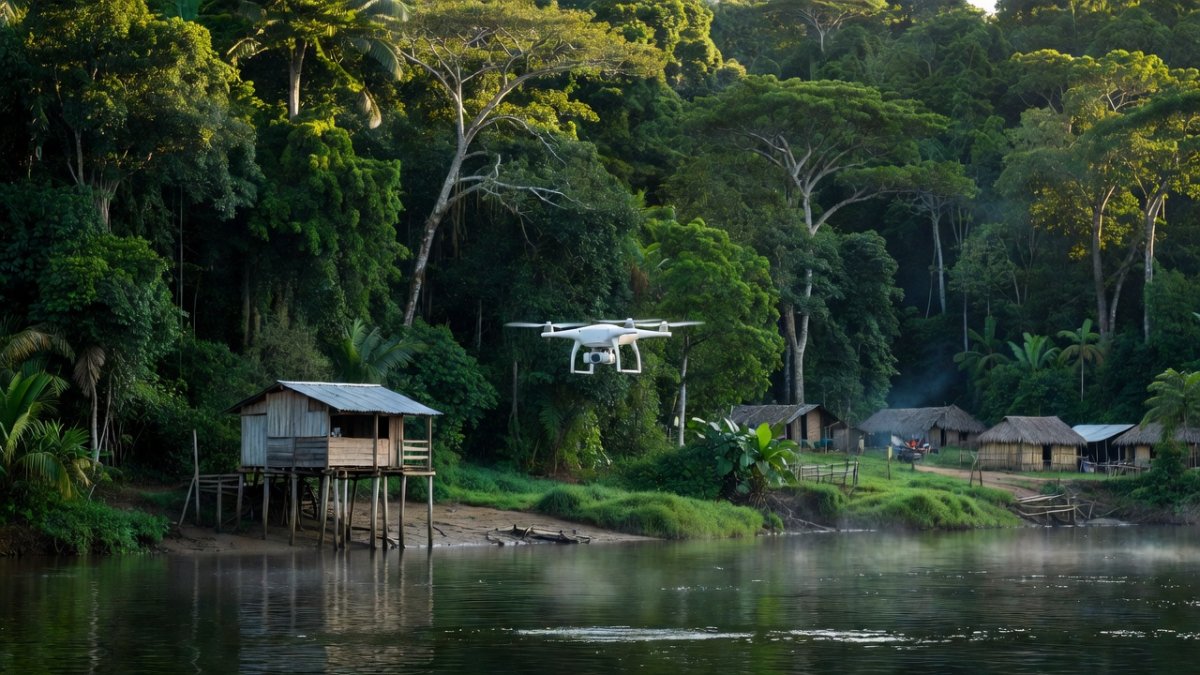
The question that haunts every public health official in Latin America is simple: if drones can work in the Philippines, why not here? The answer, increasingly, is that they can and they are. In July 2025, Brazil's Ministry of Health launched a groundbreaking fleet of medical delivery drones based in Manaus, the heart of the Amazon. The initiative, operating primarily in the states of Amazonas and Acre, is designed to transport vaccines to isolated communities where road access is limited or non-existent. These are not small, experimental craft. The Brazilian drones are equipped with solar-powered cooling units, capable of flying up to 100 miles per trip and carrying up to 500 doses of vaccine. The results have been transformative, reducing delivery times by up to 60% compared to traditional boat or road transport.
Brazilian Health Minister Luciana Barbosa captured the spirit of the initiative with a powerful declaration: "No Brazilian should miss a life-saving vaccine because of geography." This is not just rhetoric. Early drone vaccine deliveries have successfully reached indigenous villages along the Rio Negro, communities that were previously accessible only after days of river travel. The program, supported by the WHO and UNICEF, is proving that the technology is not just viable but essential for reaching the most remote populations on Earth. The Amazon is the perfect testing ground for this approach, a vast, green labyrinth where rivers are the only highways and where the nearest clinic can be hundreds of miles away. The drones are not replacing the health system; they are extending its reach into territories where it has never been able to go.
The momentum is building across the continent. In Guyana, 19Labs has launched medical drone delivery services, integrating the technology with remote telemedicine networks to create a comprehensive healthcare solution for underserved communities. This is not a one-off experiment; it is a regional movement. The South America medical drone market was valued at USD 64.24 million in 2025 and is projected to explode to USD 439.43 million by 2035, a compound annual growth rate of 21%. This investment is a clear signal that governments and private companies recognize the potential of drones to solve the region's most intractable healthcare access problems. From the Andes to the Atlantic coast, the question is no longer whether drones will be used for healthcare, but how quickly the infrastructure can be scaled to meet the immense need. The Philippines has shown the way; Latin America is now building its own skyways of hope.
The Prison Pipeline — Where Latin America's TB Hides
To understand the TB crisis in Latin America, one must look at a hidden reservoir of infection: the prison system. Prisons are not just places of punishment; they are epidemiological accelerators. Overcrowding, poor ventilation, malnutrition, and limited access to healthcare create a perfect storm for TB transmission. The data is damning. Modeling studies from Argentina, Brazil, Colombia, El Salvador, Mexico, and Peru estimate that approximately 27% of incident TB cases may be attributable to incarceration-related transmission. This means that over a quarter of new infections in these countries are directly linked to the prison environment, either through transmission within the prison walls or through the release of infected individuals back into the community. The prison is not a closed system; it is a pump that continuously injects TB into the general population.
Brazil, in particular, faces a monumental challenge in this regard. The country has one of the largest incarcerated populations in the world, and TB rates inside its prisons are dramatically higher than in the general population. Mass screening inside prisons is not just a good idea; it is an essential strategy for controlling the national epidemic. Without aggressive case-finding and treatment within these facilities, the disease will continue to spill out into the wider community, undoing any progress made elsewhere. The connection between incarceration and TB is a brutal indictment of social inequality. The people who end up in these prisons are overwhelmingly poor, Black, and marginalized, the same populations that are most vulnerable to TB in the first place. The prison system is not just a public safety issue; it is a public health crisis that demands immediate and sustained intervention.
The challenge extends beyond the prison walls. Vulnerable groups across Latin America, including Indigenous communities in the Amazon like the Yanomami, riverside populations, urban slum dwellers, and people living with HIV, are all at elevated risk. These are the populations that the health system has historically failed to reach. The drone technology being deployed in Brazil and Guyana offers a potential solution for reaching some of these groups, but it cannot solve the prison problem alone. That requires a fundamental reform of the justice system and a commitment to providing healthcare as a human right, not a privilege. The prison pipeline is a pipeline of disease, and it must be broken. The tools exist, from rapid molecular testing to short-course preventative therapy, but they must be deployed with the same urgency and scale as the drones flying over the Amazon.
What This Means for Latin America — Adaptation Lessons
The Philippine model offers more than just a technological fix; it offers a blueprint for adaptation. The core lesson is that innovation must be driven by local needs and local leadership. Dr Sampang, a Filipina pediatrician, did not wait for a global NGO to solve her country's problem. She built a solution from the ground up, leveraging her global health training from Northwestern and her deep understanding of the local terrain. For Latin America, this means empowering local health workers, engineers, and community leaders to design solutions that fit their specific contexts. A drone route over the Amazon is different from one over the Andes or the urban sprawl of Lima. The technology must be flexible, and the implementation must be community-centered.
The second lesson is the importance of integration. The drones in the Philippines are not a standalone project; they are part of a comprehensive system that includes AI-enabled logistics, laboratory networks, and community health workers. In Latin America, drone delivery must be integrated with existing health infrastructure, including the PAHO/WHO Tuberculosis Data Dashboard, to ensure that samples are not just transported but that the results are acted upon. The goal is not to fly drones for the sake of flying drones; it is to create a seamless pathway from diagnosis to cure. This requires investment in laboratory capacity, data management, and the training of healthcare professionals to use the new tools effectively. The technology is an enabler, not a solution in itself.
Finally, the Latin American response must be unapologetically focused on equity. The disease thrives on inequality, and any successful strategy must target the most vulnerable populations first. This means prioritizing mass screening in prisons, reaching Indigenous communities in the Amazon, and providing care to people living with HIV. The drone programs in Brazil and Guyana are a start, but they must be expanded and replicated. The region has the scientific expertise, the political structures, and now the technological proof of concept. What is needed is the sustained political will to fund these programs at scale and to treat TB as the emergency it is. The 63-percentage-point deviation from the target is a wake-up call. We cannot afford more years of inaction. The lessons from the Philippines are clear, and the time to adapt them is now.
The Bottom Line — A War That Can Still Be Won
Tuberculosis is a formidable enemy, but it is not invincible. The data is grim, with 10.8 million people falling ill and 1.25 million dying in 2024 alone, but the tools to change this trajectory exist. The Philippines, through the work of Dr Heidi Sampang and Philippines Flying Labs, has demonstrated that drones can dismantle the geographical barriers that have allowed TB to flourish. The 14-minute flight that replaces a 7-hour journey is not just a logistical achievement; it is a moral one. It says that a life in a remote village is worth the same as a life in a capital city. This is the standard that Latin America must now hold itself to. The region is falling behind, but it is not too late to catch up.
The path forward is clear. First, we must scale up the use of drones and other innovative delivery mechanisms to reach the populations that have been left behind. The Brazilian program in the Amazon is a powerful example, but it must be expanded to cover all isolated communities. Second, we must confront the prison pipeline head-on, with aggressive screening and treatment programs in every facility across the region. Third, we must use data, like the PAHO dashboard, to track our progress and hold ourselves accountable. The target of ending TB is not a fantasy; it is a goal that can be achieved with the right investments and the right political will. The cost of inaction is measured in the 98 lives lost every day in the Philippines and the countless more lost across Latin America.
This is a war that can still be won, but it requires a shift in mindset. We must move from seeing TB as an inevitable tragedy to seeing it as a solvable problem. The technology is here, the models are proven, and the need is urgent. From the islands of the Philippines to the rivers of the Amazon, the message is the same: distance is no longer an excuse for death. The drones are flying, the samples are being tested, and the treatments are being delivered. We have the power to write a different ending to this story, one where tuberculosis is consigned to the history books. The question is whether we have the collective will to do it. The answer, for the sake of millions, must be a resounding yes.
By Elena Vasquez, Staff Writer
This article was produced with AI-assisted research and editorial support. Reporting is based on sources cited in the article.
What's Your Reaction?
 Like
0
Like
0
 Dislike
0
Dislike
0
 Love
0
Love
0
 Funny
0
Funny
0
 Wow
0
Wow
0
 Sad
0
Sad
0
 Angry
0
Angry
0

Latin America Correspondent at Global1.News. Based in Mexico City, covering politics, economics, energy, and culture across the region. Brings an on-the-ground perspective to stories spanning from the Rio Grande to Patagonia.













Comments (0)