
Caracas Flooding: El Valle River Overflow, Metro Submerged and La Vega Devastated
The heavens opened over Caracas on Saturday night, and the city's fragile drainage systems and river channels were simply overwhelmed. What began as a forecasted tropical downpour quickly escalated into a state of emergency, with the El Valle River bursting its banks, the Caracas Metro flooding, and entire neighborhoods like La Vega transformed into fast-moving rivers of mud and debris.
The heavens opened over Caracas on Saturday night, and the city's fragile drainage systems and river channels were simply overwhelmed. What began as a forecasted tropical downpour quickly escalated into a state of emergency, with the El Valle River bursting its banks, the Caracas Metro flooding, and entire neighborhoods like La Vega transformed into fast-moving rivers of mud and debris. As the rain fell with relentless intensity, the capital's infrastructure buckled, leaving motorists trapped, residents scrambling to higher ground, and emergency services stretched to their absolute limit.
Caracas Flooding: El Valle River Overflows, Metro Submerged, and La Vega Devastated as Tropical Wave #40 Batters the Capital
Caracas, Venezuela – August 23, 2026 — The torrential rains that began in the afternoon of Saturday, August 22, 2026, and continued unabated into the night have left Gran Caracas in a state of crisis. The overflow of the El Valle River on the Valle-Coche highway, the flooding of the Coche Metro station, and the devastating water currents in the La Vega parish have paralyzed the city, prompting the activation of the Civil Protection emergency system. With the National Institute of Meteorology and Hydrology (Inameh) having issued stern warnings about Tropical Wave No. 40, the capital is now counting the cost of a night that exposed the deep vulnerabilities of its urban planning and the raw power of nature.
The Night the Rivers Rose: Chaos on the Valle-Coche Highway
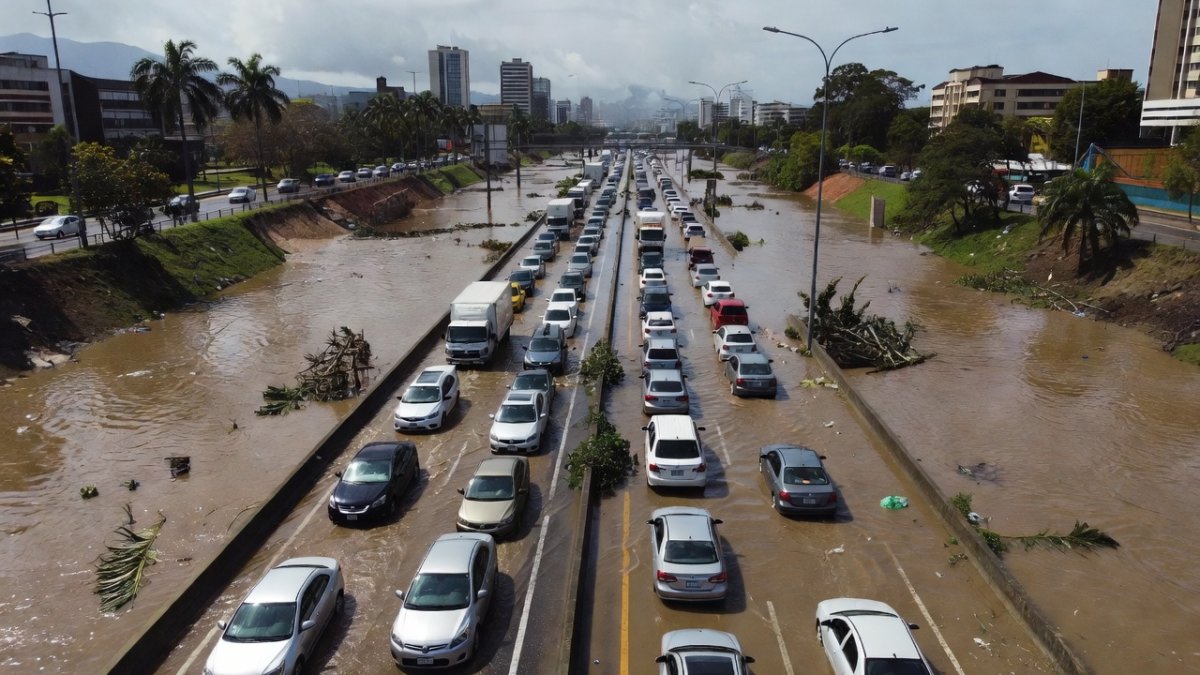
The crisis began to unfold in the late afternoon hours of Saturday, August 22, when the El Valle River, swollen by hours of relentless rain, burst its banks along the autopista Valle-Coche. This critical artery, which connects the south of the city to the west, quickly became a scene of chaos. The water rose with alarming speed, flooding the roadway between the sectors of Los Chaguaramos, Santa Mónica, and Los Próceres. Vehicles were caught in the deluge, with several trapped between the rising currents, their drivers and passengers forced to abandon their cars and seek safety on higher ground. The scene was one of desperation, as the brown, churning water swallowed the asphalt, turning a major transit route into a temporary river.
The overflow was not confined to a single point. The El Valle River also breached its banks near the iconic landmarks of Los Símbolos and La Bandera, further complicating the situation for motorists trying to navigate the city. The flooding on the Valle-Coche highway caused heavy vehicle congestion that rippled outwards, affecting traffic across the southern and central parts of the capital. The sheer volume of water was staggering, a testament to the intensity of the rainfall that Inameh had predicted. For hours, the highway was impassable, and emergency teams worked to rescue those stranded. The images coming out of the area showed cars half-submerged, their headlights flickering under the murky water, a stark reminder of how quickly a routine commute can turn into a fight for survival.
Metro de Caracas Submerged: The Coche Station Flooded
As the surface streets became impassable, the city's underground lifeline also faltered. The Caracas Metro, a system already under immense strain, suffered a significant blow when the Coche station, officially known as Estación Mercado de Coche, was flooded. According to reports, the water entered the station with considerable force, a direct consequence of the intensity of the rains overwhelming the drainage systems. The flooding forced the suspension of service on that line, leaving thousands of passengers stranded and adding to the growing transportation nightmare. The sight of water cascading into the subterranean station was a powerful symbol of the storm's dominance over the city's engineered defenses.
The flooding at Coche station is particularly concerning given the station's role as a major transit hub for residents of the southern and western parishes. The disruption to the Metro service will have a knock-on effect for days, as authorities work to pump out the water and assess the damage to electrical and signaling systems. The Metro de Caracas, which has faced years of underinvestment and maintenance issues, now faces the daunting task of recovery. For the commuters who rely on this system daily, the flooding represents not just an inconvenience but a significant blow to their mobility. The force with which the water entered the station highlights the sheer volume of rainfall, a volume that the city's aging infrastructure was never designed to handle.
La Vega and the Parishes: Communities Under Siege
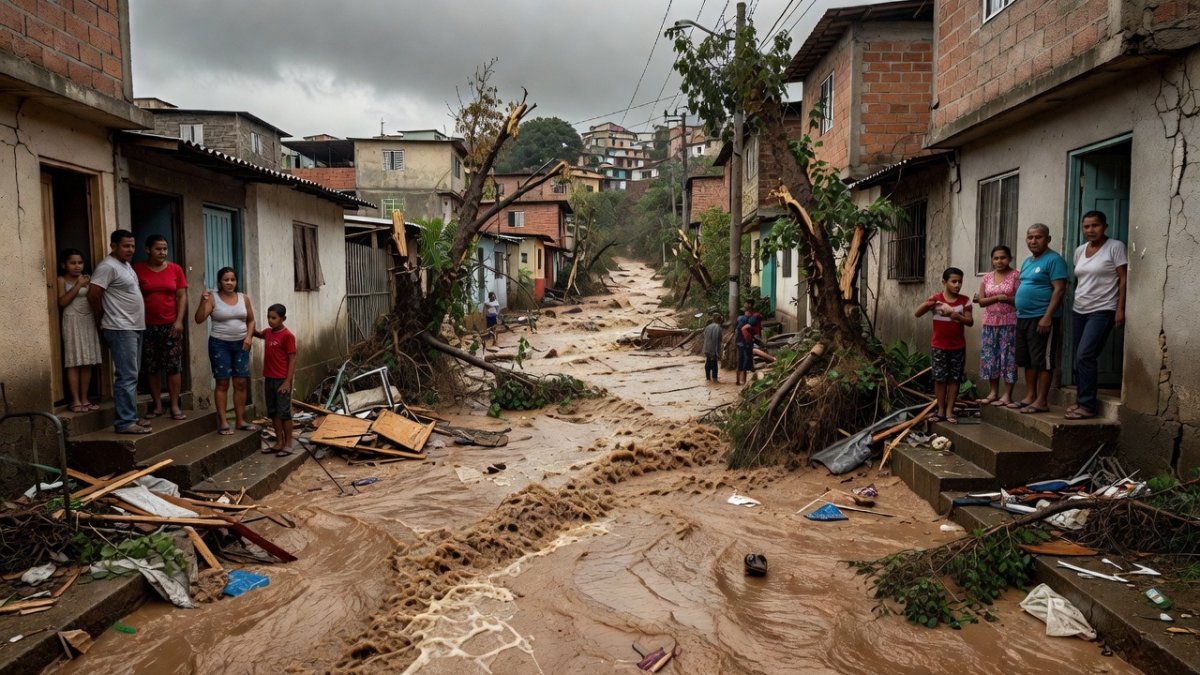
While the main highways and Metro stations made headlines, it was the residential parishes that bore the brunt of the storm's fury. In the La Vega parish, specifically in the Los Cangilones sector near the desarenador (sand trap), the force of the water was devastating. The currents were so powerful that they uprooted trees and swept away vehicles as if they were toys. Residents watched in horror as their neighborhood was transformed into a raging torrent. The sound of crashing water and snapping trees filled the air, a terrifying symphony of destruction. The vulnerability of these communities, often built on hillsides and along riverbanks, was laid bare in a matter of hours.
The situation was mirrored across the city. The Guaire River, the main waterway running through Caracas, rose dangerously at La Línea in Petare, reaching the very top of a newly constructed wall, a stark indicator of how close it came to a catastrophic overflow. The San Pedro River also overflowed its banks, leaving several drivers trapped or struggling to continue their journeys. Quebradas, the small streams that crisscross the city, became violent rapids. On the Panamericana highway at Las Minas, a lagoon formed at the entrance of a housing development near a Farmatodo store, trapping cars in deep water. Another stream broke its banks in La Vega, adding to the chaos. Strong water currents were also reported in the Ojo de Agua sector of the Baruta municipality and at the Santa Ana entrance in Carapita-Antímano, making roads impassable and forcing residents to stay put.
Emergency Response: Civil Protection and Bomberos Mobilize
Faced with a multi-faceted crisis, authorities were forced into action. The Civil Protection emergency system was activated following the heavy rains, deploying security and emergency teams across the affected areas to respond to the flooding and other weather-related incidents. The primary focus was on rescue and the regulation of traffic on the most affected roads. The Policía Nacional Bolivariana (PNB) was deployed to manage the chaos, particularly after a large tree fell at Arturo, heading toward Plaza Venezuela, hitting two vehicles. The PNB officers worked to clear the debris and redirect traffic, but the scale of the flooding made their task Herculean.
The Bomberos de Caracas (Caracas Firefighters) established a command post at La Rinconada to coordinate their emergency response. This strategic location allowed them to dispatch units quickly to the hardest-hit areas, including the Valle-Coche highway and La Vega. Their work was dangerous and relentless, involving the rescue of trapped motorists and the evacuation of residents from flooded homes. According to reporter Román Camacho, at least eight traffic incidents were recorded, including rollovers, fallen trees, and flooded roads that forced traffic restrictions. At the Distribuidor Altamira, a pickup truck rolled over after the driver lost control on the slick roads. The emergency services were stretched thin, working through the night to bring the situation under control.
Climate Context: Inameh's Warnings and the Power of Tropical Wave No. 40
This disaster was not a surprise. The Inameh had issued clear and urgent warnings in the days leading up to the storm. They had forecast strong rains with electrical discharges for Saturday in Caracas and ten other states, citing multiple atmospheric instability systems that would hit the national territory with greater intensity at night. The primary culprit was Tropical Wave No. 40, which was passing over Venezuela, interacting with the Intertropical Convergence Zone and the Monsoon Trough. This potent combination was predicted to generate frequent and intense rains, mainly after midday and late afternoon, affecting a vast swath of the country, including Bolívar, Amazonas, Anzoátegui, Guárico, Aragua, eastern Apure, western Lara, the Andes, Zulia, and Gran Caracas.
The forecast was precise. The rains came with a ferocity that matched the predictions, overwhelming the Guaire river basin and its tributaries. The geography of Caracas, a valley surrounded by mountains, makes it particularly susceptible to flash flooding. The water runs off the steep hillsides (cerros) with incredible speed, funneling into the quebradas and rivers that flow through the city. When these channels are blocked with debris or simply cannot handle the volume, they overflow, as seen on Saturday night. The Inameh had also noted that rains would intensify on Monday, August 17, Tuesday, August 18, and Sunday, August 23, due to the confluence of tropical waves 38 and 39, setting the stage for a particularly volatile week. The forecast for Sunday, August 23, in Caracas was for a maximum temperature of 27°C and a minimum of 20°C, offering little respite from the saturated conditions.
A Regional Pattern: Latin America on the Frontline of Climate Extremes
The flooding in Caracas is not an isolated event but part of a broader, deeply concerning regional pattern. Across Latin America, from the Amazon to the Andes, extreme weather events are becoming more frequent and more intense. The interaction of tropical waves with the Intertropical Convergence Zone is a normal phenomenon, but the energy and moisture in the atmosphere are now amplified by a warming climate. This translates into more violent downpours, like the one that hit Caracas, where the sheer volume of water in a short period can overwhelm any infrastructure. The vulnerability is compounded by socio-economic factors; the most affected are often the poorest communities, who live in precarious housing on unstable hillsides or in floodplains, as seen in La Vega.
Venezuela, in particular, is in a state of heightened fragility. The country has been reeling from a series of disasters in 2026, including recent earthquakes near Caracas and La Guaira. These events have compounded the strain on emergency systems, which are already under-resourced. The cumulative effect of these disasters is a population that is increasingly anxious and a government that is struggling to provide basic services and safety. The flooding of August 22-23 is a stark reminder that climate change is not a distant threat but a present-day reality that is reshaping lives and landscapes across the region. The need for robust investment in resilient infrastructure, early warning systems, and urban planning that respects natural waterways has never been more urgent.
Voices from the Ground: Desperation and Resilience
In the midst of the chaos, the human stories are the most compelling. On the Valle-Coche highway, motorists described the terror of watching the water rise around their vehicles. One driver, who managed to escape his car, spoke of the panic as he saw the El Valle River surge over its banks. In La Vega, residents of Los Cangilones watched from their balconies as the water swept away cars and uprooted trees, their expressions a mixture of shock and grief. The loss of property is immense, but the psychological toll is even greater. The constant threat of flooding, of losing one's home and belongings in a matter of minutes, creates a deep-seated anxiety that is hard to shake.
Per reporter Román Camacho, there is a report that a child and their mother may have been dragged by the water current. This report remains unconfirmed, and authorities had not yet reported any injured or a timeline to normalize traffic. The uncertainty surrounding this report is agonizing for the community, a symbol of the danger that lurked in every corner of the city on that fateful night. The resilience of the people, however, is also on display. Neighbors helped neighbors, pulling people from cars and offering shelter to those whose homes were flooded. The spirit of solidarity, so common in times of crisis in Venezuela, shone through the darkness. The emergency services, despite their limitations, worked tirelessly, their efforts a testament to their commitment to their fellow citizens.
The Bottom Line: A City on the Brink and the Road to Recovery
The flooding of August 22-23, 2026, has left Caracas in a precarious state. The immediate priority is the search for any missing persons, the rescue of those still stranded, and the restoration of basic services. The cleanup effort will be massive, involving the removal of mud, debris, and damaged vehicles from the highways and streets. The Metro de Caracas faces a significant repair job at the Coche station. The government, through Civil Protection and other agencies, has promised a swift response, but the scale of the damage is immense. The timeline for a return to normalcy is unclear, and the economic impact on a country already in crisis will be significant.
Looking ahead, this event must serve as a wake-up call. The warnings from Inameh were clear, and the city was still overwhelmed. This points to a fundamental failure of infrastructure and urban planning. The dredging of rivers, the maintenance of drainage systems, and the enforcement of building codes in high-risk areas are not optional; they are essential for the survival of the city. As Tropical Wave No. 40 moves on, with waves 41 and 42 already forming in the Atlantic, the threat is not over. The question is not if another storm will hit, but when, and whether Caracas will be any better prepared. The answer, for now, is uncertain, leaving the city's residents to brace for what the next tropical wave might bring.
By Elena Vasquez, Staff Writer
This article was produced with AI-assisted research and editorial support. Reporting is based on sources cited in the article.
What's Your Reaction?
 Like
0
Like
0
 Dislike
0
Dislike
0
 Love
0
Love
0
 Funny
0
Funny
0
 Wow
0
Wow
0
 Sad
0
Sad
0
 Angry
0
Angry
0

Latin America Correspondent at Global1.News. Based in Mexico City, covering politics, economics, energy, and culture across the region. Brings an on-the-ground perspective to stories spanning from the Rio Grande to Patagonia.














Comments (0)