
Finland Says It Detected Strike on Russian Warship in Baltic Sea
Finland’s defence ministry announced on Thursday that its forces had detected “a strike” on a Russian warship in the Gulf of Finland a day earlier, though it stressed that the overall security situation in the Baltic Sea remained stable.
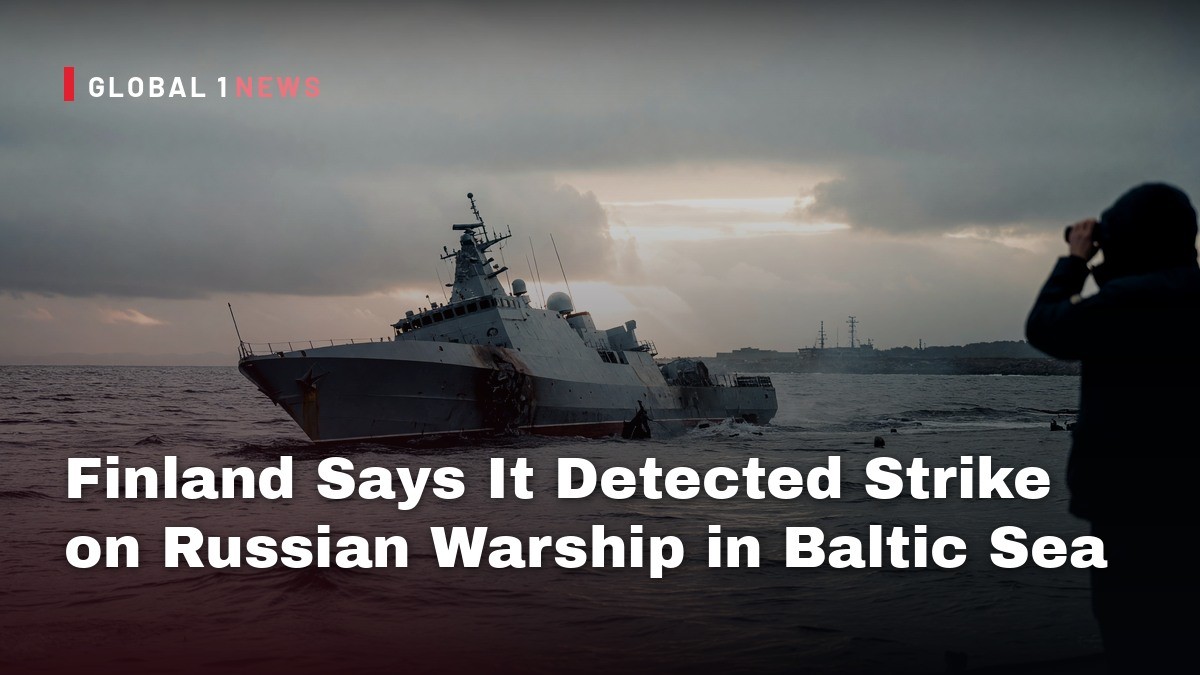
Finland’s defence ministry announced on Thursday that its forces had detected “a strike” on a Russian warship in the Gulf of Finland a day earlier, though it stressed that the overall security situation in the Baltic Sea remained stable. The statement, relayed to Reuters, offered no details on the vessel’s location, the timing of the incident, or the means by which the strike was identified, underscoring the limited information currently available to the public.
Details of the Incident as Reported by Finnish Authorities
The Finnish Defence Forces confirmed that a strike on a Russian naval asset was observed in the Gulf of Finland, a narrow arm of the Baltic Sea that separates Finland from Estonia and stretches eastward toward St. Petersburg. The spokesperson emphasized that Finland is not under any immediate military threat, and that the incident did not alter the broader security posture of the region.
Beyond the acknowledgement of the strike, Finnish officials declined to disclose the exact coordinates, the type of weaponry involved, or the identity of the vessel. The lack of casualty reports or damage assessments further highlights the uncertainty surrounding the event, leaving analysts to piece together the episode from peripheral sources.
Estonian Media Corroborates the Vessel’s Identity
Estonian outlets reported that the target was a small Russian Navy ship, which subsequently returned to St. Petersburg. This suggests that the vessel sustained no critical damage that would prevent it from completing its voyage, though the precise condition of the ship remains unverified.
The Estonian coverage aligns with the Finnish narrative that the incident, while notable, did not precipitate a broader escalation. The return of the ship to a major Russian port underscores the limited operational impact of the strike, at least in the immediate term.
Ukrainian Drone Activity in the Northwest
Ukraine has intensified its drone campaigns toward Russia’s northwestern Leningrad region, which includes the strategic port of St. Petersburg and the Baltic Sea outlet of Ust‑Luga, a key conduit for Russian oil and grain exports. These operations have increasingly spilled over into neighboring airspace, prompting heightened alerts across the Baltic states.
Finnish, Estonian, Latvian and Lithuanian authorities reported that Ukrainian drones have occasionally strayed into their skies, prompting civilian shelter warnings and NATO air patrols. The presence of these unmanned systems near Finnish territory raises the specter of inadvertent escalation, especially as NATO members monitor the situation closely.
NATO’s Response and Regional Alerts
In reaction to the drone incursions, NATO scrambled warplanes to reinforce the airspace over the Baltic region. The alliance’s rapid deployment reflects its commitment to deter any potential spillover of the conflict into member states, a concern amplified by the proximity of the Gulf of Finland to both Finnish and Estonian coastlines.
Estonia, Latvia and Lithuania issued early‑morning warnings on Wednesday, urging citizens to seek shelter as drones traversed their airspace. These precautionary measures illustrate the growing anxiety among Baltic populations about the war’s encroachment onto their daily lives.
Implications for Finnish Security Policy
Finland’s measured response—acknowledging the strike while affirming that the nation faces no immediate threat—mirrors its broader security doctrine of calibrated vigilance. By avoiding alarmist language, Finnish officials aim to prevent panic while maintaining readiness for any further provocations.
The incident may prompt a reassessment of Finland’s maritime surveillance capabilities, especially in the Gulf of Finland, where narrow waterways and heavy traffic complicate detection. Strengthening early‑warning systems could become a priority as the risk of stray drones and cross‑border strikes persists.
Russian Perspective and Information Control
Russia’s official stance on the incident remains silent, with no public statements from the Kremlin or the Russian Defence Ministry confirming the strike or its consequences. This silence is consistent with a broader pattern of information control, particularly as the Russian Prosecutor General’s Office has recently designated The Moscow Times as an “undesirable” organization, criminalising its operations and threatening its staff with prosecution.
The crackdown on independent reporting, framed by Russian authorities as a defense against “discrediting” the leadership, underscores the Kremlin’s sensitivity to narratives that could expose vulnerabilities in its naval assets. The lack of a Russian response may be a deliberate attempt to downplay the event and prevent it from gaining traction in international media.
Broader Geopolitical Context and Future Outlook
The strike on a Russian warship, though limited in scale, signals a potential shift in the conflict’s geographic reach. Ukrainian drone operations targeting the Leningrad region, combined with occasional incursions into NATO airspace, illustrate an expanding theatre of war that now brushes the borders of the alliance.
For the Kremlin, maintaining the appearance of naval invulnerability is crucial, especially as ports like Ust‑Luga remain vital lifelines for commodity exports. Any perception of vulnerability could embolden further Ukrainian attacks and increase pressure on Russia’s western front.
Looking ahead, the incident may serve as a catalyst for heightened NATO vigilance in the Baltic Sea, prompting more frequent patrols and tighter coordination with Finnish and Baltic forces. Simultaneously, Finland is likely to continue its cautious messaging, balancing the need for public reassurance with the imperative to monitor and respond to any future strikes.
This article was produced with AI-assisted research and editorial support. Reporting is based on the source material cited below. Sources: The Moscow Times; themoscowtimes.com; Global1.News (13 November 2026).
By Irina Volkov, Staff Writer
What's Your Reaction?
 Like
0
 Dislike
0
 Love
0
 Funny
0
 Wow
0
 Sad
0
 Angry
0
Russia/Eastern Europe Correspondent at Global1.News. Covering Russian politics, energy, security, and the shifting dynamics of the post-Soviet space. Provides clear-eyed analysis on one of the world's most opaque regions.













Comments (0)