
US-Israeli attacks on Iran caused 1.5M tons of carbon emissions: Iranian President
Iranian President Masoud Pezeshkian warned the world at the COP31 climate summit in Antalya that the recent US‑Israeli strikes on Iranian fuel facilities have unleashed a massive, yet largely invisible, climate disaster.
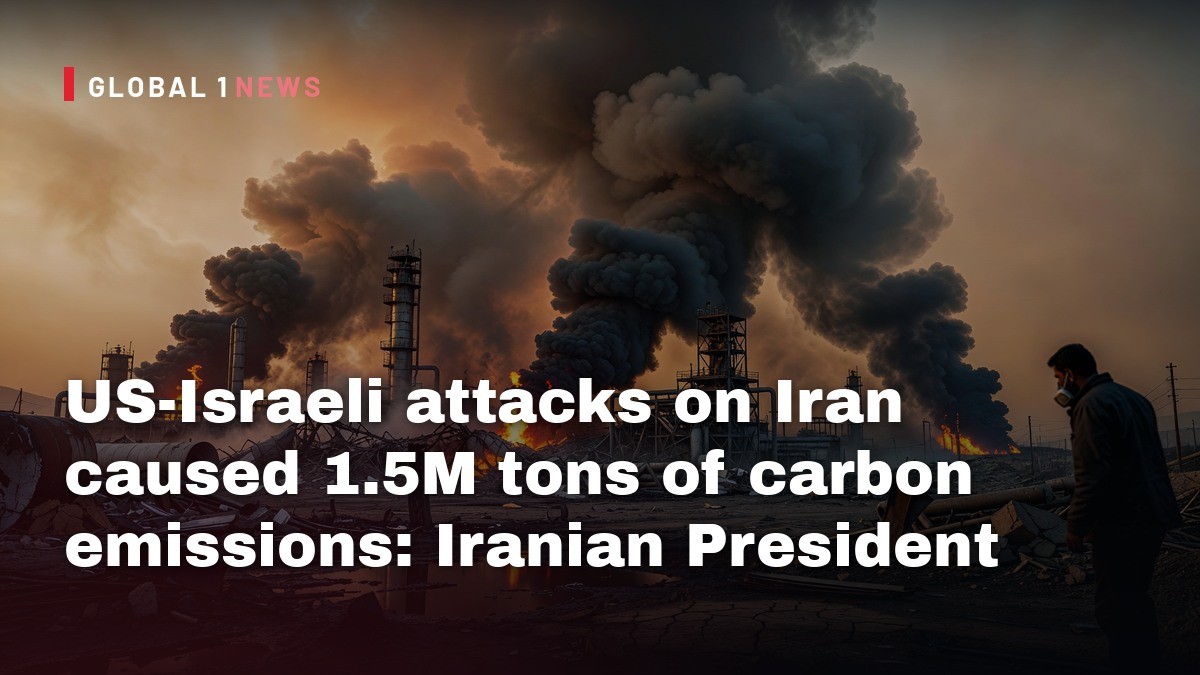
Iranian President Masoud Pezeshkian warned the world at the COP31 climate summit in Antalya that the recent US‑Israeli strikes on Iranian fuel facilities have unleashed a massive, yet largely invisible, climate disaster. He told delegates that the attacks released an estimated 1.5 million tons of carbon dioxide into the atmosphere, a figure that underscores the growing intersection of warfare, environmental destruction and human suffering across the region.
Carbon emissions from the March attacks
The president’s calculations break down the emissions into two distinct episodes. On March 7, Israeli forces targeted oil storage tanks near Tehran, a strike that he said produced roughly one million tons of carbon dioxide. A week later, on March 18, US‑Israeli air raids hit gas‑processing facilities in the southern port city of Asaluyeh, adding another half‑million tons to the atmospheric burden. Together, these operations accounted for the 1.5 million‑ton figure cited at the climate conference.
Beyond the sheer volume of greenhouse gases released, the attacks ignited fires that scorched fuel depots, destroyed dozens of tankers and rendered large swaths of equipment unusable. A photograph captured by Anadolu Agency showed a blaze raging at the Shahran oil depot in Tehran on March 8, illustrating how quickly the environmental fallout turned into a humanitarian crisis for workers and nearby residents.
The paradox of climate rhetoric and military action
President Pezeshkian framed the emissions spike as a stark contradiction to the global pledge to curb greenhouse gases. He argued that while nations gather in Antalya to negotiate emissions cuts, the same powers are simultaneously launching operations that “destroy infrastructure, trigger widespread fires and release pollutants into the atmosphere.” This juxtaposition, he warned, erodes the credibility of international climate commitments.
He also linked the Iranian experience to broader patterns of environmental damage in conflict zones, noting that the same logic applies to Israel’s ongoing campaign in Gaza. According to Pezeshkian, the Gaza Strip is facing a “humanitarian and environmental catastrophe” as its water resources, ecosystems and built environment crumble under sustained bombardment.
Human cost behind the carbon numbers
The carbon calculations, while alarming, mask the immediate human toll. The fires at Tehran’s oil depot left many fuel‑truck drivers and depot workers without work, while the smoke and heat threatened nearby communities with respiratory ailments and displacement. In Asaluyeh, the destruction of gas‑processing plants jeopardised the livelihoods of thousands of engineers and laborers who depend on the facility for income.
Pezeshkian’s statements at COP31 emphasized that “peace and environmental protection are inseparable,” underscoring that lasting peace is essential not only for political stability but also for safeguarding the health of ordinary people who breathe the air polluted by war‑generated emissions.
Calls for accountability and compensation
In a direct appeal to the international community, the Iranian president urged organizations to document the environmental damage caused by the US and Israeli operations. He called for the establishment of mechanisms that would hold the perpetrators financially responsible for the carbon released and the broader ecological harm inflicted on Iran and Gaza.
Such a demand aligns with emerging norms in international law that seek to attribute environmental damage to armed conflict. While concrete legal pathways remain under debate, Pezeshkian’s plea signals a growing expectation that states and non‑state actors be answerable for the climate impact of their military strategies.
Iran’s renewable energy strides amid conflict
Amid the devastation, President Pezeshkian highlighted Iran’s own progress in clean energy as a counter‑narrative to the attacks. He reported that the nation’s installed renewable‑energy capacity surged from 1,250 megawatts to over 6,150 megawatts in the past two years, reflecting a determined shift toward greener power sources despite sanctions and war.
In 2026, Iran generated more than 4.5 billion kilowatt‑hours of clean electricity, a production that he said prevented the release of 2.5 million tons of carbon dioxide. This achievement, he argued, demonstrates that even nations under pressure can contribute meaningfully to global emissions reductions when given the chance to develop sustainable infrastructure.
Regional diplomatic efforts to halt the war
Since the offensive began on February 28, regional mediators have stepped in to try to defuse the escalating conflict. While the article notes that “diplomatic efforts involving regional mediators have since sought to end the hostilities,” it does not detail specific negotiations. Nonetheless, the presence of these diplomatic channels offers a glimmer of hope that the cycle of retaliation and environmental harm might be broken.
The COP31 conference, running from November 9 to 20 in Antalya, provides a parallel diplomatic arena where climate leaders and political representatives can discuss not only emissions targets but also the urgent need to protect the planet from the ravages of war. Pezeshkian’s testimony aims to place the Iranian experience firmly on that agenda.
Looking ahead: climate justice and peacebuilding
The Iranian president’s testimony at COP31 underscores a broader, emerging narrative: that climate justice cannot be separated from peacebuilding. By quantifying the carbon cost of the March attacks, he translated the abstract notion of “environmental damage” into a concrete metric that policymakers can no longer ignore.
For advocates of human rights and environmental protection, the challenge now is to translate these figures into actionable policies—whether through compensation mechanisms, stricter regulations on the use of fuel‑rich targets in warfare, or renewed investment in renewable energy for conflict‑prone regions. As the world watches the outcomes of Antalya’s climate talks, the Iranian case stands as a stark reminder that the climate crisis is being compounded, not mitigated, by the very conflicts that dominate headlines today.
This article was produced with AI-assisted research and editorial support. Reporting is based on the source material cited below. Sources: Middle East Monitor; middleeastmonitor.com; Global1.News (12 November 2026).
By Fatima Al-Rashid, Staff Writer
What's Your Reaction?
 Like
0
 Dislike
0
 Love
0
 Funny
0
 Wow
0
 Sad
0
 Angry
0

Gulf/MENA Correspondent at Global1.News. Based in Doha, covering Gulf politics, energy markets, diplomacy, and development across the Middle East and North Africa. Tracks the economic transformation of the Gulf states.











Comments (0)