
Trump’s Gaza plan under fire as Israel restricts flood aid
Israel’s ongoing restrictions on humanitarian aid to Gaza have come under renewed scrutiny as the winter season intensifies the humanitarian crisis. The plan’s premise relied on a cessation of hostilities, enabling the flow of aid and the rebuilding of essential infrastructure.
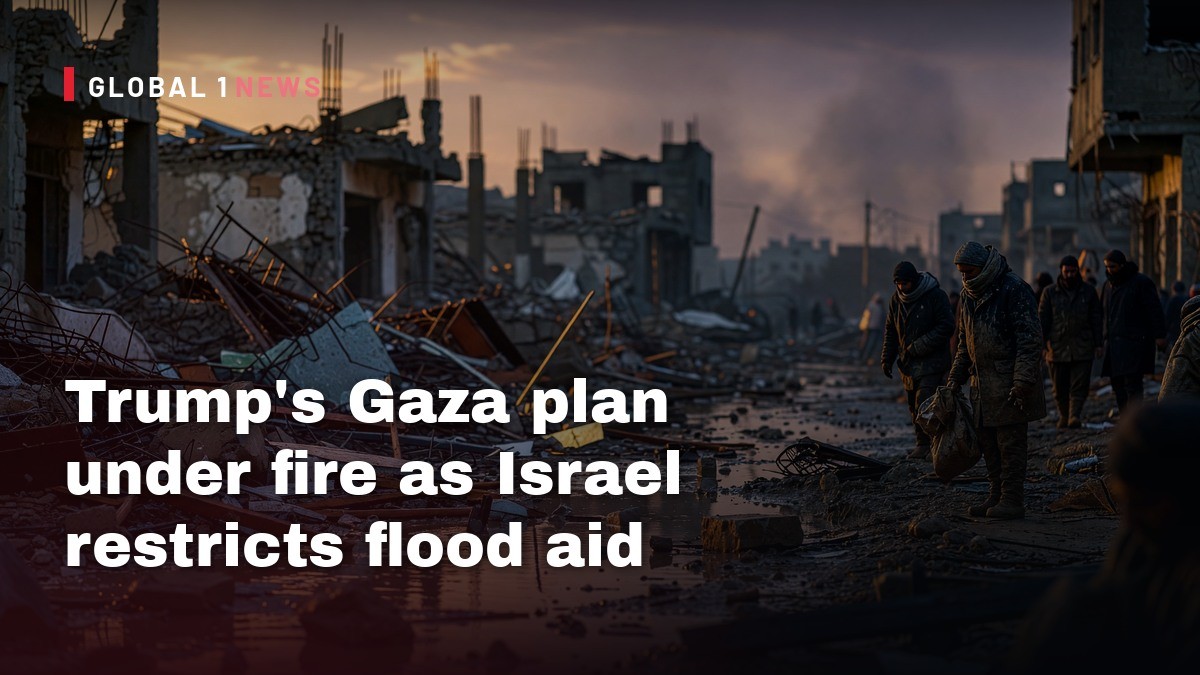
Israel’s ongoing restrictions on humanitarian aid to Gaza have come under renewed scrutiny as the winter season intensifies the humanitarian crisis. The latest flashpoint—a strike by the Israeli military on Nasser Hospital in the southern Gaza Strip—has highlighted the fragile nature of the ceasefire that President Donald Trump’s Board of Peace was tasked with enforcing more than a year after its inception. While the strike itself is the immediate focus, the broader picture involves a series of logistical hurdles that continue to impede the delivery of shelter materials and rubble‑clearing equipment, even as the region endures its third consecutive year of displacement.
Background to the Trump‑initiated ceasefire
In late 2025, President Donald Trump announced a ceasefire plan intended to bring an end to the protracted conflict in Gaza. The initiative, overseen by a Board of Peace, was meant to coordinate humanitarian assistance, reconstruction efforts, and security arrangements between Israel, the Palestinian Authority, and international donors. The plan’s premise relied on a cessation of hostilities, enabling the flow of aid and the rebuilding of essential infrastructure.
Since its launch, the Board of Peace has faced a series of setbacks, ranging from disagreements over border crossings to concerns about the infiltration of weapons. The recent Israeli strike on Nasser Hospital underscores how quickly the fragile calm can be disrupted, especially when military operations intersect with densely populated civilian areas.
The Nasser Hospital strike and its immediate impact
On Thursday, Israeli forces struck Nasser Hospital in southern Gaza, resulting in the death of six individuals and injuries to at least 28 more, according to health officials in Gaza. Among the dead were a 13‑year‑old boy and a surgeon, figures reported by Palestinian health officials. Israeli authorities stated that a Hamas operative was among those killed, framing the strike as a legitimate target in the ongoing security operation.
The loss of medical personnel and the damage to a key health facility have immediate repercussions for Gaza’s already strained health system. With winter approaching, the ability to treat injuries, manage chronic illnesses, and respond to the surge in respiratory ailments caused by cold weather is now further compromised.
Winter weather compounds the humanitarian crisis
Gaza’s displaced population, now living in tents for the third consecutive year, faces heightened vulnerability as winter sets in. The first major storm of the season, which hit on November 6, flooded approximately 70,000 tents over a single weekend, according to local authorities. The flooding left families sleeping on water‑logged bedding, exposing them to the risk of hypothermia and disease.
The combination of inadequate shelter, exposure to the elements, and limited access to clean water creates a perfect storm for public health emergencies. The influx of cold weather‑related illnesses is expected to strain the already overburdened medical facilities, including those that have just suffered direct attacks.
Restrictions on shelter materials and rubble‑clearing equipment
Despite the Board of Peace’s mandate to facilitate aid, Israel continues to restrict the entry of shelter materials and rubble‑clearing machinery into Gaza. These restrictions have slowed the reconstruction of homes and critical infrastructure, leaving many displaced families in temporary accommodations that offer little protection against harsh weather.
The limitations on rubble‑clearing equipment also impede the removal of debris from damaged neighborhoods, delaying the restoration of basic services such as electricity and water. The inability to clear rubble quickly hampers both humanitarian relief operations and longer‑term rebuilding efforts, extending the cycle of vulnerability for Gaza’s residents.
Regional diplomatic dynamics and the Board of Peace
The strike on Nasser Hospital and the ongoing aid restrictions have placed additional pressure on the Board of Peace, which must navigate a complex diplomatic landscape. Israel’s security concerns, particularly regarding the presence of Hamas operatives in civilian areas, clash with international calls for unfettered humanitarian access.
U.S. officials continue to advocate for the Board’s framework, emphasizing the need for a stable ceasefire to enable reconstruction. However, the recent incident illustrates the delicate balance between security operations and humanitarian imperatives, a balance that the Board must constantly recalibrate.
Implications for Gaza’s displaced population
For the families living in tents, the convergence of military action, weather challenges, and aid restrictions translates into daily uncertainty. The loss of a surgeon at Nasser Hospital reduces the capacity to treat injuries, while the flooding of tents exacerbates exposure risks.
Humanitarian organizations on the ground report that the lack of adequate shelter materials forces many to improvise with plastic sheeting and makeshift coverings, which offer limited insulation against cold temperatures. The inability to bring in heavy machinery for debris removal further delays the clearing of safe zones where temporary shelters could be established.
Looking ahead: prospects for the ceasefire and humanitarian relief
As winter deepens, the urgency of delivering shelter and medical supplies intensifies. The Board of Peace faces a critical test: maintaining the ceasefire while addressing Israel’s security concerns and ensuring that humanitarian aid reaches those in need. The recent hospital strike may prompt renewed diplomatic engagement, but any progress will depend on Israel’s willingness to ease restrictions on essential materials.
In the coming weeks, the international community is likely to increase pressure on all parties to uphold the ceasefire and facilitate the flow of aid. The effectiveness of these efforts will hinge on the ability to reconcile security operations with the humanitarian imperative of protecting civilians from the compounded threats of conflict, weather, and displacement.
This article was produced with AI-assisted research and editorial support. Reporting is based on the source material cited below. Sources: Al-Monitor; al-monitor.com; Global1.News (13 November 2026).
By Hannah Berg, Staff Writer
What's Your Reaction?
 Like
0
 Dislike
0
 Love
0
 Funny
0
 Wow
0
 Sad
0
 Angry
0

Israel Correspondent at Global1.News. Based in Tel Aviv, covering Israeli politics, security, technology, and society. Provides balanced, deeply-sourced reporting on one of the most closely-watched regions in the world.












Comments (0)