
DRC Ebola Tops 6,000 Cases as UK Pledges £50 Million in New Aid
The Democratic Republic of the Congo's deadliest Ebola outbreak on record continues to accelerate, with confirmed cases surpassing 6,000 and deaths approaching 3,000, according to government data tracked as of September 1.
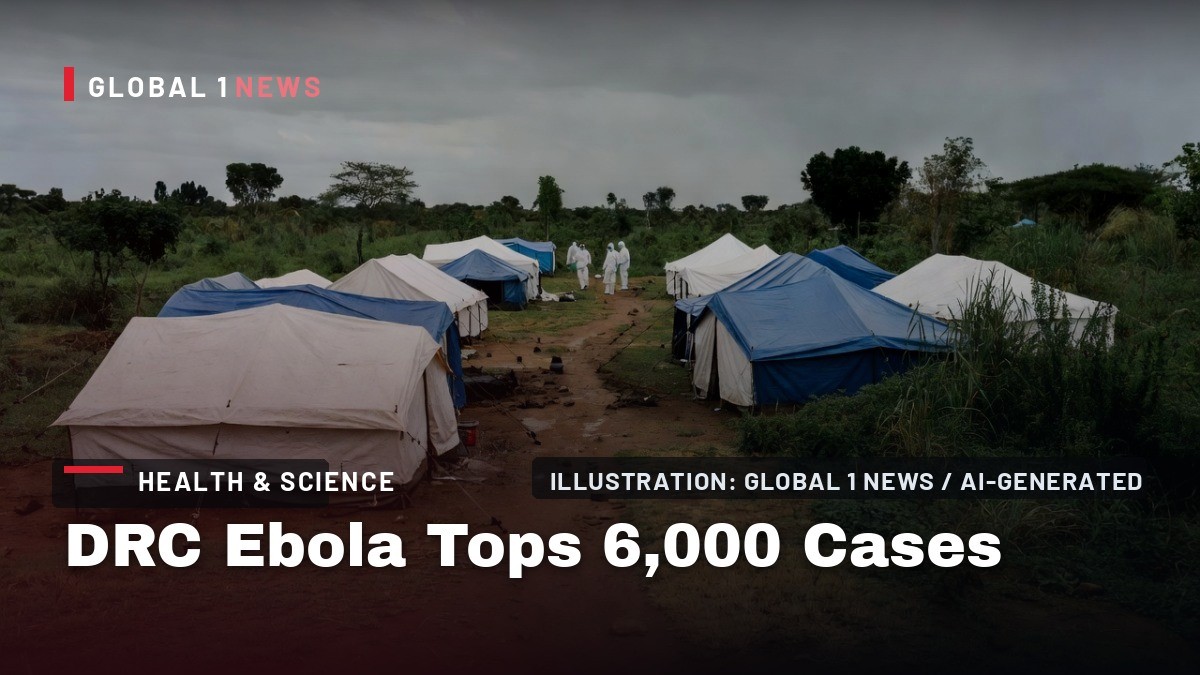
The Democratic Republic of the Congo's deadliest Ebola outbreak on record continues to accelerate, with confirmed cases surpassing 6,000 and deaths approaching 3,000, according to government data tracked as of September 1. The development came as Britain announced a new funding pledge of more than £50 million to help contain the crisis, underscoring the international community's growing alarm over the spread of the virus.
Record Scale of the Outbreak
The outbreak, declared by the DRC government on May 15, 2026, has now become the country's largest ever recorded, according to Africanews. By August 31, the outlet reported that confirmed cases had surpassed 6,000, with 2,911 deaths and more than 1,360 people recovered. Government data tracked by the LiveEbolaMap portal showed 6,121 confirmed cases and 2,952 deaths as of September 1.
The figures mark a dramatic escalation from August 20, when the Associated Press reported the outbreak had reached 5,000 confirmed cases. The current trajectory places this among the fastest-growing Ebola epidemics ever recorded, according to Africanews. This is the DRC's 17th Ebola outbreak since 1976, and it began only about five months after the previous outbreak ended, the World Health Organization and Xinhua reported.
To contextualize the scale, the DRC's previous record outbreak was the 2018-2020 epidemic in North Kivu province, caused by the Zaire species of ebolavirus, which resulted in more than 2,200 deaths. The deadliest Ebola epidemic in history remains the 2014-2016 West Africa outbreak, also caused by the Zaire species, which killed more than 11,000 people. The current outbreak has already surpassed the DRC's prior record in a fraction of the time.
The Bundibugyo Virus Challenge
This outbreak is caused by the Bundibugyo species of ebolavirus, a strain first identified in Uganda in 2007. Unlike the Zaire species that drove previous major epidemics, there is no licensed vaccine and no specific treatment for the Bundibugyo virus, according to the WHO and CIDRAP. This fundamental gap in the medical arsenal has complicated response efforts from the outset.
The WHO noted that work is ongoing to test promising vaccine candidates, and the DRC government and Africa CDC have explored compassionate use of existing vaccine platforms. However, the absence of a proven, deployable vaccine means health workers on the front lines face heightened risk, and containment relies heavily on traditional public health measures such as contact tracing, isolation, and safe burial practices.
Health experts have warned that the lack of a vaccine for this specific species creates a significant vulnerability, particularly in densely populated areas where the virus can spread rapidly before cases are identified. The scientific community's focus on the Zaire species following the 2014-2016 West Africa disaster left the world less prepared for a Bundibugyo-driven outbreak of this magnitude.
Geographic Spread and Cross-Border Concerns
The outbreak has expanded dramatically across eastern DRC, spreading from 54 to 60 health zones across six of the country's 26 provinces, according to WHO Disease Outbreak News and The Guardian. The affected provinces are Bas-Uele, Haut-Uele, Ituri, North Kivu, South Kivu, and Tshopo, with the virus reaching the sixth province by mid-August. Early infections are theorised to have occurred in January or February 2026 in the town of Mongbwalu in Ituri Province, Xinhua reported.
The geographic footprint spans remote rural areas as well as densely populated urban centers, creating a complex operational environment for responders. The spread into South Kivu and Tshopo provinces, which border major transportation routes, has raised particular concern about further dissemination.
Cross-border transmission has already been confirmed. Uganda reported cases in May 2026, including two confirmed cases in the capital Kampala with one death among people who had travelled from the DRC. A 59-year-old Congolese man died from the virus in Kampala, according to WHO and NPR. Uganda's cumulative Bundibugyo infections later reached five, including a driver, a health worker, and a Congolese woman who travelled to Kampala for treatment, according to Uganda Monitor and ReliefWeb. High-level ministerial meetings on cross-border coordination have been held to address the regional threat.
Human Toll and On-the-Ground Response
The human cost of this outbreak extends beyond the mortality figures. With 2,952 deaths recorded as of September 1, according to government data, communities across eastern DRC are grappling with loss on a scale unprecedented in the country's Ebola history. The more than 1,360 people who have recovered represent survivors who often face stigma and long-term health complications.
The response on the ground involves multiple international organizations operating in an exceptionally difficult environment. The WHO has established a continental preparedness and response plan covering June through November 2026, warning that the outbreak is occurring in a challenging context marked by a humanitarian crisis, remote and densely populated areas, and insecurity and conflict that hamper response operations.
Médecins Sans Frontières (MSF), also known as Doctors Without Borders, has been treating patients, setting up treatment centers and isolation units, and delivering supplies across affected areas. As early as July 15, MSF was calling for an urgent scale-up of the medical response, according to the organization. The Africa CDC is leading the regional response, with its Director General Dr. Jean Kaseya characterizing the outbreak as a "stress test" for the continent's preparedness, as reported by NPR and the Africa CDC.
Health workers face particular peril given the lack of a licensed vaccine for the Bundibugyo species. The combination of insecurity, community mistrust, and the virus's spread into new geographic areas has stretched response capacity thin, with responders often forced to pause operations due to security threats.
International Funding Response
Britain announced on September 1 that it will provide more than £50 million (approximately USD 67.56 million) in new funding to help contain the outbreak, according to Reuters and the UK Foreign, Commonwealth and Development Office (FCDO). The pledge, announced by FCDO Minister for Africa Kirsty McNeill, brings the full UK contribution to £78 million. The UK government said it is accelerating support to stop Ebola at source and that thousands of vulnerable people will be supported through the new funding.
The British pledge represents one of the largest single-country commitments to the outbreak response. The funding is expected to support case detection, contact tracing, community engagement, and the strengthening of health systems in affected areas, though specific program allocations have not been detailed.
The UK's contribution comes alongside the WHO's continental preparedness and response plan and the Africa CDC's regional coordination efforts. The international community's financial response reflects growing recognition that the outbreak, if left unchecked, could spread further across borders and become increasingly difficult to contain.
Implications for the United States and Global Risk
The US Centers for Disease Control and Prevention (CDC) has stated that no cases of Ebola disease from this outbreak have been confirmed in the United States, and the overall risk to the American public and travelers remains low. However, the US CDC is closely monitoring the situation, given the outbreak's scale and the potential for international spread through air travel.
Global risk assessment focuses on the outbreak's trajectory in the DRC and neighboring countries. The confirmed cases in Uganda, including in the capital Kampala, demonstrate the virus's ability to cross borders and reach major urban centers. The WHO's continental preparedness plan for June through November 2026 indicates that regional spread remains a significant concern.
For the United States and other Western nations, the primary risk is not immediate domestic transmission but the potential for the outbreak to destabilize the region and require increasingly costly containment efforts. The lack of a licensed vaccine for the Bundibugyo species means that global stockpiles of Ebola vaccines, developed primarily for the Zaire species, may be of limited utility in this outbreak, complicating international preparedness.
Lessons and What Happens Next
The current outbreak has exposed critical gaps in the global response to emerging infectious diseases. The Africa CDC's Dr. Jean Kaseya has framed the outbreak as a "stress test" for Africa's health systems, according to NPR, highlighting weaknesses that extend beyond the DRC. The fact that this outbreak began only five months after the previous one ended underscores the cyclical nature of Ebola in the region and the need for sustained investment in surveillance and response capacity.
The absence of a licensed vaccine for the Bundibugyo species represents a significant lesson from past outbreaks that prioritized vaccine development for the Zaire species. The ongoing work to test promising candidates, along with the DRC government and Africa CDC's exploration of compassionate use of existing vaccine platforms, may eventually provide tools, but they are not available at the scale needed for immediate impact.
In the coming weeks, the response will focus on scaling up treatment capacity, expanding contact tracing, and addressing the security and access challenges that have hampered operations. The UK's new funding pledge, along with continued support from the WHO, MSF, and Africa CDC, will be directed toward these efforts. The trajectory of case numbers over the next several weeks will be a critical indicator of whether current containment measures are working or whether the outbreak will continue its record-setting pace.
The coming weeks will determine whether the international community's enhanced funding and coordination efforts can bend the curve of this outbreak. Key indicators to watch include whether case numbers in the most affected health zones begin to plateau, whether the virus spreads to additional provinces or countries, and whether promising vaccine candidates can be deployed under compassionate use protocols. The outbreak's trajectory will also test the durability of cross-border coordination between the DRC and Uganda, and the ability of responders to operate safely in areas affected by conflict. If current trends continue unchecked, the DRC could face a public health crisis that dwarfs its previous Ebola experiences, with regional and global implications that will require sustained international engagement.
By Jessica Ali, Staff Writer
This article was produced with AI-assisted research and editorial support. Sources: Reuters, World Health Organization, Africa CDC, US CDC, NPR, The Guardian, gov.uk (FCDO), Africanews, Xinhua, CIDRAP, MSF.
What's Your Reaction?
 Like
0
Like
0
 Dislike
0
Dislike
0
 Love
0
Love
0
 Funny
0
Funny
0
 Wow
0
Wow
0
 Sad
0
Sad
0
 Angry
0
Angry
0

Editor-in-Chief at Global1.News. Atlanta-based journalist who cuts through the BS and tells it like it is. Lead anchor, host, and the voice you hear when the spin stops and the truth starts.













Comments (0)