
Devastation in the Himalayas: 24 Canadians Among Hundreds Missing After Nepal Flash Floods
In a recent CBC News report, the scale of a catastrophic natural disaster in the high Himalayas has come into sharp focus, confirming that at least 24 Canadians are among the hundreds of people missing after massive flash floods swept through the border region between Nepal and Tibet on Wednesday. The deluge, which has claimed the lives of at least 157 people according to Nepali police, has overwhelmed local communities and triggered a complex international rescue operation.
In a recent CBC News report, the scale of a catastrophic natural disaster in the high Himalayas has come into sharp focus, confirming that at least 24 Canadians are among the hundreds of people missing after massive flash floods swept through the border region between Nepal and Tibet on Wednesday. The deluge, which has claimed the lives of at least 157 people according to Nepali police, has overwhelmed local communities and triggered a complex international rescue operation. For Canadian families waiting for news of loved ones, the uncertainty is a harrowing ordeal, prompting an urgent response from federal officials in Ottawa.
Devastation in the Himalayas: 24 Canadians Among Hundreds Missing After Nepal Flash Floods
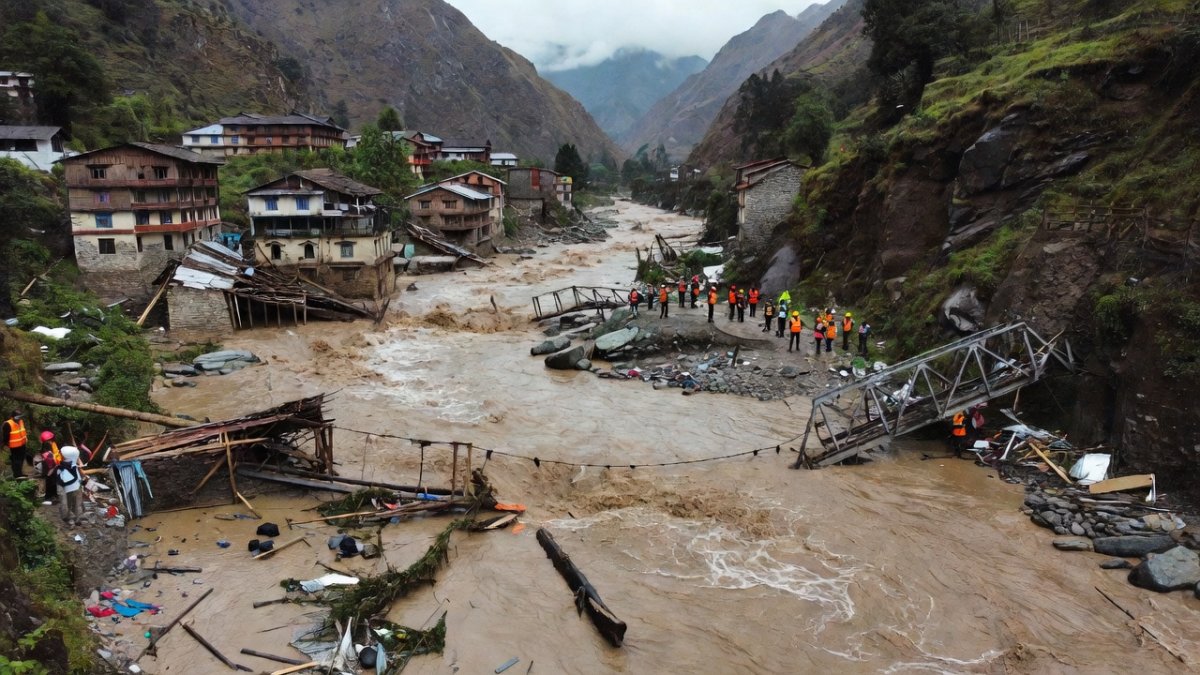
Kathmandu, Nepal – Wednesday — The floods struck with terrifying speed, inundating dozens of settlements in Nepal's Rasuwa and Nuwakot districts along the Trishuli River. The Bhotekoshi River area near the Tibet border was particularly hard hit, with floodwaters reaching settlements as high as 270 feet (about 80 metres) above the normal river level. The sheer force of the water has left a trail of destruction that officials are still struggling to fully assess, with more than 1,400 people confirmed missing as search and rescue operations continue. The disaster has not only affected local residents but has also ensnared a significant number of foreign tourists who were in the region for the popular trekking season.
In a recent CBC News report, the scale of a catastrophic natural disaster in the high Himalayas has come into sharp focus, confirming that at least 24 Canadians are among the hundreds of people missing after massive flash floods swept through the border region between Nepal and Tibet on Wednesday. The deluge, which has claimed the lives of at least 157 people according to Nepali police, has overwhelmed local communities and triggered a complex international rescue operation. For Canadian families waiting for news of loved ones, the uncertainty is a harrowing ordeal, prompting an urgent response from federal officials in Ottawa.
The floods struck with terrifying speed, inundating dozens of settlements in Nepal's Rasuwa and Nuwakot districts along the Trishuli River. The Bhotekoshi River area near the Tibet border was particularly hard hit, with floodwaters reaching settlements as high as 270 feet (about 80 metres) above the normal river level. The sheer force of the water has left a trail of destruction that officials are still struggling to fully assess, with more than 1,400 people confirmed missing as search and rescue operations continue. The disaster has not only affected local residents but has also ensnared a significant number of foreign tourists who were in the region for the popular trekking season.
The Human Toll and the Search for the Missing
The Nepal Tourism Board has reported that 291 foreign nationals are missing, a figure that underscores the international dimension of this tragedy. Among the missing are 105 Indian tourists, at least 47 Americans, and the 24 Canadians. The list also includes travellers from Australia, Malaysia, the United Kingdom, South Africa, and the Netherlands, with a 13-year-old British girl among those unaccounted for. The confirmation of these numbers has triggered a wave of consular activity from multiple governments, all of whom are working with Nepali authorities to locate their citizens amidst the chaos.
Rescue efforts are being spearheaded by a combined force of Nepali police, armed police, and military personnel. The perilous nature of the operation is highlighted by the fact that the missing include 26 police personnel, nine armed police officers, and 44 members of the military, including nine Armed Police Force personnel stationed at the Timure border outpost. These first responders were themselves caught in the path of the floodwaters while attempting to assist others, a stark reminder of the immense dangers faced by those on the front lines of this disaster. In neighbouring Tibet, China's state media has reported three fatalities and 265 others missing, indicating the disaster's reach across the international border.
Canadian Government Response and Consular Support
In Ottawa, the federal government has moved swiftly to address the crisis. Prime Minister Mark Carney stated that his government is closely following the situation and urged all Canadians in the region to sign up for the Registration of Canadians Abroad, a free service that allows the federal government to contact and assist citizens during an emergency in other countries. In a statement that resonated with the anxiety felt by many, Carney said: "Canadians are thinking of all those in distress right now, those who have lost a loved one, and all those who are still waiting for answers." His words reflect a national sentiment of solidarity with the victims and their families.
Foreign Affairs Minister Anita Anand has confirmed that Global Affairs Canada consular officials are in active contact with local authorities and are ready to assist Canadians in the region. "We are monitoring the situation and stand ready to provide assistance as appropriate," she said. For Canadians with family members in Nepal, the advice from Global Affairs is to attempt direct contact first, and if that fails, to reach out to the Emergency Watch and Response Centre in Ottawa. The department is working to establish a clearer picture of the Canadians affected, though the remote and disrupted nature of the communications network in the disaster zone is complicating these efforts.
The Science Behind the Sudden Deluge
While the immediate focus is on rescue and recovery, experts are already analysing the cause of this catastrophic event. Officials believe the Lhende Khola (Lende River), a tributary of the Bhotekoshi, may have been blocked by an avalanche, forming a natural dam and creating a glacial lake. The trapped water was then released catastrophically when the avalanche debris dam collapsed, possibly triggered by an earthquake. The U.S. Geological Survey reported a magnitude 4.4 earthquake early Wednesday about 100 kilometres north of Kathmandu, near the border with China's Tibet region, which may have been the final trigger for the dam's failure.
Climate experts at the Kathmandu-based International Centre for Integrated Mountain Development (ICIMOD) have pointed to a more systemic cause, stating that an avalanche from a glacier likely caused the flash flood. This event serves as a stark illustration of the vulnerabilities of high-mountain environments, where rising global temperatures are leading to glacial retreat and the formation of unstable glacial lakes. The sudden release of water from these lakes, known as a Glacial Lake Outburst Flood (GLOF), represents a growing threat to downstream communities. For Canadians, this is a reminder of the global impact of climate change, which is not confined to any single nation but affects the entire planet, including the fragile ecosystems of the Himalayas.
A Community in Mourning and a Call for Preparedness
The disaster has struck during a significant cultural period in Nepal, coinciding with the festival of Janai Purnima. Many locals were trekking in the Gosaikunda Lake area in Rasuwa, a popular pilgrimage site, when the floods hit. This timing has added a layer of tragedy, as families who were celebrating a sacred festival have instead been plunged into grief and uncertainty. The Nepalese Canadian Community Services has expressed its profound sorrow, stating that its members are "deeply saddened by the tragic loss of lives and widespread devastation." The organisation is working to provide support to the Nepali community in Canada and to help facilitate communication with relatives in the affected areas.
For Canadians planning travel to Nepal or other regions prone to such natural disasters, this event underscores the critical importance of preparedness. The Registration of Canadians Abroad service is a vital tool, but travellers are also encouraged to share their itineraries with family and friends, purchase comprehensive travel insurance, and monitor local news and weather reports. The Nepal Tourism Board has issued helpline numbers for those seeking information about missing persons: toll-free emergency number 1234, hotline 1144, and tourist police number 9851289445. These lines are operational for international callers, including Canadians seeking information about loved ones.
Looking Ahead: The Long Road to Recovery
As the search and rescue operations continue, the focus will inevitably shift to the immense task of recovery and reconstruction. The physical damage to infrastructure, including roads, bridges, and communication networks, is extensive, and it will take considerable time and resources to restore basic services to the affected communities. The psychological trauma experienced by survivors and the families of the missing will also require long-term support. The international community, including Canada, will likely be called upon to provide humanitarian assistance in the coming weeks and months.
The tragedy in Nepal is a sombre reminder of the power of nature and the fragility of human life. For the 24 Canadian families waiting for news, the coming days will be agonising. The Canadian government has pledged its full support, and consular officials are working tirelessly to provide updates and assistance. The thoughts of all Canadians are with the people of Nepal and Tibet, and with all those who have been affected by this devastating event. The resilience of the Nepali people, who have faced numerous challenges in recent years, will be tested once again, but the global outpouring of support offers a measure of hope in the face of overwhelming loss.
By Alex Thompson, Staff Writer
This article was produced with AI-assisted research and editorial support. Sources: CBC News, The Canadian Press, Kathmandu Post, Wikipedia.
What's Your Reaction?
 Like
0
Like
0
 Dislike
0
Dislike
0
 Love
0
Love
0
 Funny
0
Funny
0
 Wow
0
Wow
0
 Sad
0
Sad
0
 Angry
0
Angry
0

Canada Correspondent at Global1.News. Based in Toronto, covering Canadian politics, energy, trade, and US-Canada relations. Provides the Canadian perspective on North American and global affairs.














Comments (0)