
Defense reporters to China embassy: Words have consequences
In the midst of a heated diplomatic tug‑of‑war between Manila and Beijing, the Defense Press Corps of the Philippines (DPC) has taken an unexpected stand: it is defending the very act of reporting.
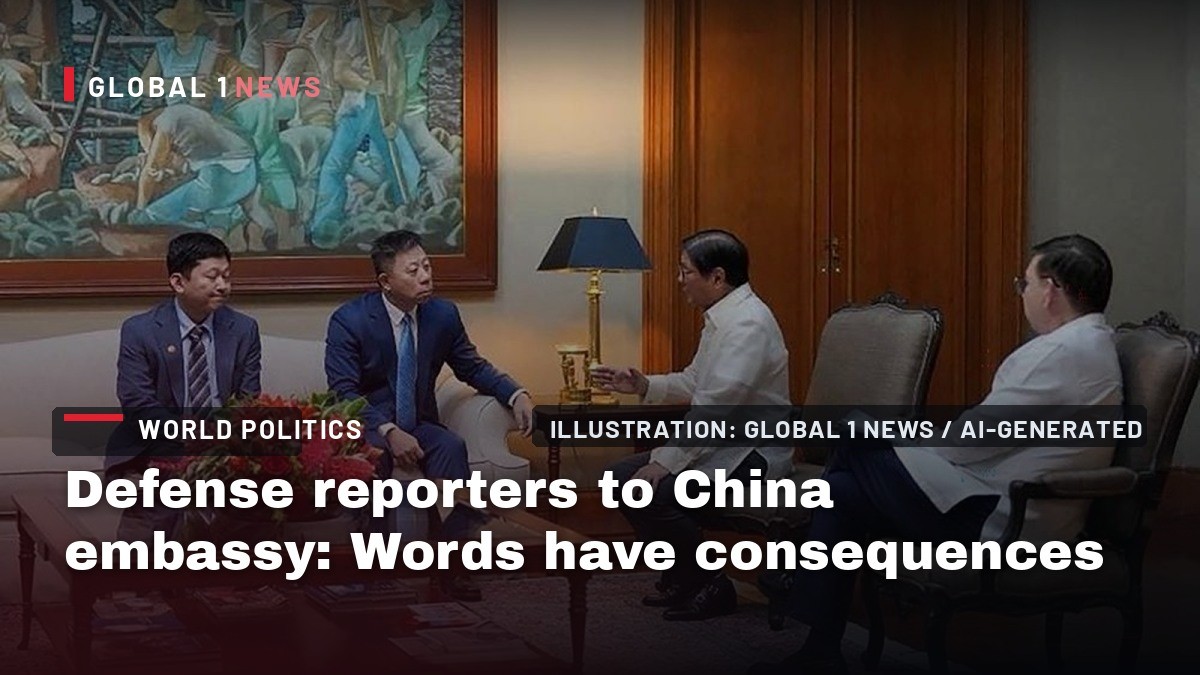
In the midst of a heated diplomatic tug‑of‑war between Manila and Beijing, the Defense Press Corps of the Philippines (DPC) has taken an unexpected stand: it is defending the very act of reporting. After a week of sharp exchanges that saw the Chinese Embassy in Manila accuse Filipino journalists of “exaggeration” and “taking things out of context,” the DPC reminded the embassy that every word spoken on the international stage carries weight, and that the responsibility for those consequences lies not with the press but with the policymakers who wield them.
From a Facebook Post to a Public Rebuttal
On Saturday, October 17, the Chinese Embassy posted on Facebook that “some Philippine politicians and reporters have very limited comprehension about facts,” adding that they are “good at exaggeration, taking things out of context, and creating hype.” The post, while vague and unnamed, clearly targeted the media that have been covering the escalating tensions in the West Philippine Sea. Two days later, the Defense Press Corps issued a formal response, rejecting the embassy’s claim that Filipino reporters “exaggerate” and “take things out of context.” The DPC emphasized that its members had quoted Ambassador Jing Quan verbatim when he warned that China could “easily win if it used force” against the Philippines.
The DPC’s statement highlighted a key point: the political fallout from such remarks “is neither within the control nor the responsibility of journalists.” By invoking the principle that “words have consequences,” the corps turned the Chinese government’s own warning back on the embassy, underscoring that the burden of diplomatic fallout rests with those who make the statements, not those who report them.
Ambassador Jing’s “Peace” Remarks and Their Ripple Effect
During a forum at Diliman College in Quezon City on October 15, Ambassador Jing Quan told reporters, “If we want to use force, we may easily win. But no, we will not use force. You know, we love peace.” The phrasing—contrasting an easy victory with a stated desire for peace—prompted immediate scrutiny. Defense Secretary Gilberto Teodoro Jr. had earlier dismissed Vice President Sara Duterte’s label of the Philippines as Southeast Asia’s “troublemaker,” calling China the real troublemaker on October 14. Jing’s comment, given in response to a question about Teodoro’s statement, was dismissed by the ambassador as “nonsense.”
The Department of Foreign Affairs (DFA) quickly weighed in, describing Jing’s words as a “poor choice of words that would seem to convey a thinly veiled threat of the use of force.” The embassy, in turn, accused the DFA of “selective quotation and overinterpretation.” President Ferdinand Marcos Jr. echoed the DFA’s concern on October 16, saying Jing’s remark “sounds very much to me like a threat” and indicating he would summon the envoy for clarification.
The Role of Defense Reporters on the Frontlines
Members of the DPC travel by sea and air to the contested waters of the West Philippine Sea, where they have witnessed Chinese aggression first‑hand. Their reporting has covered water‑cannon attacks, vessel collisions, and the broader pattern of assertive Chinese actions within the Philippines’ exclusive economic zone. Despite the risks, the journalists maintain a commitment to balanced coverage, stating they have “consistently sought China’s side… in the spirit of fair play and balanced reporting.”
This dedication to impartiality is a cornerstone of the press’s role in a democratic society. The DPC reminded the Chinese Embassy that “it must be difficult for a country without a free press to understand the dynamics of journalistic independence and editorial judgment exercised without state control or oversight.” By highlighting the contrast between a free press and a controlled media environment, the corps underscored the importance of open reporting for genuine mutual understanding.
International Law and the Call for Mutual Understanding
Invoking Article 2 of the United Nations Charter, the DPC reminded readers that states are obligated to refrain from the threat or use of force against the territorial integrity or political independence of any nation. The charter’s language, while diplomatic, carries real implications for the ongoing standoff in the West Philippine Sea. The corps argued that true peace requires space for mutual understanding—something that “cannot be achieved if China continues to shoot at the messengers.”
This reference to the UN Charter serves as a reminder that the dispute is not merely a bilateral squabble but part of a broader framework of international norms. The DPC’s appeal to these norms reinforces the idea that the Philippines’ claim to its maritime resources is anchored in globally recognized legal principles, not just national sentiment.
Political Sparring in Manila’s Corridors of Power
The diplomatic flare‑up unfolded against a backdrop of internal political tension. Defense Secretary Gilberto Teodoro Jr.’s rebuttal to Vice President Sara Duterte’s “troublemaker” label on October 14 set the stage for the embassy’s subsequent accusations. By branding Teodoro the “real troublemaker” and accusing him of smearing China, the embassy sought to shift the narrative from territorial disputes to personal attacks.
Such exchanges illustrate how diplomatic language can quickly become weaponized in domestic politics. The DPC’s involvement adds another layer, as journalists become both observers and, inadvertently, participants in the diplomatic choreography. Their insistence on factual reporting challenges attempts to politicize every statement, reminding officials that the public’s perception is shaped by the clarity and accuracy of the information they receive.
The Press’s Defense of Its Own Independence
By echoing the Chinese government’s own warning—“Words have consequences”—the DPC framed its response as a defense of press freedom rather than a partisan counter‑attack. The corps stressed that journalists are “often reminded of this principle when the Chinese side issues radio challenges within the Philippines’ exclusive economic zone: ‘You bear the responsibility for whatever consequences of your actions.’” This rhetorical turn highlights the paradox of a state that warns of consequences for speech while simultaneously accusing foreign reporters of misrepresentation.
In a democracy like the Philippines, the press serves as a bridge between government actions and public understanding. The DPC’s stance reaffirms that bridge, insisting that the responsibility for diplomatic fallout lies with the policymakers who make the statements, not the journalists who relay them. This distinction is crucial for preserving the integrity of reporting in a climate where misinformation can quickly inflame public sentiment.
Looking Ahead: What This Means for Filipinos
For ordinary Filipinos, the dispute over the West Philippine Sea is more than a headline; it affects the livelihoods of fishers, the security of coastal communities, and the national psyche of a country still healing from past authoritarian wounds. The DPC’s defense of its reporting underscores the importance of having reliable, on‑the‑ground information about what happens in those contested waters.
As the Philippines navigates its relationship with a powerful neighbor, the role of a free press remains a bulwark against unchecked narratives. By insisting on factual accuracy and refusing to be scapegoated for diplomatic tensions, the Defense Press Corps helps ensure that the stories emerging from the frontlines reach barangays, sari‑sari stores, and OFWs abroad, fostering a more informed citizenry that can hold its leaders accountable.
This article was produced with AI-assisted research and editorial support. Reporting is based on the source material cited below. Sources: Philstar.com; Global1.News (19 October 2026).
By Bella Reyes, Staff Writer
What's Your Reaction?
 Like
0
 Dislike
0
 Love
0
 Funny
0
 Wow
0
 Sad
0
 Angry
0

Philippines/Southeast Asia Correspondent at Global1.News. Manila-based journalist covering Philippine politics, environment, maritime security, and social issues. Passionate about marine conservation and the communities protecting the Philippines' natural heritage.









Comments (0)