
Day 19 of VP Sara Duterte Impeachment Trial: Hostile Witness Testimony, Signature Discrepancies, and the Fight Over P125 Million
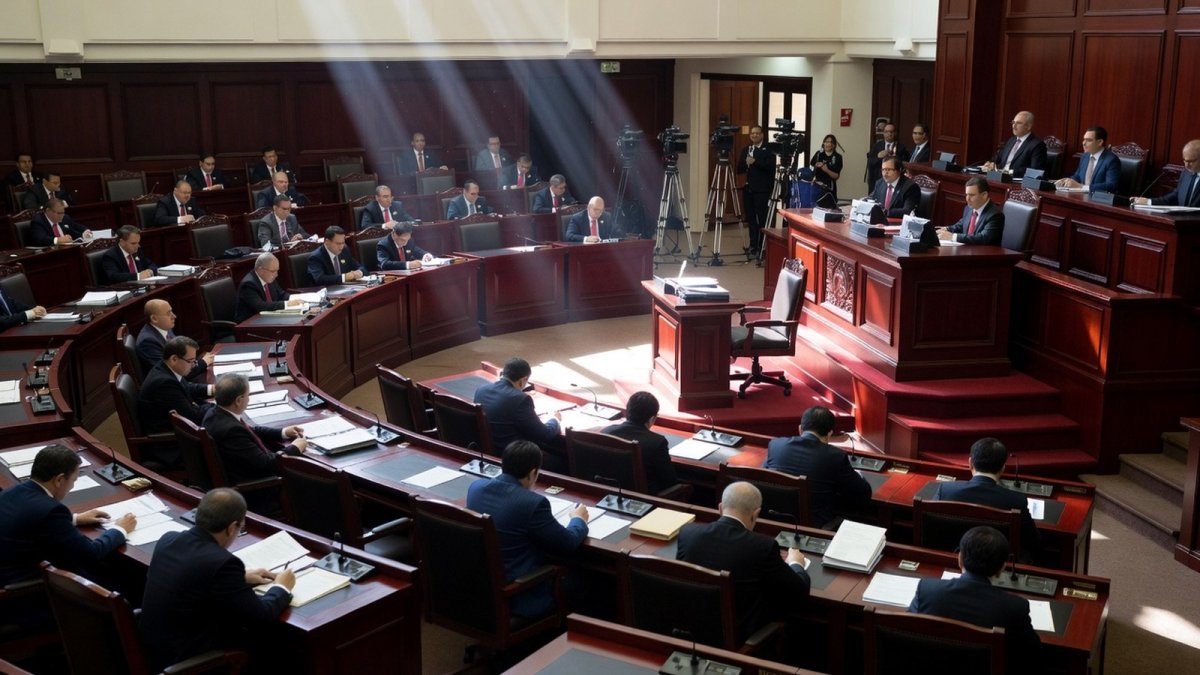
In a recent ANC 24/7 special coverage report, the Senate impeachment court reconvened on Wednesday for Day 19 of the trial of Vice President Sara Duterte, with Senate President Francis "Chiz" Escudero presiding. The proceedings, carried live from the Senate, zeroed in on the heart of Article 1 of the impeachment complaint: the alleged misuse and questionable liquidation of P125 million in confidential funds of the Office of the Vice President (OVP).
In a recent ANC 24/7 special coverage report, the Senate impeachment court reconvened on Wednesday for Day 19 of the trial of Vice President Sara Duterte, with Senate President Francis "Chiz" Escudero presiding. The proceedings, carried live from the Senate, zeroed in on the heart of Article 1 of the impeachment complaint: the alleged misuse and questionable liquidation of P125 million in confidential funds of the Office of the Vice President (OVP). As the nation watched, the testimony of a hostile witness continued to peel back layers of documentation—or the lack thereof—that could define the political future of one of the country's most polarizing figures.
Day 19 of VP Sara Duterte Impeachment Trial: Hostile Witness Testimony, Signature Discrepancies, and the Fight Over P125 Million
Manila, Philippines – August 26, 2026 — The Senate, sitting as an impeachment court, resumed its session on Wednesday for Day 19 of the trial of Vice President Sara Duterte, with Senate President Francis "Chiz" Escudero presiding over the proceedings. The day's focus remained fixed on Article 1 of the impeachment complaint, which alleges the systematic misappropriation and questionable liquidation of confidential funds under the OVP, a charge that has gripped the nation since the trial opened in July.

The Hostile Witness: Lemuel Ortonio's Testimony
At the center of Wednesday's session was Lemuel Ortonio, the OVP Assistant Secretary and Assistant Chief of Staff, who was declared a hostile witness by the court on Day 18, Tuesday. Ortonio's testimony has been nothing short of explosive, as he confirmed that Vice President Duterte personally requested the P125 million in OVP confidential funds in 2022. He further testified to a 100 percent implementation of those funds, meaning the entire amount was spent within the fiscal year, a detail that has raised eyebrows among senators and the public alike.
Ortonio detailed how the OVP distributed confidential funds directly to informants, with payments purportedly used to purchase food, medicine, and even chairs. He acknowledged that these transactions also served as compensation for the informants, a practice that, while not explicitly illegal, has drawn scrutiny for its lack of transparency. Most damning, however, was his admission that no official receipts were attached to these transactions, leaving a paper trail that auditors and prosecutors describe as dangerously thin.
Signature Discrepancies and New Evidence
On Day 19, the court noted apparent differences between two signatures attributed to Vice President Duterte on documents involving the confidential funds. This observation, while preliminary, could open a new front in the prosecution's case, suggesting possible irregularities in the authorization process. House prosecution spokesman and Lanao del Sur 1st District Rep. Terry Ridon has signaled that bank records and Bureau of Internal Revenue (BIR) documents will unearth new evidence in the coming days, promising a deeper dive into the financial trail of the OVP's confidential funds.
Senate President Escudero was also expected to rule on sub judice complaints against private prosecutor Amando Virgil Ligutan, whose public remarks and social media posts related to the trial have drawn criticism from the defense. The ruling, which could set a precedent for how trial participants conduct themselves outside the courtroom, was a key item on Wednesday's agenda, though its timing remained fluid as the session stretched on.
The COA Flag and the P73 Million Question
The Commission on Audit (COA) has already flagged approximately P73 million of the P125 million OVP confidential funds for lack of documentation. This figure, which represents more than half of the total amount, is central to the prosecution's argument that the funds were systematically misappropriated. For ordinary Filipinos, this is not just a political squabble; it is a question of where their tax money went. The COA's findings have been a rallying point for civil society groups and taxpayers who demand accountability, and they underscore the gravity of the charges against the Vice President.
The defense, however, maintains that there is a legitimate explanation for the P125 million and argues that no rule barred confidential funds from being used within 11 days, a reference to the rapid disbursement of the funds. They reject prosecution claims of personal gain, insisting that the Vice President acted within the bounds of the law. This clash of narratives—one of systemic abuse, the other of procedural compliance—lies at the heart of the trial.
Previous Witnesses and the DepEd Angle
Ortonio is not the first hostile witness to testify. Marjorie Acosta, an OVP disbursing officer, previously exposed a P150,000 discrepancy and detailed a P125 million cash transfer, with senators grilling her on how she handled such large sums without knowing the recipients. Her testimony painted a picture of a cash-heavy operation with minimal oversight, a theme that has resonated with the public.
Another prosecution hostile witness is expected later: a DepEd disbursing officer named Fajarda, who is alleged to have encashed P112.5 million in DepEd confidential funds in 2023. This angle is particularly significant for public school families, as it ties the impeachment trial to the Department of Education, an agency that directly impacts millions of Filipino students and teachers. If the allegations hold, they could signal a broader pattern of fund mismanagement that extends beyond the OVP, raising questions about the use of confidential funds across government agencies.
Trial Delays and the Race Against Time
The trial is running about three days behind schedule due to weather-related suspensions and lengthy witness testimony. The Senate allotted 31 trial days for the proceedings, but the last two witnesses alone consumed five trial days, per Senate impeachment court spokesman Tongol. This pace has raised concerns about whether the trial can conclude within its allotted timeframe, though Senate President Escudero has vowed to keep the proceedings moving.
Vice President Duterte has publicly pushed for a speedy trial, a stance that aligns with her repeated assertions of innocence. Her camp argues that the delays only prolong the uncertainty and that she is eager to clear her name. For the public, however, the slow pace is a double-edged sword: it allows for a thorough examination of the evidence, but it also extends a period of political instability that has captivated the nation.
What to Watch For
As the trial enters its third week, several key developments bear watching. First, the ruling on the sub judice complaints against private prosecutor Ligutan could shape the conduct of the trial and set boundaries for public commentary. Second, the expected testimony of DepEd disbursing officer Fajarda could broaden the scope of the case and introduce new evidence of fund misuse. Third, the signature discrepancies noted on Day 19 may lead to further forensic analysis, potentially adding a new layer to the prosecution's case.
Conviction requires a two-thirds vote of the Senate, or 16 of 24 senators, a high bar that reflects the gravity of removing a sitting Vice President. This is Duterte's second impeachment: the House impeached her in February 2026, transmitted the articles to the Senate in May 2026, and the trial opened in July 2026. The Supreme Court dismissed petitions against the impeachment in early August, clearing the way for the trial to proceed.
Beyond the legal proceedings, the trial is being watched as a test of accountability and a factor in the 2028 presidential race, in which Duterte is a possible contender. The broader context includes allegations of misuse of public funds, unexplained wealth, and an alleged threat against President Ferdinand Marcos Jr. and his family. For ordinary Filipinos, this trial is not just about one politician; it is about whether the system can hold powerful figures accountable, and whether the rule of law prevails over political convenience.
As the proceedings continue, the nation remains glued to live coverage, social media, and community discussions. In sari-sari stores and barangay halls, in classrooms and jeepneys, the trial is a topic of heated debate. For taxpayers, it is a question of where their money went. For public school families, it is a question of whether their children's education was compromised. For voters, it is a question of who can be trusted to lead. The answers, as they unfold in the Senate, will shape the country's political landscape for years to come.
By Bella Reyes, Staff Writer
This article was produced with AI-assisted research and editorial support. Reporting is based on sources cited in the article.
What's Your Reaction?
 Like
0
Like
0
 Dislike
0
Dislike
0
 Love
0
Love
0
 Funny
0
Funny
0
 Wow
0
Wow
0
 Sad
0
Sad
0
 Angry
0
Angry
0

Philippines/Southeast Asia Correspondent at Global1.News. Manila-based journalist covering Philippine politics, environment, maritime security, and social issues. Passionate about marine conservation and the communities protecting the Philippines' natural heritage.














Comments (0)