
How Korean Youth Spend Their Days: A KIHASA Time-Use Study of Workers, Job-Seekers, and NEETs
The Korea Institute for Health and Social Affairs (KIHASA) has released a revealing time-use study that quantifies the starkly divergent daily rhythms of unmarried South Koreans aged 19 to 34. By segmenting this demographic into three employment categories—employed, job-seeking, and NEET (Not in Employment, Education, or Training)—the research provides a granular portrait of how the country's youth allocate their waking hours.
The Korea Institute for Health and Social Affairs (KIHASA) has released a revealing time-use study that quantifies the starkly divergent daily rhythms of unmarried South Koreans aged 19 to 34. By segmenting this demographic into three employment categories—employed, job-seeking, and NEET (Not in Employment, Education, or Training)—the research provides a granular portrait of how the country's youth allocate their waking hours. The findings illuminate not merely personal lifestyle choices, but the structural pressures shaping Korea's labor market, social welfare needs, and demographic future.
How Korean Youth Spend Their Days: A KIHASA Time-Use Study of Workers, Job-Seekers, and NEETs
Seoul, South Korea – August 25, 2026 — A new study from the Korea Institute for Health and Social Affairs (KIHASA) offers a detailed accounting of how unmarried South Koreans aged 19 to 34 structure their daily lives, revealing profound differences between those who are employed, those actively seeking work, and those outside the labor force entirely. The report, which analyzes time-use patterns across weekdays and weekends, provides empirical grounding for ongoing policy debates about youth employment, working conditions, and social support systems in one of Asia's most competitive labor markets.
The Study: Three Youth Categories, Three Daily Rhythms
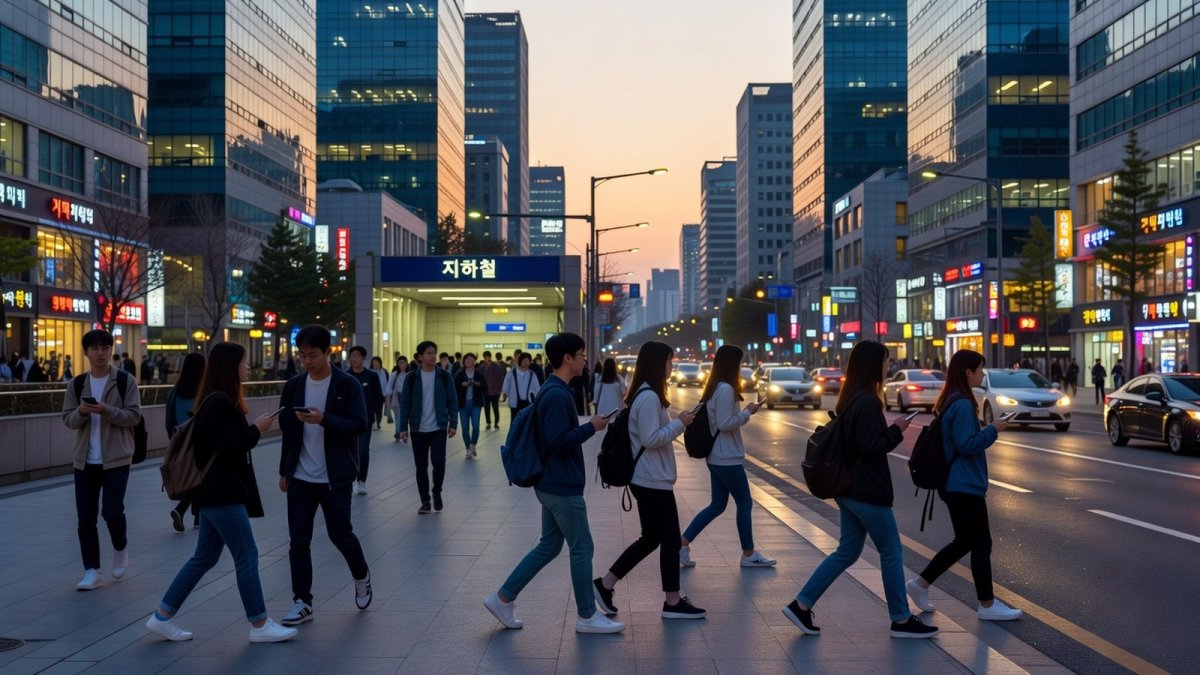
The KIHASA research categorizes unmarried youth aged 19-34 into three distinct groups based on their relationship to the labor market: employed individuals, those preparing for employment, and NEETs—young people who are not in employment, education, or training. This tripartite framework allows researchers to move beyond simple employment statistics and examine how different labor market positions translate into fundamentally different daily experiences.
For employed youth, the typical weekday follows a demanding and predictable pattern. The study found that these young workers spend an average of 8 hours and 2 minutes on labor each day, with their schedules beginning early as they prepare for work and typically concluding around dinner time. Critically, the research indicates that employed youth allocate approximately 11 hours to sleeping and eating combined, leaving relatively limited time for personal activities, leisure, or social engagement. This compressed schedule reflects the long-hours culture that remains prevalent in many Korean workplaces, despite gradual legislative efforts to reduce maximum working hours in recent years.
The contrast with youth outside the workforce is stark. Job-seeking youth—those actively preparing for employment—spend an average of 4 hours and 12 minutes per day on studying or job hunting activities. This substantial investment of time reflects the intensive preparation required to navigate Korea's competitive hiring processes, which often involve multiple rounds of examinations, portfolio reviews, and interviews. Meanwhile, NEETs spend just 1 hour and 19 minutes on study or job-seeking activities, leaving the vast majority of their day available for other pursuits.
Compared with the 8 hours that employed youth dedicate to work, both job-seekers and NEETs have considerably more discretionary time. The study indicates that much of this additional time is directed toward media consumption, gaming, and leisure activities—patterns that have significant implications for physical health, mental well-being, and social integration.
Weekend Patterns and the Blurring of Rest
The KIHASA study also examined how these three groups structure their weekends, revealing that the boundaries between workdays and rest days differ substantially across employment categories. Employed youth, unsurprisingly, spend less time working on weekends and more time resting, using the two-day break to recover from the demands of the workweek. This pattern aligns with conventional expectations about weekend rest and reflects the importance of the weekend as a recovery period for those in full-time employment.
Job-seeking youth, however, maintain a significant level of preparation activity even on weekends. The study found that this group still spends 2 hours and 45 minutes per day on employment preparation during weekends, suggesting that the pressure to secure a position does not pause for traditional rest days. This sustained effort reflects the competitive nature of Korea's youth labor market, where candidates often feel compelled to maximize every available hour for skill development and application preparation.
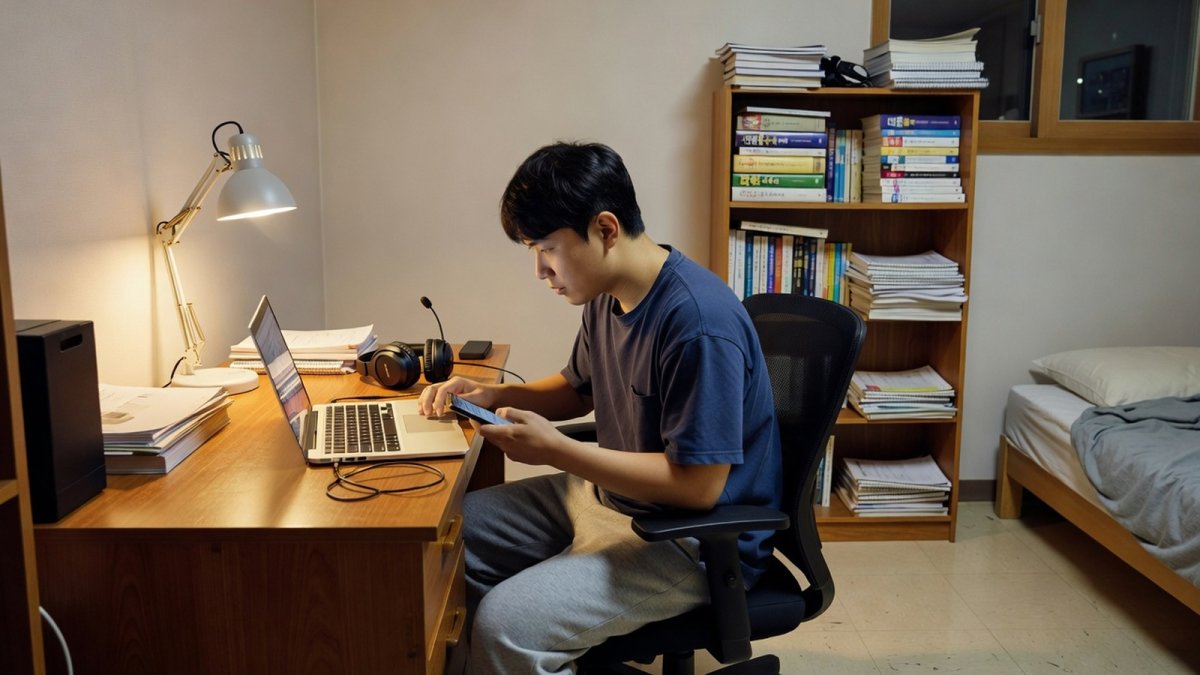
Perhaps the most counterintuitive finding concerns NEETs. Despite having the most free time of any group, NEETs report feeling slightly more pressed for time and tired on weekends than on weekdays. The study suggests that this paradox stems from the blurring of boundaries between weekdays and weekends for this group—without the structure of employment or job-seeking activities, the distinction between workdays and rest days becomes less meaningful. NEETs spend as much as 6 hours and 2 minutes on media and games during weekends, while dedicating just 36 minutes to studying or job searching. This pattern of time use, combined with the reported fatigue, points to the psychological toll of prolonged inactivity and the absence of external structure in daily life.
Structural Pressures Behind the Time-Use Divide
The KIHASA report is careful to note that these differences cannot be attributed solely to personal circumstances or individual choices. The job market has raised its hurdles with every passing year, creating structural conditions that shape how young Koreans allocate their time. The competitive examination culture, the prevalence of credential inflation, and the concentration of desirable positions within a relatively small number of large conglomerates—the chaebol—all contribute to an environment where job preparation can become an all-consuming endeavor.
Broader data contextualize these findings within a longer-term trend. The Bank of Korea has reported that the share of "resting" youth—those who are economically inactive and idle—aged 20 to 34 rose from 14.6 percent in 2019 to 22.3 percent in 2025. This nearly eight-percentage-point increase over six years indicates that the NEET population has been growing steadily, even as overall economic conditions have fluctuated. The COVID-19 pandemic and its aftermath appear to have accelerated this trend, though the underlying causes are deeply rooted in Korea's educational system and labor market structure.
Housing and family dynamics add another layer of complexity. KIHASA surveys have found that 57.5 percent of Koreans aged 19 to 34 live with their parents, and 67.7 percent of those co-residing youth have no plans to move out. This high rate of intergenerational co-residence means that many NEETs and job-seekers have a financial safety net that allows them to remain outside the labor force for extended periods. However, this arrangement also has implications for household dynamics, mental health, and the formation of independent adult identities—factors that the time-use data alone cannot capture.
Policy Implications for Labor, Welfare, and Demographics
The KIHASA report advances several policy recommendations grounded in its empirical findings. First, it calls for better protection of workers' rights to rest and improvements in working conditions. The finding that employed youth spend 8 hours and 2 minutes on labor while allocating 11 hours to sleeping and eating suggests that many young workers have minimal time for personal development, social relationships, or civic engagement. Strengthening enforcement of maximum working hour regulations and promoting workplace cultures that respect boundaries between work and personal time are presented as necessary steps.
Second, the report urges comprehensive support for job-seeking youth to prevent burnout as job searches drag on. The finding that job-seekers maintain nearly three hours of preparation activity even on weekends indicates a population under sustained pressure. Policy measures could include more robust unemployment benefits, access to mental health services, and programs that help job-seekers maintain social connections and physical activity during what can be an isolating period.
Third, the report stresses the need for more targeted policies for NEETs, taking into account factors such as income and health. The NEET population is not monolithic—some are temporarily disengaged from the labor market, while others face significant barriers including health problems, caregiving responsibilities, or skill mismatches. The finding that NEETs report feeling more tired on weekends despite having more free time suggests that inactivity itself carries costs that policy interventions must address. Programs that provide structured pathways back into education, training, or employment—while also addressing underlying health and social issues—are essential.
These policy considerations carry particular weight given Korea's demographic trajectory. With one of the world's lowest fertility rates and a rapidly aging population, the country cannot afford to have a substantial share of its youth cohort economically inactive. Every NEET represents not only a personal challenge but also a loss to the country's productive capacity and future tax base. The time-use data provided by this study offer a foundation for designing interventions that address the specific needs of each group.
Looking Ahead
The KIHASA time-use study provides a valuable empirical foundation for understanding the daily realities of Korean youth at a critical juncture. As the country grapples with demographic decline, labor market polarization, and the social consequences of prolonged youth inactivity, detailed data on how young people actually spend their time become essential for evidence-based policymaking.
The findings also resonate beyond Korea's borders, offering comparative insights for other Northeast Asian societies facing similar challenges. Japan's experience with its own "freeter" and NEET populations, as well as Taiwan's youth employment difficulties, suggest that these are regional phenomena with shared structural roots in educational competition, labor market rigidity, and changing family dynamics.
What remains clear is that the time-use patterns documented in this study are not merely personal choices but reflections of deeper structural conditions. Addressing the stark divides between employed youth, job-seekers, and NEETs will require coordinated policy responses across labor, welfare, education, and housing domains. The KIHASA report provides the diagnostic clarity needed to begin that work, even as the solutions remain politically and administratively challenging. For a society confronting demographic headwinds, ensuring that all young people can participate productively in economic and social life is not just a matter of individual welfare—it is a national imperative.
By Prof. David Park, Staff Writer
This article was produced with AI-assisted research and editorial support. Reporting is based on sources cited in the article.
What's Your Reaction?
 Like
0
Like
0
 Dislike
0
Dislike
0
 Love
0
Love
0
 Funny
0
Funny
0
 Wow
0
Wow
0
 Sad
0
Sad
0
 Angry
0
Angry
0

East Asia/Technology Correspondent at Global1.News. Seoul-based voice covering Korean politics, technology, business, and culture. Analyzes how technology and geopolitics intersect across East Asia.















Comments (0)