
Cities That Behave Like Forests: Latin America's Climate-Ready Future
In Latin America's swelling urban centers, where favela residents in Rio and small farmers migrating to Mexico City face relentless heat and blackouts, the call for buildings that breathe like living forests grows urgent. Award-winning architect Mina Hasman urges cities to adapt now, turning concrete jungles into carbon-absorbing ecosystems that work with nature.
In Latin America's swelling urban centers, where favela residents in Rio and small farmers migrating to Mexico City face relentless heat and blackouts, the call for buildings that breathe like living forests grows urgent. Award-winning architect Mina Hasman urges cities to adapt now, turning concrete jungles into carbon-absorbing ecosystems that work with nature.
Cities That Behave Like Forests: Latin America's Climate-Ready Future
São Paulo, Brazil – August 3, 2026 — From the concrete canyons of São Paulo to the mountain valley of Medellín, a quiet revolution in urban design is taking root — one that treats buildings as living organisms and cities as forests.
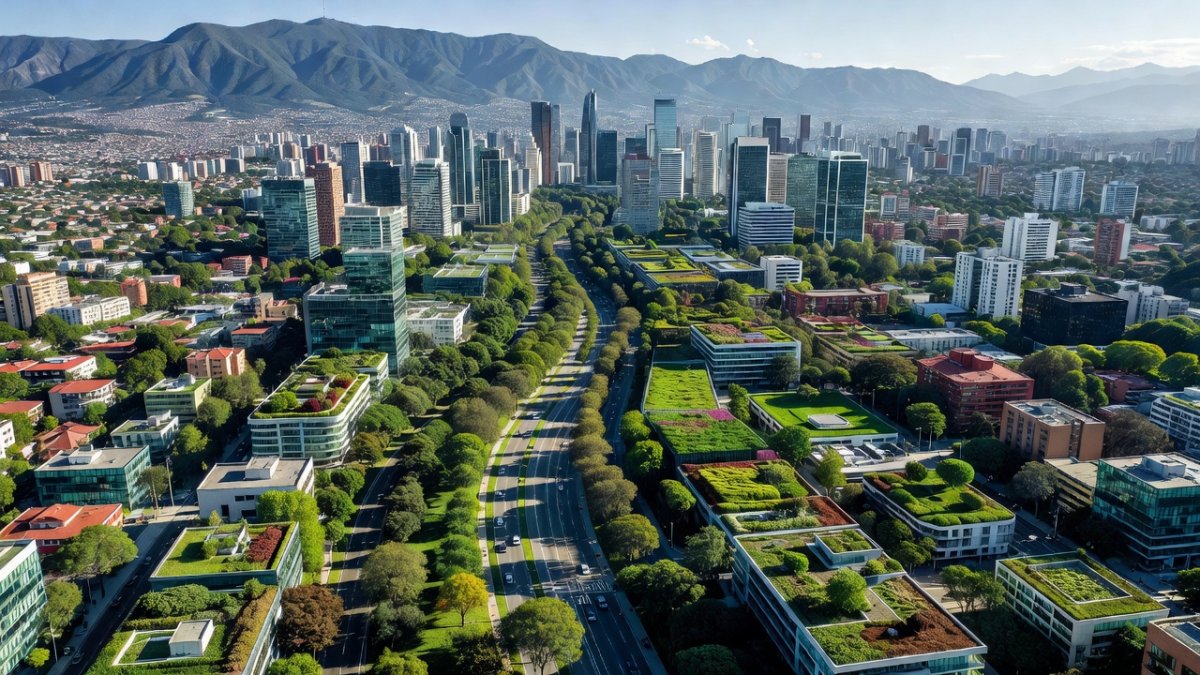
The Architect Who Wants Buildings to Act Like Trees
Mina Hasman, an award-winning architect and OBE named to the Time100 Climate list in December 2023 and recognized as a Times climate leader, champions a radical shift at Skidmore, Owings & Merrill. She envisions cities that behave like forests and buildings that act like trees, where structures breathe, communities thrive, and urban environments integrate with nature rather than fight it. This approach addresses the urgent need for climate adaptation as temperatures climb across the region.
SOM's Urban Sequoia concept, unveiled at COP26 in Glasgow in 2021, reimagines buildings as carbon sinks. One Urban Sequoia tower absorbs 1,000 tons of carbon per year, equal to 48,500 trees. SOM partner Chris Cooper states that the time has passed to talk about neutrality, proposing Urban Sequoia and entire forests of Sequoias to make buildings and cities part of the solution. SOM partner Kent Jackson adds that a building can help heal the planet through this design philosophy.
Hasman's vision draws from Latin America's realities, where urban populations expand rapidly and heat waves intensify. By designing structures that sequester carbon and support biodiversity, architects can create resilient spaces for commuters and families in dense neighborhoods. This model moves beyond traditional sustainability to active regeneration, offering hope for cities like those in Colombia and Brazil facing similar pressures.
Communities benefit when buildings mimic natural systems, filtering air and providing shade that reduces local temperatures. Hasman emphasizes integrating these principles into new developments to protect vulnerable groups, including Indigenous migrants and low-income households. The result is a new era of climate-ready design that prioritizes equity and ecological balance across Latin America.
A Sector That Builds the Crisis: 40 Percent of Global Emissions
The building sector generates nearly 40 percent of all global carbon emissions, driving much of the climate crisis that Latin American cities now confront daily. As urban populations grow, studies predict another 230 billion square meters of new building stock will be needed by 2060. This expansion risks locking in higher emissions unless designs shift toward carbon-negative solutions like those proposed by Hasman.
In Latin America, rapid urbanization amplifies these challenges. With cities expanding to house millions, the emissions from construction and operation compound heat effects already felt in valleys and coastal zones. Traditional concrete and asphalt structures trap warmth, worsening conditions for residents who rely on public transport and informal economies.
Hasman's forest-like buildings offer a counter to this trajectory. By turning towers into active carbon sinks, the sector can offset its footprint while meeting demand. This data underscores the scale: without intervention, new construction will accelerate warming that hits marginalized communities hardest, from favela dwellers to small-scale agricultural workers moving cityward.
Integrating nature-based strategies reduces long-term costs and emissions. Latin American planners can draw on these insights to prioritize regenerative architecture that supports thriving urban life amid global growth pressures. The 40 percent figure highlights why immediate adoption matters for regional stability and health.
Latin America Is Already Living the Hotter Future
Latin America stands as the second most urbanized region in the world, with about 81-82 percent of its 663 million people in 2024 living in cities, and projections indicate 90 percent will by 2050. This density makes the region especially vulnerable to climate impacts, as seen in recent heat crises that disrupt daily life for commuters and families.
Mexico's 2026 heat crises illustrate the strain. On March 18, 2026, Mexico's grid operator CENACE declared a state of emergency when record heat pushed Mexico City to 33°C, its highest mid-March reading in over 20 years, triggering rolling blackouts across the State of Mexico. From June 10 to July 2, 2026, temperatures above 44°C in Mérida, Chetumal, and Villahermosa caused daily blackouts, with one lasting 18 hours and affecting more than 1.4 million residents.
These events connect directly to urban design failures. Concrete-heavy environments intensify heat, while unequal access to cooling leaves poorer neighborhoods exposed. Urban tree inequality research shows poorer areas can be up to 7°F hotter than wealthier ones in summer, occurring in 76 percent of studied cases due to uneven tree cover and green space distribution.
For favela residents and urban commuters in Brazil or Colombia, such disparities mean prolonged discomfort and health risks. Latin America's urbanization trajectory demands designs that cool cities naturally, preventing further crises that burden small farmers and low-income households adapting to city life.
Medellin's Green Corridors: Proof That Nature Can Cool a City
Medellín, Colombia, demonstrates nature's cooling power through its Green Corridors initiative running since 2016. The project created 30 interconnected corridors, planted nearly 900,000 trees and 2.5 million plants, and selected 72 species for biodiversity. These efforts reduced the city's temperature by 2 degrees Celsius in three years, with some corridors 4.5°C cooler, while bringing wildlife back and boosting cycling.
The initiative also created gardening jobs for disadvantaged community members in Medellín's mountain valley, where annual temperatures hover near-constant at 22-24°C. By weaving green networks through the urban fabric, the city counters the urban heat island effect, where concrete and asphalt make areas several degrees hotter than surrounding countryside. Tree shade and vegetation cut surface temperatures by 2-8°C.
Residents in formerly neglected zones now enjoy fresher air and safer paths for commuting. The corridors support local economies by employing community members in maintenance, fostering pride and resilience among working families. This model aligns with broader calls for buildings and cities to function like forests, absorbing carbon and moderating climate extremes.
Medellín's success offers scalable lessons for other Latin American hubs facing similar heat pressures. The measurable drops in temperature prove that strategic planting transforms livability without massive infrastructure overhauls, directly benefiting urban populations projected to reach 90 percent by 2050.
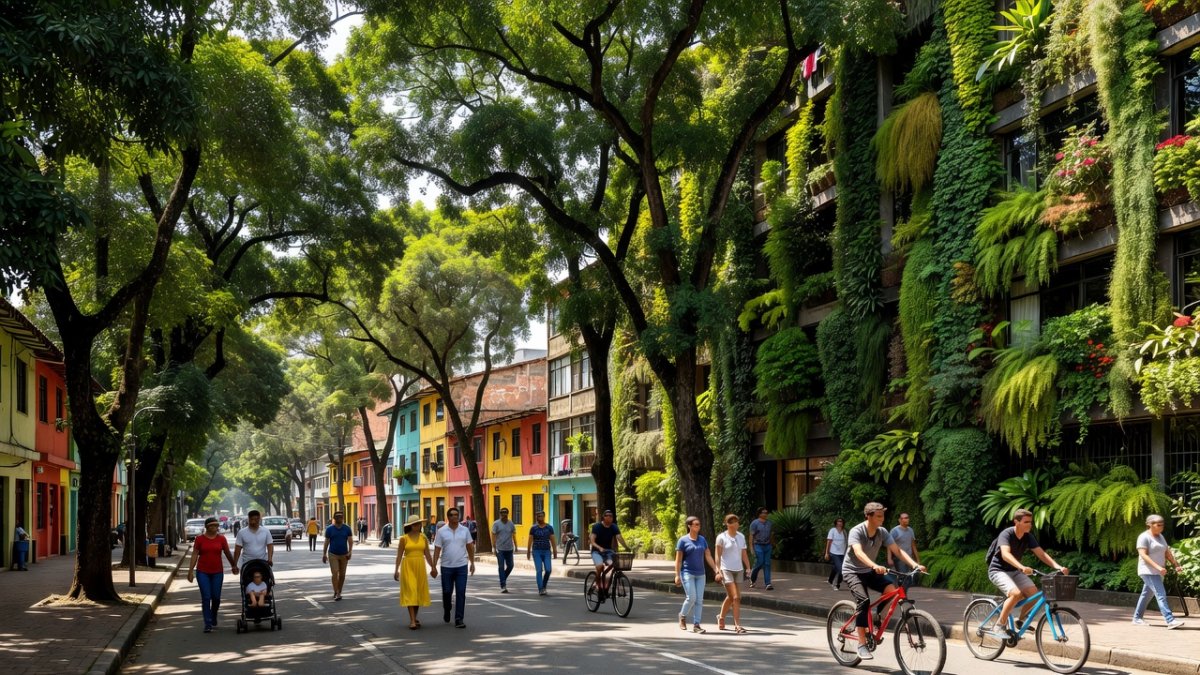
The Heat Gap: Who Gets Shade, Who Does Not
Urban tree inequality reveals stark divides in Latin American cities, where research shows poorer neighborhoods can be up to 7°F hotter than wealthier ones in summer. In 76 percent of studied cases, lower-income neighborhoods were hotter because tree cover and green space remain unequally distributed. This gap leaves favela residents and migrant workers bearing the brunt of rising temperatures.
The urban heat island effect compounds these inequities, as cities stay several degrees warmer than countryside due to concrete, asphalt, and waste heat. Without intervention, expanding building stock will widen the divide, affecting daily routines for commuters and small business owners in underserved districts.
Hasman's vision of forest-like urban design directly targets this imbalance. By prioritizing green integration in new and existing structures, planners can distribute cooling benefits more evenly. Data from Medellín shows corridors deliver temperature reductions that reach all residents when implemented thoughtfully across connected networks.
Addressing the heat gap requires policies that plant trees and design breathing buildings in low-income areas first. Latin America's urban growth makes this essential, ensuring that 90 percent city dwellers by 2050 experience equitable relief from heat rather than amplified suffering in concrete-dominated zones.
What This Means for Latin America
Latin America's urbanization, already at 81-82 percent of 663 million people and heading toward 90 percent by 2050, demands immediate adoption of climate-ready designs. Concepts like Urban Sequoia towers that absorb 1,000 tons of carbon annually provide a blueprint for offsetting the building sector's 40 percent global emissions share while accommodating 230 billion square meters of new stock by 2060.
Curitiba, Brazil, offers another reference through its 1960s master plan featuring bus rapid transit serving over 60 percent of commuters alongside networks of parks and green corridors. Championed by mayor-turned-urbanist Jaime Lerner and his "urban acupuncture" approach, it shows how targeted interventions create resilient, nature-integrated cities that ease heat for all residents.
Connecting these examples to Hasman's ideas means scaling forest-like buildings across the region. This supports biodiversity, job creation in green maintenance, and reduced blackouts during heat events like those in Mexico 2026. Communities from Indigenous groups to urban commuters gain when design works with local ecosystems.
The data points to urgent action: without shifting to regenerative architecture, heat gaps and emissions will intensify pressures on vulnerable populations. Latin America can lead by blending proven models like Medellín's corridors with innovative towers that heal the planet.
The Bottom Line — Building for a Hotter Future
Buildings that act like trees and cities that function like forests represent the path forward for Latin America amid intensifying climate pressures. Mina Hasman's framework, backed by SOM's Urban Sequoia data, shows how one tower sequesters carbon equivalent to 48,500 trees, turning the sector's emissions burden into an opportunity for planetary healing.
With 40 percent of global carbon from buildings and massive new construction ahead, the region must prioritize these strategies. Medellín's 2°C cooling and Curitiba's transit success prove nature integration delivers measurable results for residents facing 44°C extremes and unequal shade distribution.
By focusing on equity, Latin American cities can protect favela communities and small farmers transitioning to urban life. The 81-82 percent urbanization rate climbing to 90 percent by 2050 makes this transition critical for health, jobs, and stability.
The bottom line calls for action now: design with nature to build cooler, carbon-negative environments that thrive rather than merely survive the hotter decades ahead.
By Elena Vasquez, Staff Writer
Keywords: Mina Hasman, Urban Sequoia, Medellín Green Corridors, Latin America urbanization, urban heat island, building emissions, climate-ready architecture, SOM, Curitiba green planning, Mexico heat crises, carbon sinks, urban tree inequality, forest cities, climate adaptationThis article was produced with AI-assisted research and editorial support. Reporting is based on sources cited in the article.
What's Your Reaction?
 Like
0
Like
0
 Dislike
0
Dislike
0
 Love
0
Love
0
 Funny
0
Funny
0
 Wow
0
Wow
0
 Sad
0
Sad
0
 Angry
0
Angry
0

Latin America Correspondent at Global1.News. Based in Mexico City, covering politics, economics, energy, and culture across the region. Brings an on-the-ground perspective to stories spanning from the Rio Grande to Patagonia.












Comments (0)