
Gaza Journalists Rally for Colleagues in Israeli Prisons
Gaza journalists rallied Monday outside the ICRC demanding the release of about 50 colleagues still held from over 140 detained since the war began, including five women. Speakers called for disclosure of detainees' fates and international pressure. The Palestinian Journalists Syndicate documents 4,127 violations and 264 journalists killed since October 2023, while more than 9,400 Palestinians remain in Israeli prisons.
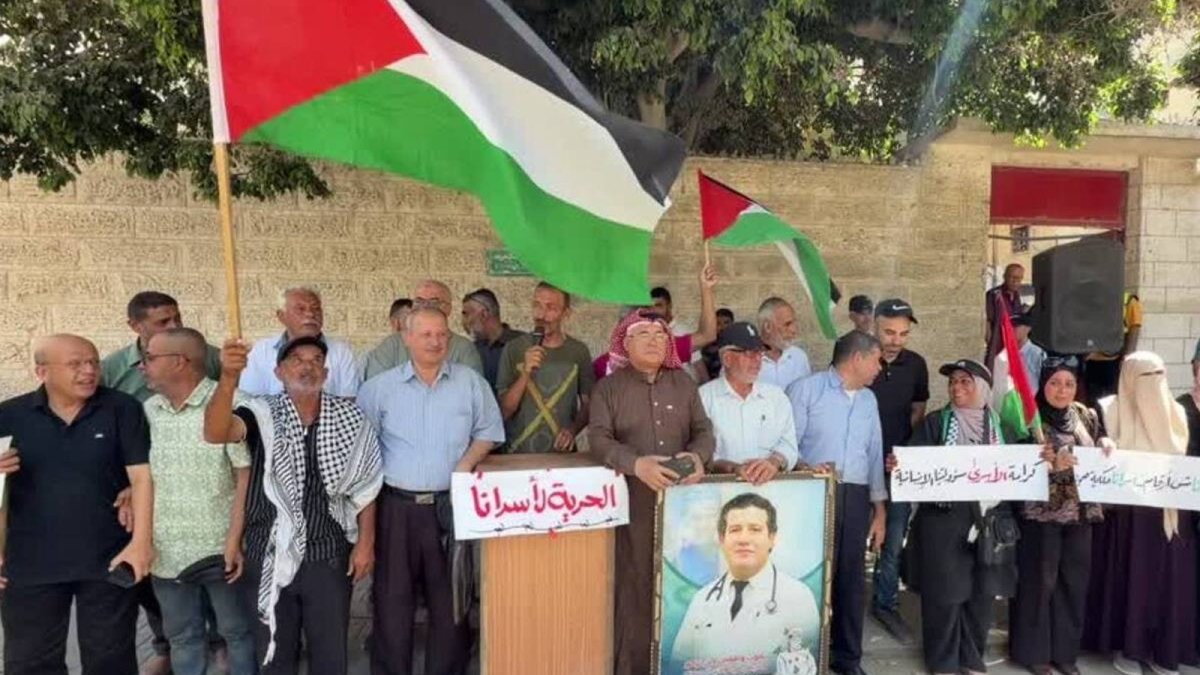
Palestinian journalists gathered on Monday outside the International Committee of the Red Cross in Gaza City to demand the release of colleagues held in Israeli prisons, spotlighting the relentless targeting of media workers who document the enclave's humanitarian crisis. The protest comes even after the October 2025 ceasefire, as attacks and detentions continue to silence firsthand accounts from the ground. This demonstration amplifies urgent calls for accountability and solidarity to protect press freedom amid widespread suffering.
Gaza Journalists Demand Freedom for 50 Detained Colleagues
Gaza City, Gaza — Journalists in Gaza took to the streets on Monday to demand the release of colleagues held in Israeli prisons.
Journalists Rally Outside Red Cross in Gaza
On Monday, a group of journalists gathered outside the International Committee of the Red Cross building in Gaza to demand the release of colleagues held in Israeli prisons. The protest highlighted the ongoing risks faced by media workers amid continued attacks across the enclave following the ceasefire that took effect on October 10, 2025. Speakers emphasized that Palestinian journalists have been systematically targeted for documenting events in Gaza.
Scale of Detentions of Palestinian Journalists
Journalist and former prisoner Imad Al-Ifrenci told the crowd that Israel has detained more than 140 Palestinian journalists from Gaza since the war began, with around 50 still held in prison. He noted that five of those detained are women. Al-Ifrenci stressed that Palestinian journalists should not be left alone and called for stronger solidarity at both national and international levels to secure their release. The detentions have drawn attention to the particular vulnerability of women journalists in Israeli custody, who face additional risks while reporting from one of the world’s most dangerous conflict zones for media workers.
Palestinian Journalists Syndicate Documents Violations
The Palestinian Journalists Syndicate reported in late July that 4,127 violations against Palestinian journalists occurred between October 2023 and the end of June 2026. These included the arrest of 193 journalists, the destruction of 187 media institutions, and the destruction of 140 journalists’ homes. More than 41 percent of the violations involved preventing media coverage or detaining press crews. The syndicate also documented the killing of eight journalists between January and June this year, bringing the total number of Palestinian journalists killed by Israel since October 8, 2023, to 264.
Conditions Faced by Palestinian Detainees
According to data from Palestinian and Israeli human rights organizations, more than 9,400 Palestinians, including 350 children and 73 women, remain held in Israeli prisons. Rights groups report that detainees face torture, starvation, and medical neglect, which have resulted in the deaths of dozens. Israeli rights group HaMoked states that Israel holds approximately 1,300 Palestinians from Gaza under the classification of unlawful combatants at Ofer Prison and the Sde Teiman military prison. A Committee to Protect Journalists report published in February 2026 documented allegations of systematic abuse, beatings, and starvation, with journalists losing an average of 52 pounds during detention under administrative orders without charges.
Administrative detention without charge allows Israeli authorities to hold Palestinians, including journalists, indefinitely under opaque military orders. Rights groups document how this practice strips detainees of due process, enabling prolonged isolation that exacerbates vulnerability to abuse. The designation of detainees as unlawful combatants bypasses standard protections and facilitates unchecked conditions, leaving journalists and other prisoners without meaningful legal recourse.
Holding journalists specifically signals an effort to silence primary witnesses to the conflict. Their absence removes firsthand accounts from circulation, while the October 2025 ceasefire has not halted the pattern of arrests that began after October 2023. Such treatment targets those who documented events, turning detention into punishment for professional work and underscoring how press freedom is subordinated to security classifications that lack independent oversight.
Wider Toll on Journalists and Press Freedom
Journalist Henadi Abu Harbid described how Palestinian journalists have endured killings, detention, and persecution for documenting events in Gaza. She urged the international community to pressure Israel to disclose the fate of detained journalists and release them. The continued attacks since the October 2025 ceasefire have killed at least 1,250 Palestinians and injured 4,110 others, according to Gaza’s Health Ministry. About 2.4 million Palestinians, including roughly 1.5 million displaced people, continue to face catastrophic humanitarian conditions, compounding the dangers for journalists attempting to report on daily life under occupation and displacement.
Documenting Gaza carries lethal risk because journalists operate amid active strikes and restricted access, with Palestinian Journalists Syndicate data recording 264 killed since October 8, 2023. The ceasefire reduced the scale of large-scale operations yet left residual attacks that maintain an environment where reporting requires constant exposure to danger. The destruction of media institutions and journalists’ homes has eliminated much of the physical infrastructure for independent coverage, forcing remaining reporters to work from temporary sites without reliable power or transmission equipment.
The resulting erosion of independent reporting narrows the world’s view of daily conditions under occupation and displacement. Without on-the-ground verification, narratives rely more heavily on official statements, reducing scrutiny of humanitarian shortfalls and rights violations that continue after the ceasefire.
International Response and Calls for Accountability
In September 2025, the Committee to Protect Journalists, IFEX, and other press freedom organizations urged EU member states to consider a partial or full suspension of the EU-Israel Association Agreement to protect journalists in Gaza. The recommendation links trade preferences to concrete improvements in press protections, reflecting frustration with repeated but unenforced appeals for restraint. The CPJ report titled “We returned from hell” detailed systematic abuse faced by Palestinian journalists held without charge, providing evidence that international mechanisms have struggled to translate into operational safeguards.
Existing frameworks such as UN resolutions and diplomatic demarches have produced statements but limited access for monitoring bodies during active hostilities. These shortcomings arise because enforcement depends on state cooperation that has not materialized, leaving detainees beyond routine ICRC visits. The report’s emphasis on starvation and beatings highlights how the absence of binding accountability measures allows administrative practices to persist across the post-ceasefire period.
What Journalists Say Is Needed Now
Journalist Hamis Abu Husayra called on the ICRC and international organizations to disclose the fate of detained journalists and take concrete steps for their release. He explained that journalists are targeted because they document and report events in Gaza to the world. Disclosure of detainees’ fates would allow families to confirm whether relatives remain alive and receive basic information on location and health. Without such transparency, uncertainty compounds the trauma already documented among the roughly 50 journalists still held from the more than 140 arrested since the war began.
The ICRC’s mandated role in visiting detainees and facilitating family messages becomes critical when other channels are closed. Speakers at the rally stressed that sustained access by the organization could establish minimum standards of treatment and open pathways for eventual release under monitored conditions.
National and international solidarity remains essential to maintain pressure for these steps. Continued advocacy linking the ceasefire’s implementation to journalist releases can prevent the issue from fading amid broader humanitarian needs affecting 2.4 million people in Gaza. By amplifying these voices, the protest underscored the human cost of detentions and attacks on those who record the realities of conflict and occupation.
By Fatima Al-Rashid, Staff Writer
This article was produced with AI-assisted research and editorial support. Reporting is based on sources cited in the article.
What's Your Reaction?
 Like
0
Like
0
 Dislike
0
Dislike
0
 Love
0
Love
0
 Funny
0
Funny
0
 Wow
0
Wow
0
 Sad
0
Sad
0
 Angry
0
Angry
0
Gulf/MENA Correspondent at Global1.News. Based in Doha, covering Gulf politics, energy markets, diplomacy, and development across the Middle East and North Africa. Tracks the economic transformation of the Gulf states.











Comments (0)