
South Korea Activates First Cheongung-II Missile Battery
South Korea’s Defense Ministry confirmed on August 3, 2026, that the initial Cheongung-II battery scheduled for 2026 deployment achieved full operational status on August 1. The system, assigned to a missile defense unit in Gyeonggi Province since May, completed extensive readiness exercises. This step marks incremental progress in Seoul’s effort to field a domestically produced lower-tier interceptor.
South Korea’s Defense Ministry confirmed on August 3, 2026, that the initial Cheongung-II battery scheduled for 2026 deployment achieved full operational status on August 1. The system, assigned to a missile defense unit in Gyeonggi Province since May, completed extensive readiness exercises. This step marks incremental progress in Seoul’s effort to field a domestically produced lower-tier interceptor.
South Korea Bolsters Lower-Tier Missile Defense with Cheongung-II Activation
Seoul, South Korea – August 4, 2026 — The Defense Ministry confirmed the battery achieved full operational status on August 1, 2026, following months of readiness exercises in Gyeonggi Province.
Deployment Announcement and Operational Status
The Defense Ministry stated that the battery entered service after months of simulated and operational exercises. It is now assigned to a unit responsible for protecting the capital region. Officials emphasized that subsequent batteries will follow the same phased schedule without accelerated timelines.
Kim Ki-young, director general of the Force Policy Bureau, underscored that the rollout adheres to a deliberate multi-year plan initiated after development began in 2012. The first battery reached initial delivery in the 2020-2022 timeframe, with the current 2026 activation forming part of a phased multi-battery program explicitly designed to replace aging MIM-23 HAWK units. This measured approach ensures each new battery undergoes rigorous validation before assuming operational duties in the capital region. South Korea's Defense Ministry announced the news in a press release on Monday, August 3, 2026. The battery entered full operational service on Saturday, August 1, 2026, after being assigned to a missile defense unit in Gyeonggi Province in May 2026. Gyeonggi Province surrounds Seoul; the missile defense unit protects the capital region.
Technical Capabilities of the Cheongung-II System
Cheongung-II, also known as M-SAM-II or KM-SAM Block II, was developed domestically beginning in 2012 under the Agency for Defense Development. The missile reaches ranges up to 40 km and altitudes between 15 and 20 km. It employs a hit-to-kill vehicle to engage short- and medium-range ballistic missiles as well as conventional aircraft during the terminal phase at lower altitudes.
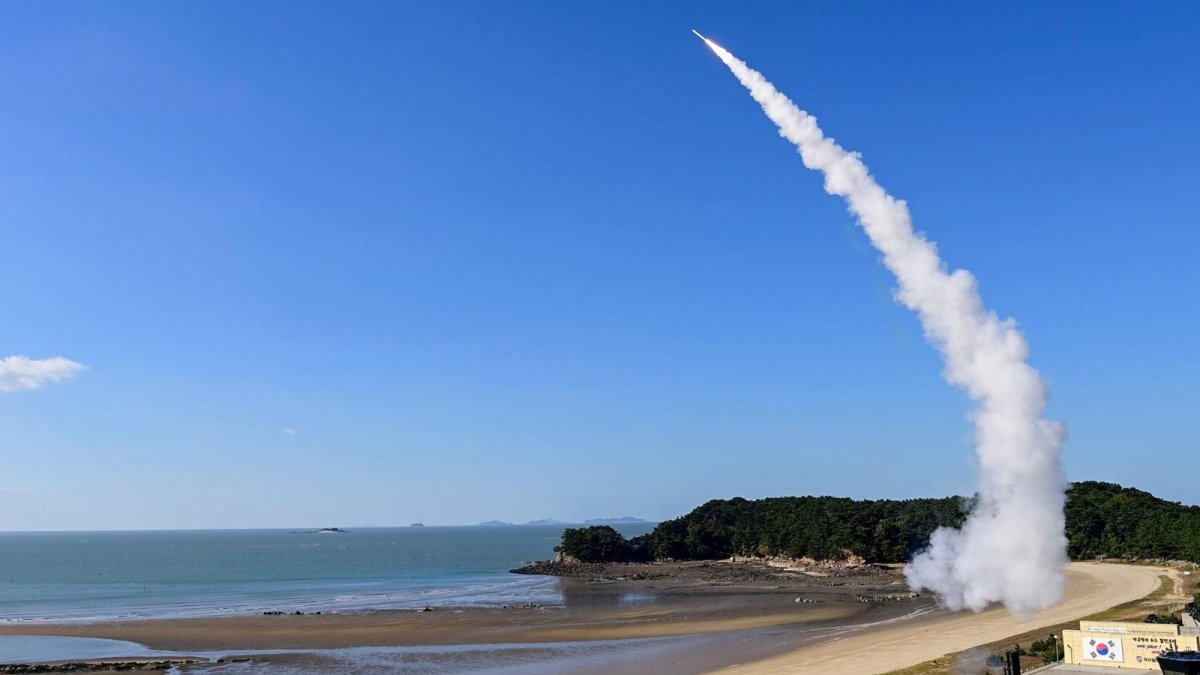
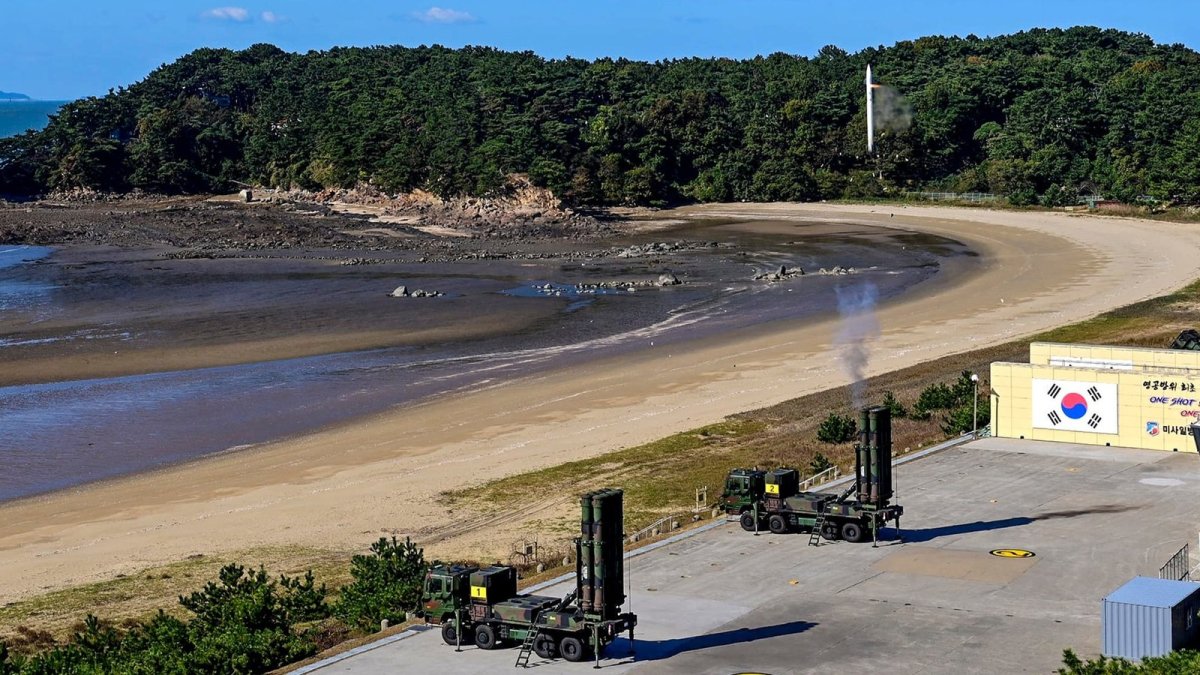
Each battery comprises four launchers, one radar, and a combat control center. Cost estimates place a single battery between 300 billion and 400 billion Korean won, approximately one-third the price of a comparable Patriot battery. The system replaces aging MIM-23 HAWK units and is frequently described as the “Korean Patriot.”
Production responsibilities are divided between LIG Nex1, which manufactures the missile itself, and Hanwha Systems, which supplies the associated radar and fire-control systems. This industrial division has allowed South Korea to refine seeker technology and command linkages tailored specifically to regional threat profiles. The resulting design emphasizes rapid reload cycles and compatibility with existing command networks.
Integration into Korea’s Multilayered Missile Defense Architecture
Cheongung-II forms the lower tier of the Korea Air and Missile Defense system alongside U.S.-supplied Patriot batteries. Military planners intend to layer the system with the Long-Range Surface-to-Air Missile, or L-SAM, now in advanced development and expected to reach initial capability in the late 2020s. L-SAM is designed to intercept targets at 40–70 km altitude, creating overlapping engagement envelopes against saturation attacks.
Future projects include M-SAM-III with improved tracking, L-SAM-II, and specialized countermeasures against massed artillery. Officials have also begun examining directed-energy weapons for low-altitude drone threats. These efforts reflect a deliberate shift from earlier reliance on foreign systems toward greater technological autonomy.
Within the broader KAMD concept, Patriot batteries handle the upper tier of the lower layer while Cheongung-II covers the lower tier, with L-SAM providing the higher-altitude layer and Aegis-equipped destroyers extending coverage seaward. Parallel development of ship-based SM-3-capable Aegis destroyers under the KDX-III Batch-II program and additional land-based long-range interceptors further densifies this architecture. The overall framework supports the three-axis system encompassing Kill Chain preemption, KAMD active defense, and Korea Massive Punishment and Retaliation retaliation options. The Cheongung-II complements U.S.-supplied Patriot batteries as the lower tier of the Korea Air and Missile Defense (KAMD).
UAE Combat Debut and Growing Defense Export Profile
In March 2026 the Cheongung-II recorded its first combat use in the United Arab Emirates, reportedly intercepting 96 percent of Iranian missiles and drones directed at UAE targets. The UAE has already received multiple batteries. Iraq subsequently signed a contract for eight systems valued at $2.63 billion. These outcomes have enhanced South Korea’s credibility as a supplier of proven missile-defense equipment.
The deployment followed the 2021 $3.5 billion UAE order for M-SAM systems, as reported by the Korea Times, with performance data subsequently cited by Seoul Economic Daily and other outlets. South Korea’s defense exports reached record levels exceeding $14 billion in 2023, with the UAE and Poland ranking among top buyers. The Cheongung-II has emerged as a flagship export item alongside K9 howitzers and K2 tanks, demonstrating how operational validation abroad accelerates further international interest.
North Korean Threat Context and Regional Security Implications
North Korea continues to field short-range ballistic missiles, hypersonic glide vehicles, and large numbers of artillery pieces aimed at the Seoul metropolitan area. Gyeonggi Province, which encircles the capital, remains the primary focus of lower-tier defenses. The incremental addition of Cheongung-II batteries contributes to a denser protective network without altering the fundamental balance of deterrence on the peninsula.
North Korea’s arsenal specifically includes KN-23 and KN-24 short-range ballistic missiles alongside hypersonic glide vehicles and long-range artillery systems. The Seoul Capital Area, home to roughly half of South Korea’s 51-52 million people, remains the most densely threatened zone on the peninsula. Cheongung-II batteries therefore prioritize coverage of this critical population center within the overall defensive posture. The capital region faces concentrated threats from North Korean short-range systems, making the new battery’s placement in Gyeonggi Province a direct response to these persistent risks.
Policy Implications for Defense Self-Reliance and Alliance Dynamics
The Cheongung-II program continues a trajectory of defense industrialization that began in the 1970s under President Park Chung-hee. Major contractors such as LIG Nex1 and Hanwha have expanded their roles in missile and radar production, reducing earlier dependence on U.S. platforms. The U.S.-ROK alliance remains central to extended deterrence, yet Seoul’s growing capacity to produce and export advanced interceptors signals a more balanced partnership in Northeast Asian security affairs.
The U.S.-ROK alliance continues as the cornerstone of South Korean security, with approximately 28,500 U.S. troops stationed in the country and extended deterrence maintained through the nuclear umbrella. At the same time, Seoul advances its three-axis system of Kill Chain, Korea Air and Missile Defense, and Korea Massive Punishment and Retaliation to enhance autonomous response options. This dual track strengthens alliance interoperability while expanding indigenous production and export capacity.
Expert Perspectives and Future Outlook
Kim Ki-young, director general of the Force Policy Bureau, stated that subsequent deployment phases will be executed seamlessly to heighten missile-response capabilities. He added that the armed forces will continue refining a multi-layered architecture capable of swift, precise responses to evolving aerial threats. Analysts note that sustained investment in M-SAM-III and L-SAM variants will determine whether South Korea achieves a fully indigenous, overlapping shield by the early 2030s.
With L-SAM expected to attain initial operational capability in the late 2020s, planners anticipate progressive integration that will close remaining altitude gaps against evolving North Korean systems. Continued refinement of command-and-control linkages across services will be essential to realizing the full potential of the multilayered shield. These developments position South Korea to maintain credible deterrence while contributing proven technologies to allied and partner nations. Kim Ki-young, director general of the Force Policy Bureau, said: "We will seamlessly execute subsequent deployment phases to decisively heighten our military's missile response capabilities. By mobilizing cutting-edge defense science and technology, our armed forces will continuously perfect a multi-layered, overlapping defense architecture capable of responding swiftly and precisely to increasingly sophisticated aerial threats." M-SAM-III, L-SAM-II, artillery-counter framework, and directed-energy weapons are in development, supporting long-term goals for comprehensive coverage.
By Prof. David Park, Staff Writer
This article was produced with AI-assisted research and editorial support. Reporting is based on sources cited in the article.
What's Your Reaction?
 Like
0
Like
0
 Dislike
0
Dislike
0
 Love
0
Love
0
 Funny
0
Funny
0
 Wow
0
Wow
0
 Sad
0
Sad
0
 Angry
0
Angry
0

East Asia/Technology Correspondent at Global1.News. Seoul-based voice covering Korean politics, technology, business, and culture. Analyzes how technology and geopolitics intersect across East Asia.















Comments (0)