
Ceuta Migrant Crisis Overwhelms Spanish Enclave as 60,000 Cross in Days
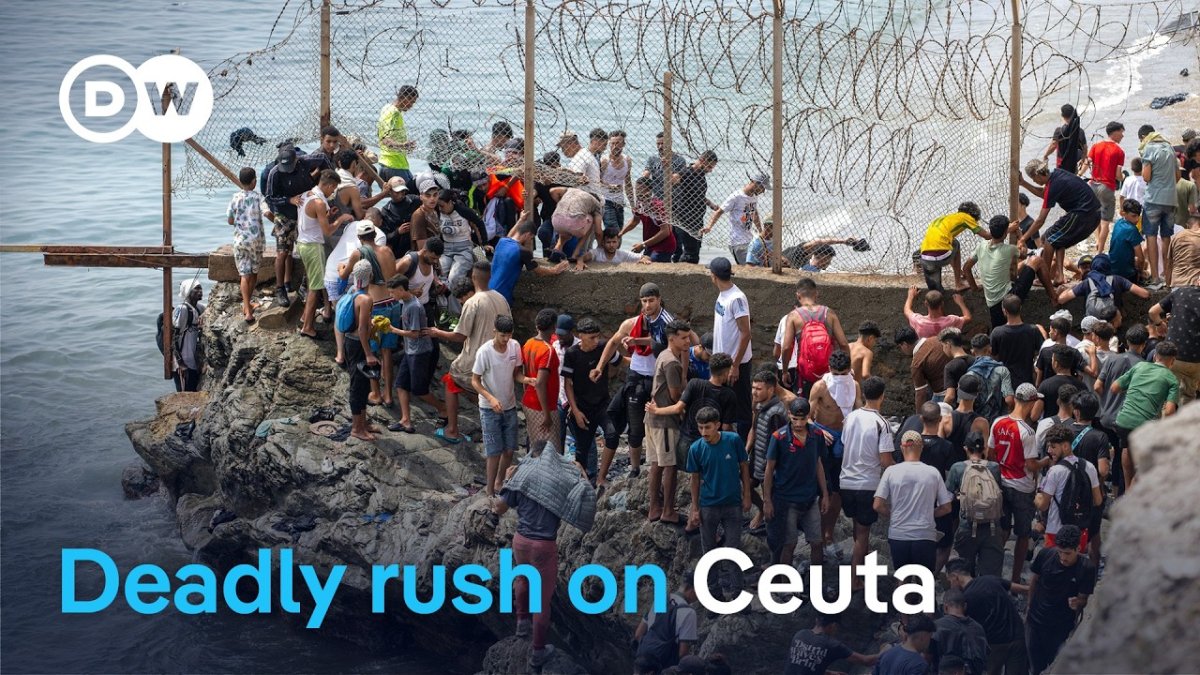
In a recent DW News report from the beach in Ceuta, correspondent Jan-Philipp Scholz showed thousands of young men swimming the five-kilometer stretch from the Moroccan town of Fnideq, with rubber rings and flippers littering the sand as Spanish security forces struggled to respond. The footage captured the ongoing surge that has brought more than 60,000 migrants into the enclave in recent days, despite dozens of deaths and thousands of returns.
In a recent DW News report from the beach in Ceuta, correspondent Jan-Philipp Scholz showed thousands of young men swimming the five-kilometer stretch from the Moroccan town of Fnideq, with rubber rings and flippers littering the sand as Spanish security forces struggled to respond. The footage captured the ongoing surge that has brought more than 60,000 migrants into the enclave in recent days, despite dozens of deaths and thousands of returns. A Spanish Supreme Court ruling this month banning summary pushbacks appears to have played a role in triggering the flow.
Ceuta Migrant Crisis Overwhelms Spanish Enclave as 60,000 Cross in Days
Ceuta, Spain – This Week — More than 60,000 migrants, mostly young men from North and sub-Saharan Africa along with some from Colombia and Venezuela, have crossed into the Spanish enclave of Ceuta since the surge began. At least 18 people drowned attempting the swim around the border jetty, while Spanish authorities returned thousands to Morocco and deployed the Armed Forces to support the overwhelmed Civil Guard.
The Story Unfolds
On Thursday, thousands slid down concrete embankments into the sea and swam around the jetty marking the border. Crossings continued overnight into Friday, with some clashes between police and migrants. Between 300 and 400 people also reached Melilla, Spain's second North African enclave. Reception centers in Ceuta quickly filled beyond capacity, leaving many without drinking water or shelter.
Spain's Interior Ministry accused human trafficking networks of exploiting the Supreme Court decision that ended summary returns at sea. Prime Minister Pedro Sánchez condemned the crossings as a violation of Spain's territorial integrity and blamed traffickers for organizing the flows. Local leader Juan Jesús Vivas urged Madrid to act faster as resources ran out.
The scale of the current surge dwarfs the May 2021 episode, when roughly 8,000 people entered Ceuta in a matter of days after Morocco relaxed border controls. This time the numbers have climbed past 60,000, according to DW News, with crossings continuing around the clock. The Supreme Court ruling against summary returns appears to have removed a key deterrent, and Spain's interior ministry says trafficking networks moved quickly to exploit it, organizing larger groups for the five-kilometer swim from Fnideq.
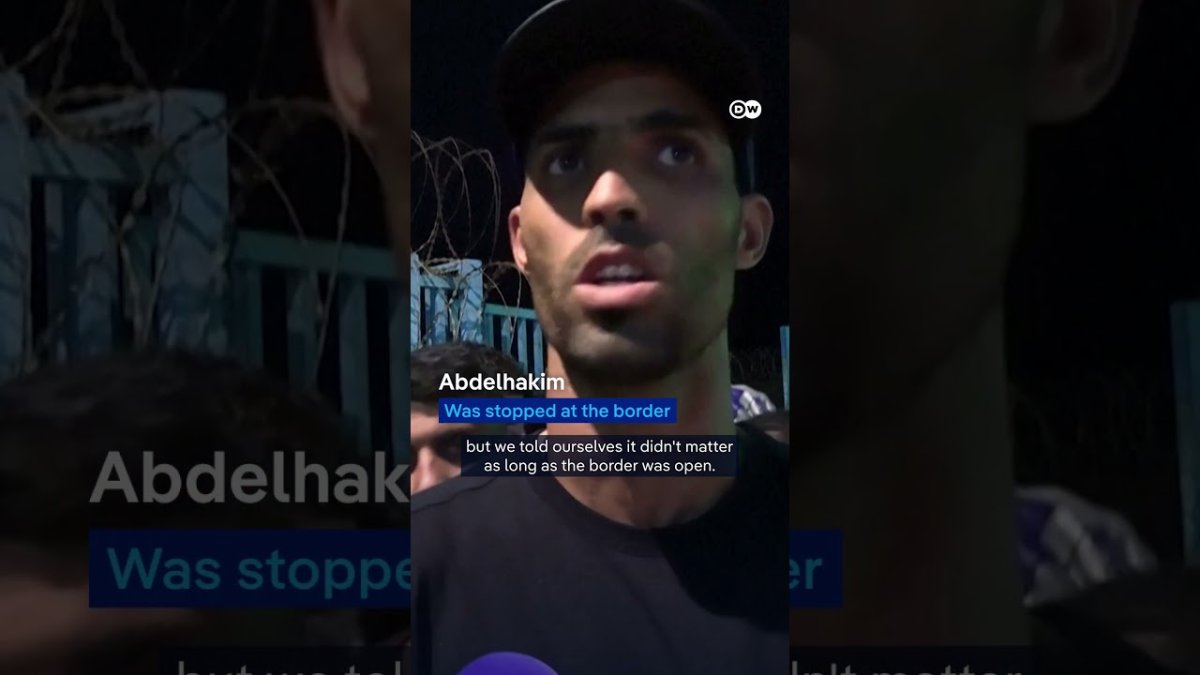
Armed Forces units were dispatched to reinforce the Civil Guard, yet DW correspondent Jan-Philipp Scholz reported from the beach that security personnel remained overwhelmed. Another 300 to 400 people crossed into Melilla, Spain's second North African enclave, stretching resources even further. Both territories represent the European Union's only land borders with Africa, and Morocco does not recognize them as Spanish soil, adding diplomatic friction to an already volatile situation.
Mexican Context
Mexican families watching from colonias in Mexico City, Monterrey, and Guadalajara recognize the same desperation that drives people across the Río Bravo or through the Sonoran Desert. Many migrants reaching Ceuta come from Colombia and Venezuela, countries whose citizens have long formed part of Spain's immigrant population now totaling around 10 million in a country of 50 million. The political blame game between Madrid and Rabat echoes tensions Mexico has seen with its northern neighbor over border enforcement and returns.
The Ceuta and Melilla land borders remain the European Union's only direct frontier with Africa, much as Mexico's northern line serves as the main gateway to the United States. Moroccan authorities do not recognize Ceuta and Melilla as Spanish territory, adding another layer of diplomatic friction familiar to observers of territorial disputes in the region.
Mexican families know the ache of watching loved ones leave home in search of safety and work, a story repeated across Latin America. Many migrants now reaching Ceuta come from Colombia and Venezuela, countries whose citizens have long formed part of Spain's immigrant population of roughly 10 million people born elsewhere. These arrivals remind readers in Mexico how desperation can push people toward any available route, whether across the US-Mexico border or the Strait of Gibraltar.
Impact on Migrant Communities
Many migrants who reached the beaches gave up after finding no water or accommodation and returned to Morocco, where authorities in Fnideq used water cannons to disperse crowds. Minors among the arrivals must receive protection under Spanish law, placing additional strain on local services already stretched thin. Families left behind in origin countries face the same uncertainty Mexican households experience when relatives attempt the journey north.
The surge recalls the May 2021 episode when roughly 8,000 people entered Ceuta in days, but the current numbers far exceed that earlier crisis. Local residents in Ceuta expressed anger at both the influx and the slow response from Madrid, while police and military personnel worked long shifts yet remained outnumbered on the beaches.
At least 18 people drowned trying to swim around the jetty, part of dozens of total deaths reported during the crossings. Many who reached Ceuta found reception centers unable to provide drinking water or shelter, forcing hundreds to return to Morocco. Families traveled together with young children, while large numbers of unaccompanied minors also arrived, all entitled to protection under Spanish law.
The human cost falls heaviest on those who risked everything for a chance at stability. Young men from sub-Saharan Africa and North Africa, alongside some from Colombia and Venezuela, left behind familiar hardships only to meet new dangers in the water and new shortages on land. Those who gave up and walked back across the border carried the same exhaustion Mexican migrants sometimes describe after failed attempts farther north.
Local Moroccan authorities in Fnideq used water cannons against crowds trying to leave, adding to the physical toll. The desperation driving these journeys reflects long-standing pressures that push people toward any opening, regardless of the risks involved. For the families who stay behind in cities across Africa and Latin America, the wait for news of a loved one who attempted the crossing is agonizingly familiar — the same vigil kept in Mexican homes when a relative heads north without papers, hoping a single phone call confirms they made it safely.
On the beaches of Ceuta, the discarded rubber rings and flippers tell the story of thousands who made the swim but found no guarantee of welcome. Spanish law obliges authorities to process asylum claims and protect minors, yet the sheer volume has pushed the system to its limits. Local residents, many of whom depend on cross-border commerce with Morocco for their livelihoods, watched their streets fill with exhausted arrivals and asked why Madrid had not moved sooner.
Reactions and Responses
Italian Prime Minister Giorgia Meloni called the images striking and warned that uncontrolled illegal immigration poses a concrete threat to Europe's borders, prompting Spain's Foreign Minister José Manuel Albares to summon the Italian ambassador and accuse Rome of partisan demagoguery. Albares said he expected "European solidarity" from a partner country, not political posturing over Schengen open-border rules. Italy's government said it was considering extraordinary measures, though closing the Schengen area with Spain would require backing from other European nations.
Prime Minister Pedro Sánchez visited Ceuta on Friday, called the crossings a violation of Spain's territorial integrity, and pledged to restore normal conditions immediately. The Interior Ministry said it was coordinating with Morocco to return everyone who crossed "as soon as possible." Ceuta leader Juan Jesús Vivas said the influx overwhelmed local resources and faulted Madrid for responding too slowly. Residents in the enclave expressed anger at their own government for leaving them to manage the sudden arrivals alone.
European Policy Center analyst Helena Hahn told DW News that Spain's Supreme Court ruling may have "caught the attention of the wrong people," while Human Rights Watch researcher Judith Sunderland said traffickers' involvement remains entirely possible. Analysts also noted that Spain's recent efforts to improve ties with Algeria may have shifted Morocco's approach to border control, reopening questions about whether Rabat uses migration as leverage in disagreements with Europe.
What to Watch For
Further crossings are expected overnight as long as weather permits and the court ruling remains in place. Spain's efforts to strengthen ties with Algeria could influence Moroccan cooperation on border control. Observers will monitor whether Italy follows through on any Schengen adjustments and how the Sheinbaum administration in Mexico tracks similar pressures on its own southern and northern borders. The human cost continues to mount for families on both sides of the Mediterranean who wait for news of loved ones who risked everything for a chance at asylum in mainland Europe.
Spain's Supreme Court ruling against summary returns will shape how future groups are processed, with officials watching whether the decision continues to influence movement patterns. Diplomatic relations among Spain, Morocco, and Algeria remain delicate, as any shift in cooperation could affect how many people attempt the crossing from Fnideq.
Italy's threat to restrict Schengen access with Spain adds pressure on European migration policy at a time when both Ceuta and Melilla already face daily challenges. Observers compare the current numbers to the 8,000 who arrived in May 2021, noting that today's scale has tested every available resource.
Those migrants who remain in Ceuta need food, water, and legal processing, while unaccompanied minors require special protection under Spanish law. European leaders will continue debating whether Morocco uses migration flows during disagreements with the EU, a question that affects planning for the months ahead.
By Rosa Martinez, Staff Writer
This article was produced with AI-assisted research and editorial support. Reporting is based on sources cited in the article.
What's Your Reaction?
 Like
0
Like
0
 Dislike
0
Dislike
0
 Love
0
Love
0
 Funny
0
Funny
0
 Wow
0
Wow
0
 Sad
0
Sad
0
 Angry
0
Angry
0

Latin America/Andes Correspondent at Global1.News. Based in Bogota, covering politics, environment, energy, and social movements across the Andean region. Passionate about environmental journalism and communities protecting their land.















Comments (0)