
Rio Carnival 2026: Tuiuti's Ifá Parade Carries West African Heritage Across the Atlantic
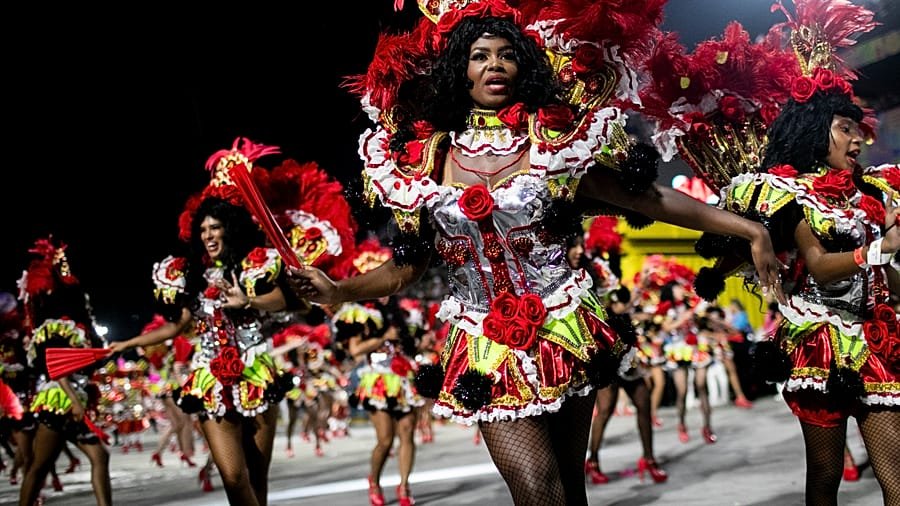
When Rio de Janeiro's samba schools closed out Carnival 2026 on the Marquês de Sapucaí, one parade carried the memory of West Africa across the Atlantic. Paraíso do Tuiuti opened the final night with "Lonã Ifá Lukumi," a dazzling tribute to the Yoruba divination tradition that survived the Middle Passage, took root in Cuba, and now pulses through Brazilian carnival.
When Rio de Janeiro's samba schools closed out Carnival 2026 on the Marquês de Sapucaí, one parade carried the memory of West Africa across the Atlantic. Paraíso do Tuiuti opened the final night with "Lonã Ifá Lukumi," a dazzling tribute to the Yoruba divination tradition that survived the Middle Passage, took root in Cuba, and now pulses through Brazilian carnival. For African readers, it was a reminder that the continent's spiritual and cultural heritage remains alive — reinvented, resistant, and radiant — on the other side of the ocean.
Rio Carnival 2026: Tuiuti's Ifá Parade Carries West African Heritage Across the Atlantic
Dakar, Senegal — The last night of Rio's Carnival 2026 belonged to the ancestors. Paraíso do Tuiuti, the blue-and-yellow samba school from São Cristóvão, opened the final evening of the Grupo Especial with a spectacular retelling of how the Ifá tradition travelled from West Africa through the Caribbean to Brazil — a story of faith, resistance, and the unbreakable thread of Yoruba culture.
Lonã Ifá Lukumi: A Parade Built on Yoruba Wisdom
The enredo, or theme, "Lonã Ifá Lukumi" was developed by carnavalesco Jack Vasconcelos, the artistic director who has guided Tuiuti's creative vision through several ambitious productions. The name itself speaks to the Afro-Cuban Ifá/Lucumí religious strand that is now being rediscovered and celebrated in Brazil, a nation whose own spiritual landscape was profoundly shaped by the same West African roots.
At the heart of the parade was Ifá itself, the divination tradition that originates among the Yoruba people of southwestern Nigeria, centred on the ancient city of Ilé-Ifẹ̀, and extends into Benin — where communities in Ketu, Sakété, and Idasha maintain their own deep connections to the practice — and across the border into Togo. The parade honoured Orunmilá (also spelled Orúnmila), the orisha of divination, knowledge, and ethics, the wise counsellor who stands at the crossroads of destiny.
The sheer intellectual weight of the tradition was on full display. The 256 Odu Ifá sacred verses, which contain the accumulated wisdom of generations, were transmitted orally by babalaôs — the priests of Ifá — who memorised vast bodies of poetry, proverbs, and historical narratives. Nothing was written in books; it lived in word, gesture, and memory, passed from elder to initiate in an unbroken chain. The parade's imagery included the divination tools central to this practice: the ikin, sacred palm nuts used in the most solemn rituals, and the opelé, the divination chain that babalaôs cast to read the patterns of fate.
Vasconcelos's creative team made a bold artistic choice with the first float, which was decorated with ancient Egyptian motifs. This was not mere ornamentation; it evoked the profound influence that Egyptian civilisation had on the development of spiritual and philosophical systems across the African continent, including the traditions that would eventually crystallise into Ifá. The visual language of the float suggested a deep, ancient lineage — a reminder that African spirituality did not begin with the slave trade but long before, in the great civilisations of the Nile and beyond.
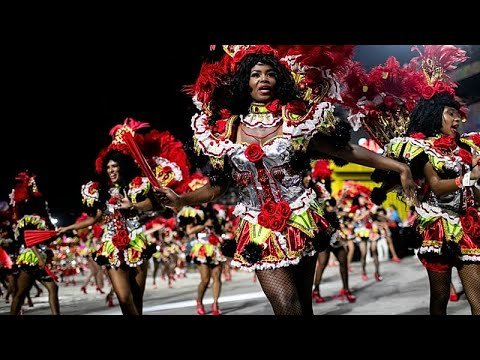
The parade unfolded on Tuesday, February 17, 2026, at the Sambadrome Marquês de Sapucaí, the iconic venue that has hosted Rio's Carnival since the 1980s. Tuiuti, founded on April 5, 1952, and led by president Renato Thor, used its platform to educate and elevate. The school's colours — blue and yellow — were woven into costumes that blended traditional Yoruba aesthetics with the exuberance of Brazilian carnival. The africanews coverage, published in French on February 18, 2026, captured the moment for audiences across the continent, ensuring that the story of this parade would reach the very lands from which its inspiration sprang.
From the Middle Passage to Matanzas: How Ifá Survived
The story Tuiuti told was not a gentle one. It began with the forced journey of enslaved Yoruba people across the Atlantic to Cuba, where they became known as lucumís, subjected to brutal labour on sugar cane and coffee plantations. Yet even in the depths of this horror, they carried something that could not be enslaved: their faith, their language, and their connection to the orishas.
In Cuba, the preservation of Ifá became an act of resistance. The enslaved Yoruba people kept their rituals secret, teaching the sacred verses and ceremonies to younger generations in hidden gatherings, often under the cover of night. They kept the orixás alive in daily life — in the songs they sang while working, in the stories they told their children, in the quiet prayers offered to Orunmilá before dawn. The city of Matanzas, on Cuba's northern coast, became a particular stronghold of this heritage.
Matanzas was also the site of one of the most powerful stories of resistance in the African diaspora. Carlota Lucumí, an enslaved African woman, led a great revolt against slavery in Cuba, becoming a symbol of struggle that resonates to this day. Her name is invoked in the very roots of the Lucumí tradition — a reminder that the faith was never separate from the fight for freedom. The parade honoured her memory, connecting the spiritual survival of Ifá to the physical resistance of those who refused to accept their chains.
Another figure central to this narrative was Remígio Herrera, known as Adechina. Born enslaved, Adechina managed to gain his freedom and then undertook an extraordinary journey: he returned to Africa to be consecrated as a babalaô, receiving the full initiation that had been denied to so many in the diaspora. He then came back to Cuba with a mission — to organise Ifá worship in the Americas, to establish the structures and lineages that would ensure the tradition's survival for generations to come. His story is a testament to the enduring connection between Africa and its diaspora, a bridge that was never fully broken.
The lucumís also developed a brilliant strategy for survival: they associated their orixás with Catholic saints, creating a syncretic religious system known as Santería, or more properly, Regla de Ocha and Regla Lucumi. Under the guise of venerating Catholic figures, they continued to honour their own deities — Ọ̀ṣun hidden behind the Virgin of Charity, Ṣàngó behind Saint Barbara, and so on. This was not a dilution of the faith but a protective camouflage, a way to keep the tradition alive under the watchful eyes of colonial authorities. The samba-enredo itself captured this spirit with the words: "A raiz é Lucumí" — the root is Lucumí.
Pixulé and the Samba-Enredo That Stopped the Sapucaí
The musical heart of Tuiuti's parade was the samba-enredo, composed by Claudio Russo, Gustavo Clarão, and Luiz Antonio Simas. These three songwriters crafted a piece that was both historically literate and emotionally devastating, weaving together the story of Ifá's journey with the personal spiritual journey of the singer.
The interpreter of this samba was Pixulé, a man whose connection to the material went far beyond professional duty. Pixulé has been an initiate of Candomblé for decades, and his performance carried an authenticity that could not be manufactured. In a moment that became iconic, he delivered a near-a-cappella rendition that lasted almost three minutes — an eternity in the fast-paced world of carnival competition. The crowd fell silent, then erupted.
The chorus — "Iboru, iboya, ibosheshe — Canta Tuiuti" — is the traditional Ifá greeting to Orunmilá, a phrase familiar to any practitioner in Nigeria, Benin, or Cuba. To hear it sung by tens of thousands of voices in the Sambadrome was a profound affirmation of the tradition's global reach. The lyrics continued: "Meu padrinho me falou, cada um tem seu orí, o destino é professor, a raiz é Lucumí" — "My godfather told me, everyone has their orí, destiny is the teacher, the root is Lucumí." The reference to orí, the personal spiritual head that guides each individual's destiny in Yoruba thought, grounded the song in authentic theological concepts.
The percussion was led by Mestre Marcão, whose battery drove the parade forward with relentless energy, while rainha de bateria Mayara Lima commanded attention at the front of the drum section. The comissão de frente, the opening choreographic group, was titled "O caminho se abre – Um canto para Orunmila" and was choreographed by David Lima. This group scored between 9.9 and 10 from the judges, a recognition of the precision and artistry of the performance. The mestre-sala and porta-bandeira, Vinicius Antunes and Rebeca Tito, carried the school's flag with the grace and dignity that the role demands.
A Flag-Bearer's Passion and a Ninth-Place Finish
Rebeca Vitória Tito, the 24-year-old porta-bandeira, embodied the emotional stakes of carnival in her public statements. "Carnival is my passion," she said. "It is where I can heal all my wounds and soothe my sadness. Carnival is my love, my passion, and I will never let it die." Her words captured the deep personal investment that carnival demands — not merely a performance, but a way of life, a source of identity and healing for the communities that build these parades from nothing each year.
The Grupo Especial competition spans three nights, with schools judged on a range of criteria including costumes, floats, harmony, and percussion. Tuiuti's parade was widely praised by critics and audiences alike, with many considering it one of the most artistically ambitious and spiritually resonant productions of the year. Yet when the apuração — the final tally of scores — was announced, Tuiuti finished in ninth place, with Viradouro taking the championship.
The result sparked controversy among fans and observers. The samba-enredo was among the most praised of the year, with Pixulé's performance being described as "fora da curva" — out of the curve, beyond the ordinary. Many fans complained that the battery's score of 9.9 in at least one criterion was unfair, arguing that the percussion section had delivered a performance worthy of a perfect score. The feeling that the school was "garfada" — robbed — was widespread, with supporters pointing to the inconsistency between the artistic quality of the parade and its final placement.
Analysis of the scoring revealed a tantalising counterfactual: without the discard rule, which allows each school to drop its lowest score in each criterion, Tuiuti would have swapped positions with Grande Rio, moving up to eighth place. It was a bitter pill for a community that had poured so much of itself into the parade. Yet the school's response was characteristically resilient — Pixulé renewed his contract with Tuiuti until 2028, a clear signal that the artistic direction that produced this parade would continue.
Ifá Today: A Living Bridge Between Africa and the Diaspora
For African readers, the significance of Tuiuti's parade extends far beyond the competitive results of carnival. Ifá remains a vibrant, living tradition in West Africa today. In Yorubaland — spanning the Nigerian states of Osun, Oyo, and Ogun — the practice continues to thrive, with priests and initiates maintaining the rituals and oral traditions passed down for centuries. The Osun-Osogbo Sacred Grove, a UNESCO World Heritage site, has been revitalised with the active participation of Yoruba priests and artists, ensuring that the sacred landscape remains a living centre of worship and cultural production.
The theology of Ifá is rich and complex, centred on the supreme being Olódùmarè, the creator who set the universe in motion, and the orishas who serve as intermediaries between the divine and the human. These include Ọ̀ṣun, the goddess of rivers and love; Ọ̀bàtálá, the creator of human bodies; Ọ̀gún, the god of iron and war; and Ṣàngó, the thunderous king of the orishas. Each was honoured in some form within the rich tapestry of Tuiuti's parade.
The tradition has spread far beyond its West African homeland. Ifá now has practitioners in more than 30 countries, with diaspora communities in the Americas, Europe, and beyond maintaining active connections to the source. Many diaspora practitioners travel to Nigeria and Benin for training and initiation, seeking the authenticity of the original tradition. Meanwhile, West African babalaôs travel worldwide to initiate new priests and establish new communities, creating a global network of Ifá practice that spans continents and cultures.
This creates a remarkable feedback loop between Africa and its diaspora. The traditions carried across the Atlantic in chains have now returned, enriched by their encounters with other cultures, and are being reintegrated into continental practice. Brazilian carnival's embrace of Ifá is part of this larger movement — a recognition that African spirituality is not a relic of the past but a living, evolving force shaping global culture. For African cultural pride, this is profoundly significant: the continent's spiritual heritage is being celebrated on one of the world's largest stages, not as a curiosity but as a source of wisdom and beauty.
What to Watch For
Paraíso do Tuiuti is already preparing its 2027 enredo, which will focus on Tia Ciata, the foundational figure of samba and Candomblé. Born in Bahia and later based in Rio de Janeiro, Tia Ciata was a matriarch of Afro-Brazilian culture whose home became a gathering place for musicians, artists, and practitioners of Candomblé. Her story is intimately connected to the themes Tuiuti has been exploring — the preservation and celebration of African heritage in Brazil. The enredo was launched at Cidade do Samba, the complex where the schools build their floats and rehearse their parades.
The school's rising reputation for Afro-Brazilian religious themes is notable. In 2024, Tuiuti told the story of Xica Manicongo, a transgender woman of African descent who lived in colonial Brazil and has become a symbol of LGBTQ+ resistance. In 2026, the school turned to Ifá. This pattern suggests a deliberate artistic direction, one that uses the massive platform of carnival to explore the intersections of African spirituality, social justice, and Brazilian identity. It is a bold and admirable approach, one that sets Tuiuti apart from schools that might prefer safer, more conventional themes.
Pixulé's renewed contract through 2028 ensures that the school will continue to have one of the most powerful voices in carnival at its disposal. The growing representation of African and Afro-diasporic spirituality in carnival is a broader trend, with multiple schools incorporating elements of Candomblé, Umbanda, and other African-derived traditions into their parades. This is not merely a fashion; it is a reclamation of heritage, a statement that the African roots of Brazilian culture are not something to be hidden but something to be celebrated.
For African artists and cultural institutions watching from the continent, the implications are significant. From Dakar's vibrant music scene to Lagos's booming film industry, there is a growing awareness that the diaspora is not merely a recipient of African culture but an active partner in its evolution. The carnival's embrace of Ifá demonstrates that African spiritual traditions have global resonance — opening possibilities for collaboration, exchange, and mutual enrichment between African and diaspora artists.
The power of carnival as a living archive of African memory cannot be overstated. In a continent where so much history was deliberately destroyed — where languages were suppressed, religions outlawed, and cultural practices criminalised — the survival of Ifá in the Americas is a testament to the resilience of the human spirit. When Tuiuti paraded down the Sapucaí with the story of Orunmilá, it was not merely entertainment; it was an act of remembrance, a declaration that the ancestors are not forgotten. For those of us in Africa, watching from across the Atlantic, it was a reminder that our heritage belongs to the world — and it will endure.
By Amara Diop, Staff Writer
This article was produced with AI-assisted research and editorial support. Reporting is based on sources cited in the article.
What's Your Reaction?
 Like
0
Like
0
 Dislike
0
Dislike
0
 Love
0
Love
0
 Funny
0
Funny
0
 Wow
0
Wow
0
 Sad
0
Sad
0
 Angry
0
Angry
0

West Africa/Sahel Correspondent at Global1.News. Dakar-based journalist covering politics, security, climate, and development across Francophone and Anglophone West Africa. Tells the stories of a region undergoing profound transformation.















Comments (0)