
Central Election Commission Bars Yabloko Candidates From St. Petersburg Ballot
The Central Election Commission on Friday unanimously upheld the St. Petersburg commission's decision to bar liberal party Yabloko from the city's September ballot, less than 48 hours after clearing the party for State Duma races. Yabloko, the only registered pro-peace party, vows a court challenge.
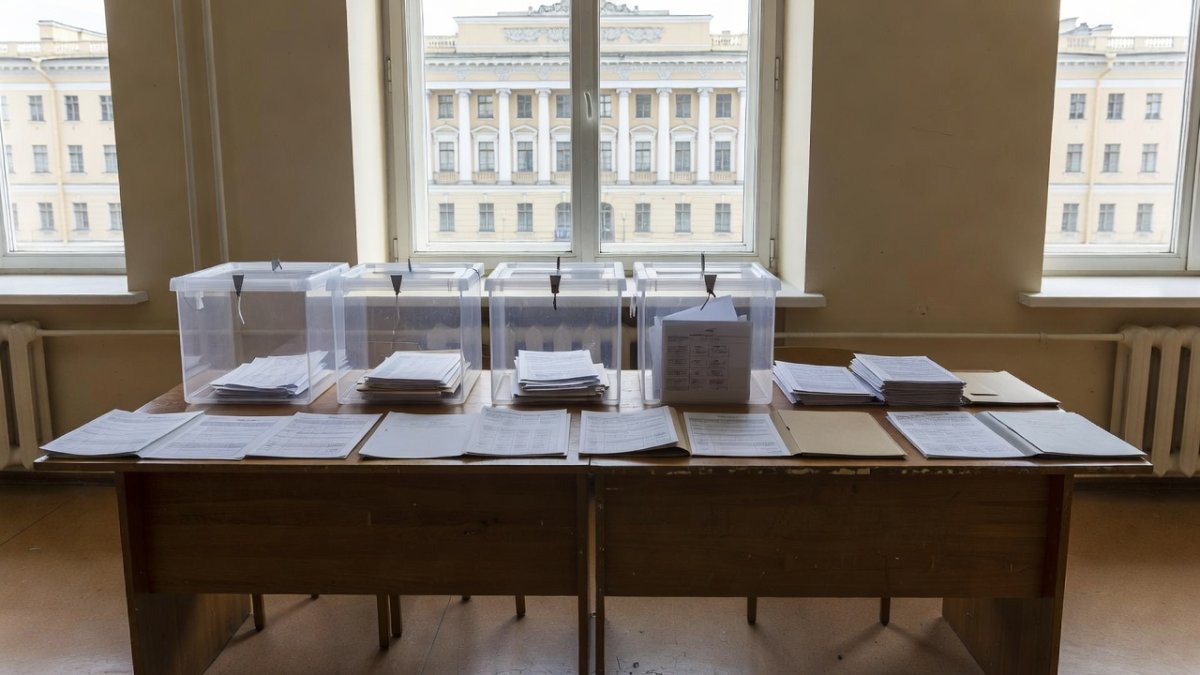
The Central Election Commission on Friday unanimously upheld the St. Petersburg city election commission's decision to bar Russia's liberal Yabloko party from fielding its slate in the city's September legislative assembly elections, a ruling that leaves the party facing the loss of its final stronghold seats. The decision came less than 48 hours after the same commission cleared Yabloko to contest nationwide State Duma races, underscoring what critics describe as a selective application of registration rules against the country's only officially registered pro-peace party. Yabloko, which currently holds two seats in the 50-member assembly, said it will challenge the ruling in court.
Unanimous Ruling Caps a Week of Contrasting Decisions
The Central Election Commission voted unanimously on Friday to reject Yabloko's appeal against the St. Petersburg branch's exclusion, leaving the party's entire list off the ballot for the September vote. Commission officials upheld the city-level decision without alteration and without fresh examination of the underlying documents, according to the party.
Party leader Nikolai Rybakov had sent a formal request to CEC Chair Ella Pamfilova hours before the July 24 city commission meeting, asking her to dispatch a representative with decisive voting rights. No such delegate was sent, and the CEC later sustained the regional ruling. Observers interpret the unanimous outcome as evidence of coordinated institutional alignment rather than independent review, given that federal tolerance for Yabloko coexists with its targeted regional exclusion.
A Paperwork Dispute With High Stakes
On July 24 the St. Petersburg city election commission refused to register Yabloko's party list for the city legislative assembly, citing a technical paperwork issue. Deputy head Oleg Zatsepa said the party's financial report had been signed by an individual lacking the authority to do so, and described the defect as uncorrectable. "The financial report was not actually submitted, because it was signed by someone who did not have the authority to do so. This is considered an uncorrectable flaw," Zatsepa said, as quoted by the Telegram channel Rotonda.
The same session registered candidate lists from A Just Russia, New People, and the Communist Party, leaving those organizations as the principal registered contenders in the northwestern region while Yabloko's slate was removed entirely. The contrast in outcomes illustrates how minor procedural objections can be applied unevenly in Russian electoral practice.
Dispute Centers on Power of Attorney Language
Yabloko representative Pavel Shapchits argued that the notarized power of attorney used inclusive wording that authorized the party's lawyer to submit the financial disclosure. "The list of powers in the power of attorney is not exhaustive. It uses the word 'including.' We believe our lawyer could submit such a report," Shapchits told the commission meeting.
The party quickly resubmitted corrected notarized documents, but officials ruled that authority could not be granted retroactively, eliminating Yabloko's remaining administrative avenue for ballot access. By framing the dispute as a non-remediable paperwork deficiency rather than a substantive political question, the commission avoided public discussion of Yabloko's platform while achieving the practical result of removing the party from the September ballot.
Federal Clearance, Regional Ban
On July 29 the Central Election Commission approved Yabloko to field candidates in the nationwide State Duma elections, confirming the party as the sole officially registered organization advancing an explicit pro-peace platform at the federal level. The June 27 party convention had already endorsed a federal list of 275 candidates plus 137 single-mandate nominees.
That clearance came less than 48 hours before the same commission unanimously sustained the St. Petersburg ban, revealing a sharp divergence in treatment between national and regional registration reviews. St. Petersburg is one of eight mostly northwestern Russian regions where Yabloko is fielding candidates in September local elections; the party says it will continue its campaigns in the other seven.
Meduza reported, citing unnamed sources, that ahead of the State Duma elections Russian authorities stepped up pressure on Yabloko, pushing the party to withdraw entirely or, at the very least, preventing well-known figures from appearing on its candidate lists. The regional elections are scheduled for the same September days as the federal parliamentary vote, concentrating the stakes of every registration decision in a single campaign window.
A Crackdown in the Party's Stronghold
St. Petersburg historically maintained Russia's strongest Yabloko organization, yet by 2026 the local opposition had been largely dismantled through administrative and criminal proceedings. Long-time leader Boris Vishnevsky was fined and stripped of his mandate after being designated a foreign agent, and the remaining two Yabloko deputies in the assembly were convicted under extremism charges for using images of Alexei Navalny.
By March 2026 the city ranked among Russia's leading regions for criminal cases involving alleged "fake news" about the armed forces, according to the Russian Election Monitor. The systematic removal of prominent figures has left the party without effective local representation precisely in the region where its organizational base was once most robust.
Pressure on the Party Leadership
The St. Petersburg exclusion fits a broader pattern of legal pressure on Yabloko's leadership documented by Amnesty International. Deputy Chair Lev Shlosberg was sentenced in November 2025 to 420 hours of community service under the foreign agents law and faces a third criminal case opened in December 2025 over a 2022 social media repost. Deputy Chair Maksim Kruglov has remained in pre-trial detention since October 2025 over two 2022 Telegram posts.
Rybakov himself received a 1,500-ruble fine in December 2025 for sharing an image of Alexei Navalny on the day of his death, an "extremism" conviction that bars him from the September parliamentary race. Eleven party members, including Nobel Peace Prize laureate Dmitry Muratov and human rights defender Svetlana Gannushkina, carry foreign agent designations, and around 50 administrative cases have been opened against Yabloko members nationwide.
Marie Struthers, Amnesty International's director for Eastern Europe and Central Asia, said authorities are "steadily dismantling what remains of peaceful political opposition" ahead of the September elections, seeking to purge groups that do not share the Kremlin's agenda, including its war in Ukraine. At least five other Yabloko regional leaders and members have been prosecuted across the country, according to the human rights group, and the party's federal ambitions have been narrowed by the legal status of its top figures even where its candidate lists were formally cleared.
Court Challenge and What Comes Next
Following the CEC's unanimous Friday decision, Yabloko announced it will pursue a judicial appeal to contest the exclusion of its St. Petersburg list. Party chairman Nikolai Rybakov has accused election officials of systematically targeting the party because it "opposes the authorities and defends residents and the city of St. Petersburg."
Analysts view the planned court challenge as unlikely to alter the administrative outcome before the September vote, given the pattern of selective enforcement already applied to the party's regional participation. For Russian voters, the ruling removes the most prominent anti-war voice from the ballot in a city that once served as the country's liberal heart, narrowing the field of legal political alternatives as the parliamentary campaign enters its final weeks. The September elections, scheduled for September 18-20, will test whether any legal political space remains for parties that openly oppose the Kremlin's war agenda.
By Irina Volkov, Staff Writer
This article was produced with AI-assisted research and editorial support. Reporting is based on sources cited in the article.
What's Your Reaction?
 Like
0
Like
0
 Dislike
0
Dislike
0
 Love
0
Love
0
 Funny
0
Funny
0
 Wow
0
Wow
0
 Sad
0
Sad
0
 Angry
0
Angry
0
Russia/Eastern Europe Correspondent at Global1.News. Covering Russian politics, energy, security, and the shifting dynamics of the post-Soviet space. Provides clear-eyed analysis on one of the world's most opaque regions.












Comments (0)