
EU Calls Emergency Meeting as Ceuta Migrant Crisis Strains European Unity
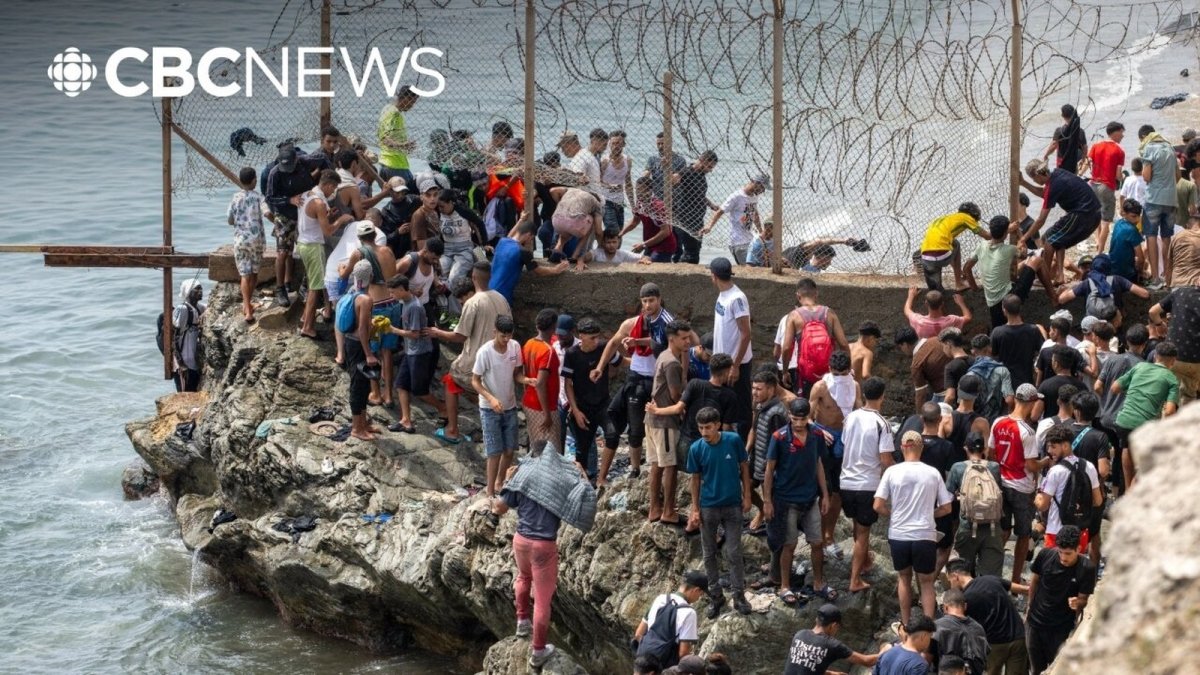
In a recent CBC News report, footage from Ceuta showed crowds pressing against border barriers and rescue teams recovering bodies from the water after one of the largest mass crossings in Europe's recent history.
In a recent CBC News report, footage from Ceuta showed crowds pressing against border barriers and rescue teams recovering bodies from the water after one of the largest mass crossings in Europe's recent history. The images arrived as the European Union prepared to convene emergency talks over the roughly 60,000 migrants who entered the Spanish enclave from Morocco in a matter of days. For Canadians, the crisis is a stark reminder of how quickly border pressures can test the political and humanitarian limits of any migration system.
EU Calls Emergency Meeting as Ceuta Migrant Crisis Strains European Unity
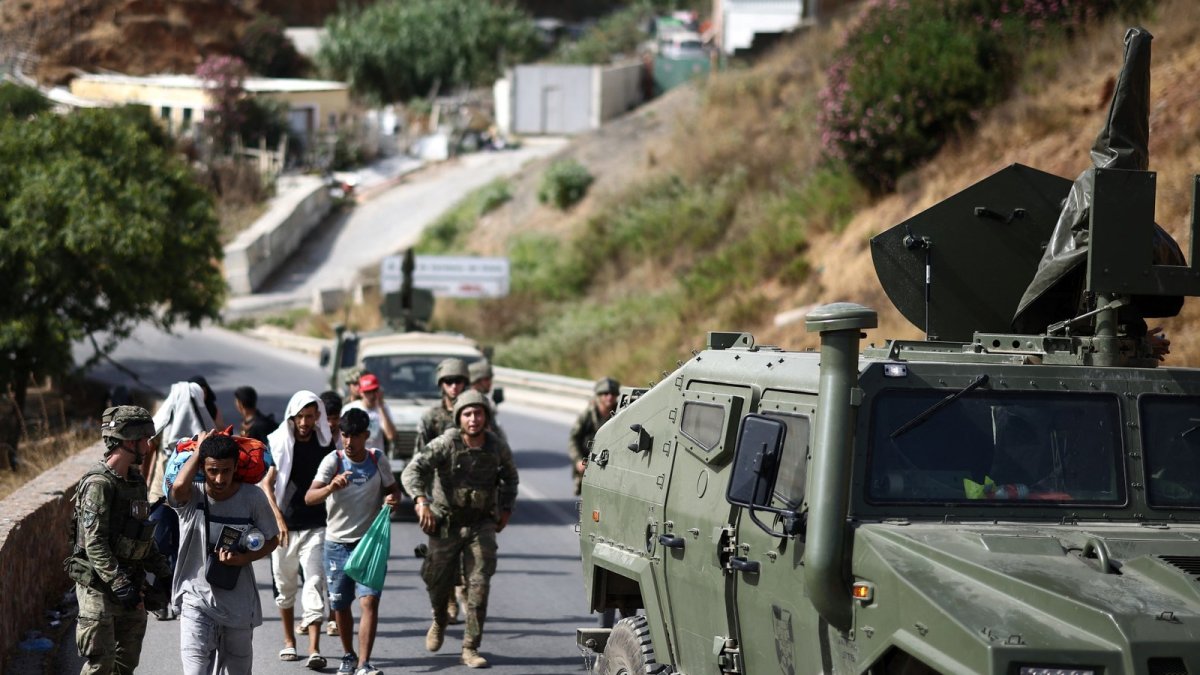
Brussels, Belgium — The European Union will convene an emergency meeting of interior ministers on Tuesday after roughly 60,000 migrants entered Spain's North African enclave of Ceuta from Morocco between Wednesday and Friday. At least 67 people died during the crossings, some by drowning and others crushed against a breakwater, in the largest single migration event in the territory's history — far exceeding the 8,000 to 12,000 arrivals recorded during the 2021 crisis over two days.
The Story — A Record Surge at Europe's Southern Border
Ceuta, home to just 84,000 residents, absorbed an influx nearly equal to three-quarters of its population in a single week. More than 48,000 people had voluntarily returned to Morocco by Friday evening, and Spanish Interior Minister Fernando Grande-Marlaska said "almost all" of the migrants had left the enclave by the weekend, allowing businesses to reopen. Spanish authorities are now installing a 500-metre floating barrier off the border with Morocco to deter further attempts.
Ceuta's top official, Juan Jesús Vivas, cautioned that "we're not back to normal because there are several thousand people who need to be returned." Spanish officials attributed the surge in part to people-smuggling networks exploiting a July 8 Supreme Court ruling that limited the government's ability to immediately deport migrants who arrive by sea. Spain's April plan to grant legal status to up to 1.2 million undocumented migrants does not apply to the recent entrants, who fail to meet requirements including proof of residency before January 1, 2026.
Ceuta and Melilla form the European Union's only land borders with Africa, surrounded by high fences, surveillance systems and a permanent deployment of Spain's Civil Guard and National Police. Morocco has claimed sovereignty over both territories since its independence in 1956, a position Spain continues to reject. The recent surge follows last year's Gen Z anti-government protests in Morocco over opportunities and public services, adding further regional pressure on the border.
Why the EU Is Meeting on Tuesday
Ireland, which holds the rotating EU presidency, convened the Tuesday meeting of the Justice and Home Affairs Council, to be chaired by Irish Justice Minister Jim O'Callaghan. The emergency talks follow a joint letter signed by 22 of the 27 member states — drafted by Italy and Denmark — calling for "coordinated action and the strengthening of external borders" and demanding that the bloc address "pull factors" such as Spain's regularization of undocumented migrants.
Signatories include German Chancellor Friedrich Merz and Italian Prime Minister Giorgia Meloni, along with the leaders of Austria, Belgium, Bulgaria, Croatia, Cyprus, the Czech Republic, Denmark, Estonia, Finland, Greece, Hungary, Latvia, Lithuania, Malta, the Netherlands, Poland, Romania, Slovakia, Slovenia and Sweden. Italy has already suspended its Schengen open-border arrangement with Spain for one month, a step backed by Finland and Denmark, with some support from Poland and Sweden.
France has ruled out any suspension — calling it "absolutely not on the table" — but announced a five-fold increase in police at its border with Spain, while Portugal said it would strengthen controls at its southern land and maritime borders. Spanish Prime Minister Pedro Sánchez described the reactions as "selfish, polarising and unlawful," noting that Ceuta is not part of the Schengen area and that Frontex data shows Spain records only half the irregular entries of Italy between 2021 and 2026.
The Canadian Context — Managed Migration vs Crisis Surges
Canada's approach to immigration is deliberately planned rather than reactive. The points-based system, administered through Express Entry and provincial nominee programs, selects applicants according to skills, language ability and labour market needs, with annual targets set by the federal government — roughly 465,000 new permanent residents in 2024 and approximately 500,000 planned for 2025.
The Safe Third Country Agreement with the United States directs most asylum claims to official ports of entry, while past irregular crossings at Roxham Road in Quebec prompted federal-provincial coordination to restore orderly processing and contributed to asylum backlogs. Canada maintains close ties with the European Union through the Comprehensive Economic and Trade Agreement, and Canadian values of fairness and the rule of law underpin a system that prioritises orderly processing over sudden surges.
Analysts have noted that the Ceuta situation involved suspected Russian disinformation and what Karel Lannoo of the Centre for European Policy Studies described as "a concerted action by countries which are basically enemies to Europe to try to undermine European unity in one of the areas where Europe's unity is one of the weakest." Canada's structured model, by contrast, avoids the scale of the 67 to 72 deaths recorded on the Ceuta breakwater this week.
Impact on Canadians — What This Means at Home
Canadians who travel to Europe under the CETA framework encounter the same external border pressures now visible in Ceuta and Melilla, and the crisis underscores ongoing Canadian debates about asylum processing backlogs and maintaining public confidence in a system built on fairness and the rule of law.
While no direct Canadian government response is required, the events illustrate how rapid, unplanned inflows can strain housing, healthcare and integration services in receiving communities — issues familiar to provinces managing temporary foreign worker programs and refugee claims. The rapid return of 48,000 migrants from Ceuta by Friday evening highlights the challenge of managing sudden inflows that exceed local capacity in an enclave of 84,000 residents.
The EU's Tuesday meeting and the letter signed by 22 member states underscore the importance of external border measures, a principle aligned with Canada's Safe Third Country Agreement with the United States. The Ceuta deaths and the installation of the floating barrier illustrate the human and logistical costs that Canada's points-based system seeks to avoid through advance planning and legal pathways.
Reactions and Analysis — A Bloc Divided
In a letter to European Commission President Ursula von der Leyen, European Council President António Costa and Irish Prime Minister Micheál Martin, Sánchez said that while most EU countries had expressed support and solidarity, others had chosen to attack Spain "driven by prejudice, fake news, ignorance, or political interest." Von der Leyen called the images from Ceuta "unacceptable," adding: "We cannot allow anyone to come to our Union without abiding by our rules."
Manfred Weber, leader of the European People's Party, called for Frontex, the EU border agency, to receive "real enforcement powers" and "command authority." German Chancellor Friedrich Merz demanded that Morocco "take back illegal migrants immediately," while Danish Prime Minister Mette Frederiksen urged the EU to "consider all options, including a suspension of Schengen co-operation." UK Prime Minister Andy Burnham said Britain is "providing what help we can" to Spain.
Spanish officials have pushed back against claims that the regularization scheme triggered the crisis, pointing out that none of the Ceuta entrants would qualify because they arrived after the January 1, 2026 residency cutoff. Interior Minister Grande-Marlaska insisted "Morocco isn't any threat to Ceuta or the rest of Spain. It's a fully reliable partner," while warning that the crisis was not formally over and that overnight crossings had fallen to about zero.
What Happens Next
The Tuesday council meeting will focus on coordinated external border measures and possible responses to suspected disinformation campaigns discussed in recent EU sessions. Italy's one-month Schengen suspension with Spain remains in place, supported by Finland and Denmark, while France maintains heightened border controls without formal suspension.
Spain continues to install the 500-metre floating barrier at Ceuta and reports that virtually all of the 60,000 arrivals had returned by Saturday, though Vivas said several thousand people still require return processing. Further discussions are expected on Frontex powers and potential coordinated returns, with Morocco's role in managing departures remaining central.
The outcome of the emergency talks will determine whether the current divisions produce lasting changes to Schengen cooperation and Frontex authority — and whether Europe can present a unified response to the next surge. For Canadian readers, the crisis is a reminder that orderly migration is a deliberate achievement, not an accident, and that the rules and institutions that manage it deserve attention and care.
By Alex Thompson, Staff Writer
This article was produced with AI-assisted research and editorial support. Reporting is based on sources cited in the article.
What's Your Reaction?
 Like
0
Like
0
 Dislike
0
Dislike
0
 Love
0
Love
0
 Funny
0
Funny
0
 Wow
0
Wow
0
 Sad
0
Sad
0
 Angry
0
Angry
0

Canada Correspondent at Global1.News. Based in Toronto, covering Canadian politics, energy, trade, and US-Canada relations. Provides the Canadian perspective on North American and global affairs.














Comments (0)