
Cancha Violeta: Mexico Girls Fight Violence With Football
In the shadow of the 2026 FIFA World Cup final where Spain defeated Argentina, a group of girls in Ecatepec are using football to push back against cartel activity and gender violence that has gripped their community for years. Nallely Arenas and Perla Acosta launched Cancha Violeta six years ago with nearly 40 teams, turning a peripheral zone of Mexico City into a space where sport becomes a human right.
In the shadow of the 2026 FIFA World Cup final where Spain defeated Argentina, a group of girls in Ecatepec are using football to push back against cartel activity and gender violence that has gripped their community for years. Nallely Arenas and Perla Acosta launched Cancha Violeta six years ago with nearly 40 teams, turning a peripheral zone of Mexico City into a space where sport becomes a human right. Their work echoes the 2010 Durban Street Child World Cup origins and now prepares players like Karol Arenas for the Mexico City edition in 2026.
Cancha Violeta: Mexico Girls Fight Violence With Football
Mexico City, Mexico — Nallely Arenas, a lawyer turned grassroots organiser, co-founded Cancha Violeta with Perla Acosta under the non-profit Mas Suenos to deliver women's and mixed football alongside emotional support in San Pedro Xalostoc, Ecatepec, Estado de Mexico. The project runs in a zone marked by high insecurity and marginalisation, where two Gender Violence Alerts against Women remain active since the first declaration in 2015 across 11 municipalities including Ecatepec. Against the backdrop of the 2026 FIFA World Cup hosted across the United States, Canada and Mexico, the initiative normalises sport as protection and equality for girls facing daily threats.
Cancha Violeta Builds Safe Spaces in Ecatepec
Cancha Violeta operates from San Pedro Xalostoc in Ecatepec, Estado de Mexico, where founders Perla Acosta and Nallely Arenas integrate socio-emotional support with violence prevention. The organisation held its first tournament roughly six years ago, drawing nearly 40 teams to promote women's football and mixed football. Mas Suenos drives the work on principles of equity and holistic health, creating the violet pitch as a visible symbol of struggle and equality that has become part of the girls' daily lives.
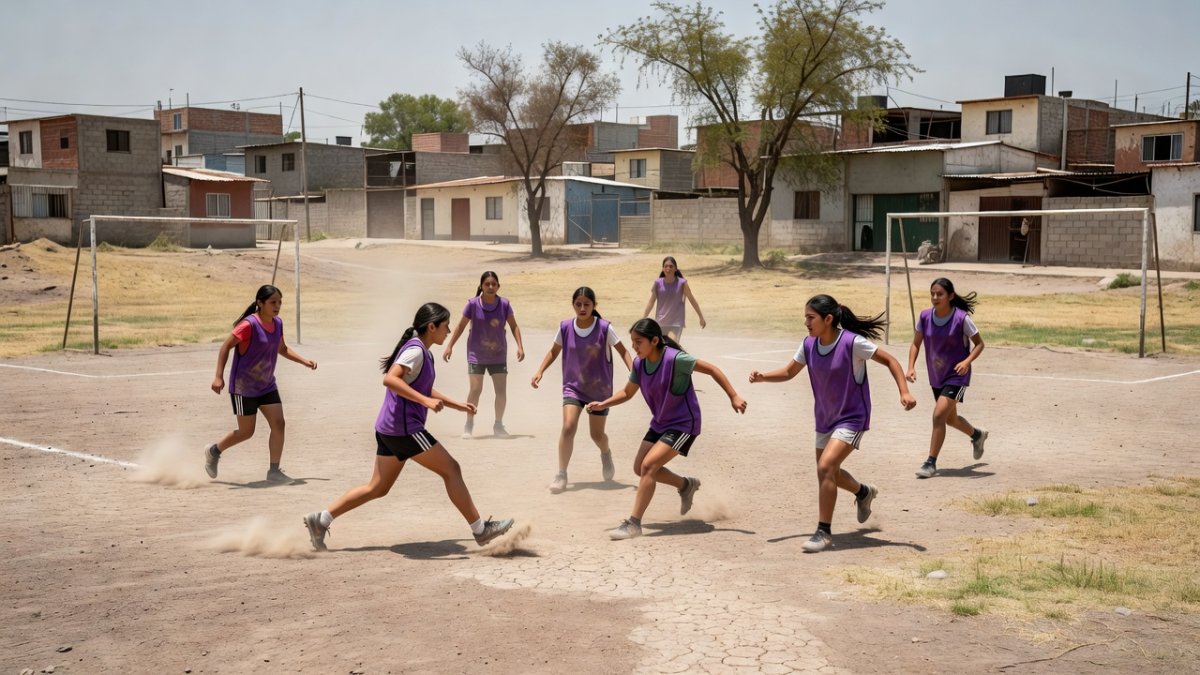
Nallely Arenas took her experience as a lawyer fighting legal battles and poured it straight into building Cancha Violeta on the ground in Ecatepec, turning paperwork and courtrooms into real pitches where girls could train without fear. The violet pitch itself stands as a bold symbol of resistance and visibility, a bright splash of colour in a neighbourhood where cartel activity and gender violence often push young women indoors. By creating this dedicated space, the project directly challenges the daily threats that keep girls from playing freely, offering them a protected zone where they can run, kick and dream without looking over their shoulders every few minutes.
Mas Suenos runs the whole operation with clear principles of equity and holistic health, making sure every session addresses not just football skills but also the emotional and physical wellbeing of each participant. This approach recognises that safety means more than locked gates; it means building confidence and community so girls feel they belong on the field and in their own futures. The scale of that first tournament proved demand was already huge, and that the model of combining sport with protection could draw families who had previously kept their daughters at home.
Girls Share How Football Transforms Their Lives
Twelve-year-old Estrella Guzman said, "With football I'm more myself. Here I express everything I feel. I'm happier playing football and I forget all my problems." She added that before joining she heard, "you're not good at football, you're a woman, women don't play like that," but now believes all women can fulfill their dreams. Seventeen-year-old Aldo Huerta stated, "Women are really good at soccer, and we also learn from them," and called on World Football Day for an end to macho thoughts, insisting all women hold the same right as men to practice any sport.
Six-year-old Dominic Ibanez found an outlet from depression after losing his grandfather, with his grandmother Yolanda Martinez crediting the programme for transforming his life. Nallely Arenas noted, "Thanks to this project it's being normalized that sport is a human right and that all of us can play any sport... the violet space, the violet pitch, the violet color is part of the struggle and equality. It's already part of their lives." Her daughter Karol trains with the team in hopes of selection for the upcoming Street Child World Cup.
Estrella Guzman, at just 12 years old, has learned to push back against the insults that say a woman cannot play football with power and skill, turning those words into fuel that drives her harder on the pitch. Her story shows how Cancha Violeta gives girls the tools to answer back with their feet and their presence, changing the conversation one match at a time. The insults lose their sting when the whole team stands together, proving that the field belongs to them as much as to anyone else.
Aldo Huerta at 17 has seen mixed football teach boys and girls alike about inclusion and basic rights, creating moments where respect is learned through shared play rather than lectures. Dominic Ibanez, only six, found a way through grief after losing his grandfather, with grandmother Yolanda Martinez watching from the sidelines as football helped the boy rebuild his days. Every training session at Cancha Violeta weaves in socio-emotional support and violence prevention, so the game itself becomes the doorway to healing and safety for children carrying heavy burdens.
Street Child World Cup Links Durban 2010 to Mexico City 2026
The Street Child World Cup movement began in Durban, South Africa in 2010 ahead of the FIFA World Cup, carrying the motto "I Am Somebody." Subsequent editions took place in Rio de Janeiro Brazil 2014, Moscow Russia 2018, London England 2019, Doha Qatar 2022 and Chennai India 2023. The Mexico City 2026 tournament brought together 28 teams from 20 countries, giving Karol Arenas and other Cancha Violeta players a direct pathway from local pitches in Estado de Mexico to international competition.
What began as a declaration that every child matters has grown into a global platform, and this steady expansion shows how the original Durban spark became a worldwide call for recognition and opportunity through sport.
For a girl from Ecatepec like Karol Arenas, chasing selection for the Mexico City edition carries extra weight because it connects her daily fight on the violet pitch to that 2010 legacy thousands of kilometres away. The journey from Durban to Mexico City proves that grassroots projects can feed into something larger, giving young players a concrete goal that lifts their eyes beyond their immediate neighbourhood. Each edition builds on the last, turning personal stories of struggle into collective celebrations of resilience on an international stage.
Gender Violence Alerts Highlight Risks in Estado de Mexico
The State of Mexico holds two Gender Violence Alerts against Women, a unique Mexican protection mechanism for women's human rights. The first Alert was declared in 2015 in 11 municipalities including Ecatepec, where Cancha Violeta now operates. The Al Jazeera English Witness documentary "Beyond the World Cup: Can football protect girls from violence in Mexico?" by Elpida Nikou and Rodrigo Hernandez, published mid-July 2026, frames these alerts against the daily realities faced by girls training on the violet pitch.
These alerts function as an official protection mechanism, requiring authorities to step up prevention and response when violence against women reaches critical levels. In practice they shine a light on the daily realities of high insecurity and marginalisation that shape every choice a girl makes about leaving her home.
The Al Jazeera English Witness documentary "Beyond the World Cup: Can football protect girls from violence in Mexico?" by Elpida Nikou and Rodrigo Hernandez captures exactly how Cancha Violeta operates inside this alert zone, showing the pitch as both refuge and statement. Girls navigate streets where danger is constant, yet the project gives them structured hours of safety and purpose that the alerts alone cannot provide. This framing makes clear that sport becomes a practical tool for protection when state mechanisms fall short on the ground.
South African Perspective Ties 2010 Legacy to Grassroots Fight
South Africa's hosting of the 2010 FIFA World Cup in Durban gave birth to the Street Child World Cup, a legacy that now resonates with Banyana Banyana's ongoing push for women's football development under SAFA. Local clubs and the MultiChoice Diski Challenge continue to expand access at grassroots level, yet violence against women remains a national challenge that SASCOC and the SA Sports Ministry must confront through sustained investment. Cancha Violeta's model in Ecatepec mirrors the transformation South African fans witnessed when sport united communities in 2010, offering a blueprint for SARU and CSA programmes that link physical activity to protection and equality.
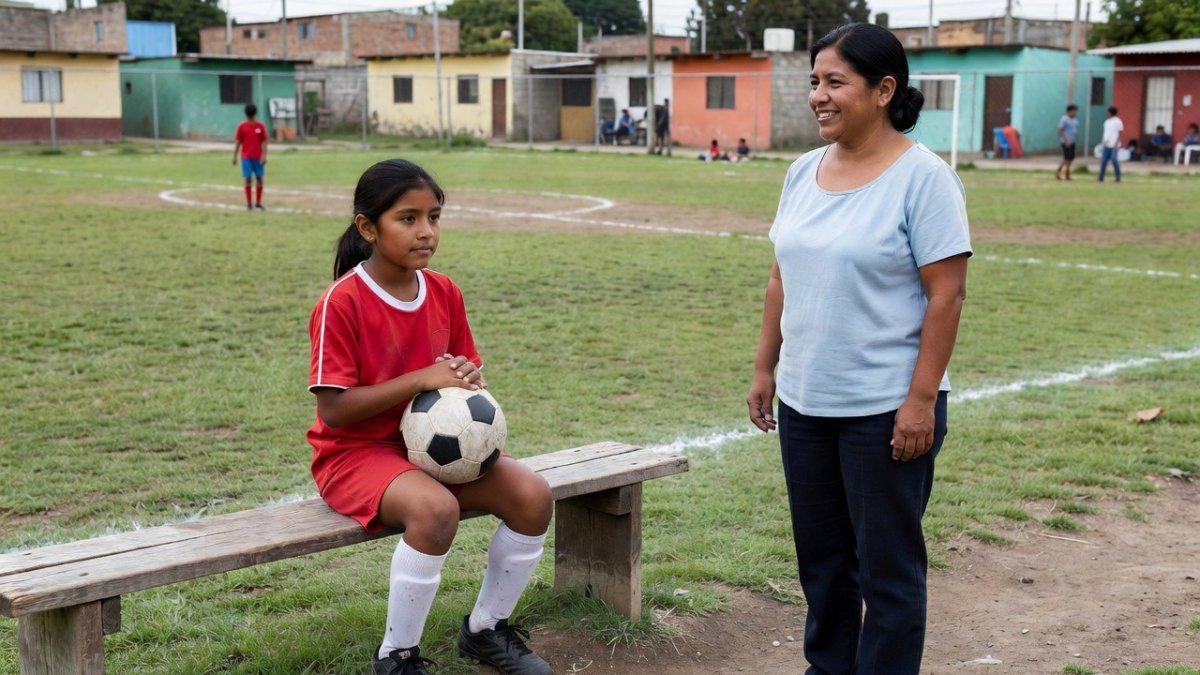
South Africa's 2010 World Cup legacy lives on through the birth of the Street Child World Cup in Durban, where the motto "I Am Somebody" first rang out and still echoes in every grassroots effort that links sport to dignity. Banyana Banyana's continued rise under SAFA shows what sustained investment in women's football can achieve, yet the same energy must reach the youngest players facing violence at home and in their communities. Programmes like the MultiChoice Diski Challenge already prove that structured leagues can build discipline and belonging, offering a local model that Cancha Violeta's approach could strengthen further.
The challenge of violence against women remains urgent across South Africa, demanding that SASCOC, the SA Sports Ministry, SARU and CSA look closely at how Cancha Violeta ties football directly to protection and equality. By weaving socio-emotional support into every session, the Mexican project offers lessons on turning pitches into safe zones rather than just competition venues. South African sports bodies can draw from this example to deepen transformation at the grassroots level, ensuring that the 2010 spirit continues to protect and uplift the next generation of girls on our own fields.
What to Watch For as 2026 Street Child World Cup Nears
Selection decisions for the Mexico City 2026 Street Child World Cup will determine whether Karol Arenas and her Cancha Violeta teammates represent the project on home soil. Continued expansion of Mas Suenos programmes could strengthen ties between Estado de Mexico teams and South African grassroots initiatives ahead of future international events. Observers will track how the violet pitch model influences policy responses to the two active Gender Violence Alerts while Spain's 2026 FIFA World Cup victory keeps global attention on the host nations.
The work of Nallely Arenas and Perla Acosta shows that football can shift daily realities for girls in high-risk zones, carrying forward the 2010 Durban spirit into tangible protection and opportunity. South African supporters recognise the same power that once lifted the nation and now watch how Cancha Violeta writes its next chapter on the global stage.
By Dante Williams, Staff WriterThis article was produced with AI-assisted research and editorial support. Reporting is based on sources cited in the article.
What's Your Reaction?
 Like
0
Like
0
 Dislike
0
Dislike
0
 Love
0
Love
0
 Funny
0
Funny
0
 Wow
0
Wow
0
 Sad
0
Sad
0
 Angry
0
Angry
0

Breaking News and Investigations Correspondent at Global1.News. Based in London, covering global breaking news, security, and investigative stories. Known for digging deeper and connecting the dots across continents.















Comments (0)