
Many Canadians unaware federal travel advisories can void insurance: survey
Survey of 1,850 Canadians shows low awareness that federal travel alerts can void insurance (28 per cent aware) and widespread misconceptions about consular aid such as evacuation loans and burials. Report to Global Affairs Canada flags risks from underestimating or overestimating what embassies can do.
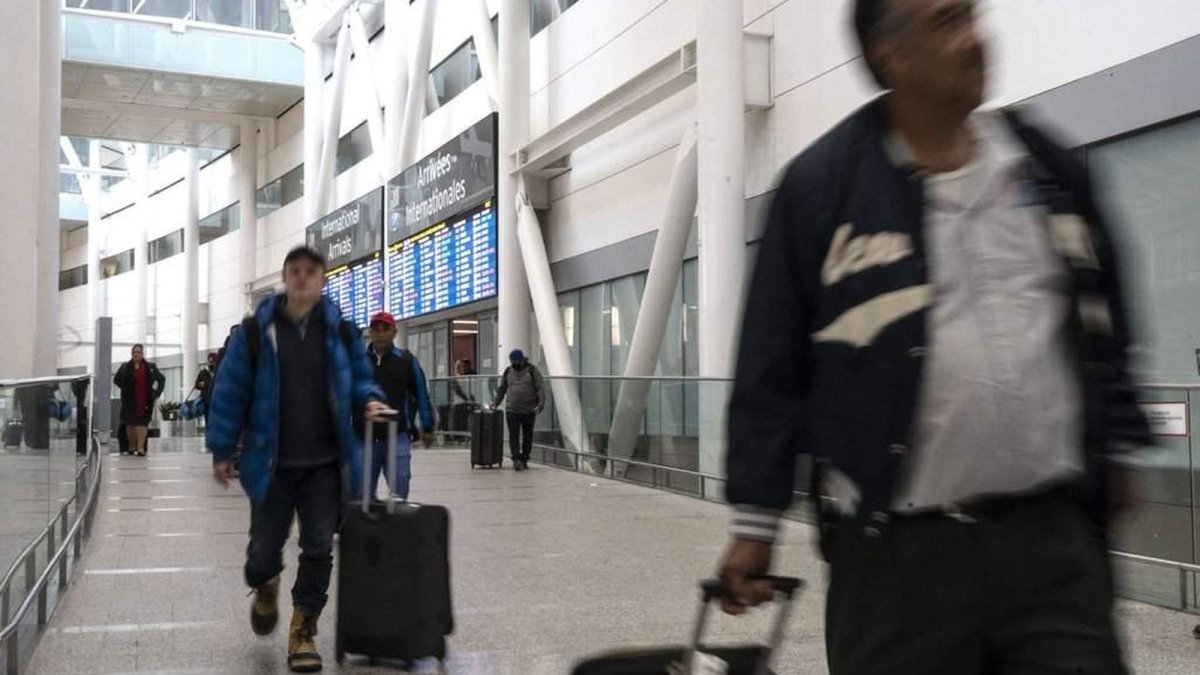
More than half of Canadian travellers are unaware that a federal travel advisory can void their insurance coverage, according to a new survey commissioned by Global Affairs Canada — a gap the department says may expose travellers to unintended financial and safety risks abroad. The report, submitted to the department in March, found widespread misconceptions about what consular services can and cannot do for Canadians overseas.
Tags: travel advisories, insurance, Global Affairs Canada, consular services, survey, Canadians abroad
Many Canadians Unaware Federal Travel Advisories Can Void Insurance: Survey
Ottawa – August 5, 2026 — A new survey commissioned by Global Affairs Canada shows that most Canadian travellers do not understand how federal travel alerts can affect their insurance policies or the limits of consular support available while abroad. The report, submitted to the department in March, underscores gaps in knowledge that may expose travellers to financial and safety risks during international trips. Market research firm Strategic Counsel conducted the online survey of 1,850 Canadians in January for the department, weighting results for demographics through a non-probability approach that carries no margin of error.
The Survey
The department engaged Strategic Counsel to examine what Canadians know about consular services and the travel advisories and information published by Ottawa. The report found that awareness of consular services exists but familiarity is often self-described as low or partial. Few Canadians proactively seek out safety or health information when planning trips, and engagement with government travel risk information is not yet embedded as a routine part of trip preparation for many.
The survey commissioned by Global Affairs Canada was carried out by Strategic Counsel in January and delivered in March. It gathered responses from 1,850 Canadians through an online platform that was weighted to reflect demographic patterns. Because the sampling was non-probability based, no margin of error is attached to the results. The exercise therefore offers a snapshot of current understanding rather than a statistically projectable measure, highlighting areas where knowledge of consular support remains uneven across the travelling public.
Engagement with safety and health information is not yet a routine step in trip planning for most Canadians. While awareness of consular services exists in broad terms, many respondents described their own familiarity as low or partial. This pattern suggests that travellers often turn to official channels only after problems arise rather than incorporating risk checks into standard preparation, leaving gaps that could affect timely access to available support mechanisms.
What Canadians Got Wrong
The report identified several areas of misunderstanding about eligibility, financial assistance, and the limits of government intervention abroad. Only a third of respondents knew that Ottawa can provide financial assistance in emergency and exceptional situations, such as a loan to pay for evacuation from a dangerous place, while 43 per cent were unsure. Similarly, 42 per cent were not sure whether Ottawa pays for burials or the cost of transporting human remains back to Canada, though just 39 per cent correctly stated that this is not a service offered.
How Travel Advisories Affect Insurance
The report found that just 28 per cent of respondents were aware that changes to the risk level Ottawa attributes to specific destinations in its travel alerts can change the validity of travel insurance, leading insurers to completely or partially deny claims. Some 56 per cent were not aware, while 16 per cent were unsure. The report describes this gap as significant, noting that misunderstanding insurance implications may expose travellers to unintended financial and safety risks. The disconnect carries practical weight because travellers who misread the connection between advisories and policy terms may face unexpected financial exposure or safety complications when coverage is later disputed.
These findings point to a broader disconnect between the information Global Affairs Canada issues and the assumptions many Canadians hold about its downstream effects. Without clearer public messaging on how risk-level changes interact with private insurance contracts, travellers may continue to underestimate the consequences of ignoring updated alerts, increasing the chance that they encounter both monetary losses and reduced protection in difficult circumstances abroad.
What Embassies Actually Do
While 52 per cent of respondents were aware that Canadian embassies abroad will not help people find jobs overseas, 36 per cent were unsure and 12 per cent wrongly thought this is a service Ottawa offers. The report notes that Canadians often either overestimate the mandate, such as assuming intervention in foreign legal systems beyond what is possible, or underestimate support, such as not realising assistance channels or financial mechanisms exist. In crisis situations, inaccurate assumptions may lead to frustration, delayed contact, or inappropriate reliance on unavailable forms of assistance.
The Registration of Canadians Abroad database allows embassies to send targeted safety messages by email or text, covering scenarios from post-attack guidance in Europe to evacuation instructions during missile strikes in Lebanon or shelter advice amid gang violence in Mexico. When assumptions about eligibility or scope prove inaccurate, the report warns, travellers may delay contact or request unavailable forms of assistance.
Consular Services Under Strain
The survey report notes that 38 per cent of respondents believe permanent residents are eligible to receive consular services — reflecting an expansive view of who should be helped in crises. Under both the Carney and Trudeau governments, cabinet ministers have asked Global Affairs Canada during emergency evacuations abroad to assist not just citizens but also permanent residents and relatives of evacuated citizens.
In May 2025 Global Affairs Canada advised Foreign Affairs Minister Anita Anand that rising global instability is driving a sharp increase in consular demand, warning that Canadians may face higher costs and reduced expectations. The briefing material noted frequent requests for evacuations from civil conflicts in Africa, unrest in the Middle East and natural disasters such as those in Hawaii. These pressures have expanded the department’s workload beyond traditional consular boundaries.
By November 2025 Anand stated that planned budget reductions would leave services Canadians rely on while abroad unaffected. Departmental officials indicated that some consular positions would be eliminated through modernisation, including the transfer of simpler cases to an online portal. The combination of growing operational needs and staffing adjustments raises questions about how capacity will be maintained as international conditions continue to generate more complex assistance requests.
What Travellers Should Know
The report emphasises that while Canadians are receptive to travel advice, few proactively check what Ottawa publishes or register for updates. Misconceptions regarding eligibility and the limits of government intervention abroad remain widespread. Departmental officials have indicated plans to modernise service delivery by shifting less complex cases to an online portal, though the survey highlights the need for clearer communication on available supports to reduce risks for travellers.
The federal government recommends that all Canadians travelling abroad make Ottawa aware of their plans through the Registration of Canadians Abroad database, which allows embassies to send safety information through emails and text messages. The report found that most Canadians do not yet build a review of travel risk and advisory information into their routine trip preparation, and it warns that travellers who misunderstand the connection between advisories and insurance terms may face unintended financial and safety consequences.
By Alex Thompson, Staff Writer
This article was produced with AI-assisted research and editorial support. Reporting is based on sources cited in the article.
What's Your Reaction?
 Like
0
Like
0
 Dislike
0
Dislike
0
 Love
0
Love
0
 Funny
0
Funny
0
 Wow
0
Wow
0
 Sad
0
Sad
0
 Angry
0
Angry
0

Canada Correspondent at Global1.News. Based in Toronto, covering Canadian politics, energy, trade, and US-Canada relations. Provides the Canadian perspective on North American and global affairs.














Comments (0)