
Burnham Pledges 'Relentless' Crackdown on Small Boat Crossings
Andy Burnham pledges his government will be 'relentless' in curbing small boat crossings as 2,057 people arrive in a fortnight. Speaking at Dover, he backs enforcement and safe routes amid the Ceuta crisis.
Prime Minister Andy Burnham has vowed his government will be "relentless" in reducing small boat arrivals, speaking from Dover's joint command room on 2 August 2026. The pledge comes as 2,057 people have crossed the Channel since he took office on 20 July, outpacing last year's figures despite a broader 42% drop in crossings this year.
Burnham Confronts Channel Crossings as Ceuta Crisis Looms
London, UK – 2 August 2026 — Andy Burnham toured Dover's joint command room and inspected a seized small boat, declaring the public demands visible border control. He stressed the need for both enforcement and safe routes to undermine smuggling gangs, while net migration fell to 171,000 last year.
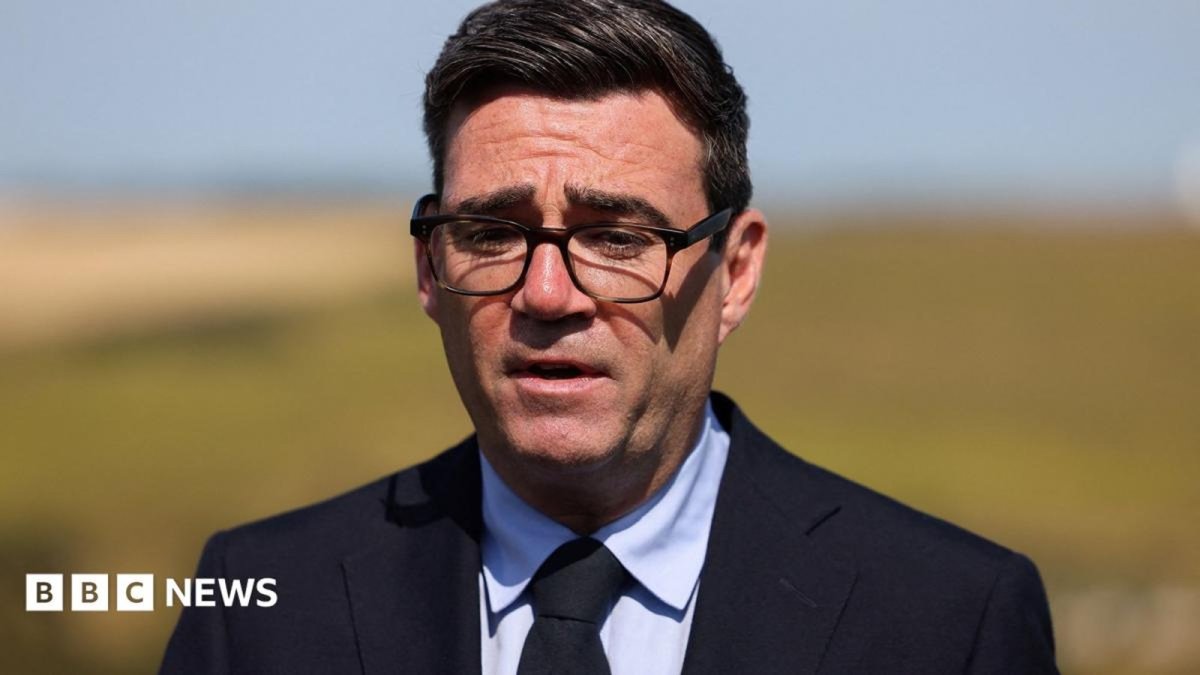
Burnham Sets Out Dual Approach in Dover
During his visit to Dover, Prime Minister Andy Burnham told officials the government must address public concerns over uncontrolled borders without descending into political point-scoring. He argued that safe legal routes would remove the gangs' selling point while enforcement restored order. Burnham described the new strategy as building blocks for a fundamentally different system, insisting progress was evident yet far from complete. The Home Office recorded 14,128 arrivals between 1 January and 29 July 2026, a 42% reduction on the same period last year. Officials noted that small boat arrivals accounted for 42% of asylum applications between April 2025 and March 2026. Burnham stressed that genuine refugees deserved support alongside firm action against illegal facilitation.
Burnham's emphasis on safe routes alongside enforcement marks a deliberate pivot from the enforcement-first strategies of recent years. By highlighting how legitimate pathways undermine the gangs' business model, he frames control not merely as deterrence but as a recalibration that respects the UK's obligations under international conventions on rescue at sea and asylum claims.
This approach also speaks to domestic concerns about perceived border weakness, seeking to restore public confidence while addressing the reality that most small boat arrivals pursue protection. The strategy positions the government as pragmatic rather than performative, aiming to shift the political conversation toward sustainable structures rather than short-term optics.
Crossings Hit 2,057 Since Burnham Took Office
Since Andy Burnham became Prime Minister on 20 July 2026, 2,057 people have reached the UK in small boats, already exceeding the 1,962 recorded in the equivalent fortnight last year. On Saturday 1 August alone, 326 individuals arrived in four boats. The busiest single day so far this year saw 752 people land last Wednesday. Average occupancy has risen to 67 people per boat between 30 July 2025 and 29 July 2026, more than double the 2021 figure. The Office for National Statistics reported net migration fell to 171,000 last year, almost half the 2024 level and the lowest since 2012. These numbers arrive against a backdrop of 84 deaths in the Channel during 2024, according to UN data.
Seasonal patterns show that summer months typically see heightened attempts due to calmer conditions, yet the current downward trajectory since the 2022 peak suggests enforcement measures are beginning to intersect with broader migration trends. Small boat arrivals have become the dominant detection method for illegal entry since 2020, turning the issue into a focal point for wider debates on net migration, which recently fell to its lowest level since 2012.
The concentration of Eritrean nationals among arrivals underscores how specific conflict zones continue to drive flows, while the fact that nearly all claim asylum illustrates the legal framework that permits individuals to remain during processing. This dynamic places pressure on the system to balance humanitarian commitments with operational control.
National Crime Agency Doubles Smuggling Teams
The National Crime Agency has nearly doubled its officers tackling smuggling gangs, rising from 376 at the start of 2025 to almost 800. French counterparts have mirrored this increase. The Home Office confirmed nearly 300 arrests of gang members last year, alongside the seizure of more than 1,100 small boats and engines. Had those vessels been used, they could have carried an additional 72,000 people to the UK. Separate detections of unauthorised entries via vehicles, ferries and airports totalled 4,535 between April 2025 and March 2026, down 22%. Burnham said these operational gains formed part of a wider effort to change the economics facing the gangs.
The expansion also targets the human trafficking dimension, given that at least 2,000 small boat arrivals in 2025 were identified as potential modern slavery victims. This underscores how enforcement must address not only the logistics of crossings but the exploitation embedded within them.

Ceuta Influx Prompts EU Emergency Talks
The Spanish exclave of Ceuta saw an estimated 50,000 migrants swim ashore on 30 July, overwhelming its 85,000 residents within 24 hours. Spanish Prime Minister Pedro Sánchez told Burnham that 98% of arrivals had been returned to Morocco. At least 72 people died attempting the crossing, either by drowning or being crushed at the border fence. Spain installed a 500-metre floating barrier on Saturday. EU ministers will hold emergency talks on Tuesday, with some member states calling for Spain's suspension from the Schengen zone. Burnham said the UK would maintain regular dialogue with the EU on Schengen issues and broader migration cooperation.
Calls from 22 EU countries for urgent action, including some demands for Spain's temporary suspension from Schengen, highlight the political tensions that arise when one nation's border becomes a continental pressure point. The episode also places Spain's planned regularisation of around 500,000 immigrants under renewed scrutiny from centre-right governments.
Opposition Demands Radical Policy Shifts
Shadow home secretary Chris Philp repeated Conservative calls to leave the European Convention on Human Rights, claiming it would allow deportation of every illegal arrival within a week, either to their origin country or a safe third country such as Rwanda. Reform UK's Zia Yusuf proposed ordering the Navy to turn boats back to France, describing it as the largest military operation in the Channel since the Second World War. Labour dismissed the suggestion as a distraction from scrutiny of Reform's finances. Liberal Democrat spokesman Will Forster urged the government to rebuild relations with Europe and tackle the asylum backlog. International law permits rescue at sea but prohibits returning people without the receiving state's consent.
Conservative calls to leave the ECHR and deport every illegal arrival within a week, potentially to Rwanda or another safe third country, represent a sharp departure from current frameworks. Reform UK's proposal for naval intervention on a scale not seen in the Channel since the Second World War further escalates the rhetoric, framing the issue as requiring military-level response.
Liberal Democrat emphasis on repairing European relationships and tackling the asylum backlog offers a contrasting focus on cooperation and processing efficiency. These positions collectively test the government's middle path, revealing how the crossings have become a proxy for deeper ideological divides over sovereignty, international law and enforcement scale.
Mahmood Rejects Direct Copy of Spanish Returns
Home Secretary Shabana Mahmood, visiting National Crime Agency headquarters in Stratford, said enforcement work was beginning to bear fruit and aimed to change migrants' calculations before they boarded boats. She rejected adopting Spain's approach of mass returns without asylum processing, noting the absence of a land border and bilateral agreement with France. Mahmood faces internal Labour opposition over plans to double the qualifying period for indefinite leave to remain from five to ten years. Eritrea accounted for 18% of arrivals between April 2025 and March 2026, highlighting shifting source countries amid the overall downward trend.
Mahmood's rejection of a Spanish-style model stems from the absence of a land border and the complexities of shared waters with France, where consent from the neighbouring state is required under international conventions before any returns can occur. This distinction limits direct policy transfer and forces reliance on bilateral agreements that have proven difficult to secure.
Her stated aim to alter the calculus so that potential arrivals reconsider boarding reflects an attempt to deter through systemic change rather than physical barriers alone. Yet internal Labour tensions over extending the qualifying period for indefinite leave to remain from five to ten years illustrate the domestic political costs of pursuing a tougher stance within the party's own ranks.
The Bottom Line — What Comes Next
Burnham's government must now translate operational gains and falling net migration into sustained public confidence while navigating EU tensions and domestic party divisions. Further reductions will depend on continued NCA expansion, French cooperation and progress on safe routes. The coming weeks will test whether the new approach can deliver both control and humanitarian credibility before winter crossings resume.
By Erica Thornton, Staff Writer
This article was produced with AI-assisted research and editorial support. Reporting is based on sources cited in the article.
What's Your Reaction?
 Like
0
Like
0
 Dislike
0
Dislike
0
 Love
0
Love
0
 Funny
0
Funny
0
 Wow
0
Wow
0
 Sad
0
Sad
0
 Angry
0
Angry
0

US Politics and Policy Correspondent at Global1.News. Based in Washington DC, covering American politics, policy, elections, and the courts. Knows how the system works and tells you what it actually means.















Comments (0)