
British Columbia Woke Up Blue. Only Half the Province Voted.
British Columbia has elected its first Conservative government since 1928, with Lorne Doerkson's party projected to take about 64 of 93 seats. David Eby has resigned as premier and NDP leader, and preliminary turnout fell to about 48 per cent, the lowest since 1928.
British Columbia had not elected a Conservative government since 1928. On Saturday it elected one with roughly two-thirds of the seats in the legislature, and it did so with fewer than half of its registered voters casting a ballot. The result remains a projection pending the final count of November 6 to 10.
British Columbia Woke Up Blue. Only Half the Province Voted.
Vancouver, British Columbia - Lorne Doerkson, who took the interim leadership of the B.C. Conservative Party two days before the election was called, is premier-designate. The New Democrats are reduced to Official Opposition for the first time since 2017, and David Eby has resigned as premier and as party leader.
The Gamble That Ended a Nine-Year Government
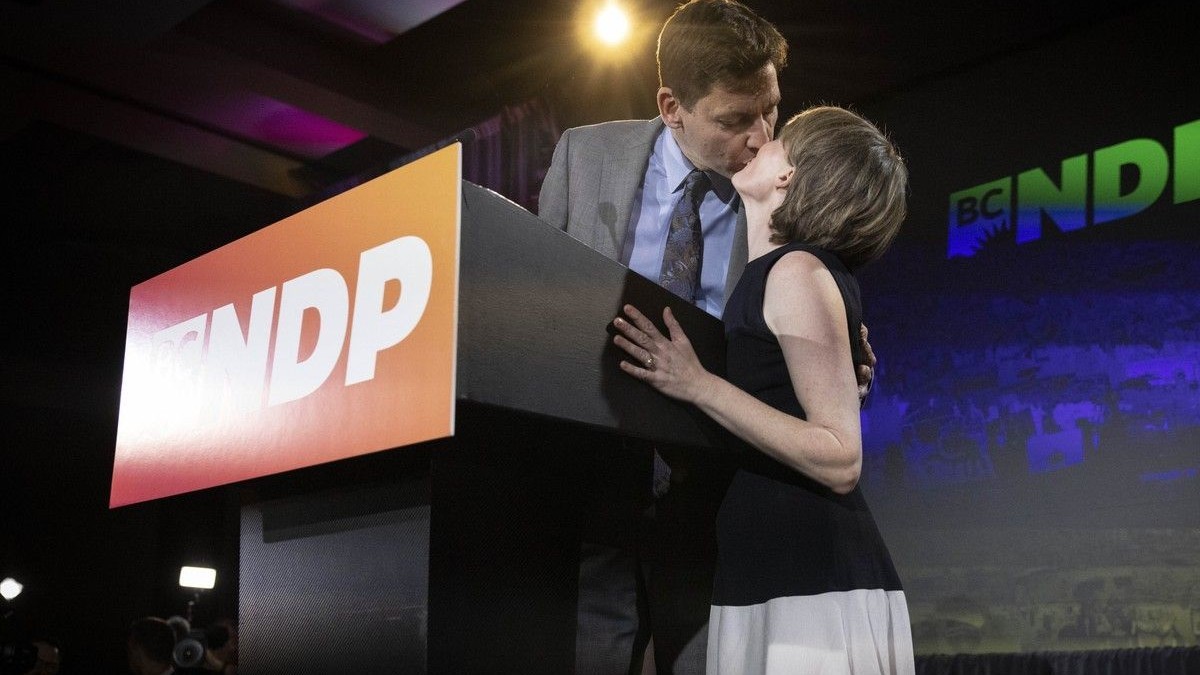
Eby called the election on September 22, two years before the scheduled 2028 vote, and called it while his party led in the polls against an opposition with no permanent leader. He had a one-seat majority. His first justification was the threat posed by U.S. President Donald Trump; within days he had moved to housing and affordability. The vote ended nine years of NDP government that began in 2017 under John Horgan, who died in 2024. It also delivered the Conservative Party its first provincial election victory in British Columbia since 1928, when Simon Fraser Tolmie formed a government. Eby conceded at the Marriott Pinnacle hotel in downtown Vancouver on October 24 and resigned as premier and as NDP leader in the same speech.
Sixty-Four of Ninety-Three
At least 11 of the Conservative gains came in ridings the New Democrats had held, all but one of them in Metro Vancouver, with Surrey and the Tri-Cities taking much of the damage. Forty-seven seats is a majority in the 93-seat chamber, so a count in the mid-sixties is close to two-thirds of the house. Preliminary figures put the Conservatives near 48 per cent of the popular vote, the NDP near 37 and the Greens near 11, and a Globe and Mail tally recorded 861,258 votes for the Conservatives at 48.05 per cent. The New Democrats fell from 47 seats to 27, which CBC News reported would be the party's worst result in 25 years, while CBC described the incoming Conservative caucus as the second largest in the province's history.
A Majority Built on Fewer Than Half the Voters
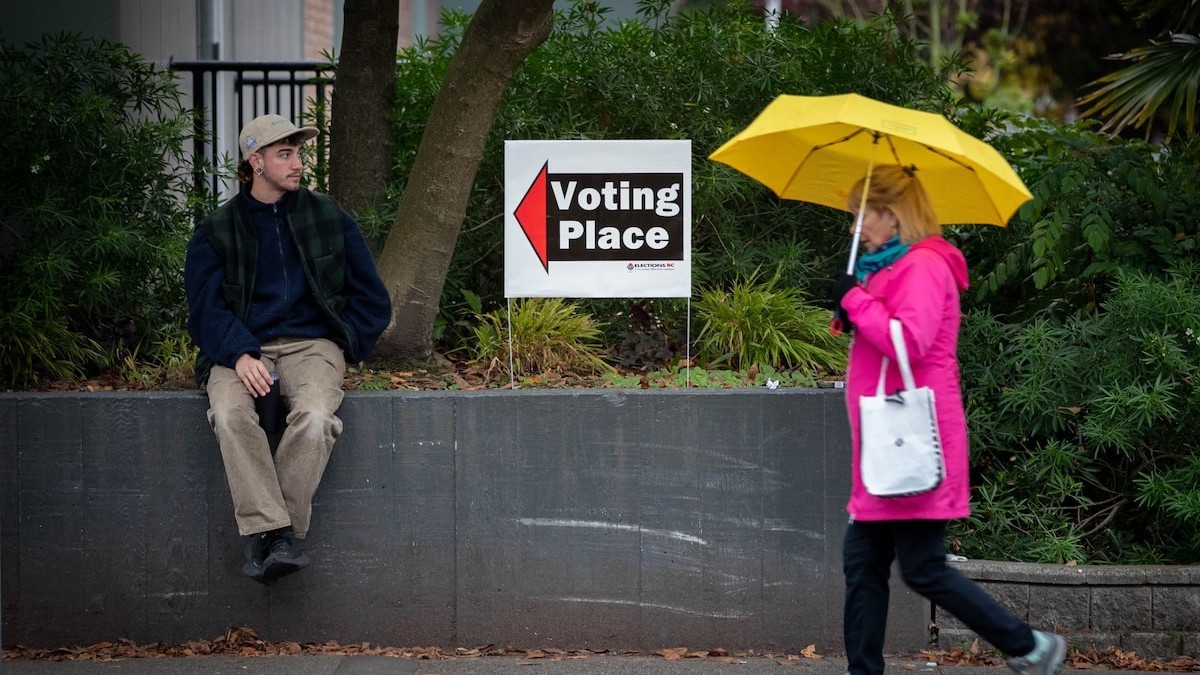
Preliminary Elections BC figures put turnout at about 48 per cent of registered voters, fewer than half, or roughly 1.8 million people. The Globe and Mail reported that would be the lowest level recorded going back as far as 1928, against about 58.5 per cent in 2024 and about 53.9 per cent in 2020. Advance voting from October 16 to 21 drew 891,348 people over six days, roughly a quarter of the electorate. The municipal elections held a week earlier drew 32.8 per cent, up about three points, according to the Union of B.C. Municipalities. The movement underneath the headline was lopsided: the NDP lost about 274,000 votes compared with the previous election, the Conservatives about 49,000, and the Greens gained about 23,000.
The Accidental Leader Who Took Five Weeks
Doerkson, 58, is a former rodeo rider who spent about 20 years as a Black Press newspaper publisher in Williams Lake, and he has represented Cariboo-Chilcotin since 2020. Until this autumn he was little known outside that riding. He carried it again with more than 70 per cent of the vote for a third term. He became interim leader on September 20, two days before Eby called the election, after Kerry-Lynne Findlay resigned following a four-month reign that had seen MLAs leave the party or be removed from it. He was installed having returned from a vacation in Africa, The Canadian Press reported. In a little under five weeks he brought most of the departed MLAs back and took the party to a majority. CBC News called him the party's "accidental leader". "B.C. is definitely blue," he told a crowd of about 500 at the Rocky Mountaineer Station in Vancouver. "For a very long time, a lot of British Columbians have felt like Victoria forgot about them, like the map maybe stopped at Hope. But tonight, the whole map counts for British Columbia."
What the New Premier Says He Will Do First
At his first news conference as premier-designate, at the JW Marriott Parq Vancouver on October 25, Doerkson said his government would launch an independent review of the province's finances on day one. "The deficit, as you know, is nearly $14 billion dollars, and B.C. has had eight credit downgrades in three years," he said. Within the first 100 days he promised an expert commission on keeping emergency rooms open and cutting wait times; Black Press Media reported that the emergency room at 100 Mile House has closed more than 37 times this year. His first big bill would raise the basic personal exemption to $32,000, which he said is "about $1,000 a year back in the pocket of nearly every working British Columbian". The change would need to be law by January 1 to reach taxpayers in the 2027 tax year.
The Energy Promise and the Pipeline Call
The campaign promises set the direction: double natural gas production by 2032 and more than triple it by 2035, end emissions limits, replace the province's carbon tax framework and reach out to energy providers that had left the province. "I believe in energy," Doerkson said in his victory speech. "We will cut red tape like it's never been cut before." He promised to "supercharge" British Columbia and to hold a business summit in Vancouver next year. The New Democrats had opposed new oil pipelines and backed a tanker ban along the northern coast. Doerkson said the trade conflict with the United States is the biggest economic threat the province faces, and that among his first calls as premier would be to Prime Minister Mark Carney and Alberta Premier Danielle Smith to get the proposed Pacific Link pipeline moving. He also listed repeal of the Declaration on the Rights of Indigenous Peoples Act, which requires provincial law to align with the UN declaration, as a priority.
The Constitutional Detail He Calls Administrative
The party's constitution bars an interim leader from contesting the leadership in a subsequent vote, and changing that requires two-thirds support from party members. The board said after the election was called that Doerkson would remain leader if he became premier and that it would pursue the appropriate means "to give effect to this intention". Doerkson was blunt about it. "I am leader and that's an administrative detail that there'll be more information on that imminently," he said. "But I will remain as leader of the party and I'm thrilled to be the premier-elect of British Columbia right now." CBC News reported online speculation that he could be replaced by North Island-Powell River MP Aaron Gunn or former provincial leadership candidate Caroline Elliott. No swearing-in date has been announced.
The Night the NDP Cabinet Fell
The New Democrats lost at least five cabinet ministers: Anne Kang in Burnaby Centre, Jessie Sunner in Surrey-Newton, Jodie Wickens in Coquitlam-Burke Mountain, Jagrup Brar in Surrey-Fleetwood and Rick Glumac in Port Moody-Burquitlam. CBC News projected six cabinet members would fall, with 15 former ministers holding their seats. Three chose not to run at all, among them former health minister Ravi Kahlon, former emergency management minister Kelly Greene and former agriculture minister Lana Popham. At dissolution the house held 47 New Democrats, 29 Conservatives, two Greens and 13 Independents, with two seats vacant. Eby was poised to hold Vancouver-Point Grey over Conservative Alex McMillan by fewer than 550 votes with 70 of 71 polls reporting, and told supporters: "Some of the hardest working MLAs I know for their communities were not elected tonight. It breaks my heart, and I accept full responsibility for that outcome."
Why the NDP's Own Voters Stayed Home
Geoff Meggs, who was chief of staff to John Horgan, said the party's own voters never bought the argument for the election. "Dave Eby's campaign angered them. They were never persuaded by his arguments in favour of an election," he told The Globe and Mail. "He didn't campaign on the very real achievements of the NDP over the years since 2017 and proposed things that didn't resonate with British Columbians." The Globe reported that once the NDP abandoned the trade argument it turned to complicated affordability measures, including regulating grocery prices, that failed to land with voters. Eby's own account was shorter, and delivered in the same concession speech. "This is obviously something I do with a very heavy heart, but it is time for new leadership within our party," he said, describing the night as "a wild ride" for which his family had paid "a very significant cost for this work". Prime Minister Mark Carney thanked him in a statement.
The Greens Hold, the New Parties Vanish
Green Party Leader Emily Lowan won her first seat, in Saanich North and the Islands, and Jeremy Valeriote returned in West Vancouver-Sea to Sky, leaving the Greens with two seats and no bargaining position in a legislature where the government will need no other party's votes. The leaders of OneBC and CentreBC were both projected to lose their seats, and CentreBC Leader Elenore Sturko lost hers. Eby had spent the campaign warning that Doerkson, while possibly a "good guy", was a "Trojan horse" for far-right ideas, and the New Democrats pointed to discarded candidates and past comments by Conservative caucus members as a sign of what could follow. The shape of the win was two-sided: the Conservatives swept Surrey, Delta and Richmond, and they took back historic centre-right strongholds in the North and the Interior.
November Sixth, November Eighteenth
Final count runs from November 6 to 10, when ballots from certification envelopes are added before Elections BC declares who is elected, and Return Day is November 18. Doerkson has not ruled out recalling the legislature this fall. "I think it's important to keep that option available and open to us," he said. "Of course, we have much to do before we can get there to make that decision." He also wants legislation to stop provincial and municipal campaigns from overlapping; The Province reported a 90-day separation, while Black Press Media reported he wants at least 60 days between them. Kim Henderson, a former deputy minister and head of the public service under the Liberal governments of Christy Clark and Gordon Campbell, will chair his transition team on a volunteer basis while on unpaid leave from Trans Mountain Corp. "When this government is sworn in, it will be ready on day one, and it will hit the ground running," Doerkson said.
By Jessica Ali, Staff Writer
This article was produced with AI-assisted research and editorial support. Sources: Reuters, CBC News, The Globe and Mail, The Canadian Press, The Province, Vancouver Sun, Black Press Media, Castanet, BNN Bloomberg, Elections BC. Photographs: Arlen Redekop/Postmedia; Jason Payne/Postmedia; Justine Beaulieu-Poudrier/The Globe and Mail.
What's Your Reaction?
 Like
0
 Dislike
0
 Love
0
 Funny
0
 Wow
0
 Sad
0
 Angry
0

Editor-in-Chief at Global1.News. Atlanta-based journalist who cuts through the BS and tells it like it is. Lead anchor, host, and the voice you hear when the spin stops and the truth starts.










Comments (0)