
What States Make of Military Exercises: Ulchi and Beyond
In August 2026 the long‑standing South Korea‑U.S. joint drill known as Ulchi Freedom Shield entered a contentious phase when President Donald Trump ordered a “substantial reduction” in its scale.
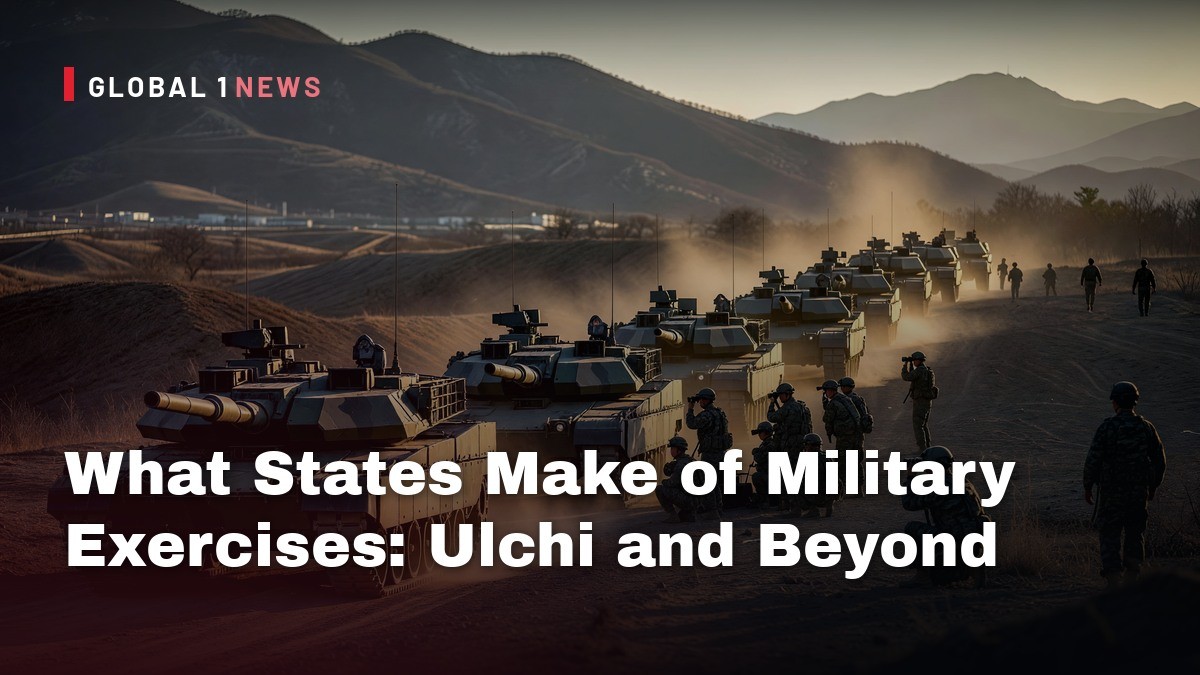
In August 2026 the long‑standing South Korea‑U.S. joint drill known as Ulchi Freedom Shield entered a contentious phase when President Donald Trump ordered a “substantial reduction” in its scale. The decision, framed as a cost‑saving measure and a signal of “restraint” toward North Korea, also invoked criticism of Seoul’s perceived lack of support for U.S. operations against Iran. This episode offers a prism through which to examine the dual strategic functions of large‑scale combined exercises—deterrence and defense diplomacy—and to assess how shifting political contexts shape their interpretation across Washington, Seoul, Pyongyang and Beijing.
Historical Patterns of Ulchi Participation
The Ulchi exercise, conducted annually since the early 1990s, has never mirrored the trajectory of the North Korean threat in a linear fashion. According to the source, the size of the drill has “seldom increased in tandem with the danger from North Korea.” Instead, participation has risen and fallen in response to diplomatic developments, such as the Six‑Party Talks, and has even been suspended during periods of direct engagement with Kim Jong Un in the first Trump administration.
Domestic political cycles have likewise left a distinct imprint on the exercise’s scale. Publicly available data cited in the source indicate that troop contributions were generally lower under the progressive administrations of Kim Dae‑jung and Roh Moo‑hyun, rose markedly under the conservative presidencies of Lee Myung‑bak and Park Geun‑hye, and were again moderated during Moon Jae‑in’s term, which emphasized diplomatic outreach. These fluctuations underscore how South Korean leadership calibrates the exercise to align with broader foreign‑policy priorities, balancing deterrence against the desire for diplomatic space.
The Dual Functions of Joint Military Drills
Joint exercises serve two complementary strategic purposes. First, they demonstrate warfighting capability and resolve, thereby reinforcing deterrence against adversaries. The source notes that “larger and more complex exercises… can demonstrate greater warfighting capability and resolve to deter.” Second, they act as instruments of defense diplomacy, fostering predictability, trust, interoperability and institutionalized relationships among participants. The same material characteristics—tens of thousands of troops, sophisticated command‑and‑control systems, live‑fire maneuvers—can simultaneously signal both combat readiness and the depth of bilateral cooperation.
Because the observable features of an exercise do not uniquely identify its intended political message, analysts must look beyond scale to interpret meaning. The source emphasizes that “the material features… cannot by themselves establish the political messages governments intend or how different audiences will interpret them.” Thus, the strategic significance of Ulchi’s reduction in 2026 cannot be deduced solely from the number of troops or the scope of the maneu4e.
Audience‑Specific Interpretations
Washington’s rationale for trimming Ulchi combined cost concerns, a desire to signal restraint toward Pyongyang, and frustration with Seoul over Iran policy. Yet each principal audience is likely to read the move through its own strategic lens. North Korea may view the reduction as a concession, interpreting the scaling back as a weakening of the alliance’s resolve. Seoul, confronted with a sudden change in U.S. posture, could perceive uncertainty regarding the durability of the bilateral security guarantee. Beijing, observing a transactional approach to alliance management, might infer an opening for its own influence in the peninsula.
These divergent readings illustrate the source’s central argument: “Established relationships and political contexts are therefore essential to interpreting an exercise’s strategic meaning.” The same reduction can be cast as restraint, concession, uncertainty or opportunism, depending on the observer’s prior expectations and the broader diplomatic environment.
Continuity Amid Reduction: Other Combined Training
Despite the curtailment of Ulchi, the source documents a suite of other combined activities that persisted. Lieutenant General Joe Hilbert of the Eighth Army confirmed that “other combined training continued,” while certain components affected by Trump’s order were conducted by South Korean forces alone. Trilateral drills such as Freedom Edge, and South Korea’s observer role in the U.S. exercise Keen Sword, illustrate alternative modalities of engagement that maintain familiarity and relationship‑building without full participation.
These complementary programs complicate any simplistic reading of the Ulchi cutback as a wholesale withdrawal from military cooperation. As the source notes, “Observation offers opportunities for familiarity and relationship building without active participation in training.” By sustaining a spectrum of joint activities, the alliance preserves the underlying defense‑diplomacy function even as the most visible deterrence demonstration is scaled down.
Strategic Implications for Deterrence Posture
The reduction’s impact on deterrence is contested. Some analysts warned that “reducing exercises could weaken deterrence and alliance coordination,” suggesting that a visible, large‑scale drill serves as a tangible reminder of collective resolve. Conversely, proponents of restraint argue that scaling back may reduce provocation and lower the risk of miscalculation, potentially contributing to regional stability.
Given the source’s observation that “deterrence and defense diplomacy often generate the same observable characteristics,” the net effect on deterrence depends on how adversaries—particularly North Korea—interpret the broader pattern of cooperation. If the reduction is seen as part of a broader trend of diminished U.S. commitment, deterrence could erode. If, however, it is viewed as a calibrated signal of restraint without undermining underlying capabilities, the deterrent effect may persist.
Future Trajectories and Policy Recommendations
Looking ahead, the Ulchi episode underscores the necessity for Seoul and Washington to coordinate messaging and maintain consistency across the spectrum of joint activities. The source highlights General Ronald Clark’s view that “military partnerships help sustain the access and cooperation through which forces demonstrate capability and resolve.” A coherent narrative that links reduced Ulchi participation to continued engagement in Freedom Edge, Keen Sword and other exercises can mitigate ambiguity for both allies and adversaries.
For policymakers, the lesson is clear: the political meaning of joint drills is shaped more by the surrounding diplomatic context than by their raw size. Consequently, any adjustment to exercise scale should be accompanied by transparent diplomatic outreach—both bilaterally and through multilateral forums such as the Ministry of Foreign Affairs (MOFA) and think tanks like the Asan Institute—to articulate intent and manage audience perceptions. By aligning exercise design with broader strategic communication, the alliance can preserve deterrence credibility while advancing defense‑diplomacy objectives in a volatile Northeast Asian security environment.
This article was produced with AI-assisted research and editorial support. Reporting is based on the source material cited below. Sources: The Diplomat; thediplomat.com; Global1.News (26 October 2026).
By Prof. David Park, Staff Writer
What's Your Reaction?
 Like
0
 Dislike
0
 Love
0
 Funny
0
 Wow
0
 Sad
0
 Angry
0

East Asia/Technology Correspondent at Global1.News. Seoul-based voice covering Korean politics, technology, business, and culture. Analyzes how technology and geopolitics intersect across East Asia.














Comments (0)