
British Climber Nirmal Purja Dies in Broad Peak Avalanche
Nirmal Purja, the British-Nepali mountaineer who climbed all 14 eight-thousanders in 189 days, has died after an avalanche on Broad Peak in Pakistan, his company Elite Exped has confirmed. Five of the ten-strong team remain missing as rescue operations resume.
The avalanche that struck Broad Peak on 30 July has claimed the life of Nirmal Purja, the record-breaking British-Nepali climber whose exploits made him a national hero. Four bodies had been recovered by Friday evening; on Saturday his company confirmed that Purja, too, had died, with five of the ten-strong team still unaccounted for. For Britain the loss cuts deep: a decorated former special forces soldier whose achievements redefined what was possible on the world's highest peaks.
British Climber Nirmal Purja Dies in Broad Peak Avalanche
Islamabad, Pakistan – 1 August 2026 — Elite Exped confirmed today that Nirmal Purja died in the avalanche that swept the West Ridge of Broad Peak, bringing the reported death toll to five. Four bodies have been located by Pakistani army teams, yet five climbers remain unaccounted for as operations resume after a weather suspension. The disaster has stunned the British armed forces community and the wider mountaineering world.
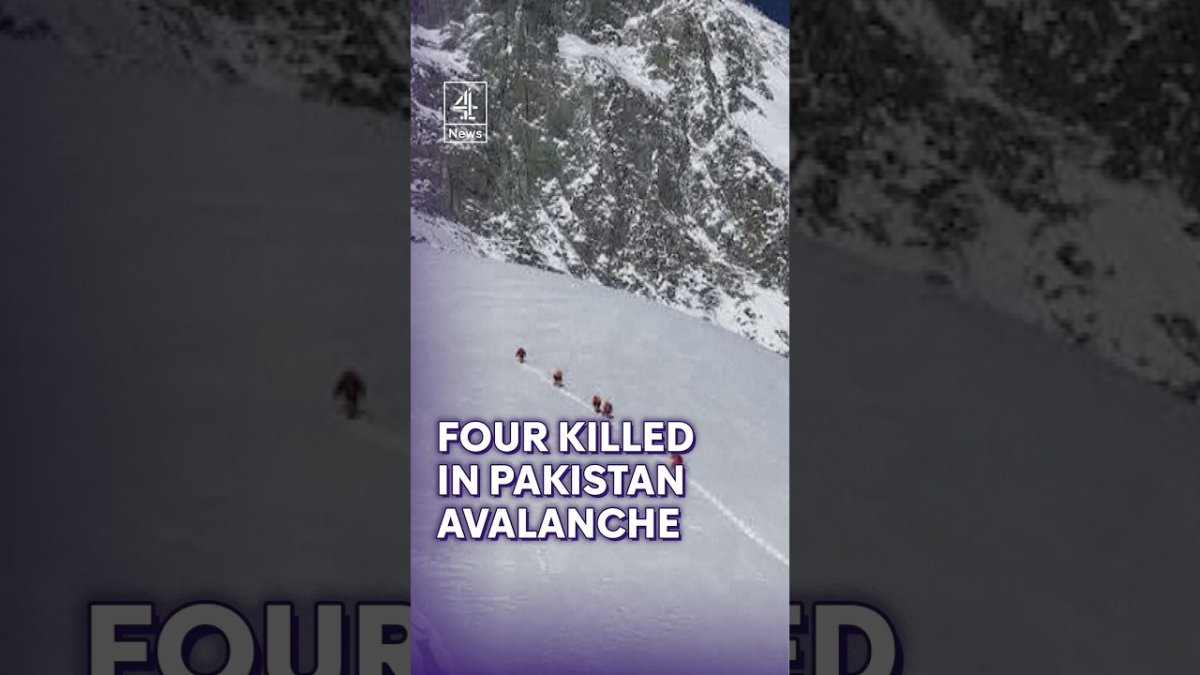
The Avalanche
The team of ten was positioned between Camp II and Camp III on the West Ridge of Broad Peak, the world's 12th-highest mountain at 8,047 metres, when the mountain moved beneath them on the morning of Thursday 30 July. The Alpine Club of Pakistan (ACP) said the avalanche had struck around midday; GPS data later suggested the slide tore through the group between 8.57am and 9.30am local time at roughly 6,579 metres, on the most popular ascent route. "Most probably the entire, snow-laden face moved, sweeping the entire traverse," said Samson Sharaf, a Pakistani mountaineer and mentor to one of the missing guides, who shared images of the overhang where the accident took place.
The GPS trackers painted a harrowing picture of the avalanche's force. Mallory Geis's device recorded a sudden plunge of 543 metres, while Nadhira Al Harthy's showed a terrifying 1,651-metre descent in seconds. Purja's own tracker first indicated a rapid downhill movement before its signal shifted again, suggesting he had been swept by the initial slide and then moved once more. One climber's location appeared to be near the foot of the mountain, prompting an overland team of a Pakistani and a Nepali rescuer to investigate on foot. Drone footage later spotted seven figures on the slope, though their identities and condition could not be verified from the air.
Rescue
Pakistan's army dispatched two helicopters while ground teams from the Gilgit-Baltistan region scoured the mountainside. On Friday afternoon the search was suspended because of deteriorating weather, with the home secretary of Gilgit-Baltistan, Faisal Ehsan Pirzada, telling the BBC that operations would resume the following day. "There is a lot of snow from what's been seen from the helicopters and we are being cautious as this is avalanche season," said Ayaz Ahmed Shigri, general secretary of the ACP, coordinating the rescue from Skardu.
Recovery efforts were clouded by early confusion over the death toll. Gilgit-Baltistan police initially reported four bodies found; the ACP then described the figure as a "miscommunication", saying two bodies and a body part had been located, before the regional tourism minister confirmed four deaths. Three of the recovered climbers — Nepali guide Pur Bahadur Gurung, Omani climber Nadhira Al Harthy and American climber Mallory Geis — were flown by army helicopter to a military hospital for formal identification. On Saturday, Elite Exped confirmed that Purja had also died, along with guide Nima Sherpa, bringing reported deaths to five. The ACP's president, Irfan Arshad Khan, asked the company for discretion, writing: "Please stop spreading such information, till no human has reached them." Still unaccounted for are Pakistani guide Sohail Sakhi, the Sherpas Kilu, Gyalu and Nawang Thindu, and Chinese climber Wang Zhong.
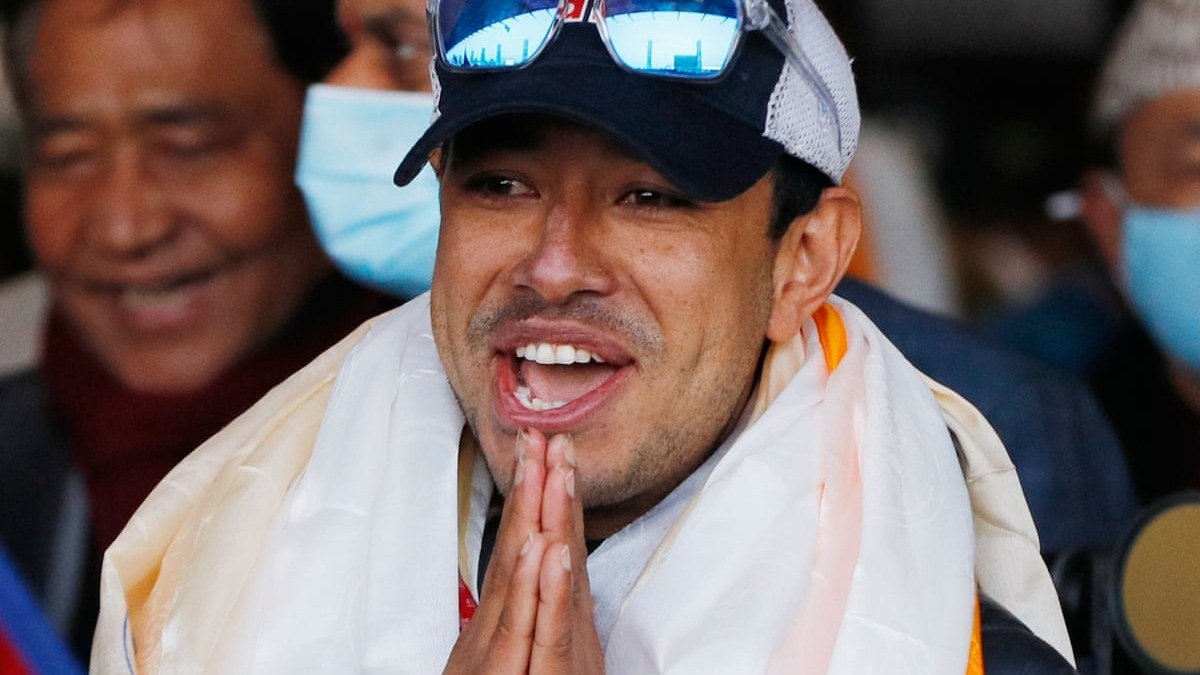
Who Was Nirmal Purja?
Purja, 43, was born in a village around 1,600 metres above sea level in Nepal's Myagdi district and became a naturalised British citizen. He joined the British Army in 2003 aged 18, serving in the Brigade of Gurkhas, and moved to the Special Boat Service of the Royal Navy in 2009 — 16 years in the British military, ten of them in special forces, following a father and elder brothers who were all Gurkhas. He was awarded an MBE in 2018 for services to mountaineering and given the Honorary Freedom of the Borough of Eastleigh in 2021, where he was a prominent member of the Nepalese community.
He made history in 2019 by climbing all 14 of the world's 8,000-metre peaks in 189 days, starting with Annapurna on 23 April and smashing the previous record by more than seven years — a feat chronicled in the Netflix documentary "14 Peaks: Nothing Is Impossible". In January 2021 he led the first team to summit K2 in winter, and in October 2024 he became the fastest person to complete all 14 eight-thousanders without supplementary oxygen. In total he summited 8,000-metre peaks 57 times, 29 of them without oxygen, more than anyone in history.
Purja's reputation rested as much on his rescues as on his summits. In 2016 he broke with mountaineering convention to bring a stricken climber down from Everest's death zone alone. During his Annapurna descent he led a rescue of fellow climber Chin Wui Kin, who had been left without food, water or oxygen for 40 hours — though Chin later died in hospital. And with his team he rescued two climbers at 8,400 metres, sacrificing their own supplementary oxygen. "You can't call yourself a climber and not help in that situation," he once said. In 2023 he joined Bear Grylls and Spencer Matthews to recover the body of Michael Matthews, the youngest Briton to summit Everest, for the documentary Finding Michael.
He had been attempting to become the first person to climb all 14 eight-thousanders twice without oxygen; after Broad Peak, only Cho Oyu would have stood between him and that record. His final public message this week spoke of seeking "safe passage" on the mountain. "Broad Peak, I ask for nothing but safe passage up and back down," he wrote on X. "I take zero mountains for granted. Not one."
The Expedition and the Lost
The ten-strong expedition was an Elite Exped commercial outing, with climbers whose achievements spanned continents. Nadhira Ahmed Abdullah Al Harthy, the first Omani woman to summit Everest, had also climbed Ama Dablam, Manaslu, K2 and Nanga Parbat while working as a geology teacher and president of the Oman School Sports Federation. Mallory Geis, 39, from San Antonio, Texas, had closed her Pilates studio this year to pursue her adventures — "a giant leap of faith into the unknown" — and Broad Peak was to be her first 8,000-metre peak after Lobuche East and Mera Peak.
Pur Bahadur "Yukta" Gurung, an IMFGA-certified guide from Luprak near the epicentre of Nepal's 2025 earthquake, had climbed eight-thousanders 28 times, including ten Everest summits and two on K2, and was described as "one of Nirmal Purja's most trusted senior guides". Sohail Sakhi, a mathematician from the Hunza Valley, had summited Nanga Parbat without oxygen and K2 in 2025 — helping an injured guide down on the descent — and had campaigned for better pay for Pakistani guides. Wang Zhong was on his 13th eight-thousander after climbing Gasherbrum II alongside Purja on 4 July, while Kilu Sherpa had already completed all 14 peaks and once guided a double-amputee client to the summit of Everest.
What This Means for the UK
Purja's death reverberates through Britain's armed forces and its small but devoted mountaineering community. As a former Gurkha and Special Boat Service operator, he embodied the endurance and leadership the armed forces celebrate, and his naturalisation and MBE made him a proud symbol of the British-Nepali community — the Gurkha heritage that has served the Crown for more than 200 years. In Eastleigh, Hampshire, where he was made an honorary freeman, the grief will be felt keenly.
Channel 4 News, which first reported the search for the missing former special forces climber, has framed the story as both a personal tragedy and a reminder of the risks taken by British citizens operating far beyond official support networks. Purja inspired a generation of climbers through his Netflix film, and his death will resonate from the pubs of the Peak District to the corridors of Whitehall, where the armed forces community counts him as one of their own.
Reaction and Tributes
Elite Exped, the company Purja co-founded, confirmed his death on Saturday in a statement that read: "Today it is with profound sadness and immense heartbreak that we confirm that Nirmal 'Nimsdai' Purja tragically lost his life following the avalanche on Broad Peak. Today, we mourn not only Nims, but every life lost in this tragedy including his trusted climbing partners and guides, Pur Bahadur Gurung (Yukta) and Nima Sherpa. No words can erase the pain of this unimaginable loss, and we ask that everyone respects their privacy as they grieve."
Bear Grylls, who climbed alongside Purja, wrote: "Heartbreaking news for so many climbers around the world who had a relationship with this remarkable and unique man. We will never forget you Nims and your unstoppable spirit." Lhakpa Sherpa, founder of 8K Expeditions, called him "a dear friend and brother" who "elevated Nepal's mountaineering community to the global stage", adding: "I continue to pray for a miracle." Nepal's foreign ministry said it was "closely monitoring" the situation, with its embassy in Islamabad coordinating with Pakistani authorities, while China's foreign ministry spokeswoman Mao Ning said Beijing was "urgently working to verify and understand the situation" and stood ready to assist. In Oman, the Civil Defence and Ambulance Authority called Al Harthy an "exemplar" of safety standards. On Reddit, climbers and fans tracked Purja's smartwatch data in real time, holding out hope.
Broad Peak: A Mountain That Takes a Toll
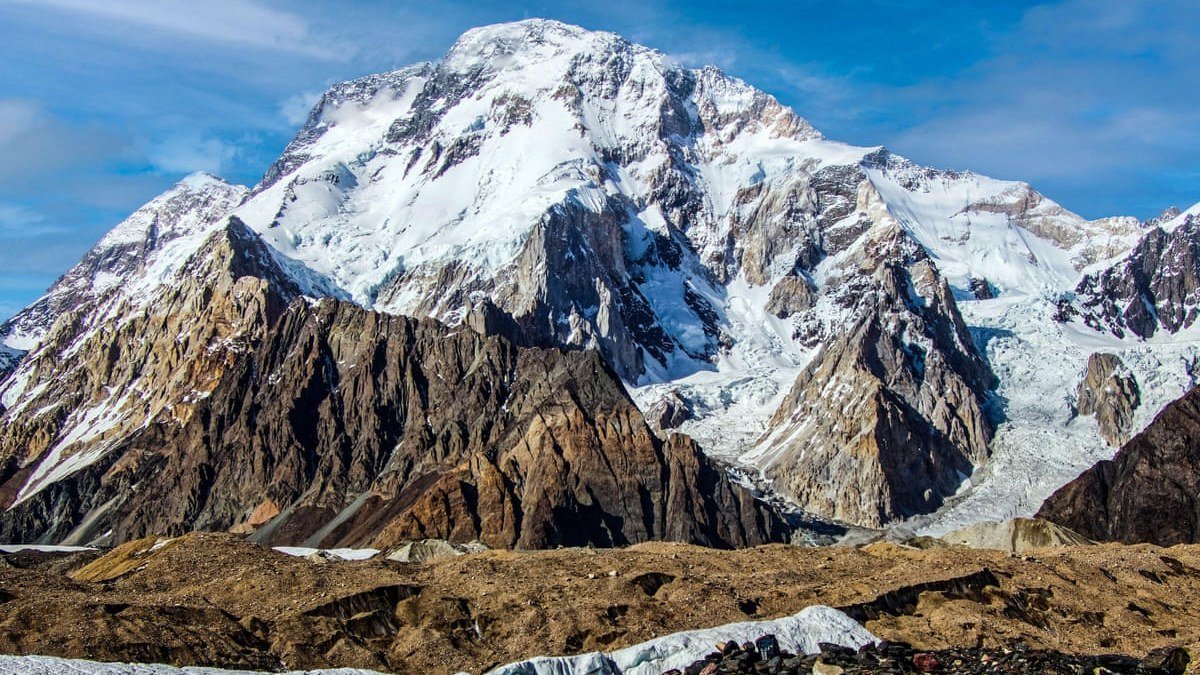
Broad Peak, known locally as Falchan Kangri, was first climbed in 1957 by a four-member Austrian expedition. Considered less technically demanding than its notorious neighbour K2, it is nevertheless prone to harsh and unpredictable weather, and its history is written in fatalities: at least six climbers died there in 2013 alone, including two Polish mountaineers, three Iranians and a German. Pakistan's worst modern mountaineering disaster remains the 2008 K2 avalanche, which killed 11 climbers on the neighbouring peak. With the Karakoram now deep in avalanche season, rescuers warn that further slides remain a constant threat.
The Bottom Line — What Comes Next
Search operations are expected to resume once the weather permits, with five climbers still missing and families in Britain, Oman, the United States, China, Pakistan and Nepal awaiting news. Purja's legacy, however, is already secure: his records stand, his Nimsdai Foundation continues its work with mountain communities in Nepal, and British mountaineering has lost one of its most visible and inspirational ambassadors. The mountain has claimed another life; the questions it raises about risk, commercial expeditions and rescue infrastructure in the world's highest ranges will outlast the search.
By Erica Thornton, Staff Writer
This article was produced with AI-assisted research and editorial support. Reporting is based on sources cited in the article.
What's Your Reaction?
 Like
0
Like
0
 Dislike
0
Dislike
0
 Love
0
Love
0
 Funny
0
Funny
0
 Wow
0
Wow
0
 Sad
0
Sad
0
 Angry
0
Angry
0

US Politics and Policy Correspondent at Global1.News. Based in Washington DC, covering American politics, policy, elections, and the courts. Knows how the system works and tells you what it actually means.













Comments (0)