
Bodo: Zimbabwe's One-Man Play Takes On Constitutional Change
In Harare, where the weight of political history presses on every stage, one actor has turned a traditional Shona storytelling form into an act of civic defiance. Daves Guzha's one-man play "Bodo" arrives at a moment when Zimbabweans are debating a constitutional amendment that would extend presidential terms and shift how the country chooses its leader.
In Harare, where the weight of political history presses on every stage, one actor has turned a traditional Shona storytelling form into an act of civic defiance. Daves Guzha's one-man play "Bodo" arrives at a moment when Zimbabweans are debating a constitutional amendment that would extend presidential terms and shift how the country chooses its leader.
Bodo: Zimbabwe's One-Man Play Takes On Constitutional Change
Harare, Zimbabwe — Drawing on Ngano, the ancient Shona storytelling method, Guzha fuses tradition with modern visual and audio elements to ask a question many Zimbabweans are asking themselves: why is a change this significant not being put to a public referendum? The play has become a cultural flashpoint in a nation where artists have long used the stage to speak truth to power.
Bodo: One Man, One Stage, One Nation's Questions
Daves Guzha stands as an acclaimed Zimbabwean actor and director whose work as a social justice activist runs through every role he takes on stage. His X handle @twoleaders signals his ongoing public engagement with civic issues that affect daily life in Harare and beyond. Guzha remains a veteran of Harare's Theatre in the Park, where he has built community theatre productions that tackled land corruption, poaching, and gender-based violence with direct audience involvement.
The one-man format of "Bodo" places Guzha alone under the lights, carrying the full weight of multiple characters through shifts in voice, posture, and projected imagery. This structure forces viewers to confront the isolation of individual responsibility in a time of collective political uncertainty. Guzha has described his own position with the words "Number one, I'm a child of war," grounding his performance in personal history that connects to broader national struggles.
The play confronts the constitutional amendments head-on by weaving current legislative changes into the narrative fabric of Ngano storytelling. Guzha uses the format to question why a change this significant is not being put to a public referendum, echoing concerns raised across Harare's artistic circles. He has stated that he felt it was time to express some of the wishes of the people through this performance.
Modern production elements blend with Ngano roots as Guzha incorporates recorded audio layers, projected visuals, and live sound design that update the ancient form without erasing its communal spirit. The result keeps audiences leaning forward as the story unfolds on a single stage. africanews covered the play on 16 April 2026 in its "This is Culture" segment, highlighting how the work reached viewers beyond Zimbabwe's borders.
Guzha's community theatre background prepared him for this moment, where every performance at Theatre in the Park served as rehearsal for larger civic conversations. His approach keeps the focus on lived realities rather than abstract debate. The one-man structure amplifies the sense that one voice can still spark wider dialogue when institutions grow distant.
Ngano: The Ancient Art of Speaking Truth
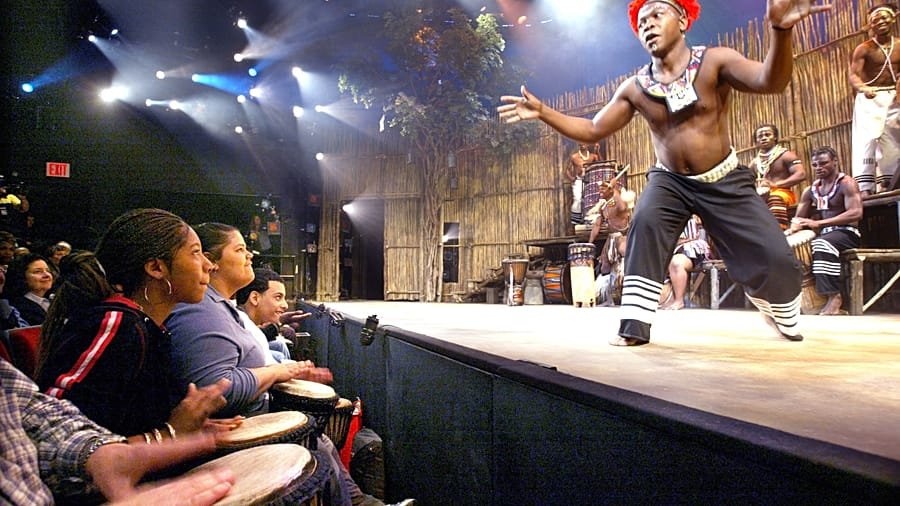
Ngano means "story" or "tale" in Shona, a living practice that has carried moral lessons and social memory across generations in Zimbabwe. The lead storyteller in the Ngano tradition is called the sarungano, a role Guzha steps into with full awareness of its historic weight. Audiences participate through clapping, ululation, song, and dance that turn each telling into a shared event rather than a passive viewing.
Animal characters and trickster figures populate Ngano tales, allowing storytellers to explore moral dilemmas without naming real individuals directly. This indirect approach has long protected performers while still delivering sharp commentary on power and justice. Guzha modernizes the form by layering contemporary references onto these timeless structures, keeping the participatory energy alive.
Ngano suits political commentary because its built-in audience responses create immediate feedback loops that test every line against community values. The sarungano must read the room and adjust, a skill Guzha brings to "Bodo" when he invites viewers to respond in real time. Zimbabwe's intangible cultural heritage gains fresh relevance when artists like Guzha adapt these methods to current events.
The participatory nature of Shona storytelling means spectators become co-creators rather than spectators, a dynamic that challenges the distance often found in formal political discourse. Guzha preserves this by leaving space for ululation and song within the one-man frame. Such traditions remind audiences that governance questions belong to everyone present.
Guzha has noted that a society whose storytellers tell a different kind of story which is out of sync with their society becomes a sick society. This observation drives his choice to root "Bodo" firmly in Ngano while addressing the amendment debates. The form itself becomes an argument for keeping cultural memory active in civic life.
The Amendment at the Heart of the Storm
Constitution Amendment No. 3 was signed early July 2026, extending presidential and parliamentary terms from 5 to 7 years. The measure also shifts presidential election from direct popular vote to selection by Parliament, altering the 2013 people-driven Constitution that had undergone extensive consultations and a referendum. Critics including constitutional lawyers Fadzayi Mahere and Tendai Biti have called the result an "imperial presidency" similar to the Mugabe era.
Section 212 was amended to remove the military's standalone duty to "uphold the constitution," raising concerns about institutional checks. The 2013 Constitution had been celebrated for its broad public input, making the new process feel abrupt to many observers. Guzha's play asks why these shifts bypassed another national vote.
The "2030 agenda" associated with President Mnangagwa frames the changes as necessary for stability, yet opponents see them as power consolidation. A Zimbabwe court ruling on the amendments sparked divided reactions in June 2026, with some welcoming the outcome and others preparing further legal challenges. The government maintains the process was lawful because it included public consultations and secured a two-thirds parliamentary majority.
Judicial appointments and expanded presidential powers form additional flashpoints within the amendment package. These provisions have drawn comparisons to earlier eras when executive authority grew unchecked. "Bodo" places these details before audiences through the sarungano lens, turning legislative text into lived drama.
Protests and stayaways called around 31 July 2026 by groups including the Sungano YeVanhu/Ubumbano alliance, which includes Jacob Ngarivhume and Lovemore Madhuku, show how the amendment continues to mobilize civic energy. The play arrives amid these tensions, offering a cultural space to process the stakes.
Artists Under Pressure: The Cost of Speaking Out
The tense political moment in Zimbabwe has produced reports of opposition figures arrested or assaulted, creating an atmosphere where artistic expression carries real risk. Zimbabwe's history of arresting performers who question authority stretches back decades, yet artists continue to claim the stage. Guzha's resolve appears in his statement that when everything else fails in a society, the arts must rise to the occasion.
Playwright Norbert Fero has echoed this stance, noting that he felt compelled to be part of this moment and that we are duty bound to raise awareness on the current amendment bill. Such voices keep pressure on public discourse even as official channels narrow. Guzha draws on the same tradition when he brings Ngano into the present debate.
The government's position holds that the amendment process followed legal requirements through consultations and parliamentary votes. This framing clashes with calls for broader public input that marked the 2013 Constitution. Artists navigate the gap by embedding critique in performance rather than direct confrontation.
Community theatre work at Theatre in the Park has long prepared Guzha for these pressures, where earlier productions on land corruption and gender-based violence tested boundaries without crossing into outright prohibition. The one-man format of "Bodo" reduces logistical exposure while maximizing narrative reach. His quotes about the role of storytellers underscore a deliberate choice to stay engaged.
Protests planned around 31 July 2026 by the Sungano YeVanhu/Ubumbano alliance demonstrate that civic resistance extends beyond the theatre. Guzha's performance adds a cultural dimension that complements street actions without replacing them. The cost of speaking out remains visible, yet the tradition of artistic witness persists.
Theatre as Civic Voice Across Africa
African theatre traditions from Senegal to Zimbabwe have long used performance for social commentary, drawing on griot heritage and communal storytelling that predate colonial structures. In Senegal, the same impulse appears in Mbalax rhythms and Dakar Biennale installations that turn public space into sites of reflection. Guzha's adaptation of Ngano fits this continental pattern where artists step forward when formal institutions grow silent.
Theatre for development practices across the continent train performers to address governance, health, and justice through interactive scenes that invite audience solutions. Satire and music in African drama soften direct critique while sharpening its edge, a method visible in Highlife songs from Accra and Amapiano tracks from Johannesburg. Guzha's blend of ancient and modern elements continues this lineage.
Artists across the continent respond to political pressure by embedding messages in familiar cultural forms that authorities cannot easily ban. The DR Congo court approved a referendum law fueling third-term debate in late July 2026, offering a regional parallel that Zimbabwean audiences recognize. Such patterns show how constitutional questions travel across borders through shared artistic strategies.
From my Senegalese perspective, the arts rise when institutions falter because performance carries memory that written law sometimes forgets. Youssou N'Dour and Baaba Maal have used song in similar ways to hold space for public conversation. Guzha's work in Harare echoes these efforts, reminding viewers that cultural resistance forms part of everyday civic life.
Zimbabwean theatre tradition uses satire, music, dance and community engagement to discuss governance, a practice that links Theatre in the Park to festivals like the Saint-Louis Jazz Festival in Senegal. When one performer carries an entire nation’s questions, the stage becomes a temporary commons where participation remains possible.
What to Watch For
Whether "Bodo"'s run expands and reaches more audiences will depend on continued support from Harare's theatre community and regional festivals. The status of the constitutional amendment and any remaining court challenges will shape the next months of civic life. Upcoming protests and stayaways around 31 July 2026 by the Sungano YeVanhu/Ubumbano alliance offer one measure of public response.
How Zimbabwean artists continue to respond will test the resilience of Ngano and other forms under pressure. The regional pattern of third-term debates across Africa, visible in both Zimbabwe and the DR Congo, suggests these questions will recur. Cultural resistance matters because it keeps memory and moral imagination active when formal politics narrows.
African audiences can learn from Guzha's artistic courage that one performer on one stage can still name what many feel. The participatory spirit of Ngano offers a model for engagement that travels from Harare to Dakar and beyond. Future performances may reveal whether the play sparks wider conversations or remains a contained moment of reflection.
Community theatre work on issues like land corruption and gender-based violence has already shown Guzha's ability to sustain long-term engagement. The same persistence may determine how "Bodo" evolves as the amendment debate continues. Regional parallels remind viewers that no single country faces these pressures alone.
The question of why significant constitutional changes bypass referendums will likely stay central to artistic responses across the continent. Guzha's choice to root his work in Shona tradition while addressing present legislation demonstrates one path forward. Audiences watching from Senegal or elsewhere will see familiar patterns of artists claiming space when other voices grow quiet.
By Amara Diop, Staff Writer
This article was produced with AI-assisted research and editorial support. Reporting is based on sources cited in the article.
What's Your Reaction?
 Like
0
Like
0
 Dislike
0
Dislike
0
 Love
0
Love
0
 Funny
0
Funny
0
 Wow
0
Wow
0
 Sad
0
Sad
0
 Angry
0
Angry
0

West Africa/Sahel Correspondent at Global1.News. Dakar-based journalist covering politics, security, climate, and development across Francophone and Anglophone West Africa. Tells the stories of a region undergoing profound transformation.









Comments (0)