
Kia to Begin EV3 Production in Nuevo León Tomorrow with $649 Million Investment
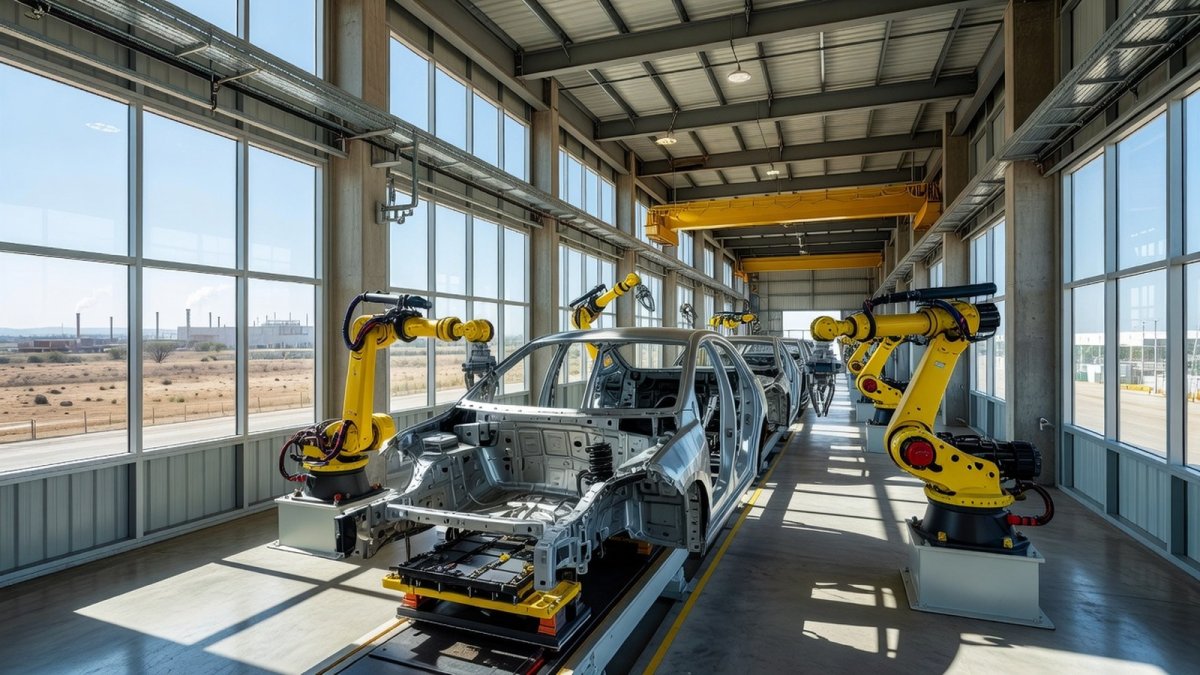
Kia announced a US$649 million investment to shift production of its all-electric EV3 compact SUV to the existing assembly plant in Pesquería, Nuevo León. The move marks the South Korean automaker's first electric vehicle manufacturing operations in Mexico and its largest commitment since the facility opened in 2016. Production of the EV3 line is scheduled to start August 4, 2026.
Kia to Begin EV3 Production in Nuevo León Tomorrow with $649 Million Investment
Kia announced a US$649 million investment to shift production of its all-electric EV3 compact SUV to the existing assembly plant in Pesquería, Nuevo León. The move marks the South Korean automaker's first electric vehicle manufacturing operations in Mexico and its largest commitment since the facility opened in 2016.
Production of the EV3 line is scheduled to start August 4, 2026. Mexico becomes the second global production hub for the model after South Korea, with vehicles built for both the domestic market and export to Latin America.
More than US$260 million of the total investment will go directly to the EV3 production line. The announcement came during President Claudia Sheinbaum's mañanera at the Palacio Nacional on July 29, 2026, attended by Economy Minister Marcelo Ebrard and senior Kia Mexico executives.
Key Officials Highlight Confidence in Mexican Manufacturing
Marcelo Ebrard emphasized the decision's significance amid global automotive uncertainty. He noted that Kia's choice reflects productivity in Mexico and opportunities for investment, technology, jobs, and economic activity across the country.
Ebrard also tied the project to Plan México priorities, stressing the goal of increasing national content to expand production opportunities for Mexico's automotive industry. The EV3 will position Pesquería as a regional hub serving Latin America.
President Sheinbaum described the investment as a sign of confidence in Mexico while advancing electromobility through vehicle production and charging infrastructure. She called the news very good for the nation's industrial future.
Economy Minister Marcelo Ebrard placed the Kia decision in the broader picture of industry uncertainty. “In an era of such uncertainty regarding the automotive industry, tariffs, new rules, and so on, the fact that this decision is being made means that this company, which is one of the most important in the world, is experiencing productivity in Mexico and sees opportunities, investment, technology, jobs, and economic activity in the country,” he said. His words underscore how the Pesquería expansion can deliver tangible benefits to workers and suppliers throughout the region. President Sheinbaum highlighted both the investment itself and its electric focus. “The investment per se shows confidence in our country, and the second aspect is the push toward electromobility, which means the production of an electric vehicle and the network of charging stations to power these vehicles. So, it is very, very good news,” she noted. The remarks connect the new plant to Mexico’s larger goals for cleaner transportation and community infrastructure. Kia Mexico CEO Andy Kim reaffirmed the company’s long-term partnership with the country. “Today I reaffirm our promise: Kia Mexico will be your most strategic and reliable partner in making shared prosperity a reality. We have grown hand in hand with the Mexican economy,” he stated. Together the comments reflect steady confidence from officials and company leaders alike in the future of Mexican auto communities.Two Thousand New Jobs Support Nuevo León Families and Suppliers
The new EV3 line will create 500 direct jobs in 2026, followed by 1,500 additional direct positions between 2027 and 2030, for a total of roughly 2,000 new roles. The Pesquería plant currently employs about 2,600 people directly, with more than 85,000 jobs linked to its supplier network.
Since opening in 2016, the facility has generated more than 80,000 direct and indirect jobs, according to the Secretaría de Economía. These positions benefit families across Nuevo León colonias and strengthen the maquiladora economy in the region.
Young Sam "Andy" Kim, President and CEO of Kia Mexico, reaffirmed the company's long-term commitment, noting that the EV3 launch strengthens Kia's position for the next stage of Mexico's automotive development and supports shared prosperity.
Plan México Drives Local Content Growth and Supply Chain Expansion
The Mexican-built EV3 will launch with approximately 27 percent local content, with Kia and the government planning to raise that share over the investment period through 2028. Battery packs and key components will initially be imported from Asia while assembly occurs in Mexico.
Ximena Escobedo, Undersecretary of Industry and Commerce, highlighted government efforts to accelerate regulatory processes for foreign direct investment. Thirteen priority projects in energy and telecom have already received immediate administrative authorization.
The project aligns with Plan México's overall portfolio of 1,186 projects valued at approximately US$404 billion, concentrated in automotive and manufacturing sectors. It also builds on a May 2026 bilateral call between Sheinbaum and South Korean President Lee Jae Myung to expand commercial and industrial cooperation.
South Korea continues to rank among Mexico’s most important Asian trading partners and sources of foreign investment. More than 2,000 South Korean companies already operate across the country, creating steady jobs and technology exchange in states like Nuevo León. The Kia announcement builds directly on that long-standing relationship. Two months before the investment figure was released, President Sheinbaum and South Korean President Lee Jae Myung held a bilateral call in which they agreed to deepen commercial, economic, and industrial cooperation. That conversation set a cooperative tone for the months that followed. Kia first shared early details of the EV3 project on April 8, 2026, during a Nuevo León trade mission to South Korea led by Governor Samuel García. At the time the company did not disclose the dollar amount, yet the visit already signaled growing ties between the state’s manufacturing communities and South Korean automakers.Sustainability Measures Address Nuevo León Water and Energy Needs
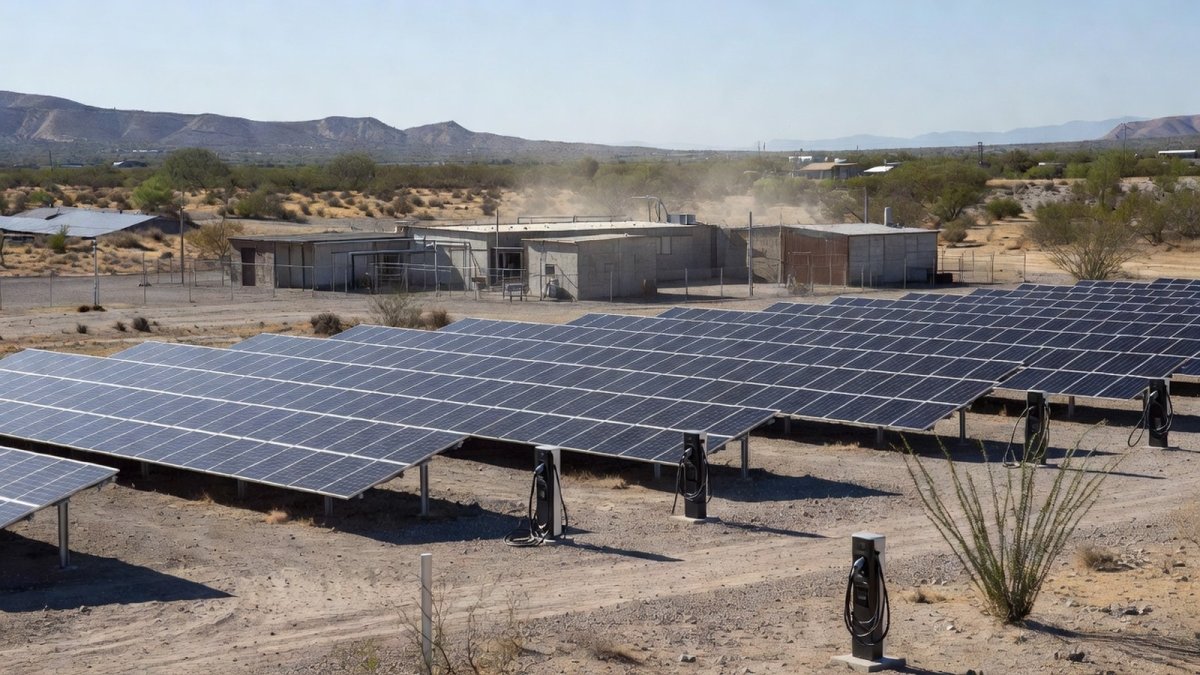
Kia is constructing a 2-megawatt solar farm at the Pesquería complex, expanding to 8 MW by 2030. Once fully operational, it will produce electricity equivalent to the annual consumption of more than 4,000 Mexican households.
A second wastewater treatment plant will treat and recycle about 1,050 cubic meters of industrial water daily, reclaiming roughly 70 percent of the treated water used by the assembly plant. This volume matches the daily water usage of more than 2,000 homes in a state facing recurring drought conditions.
Marianela Calderón, Administrative Director of Kia Mexico, outlined these initiatives as part of the company's broader sustainability efforts tied to the EV3 investment and long-term operations in Nuevo León.
Charging Network and EV Ecosystem Support Domestic Adoption
Kia's rollout includes residential charging solutions, public charging stations in urban areas and along major highway corridors, and dedicated EV customer support services. Vehicle-to-vehicle mobile charging units will provide emergency battery replenishment for stranded drivers.
Horacio Chavez, Commercial Director of Kia Mexico, noted that this marks the first time the company will produce and commercialize an all-electric vehicle in Mexico, with the EV3 proudly made in Pesquería for local buyers and regional export.
The EV3 arriving from Pesquería will bring European-proven battery options to North America. Buyers there can choose between 58.3 kWh and 81.4 kWh packs that deliver up to 600 km of WLTP range, powered by a 150 kW front-mounted motor on a 400-volt architecture. These details give Mexican-built units a strong starting point for efficiency and everyday usability. The 2027 model year EV3 will reach US showrooms later this year in five trims. Specifications for the versions produced in Nuevo León will be shared at a later date, allowing Kia to tailor the compact electric SUV to regional needs while still meeting the same core performance standards. Kia is adding the EV3 to its US lineup at a time when other automakers are pulling back on electric-vehicle plans. The decision keeps the focus on growing electromobility options for American drivers and reinforces the role of Mexican plants in that expansion.USMCA Review Puts Mexico's Auto Sector in the Spotlight
In the midst of shifting trade rules under the USMCA, the United States proposed during May 2026 bilateral talks with Mexico that 50 percent of the value of North American-built vehicles must originate in the United States. This marks a clear change from the current requirement of 75 percent North American content overall. Mexican communities that rely on auto jobs are watching these talks closely as they shape future investment decisions. Other automakers have begun adjusting their footprints in response. Toyota is moving some Tacoma production from Mexico to Texas by 2030, and GM has announced plans to expand capacity inside the United States. Mexico is responding by diversifying its trade relationships and reducing imports amid rising US protectionism. Kia has taken a different path by expanding its Mexican operations instead. The company’s choice to build the EV3 in Pesquería keeps production and related economic activity inside Nuevo León, supporting local families and suppliers who have long partnered with the industry.Tags: Kia EV3 Mexico, Pesquería plant, Nuevo León jobs, Plan México, Claudia Sheinbaum, Marcelo Ebrard, electric vehicle manufacturing, Kia investment 2026, Samuel García, electromobility
By Rosa Martinez, Staff Writer
This article was produced with AI-assisted research and editorial support. Reporting is based on sources cited in the article.
What's Your Reaction?
 Like
0
Like
0
 Dislike
0
Dislike
0
 Love
0
Love
0
 Funny
0
Funny
0
 Wow
0
Wow
0
 Sad
0
Sad
0
 Angry
0
Angry
0

Latin America/Andes Correspondent at Global1.News. Based in Bogota, covering politics, environment, energy, and social movements across the Andean region. Passionate about environmental journalism and communities protecting their land.















Comments (0)