
BC Wildfires Evacuate Over 5,000 as Fires Top 130
More than 5,000 residents across British Columbia have been placed under evacuation orders in the past 24 hours as the number of active wildfires climbed above 130.
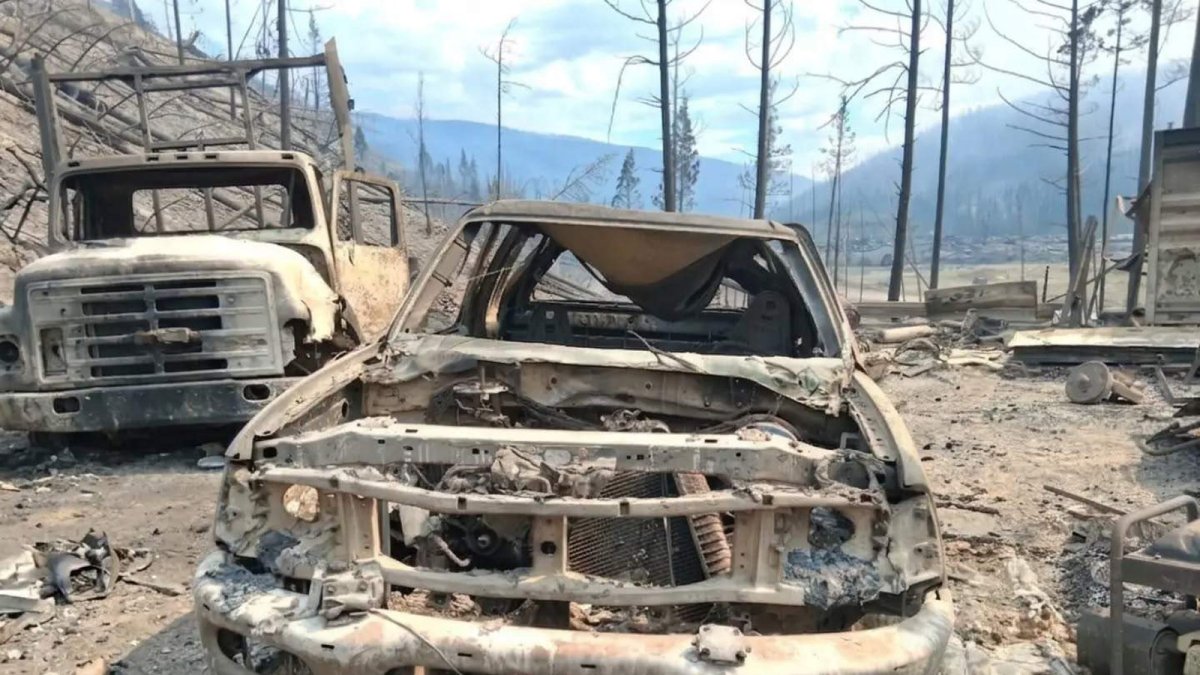
BC Wildfires Evacuate Over 5,000 as Fires Top 130
More than 5,000 residents across British Columbia have been placed under evacuation orders in the past 24 hours as the number of active wildfires climbed above 130. Provincial officials described the situation as complex and rapidly evolving, with nearly half the fires out of control and dozens more ignited by lightning and high winds over the weekend.
Tags: British Columbia wildfires, evacuation orders, BC Wildfire Service, Kevin Dunbar, Cliff Miller, drought conditions, First Nations emergencies, cold front impacts, resource deployment, Fraser Valley fires, Okanagan fires, emergency preparedness
The Story
Vancouver, B.C. - Aug. 3, 2026 - The BC Wildfire Service reported approximately 130 wildfires burning across the province, with nearly half considered out of control. About 30 new fires started in the past 24 hours alone, adding to the roughly 100 already active as of Saturday morning. Strong winds and lightning strikes drove rapid expansion, prompting more than 40 evacuation orders and a similar number of alerts by Sunday night.
Executive director Kevin Dunbar of provincial response and recovery operations stated that states of local emergency remain in effect for multiple First Nations and local authorities. He noted that changing conditions since Saturday have forced ongoing adjustments to orders and alerts in several regions, including the Fraser Valley and areas south of Lillooet.
The rapid rise in active wildfires from roughly 100 on Saturday morning to approximately 130 within a day illustrates how quickly conditions can shift under the influence of lightning and strong winds. Provincial tracking shows about 30 new ignitions in that period, with nearly half the total fires classified as out of control. This pattern aligns with the BC Wildfire Service's ongoing monitoring of ignition sources and expansion rates across multiple regions.
Evacuation orders and alerts, exceeding 40 of each by Sunday night, reflect the provincial emergency management system's structured approach to scaling responses as new fires develop. Adjustments to these measures in areas such as the Fraser Valley and south of Lillooet demonstrate how local authorities and First Nations integrate real-time data into declarations of local emergencies. Such coordination ensures that orders target zones where immediate risk is highest while maintaining flexibility for changing weather inputs.
Emergency Response
Cliff Miller of the BC Wildfire Service confirmed that a cold front passing through southern British Columbia produced significant impacts on both existing and newly ignited fires. The province has mobilised more than 500 contractors, 130 aviation helicopters, and a full air tanker fleet to support suppression efforts. Additional resources from Alberta, Mexico, and Australia are scheduled to arrive over the next three weeks.
Dunbar emphasised that local governments and First Nations will conduct damage assessments only when conditions allow safe access. He urged residents in at-risk areas to pre-register for emergency support services and maintain updated household emergency plans with 72-hour grab-and-go supplies for every member, including pets.
Resource mobilisation involving more than 500 contractors, 130 aviation helicopters and the full air tanker fleet forms a core element of the provincial suppression strategy. Additional support scheduled from Alberta, Mexico and Australia over the coming three weeks extends this capacity through established interprovincial and international agreements. These deployments follow standard logistics pathways that prioritise rapid integration of external crews and equipment into existing operations.
Damage assessments remain deferred until local governments and First Nations confirm safe access, consistent with the emergency management framework that places safety above immediate evaluation. Pre-registration for support services and maintenance of 72-hour household supplies, including provisions for pets, represent practical steps encouraged by officials to reduce strain on response systems. This emphasis on household-level readiness complements broader provincial coordination under the Disaster Financial Assistance Arrangements when required.
Fire Behaviour and Conditions
Miller reported that drought conditions in southern British Columbia have reached record levels, producing explosive fire behaviour. The recent cold front brought a temporary drop in temperatures and an uptick in relative humidity, reducing the immediate risk of rapid growth over the next 48 hours. However, forecasters anticipate another high-pressure system that could return warm, dry conditions within days.
Very little rain is expected in the short term, though a forecast drop in winds over the next three to four days may assist crews in containing some fires. Officials continue to monitor the situation closely as August progresses, recognising that the fire season remains active.
Record drought levels in southern British Columbia have produced conditions described as explosive, where even modest ignition sources lead to fast-moving fires. The recent cold front's effects, including lowered temperatures and higher relative humidity, created a short-term moderation that limits rapid growth potential over the next 48 hours. Forecasters note that this window is temporary, with a subsequent high-pressure system likely to restore warmer and drier patterns.
Limited rainfall prospects in the near term mean crews must capitalise on the forecasted wind reduction over three to four days to improve containment on select fires. Monitoring continues through August because the season remains active, and the combination of drought persistence with ongoing lightning activity requires sustained operational vigilance. These factors underscore the value of layered suppression tactics that adapt to incremental weather shifts without assuming long-term relief.
Impact on Communities
Evacuation orders have affected communities in the Fraser Valley, the Okanagan Indian Band area, and regions near Lillooet, including the Riley Creek and Brunswick Complex fires. More than 5,000 people have been displaced in the last day, with additional alerts in place across the province. Dunbar acknowledged the stress on evacuated residents and stressed the importance of community resilience during this period.
First Nations and local authorities are coordinating responses under declared states of emergency. Miller indicated that communities under current orders face the highest risk, and any new orders will prioritise areas where danger to residents is greatest. Damage assessments will proceed once safety permits.
Evacuation orders affecting more than 5,000 residents in the past 24 hours have concentrated in zones such as the Fraser Valley, the Okanagan Indian Band area and regions near Lillooet, including the Riley Creek and Brunswick Complex fires. First Nations communities operating under declared states of local emergency coordinate directly with provincial authorities, ensuring that response priorities reflect local knowledge of terrain and population needs. This partnership model supports equitable allocation of resources where danger to residents is greatest.
Alerts in place across additional areas serve as an early indicator layer within the provincial system, allowing residents time to prepare before orders are issued. Stress on displaced individuals is acknowledged by officials, who highlight community resilience as a factor that aids recovery once assessments begin. New orders will continue to focus on highest-risk locations, maintaining a risk-based sequence that protects people ahead of property evaluations.
What Happens Next
With resources continuing to arrive from other provinces and international partners, suppression operations are expected to intensify. The temporary improvement in humidity offers a window for crews to make progress before any return to drier conditions. Officials advise residents to remain prepared and monitor updates from EmergencyInfoBC.
The combination of record drought and ongoing lightning activity underscores the need for sustained vigilance across British Columbia. Provincial coordination with federal support mechanisms, including potential Canadian Armed Forces assistance under the Disaster Financial Assistance Arrangements, remains available if required. Communities that maintain strong preparedness measures will be better positioned to weather the remainder of the season.
Intensified suppression is anticipated as incoming resources from other provinces and international partners integrate into field operations. The current humidity improvement offers crews a defined interval to advance containment lines before any return to drier conditions, with wind reductions expected to further assist these efforts. Officials continue to advise residents to monitor EmergencyInfoBC updates and maintain readiness measures.
Provincial coordination mechanisms, including potential Canadian Armed Forces support under established financial arrangements, remain available should conditions warrant escalation. Communities that sustain updated emergency plans and pre-registered support access are positioned to navigate the remainder of the season with reduced disruption. Ongoing lightning activity combined with drought persistence reinforces the requirement for continued vigilance through the active period.
By Alex Thompson, Staff Writer
This article was produced with AI-assisted research and editorial support. Reporting is based on sources cited in the article.
What's Your Reaction?
 Like
0
Like
0
 Dislike
0
Dislike
0
 Love
0
Love
0
 Funny
0
Funny
0
 Wow
0
Wow
0
 Sad
0
Sad
0
 Angry
0
Angry
0

Canada Correspondent at Global1.News. Based in Toronto, covering Canadian politics, energy, trade, and US-Canada relations. Provides the Canadian perspective on North American and global affairs.














Comments (0)