
Anutin calls for UN reform, equal voices at 81st General Assembly
Prime Minister Anutin Charnvirakul addressed the 81st United Nations General Assembly in New York on 24 September, urging a reshaping of the world body to better reflect the voices of all its members.
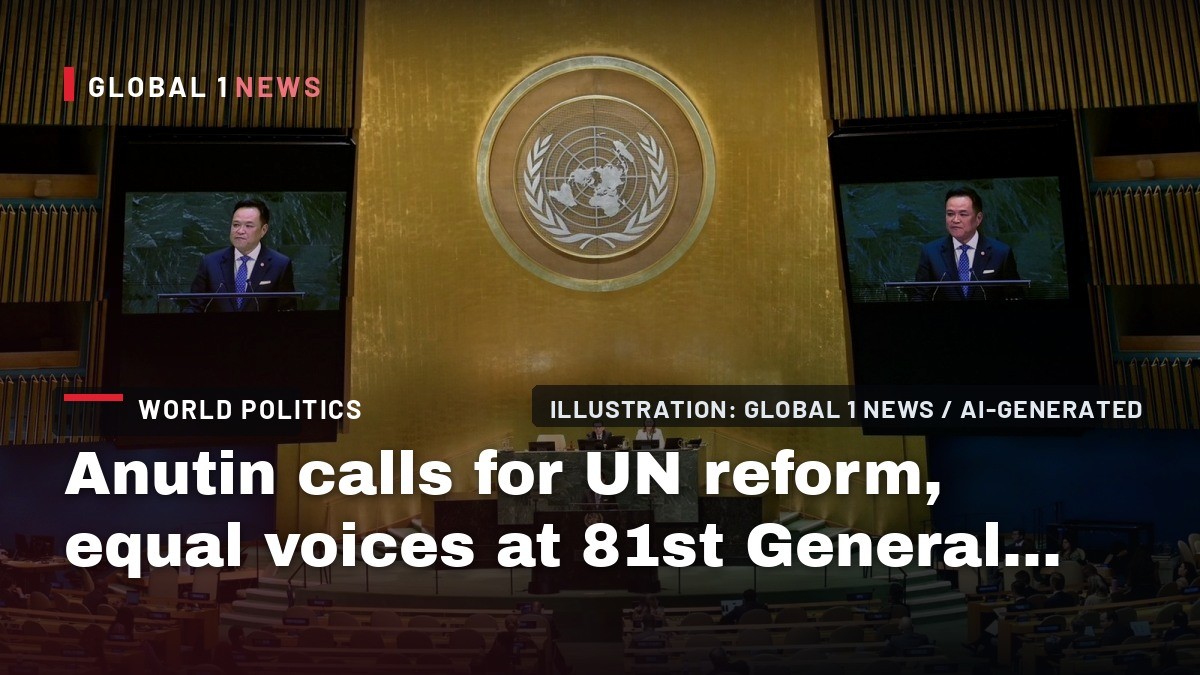
Prime Minister Anutin Charnvirakul addressed the 81st United Nations General Assembly in New York on 24 September, urging a reshaping of the world body to better reflect the voices of all its members. Speaking under Thailand’s national theme “Restoring Trust, Managing Transformation: A United Nations that Delivers for All,” the Thai leader emphasized that the UN, which celebrated its 80th anniversary this year, must evolve through trust‑building and broader participation. His remarks, delivered after a brief meeting with Secretary‑General António Guterres at UN headquarters, resonated with the Buddhist principle of compassionate dialogue, reminding listeners that true peace grows from mutual understanding rather than the mere absence of conflict.
Trust as the Foundation for Reform
Prime Minister Anutin stressed that trust cannot be imposed from the top down; it must arise from smaller, inclusive groups that gradually expand into larger cooperation frameworks. By allowing nations that have historically held less influence to speak, the UN can nurture a more balanced dialogue. This approach mirrors the Thai practice of “samakhom,” a communal decision‑making process that values each participant’s contribution, no matter how modest.
The minister’s call for incremental trust‑building reflects a broader desire to restore confidence in multilateralism. He argued that when all countries feel heard, the collective will to act on global challenges strengthens, echoing the Buddhist teaching that harmony emerges when each being is respected.
Redefining Peace Beyond the Absence of War
Anutin warned against a narrow definition of peace that equates it solely with the lack of armed conflict. He advocated for a more expansive view that includes constructive cooperation among nations. This perspective aligns with the Thai concept of “mae nam,” where harmony is cultivated through ongoing, positive interaction rather than simply avoiding discord.
By framing peace as collaborative effort, the prime minister highlighted the importance of joint projects, shared knowledge, and cultural exchange. Such a vision invites countries to work together on common goals, from climate resilience to public health, reinforcing the idea that lasting peace is built on shared prosperity.
Addressing Global Conflicts with Dialogue
When asked about ongoing crises, Anutin referenced the situation in Palestine, underscoring the need for diplomatic engagement. He also pointed to the long‑standing border issues between Thailand and Cambodia, urging bilateral negotiations as the preferred path to resolution. This emphasis on direct dialogue reflects Thailand’s own tradition of “panyaa,” a practice of seeking consensus through face‑to‑face discussion.
The prime minister reminded the assembly that the UN Convention on the Law of the Sea (UNCLOS) remains a vital tool for clarifying maritime boundaries. By invoking UNCLOS, he linked Thailand’s regional concerns to a broader legal framework that supports peaceful coexistence on the seas, an area of great importance for Southeast Asian nations whose livelihoods depend on maritime trade and fisheries.
Supporting Reconciliation in Myanmar
In a clear statement of solidarity, Anutin reaffirmed Thailand’s support for peace and national reconciliation in Myanmar. The Thai government’s stance is rooted in the shared cultural and historical ties that bind the two neighbors, as well as a common Buddhist heritage that values compassion and the alleviation of suffering.
By voicing support for Myanmar’s path toward unity, Thailand signals its willingness to contribute to regional stability. The prime minister’s remarks suggest that any lasting solution will require inclusive dialogue that respects the voices of all ethnic groups, echoing the broader UN call for participatory peace processes.
Tackling Transnational Challenges Together
The prime minister highlighted Thailand’s cooperation with the UN Office on Drugs and Crime (UNODC) to curb drug trafficking. He noted that this partnership draws on multiple sectors, reflecting a whole‑of‑society approach that aligns with Thailand’s community‑based prevention programs. Such collaboration demonstrates how regional expertise can complement global initiatives.
In addition to drug control, Anutin pointed to joint efforts to address online crime. By involving government agencies, the private sector, and civil society, Thailand aims to build a resilient digital environment. This multi‑layered strategy mirrors the Buddhist principle of “right effort,” encouraging proactive measures to prevent harm before it spreads.
Building a Rules‑Based International Order
At the heart of Anutin’s speech was a call for a rules‑based international order that includes every nation in shaping a shared future. He argued that when all countries participate in setting the rules that govern global affairs, confidence in the multilateral system can be restored. This vision resonates with Thailand’s own constitutional tradition of inclusive governance, where diverse voices contribute to national policy.
The prime minister’s appeal for inclusive rule‑making underscores the belief that fairness and predictability are essential for cooperation. By inviting all members to the table, the UN can become a platform where collective wisdom guides action, much like the Thai practice of “khun chao,” where leaders seek counsel from a broad council before making decisions.
Looking Ahead: Thailand’s Role in a Reformed UN
Prime Minister Anutin’s address painted a picture of a United Nations that listens, learns, and leads together with its members. By grounding his proposals in trust, inclusive dialogue, and shared responsibility, he offered a roadmap that aligns with Thailand’s cultural values and regional aspirations. As the UN moves beyond its 80th anniversary, the Thai perspective may serve as a gentle reminder that true transformation begins with humility and the willingness to hear every voice.
In the months ahead, Thailand is likely to continue its engagement with UN bodies, leveraging its experience in community‑driven initiatives and its strategic position in Southeast Asia. Whether through further cooperation with UNODC, deeper involvement in maritime discussions under UNCLOS, or continued support for peace processes in neighboring Myanmar, the kingdom aims to embody the very principles it championed at the General Assembly: trust, participation, and a shared vision for a peaceful future.
This article was produced with AI-assisted research and editorial support. Reporting is based on the source material cited below. Sources: Khaosod English; khaosodenglish.com; Global1.News (25 September 2026).
By Ann Srisawat, Staff Writer
What's Your Reaction?
 Like
0
Like
0
 Dislike
0
Dislike
0
 Love
0
Love
0
 Funny
0
Funny
0
 Wow
0
Wow
0
 Sad
0
Sad
0
 Angry
0
Angry
0

Southeast Asia Correspondent at Global1.News. Based in Bangkok, covering Thai and Southeast Asian politics, economy, technology, and culture. Deep regional perspective on one of the world's most dynamic regions.













Comments (0)